


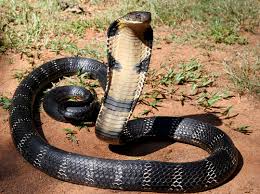
King cobras scientifically known as "Ophiophagus hannah" are amongst the most interesting animals in the world. They are very popular due to their iconic and recognizable look. However, this article will be an eye-opener to some of the wonderful and interesting facts about king cobras.
In Asia, king cobras are very important as they serve as a cultural symbol. King cobras are interesting reptiles but also dangerous. Therefore, we’ll be sharing useful tips and facts on king cobras.
Although, king cobras are a bit complicated as they are very dangerous and at the same time interesting reptiles.
9 Interesting Facts About King Cobras (Ophiophagus hannah)
1. King Cobra Is The Largest Venomous Snake in the World!
However, some researchers, believe that the snake can only grow to an optimum length of about 20ft. You should also know that the largest discovered specimen of king cobra was close to the largest possible snake on earth!
Although, the king cobra is not the largest of all snakes in the world. Both the Anaconda and reticulated python may surpass the king cobra in terms of length.
2. They Are Said To Have a "Neurotoxin" Venom
The king cobra uses a neurotoxic venom that damages the nervous system. When injected with this venom, a human will suffer multiple types of nervous system failures. These can lead to cardiac arrest and the inability to breathe.
🌿 Go Organic on Your Farm: Instead of harmful chemical pesticides and fertilisers, try our organic farming products — including neem oil spray, bio-pesticides, natural plant treatments, organic seeds and seedlings, suckers, and many more organic products that are safe for your health, your family, your soil and your harvest. Shop Now →
The king cobra possesses a venom called neurotoxic. This venom is capable of damaging the nervous system.
According to medical experts, when someone gets injected with this venom, that individual will start to suffer multiple types of nervous failures. These can however lead to a cardiac arrest and inability to breathe.
There is also another venom called the ‘hemotoxic venom’, that kills both muscles and blood cells. The king cobra venom also stands in contrast with this venom.
Read Also: Water Snakes (Nerodia): Species, Habitat, Diet, & More
🔧 Free Farm Tool Available: Use our free Agric4Profits Farm Tools to calculate your farm profits, formulate feeds, identify pests and diseases on both your crops and animal farms, plan your planting and harvesting season, including many more farm tasks to get free expert advice and recommendations — completely free, no registration required. Access Free Tools →
3. King Cobras Are the Only Snake That Builds a Nest for Their Young
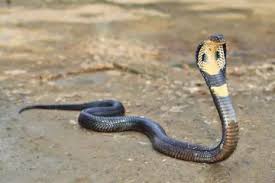
King cobras protect their young from harm while rarely eating themselves. They rarely eat themselves as they can be very protective. They protect their young from harm.
However, king cobras are widely known for building a nest for their young before they are born. They are also capable of laying up to 40 eggs at a time and these eggs are placed in nests that include vegetation.
The nest where the eggs are kept is usually camouflaged by the items used in its construction. The snake will then cover the eggs by resting on top of it, they're using its deadly bite to frighten away other creatures that might make them feel endangered.
4. They Rarely Eat Each Other, But They Eat Each Other!
When it comes to cannibalism, king cobras are high on the list as they consume both their specie and other species like python, rat snake, and others. Although, king cobras will often consume snakes that do not pose much of a threat to them.
Their cannibalism might just reduce the number of dangerous snakes lurking in areas with humans.
💬 Have a Farming Question? Join thousands of farmers across Africa on the Agric4Profits Community — ask questions, share experiences and connect with agricultural experts. It is completely free. Ask Your Question Now →
5. The King Cobra Specie is Not a True Cobra
Have you heard of the Indian cobra? Well, this specie looks very similar to king cobras specie. The Indian cobra belongs to its own to its genus called the “Ophiophagus”.
However, you should also know that the king cobras share their ability to spread their neck and also draw their selves up as part of the threat response. The Indian cobra is also referred to as the king cobra because of its large structure, so don’t get confused about which is the true king cobra.
Read Also: Rat Snakes (Pantherophis obsoletus): Facts, Habitat, Feeding, & More
6. These Snakes Can Live for 20 Years
King cobras are said to live in places with other deadly wildlife. Although one fact about this dangerous reptile is that it mostly exists in places that pose a great threat to their hood. These snakes can survive in tougher conditions.
Therefore, king cobra can survive for 20 years in the wild, they can even live more than that if they are cared for in captivity.
7. A Single Bite From a Venom Can Kill An Elephant or Even Over 20 People
King cobras with no doubt have the most dangerous and deadliest bites in the world. Meanwhile, when compared to the Indian cobra, they don’t kill as much as the Indian cobra does.
However, when a king cobra bites, it injects enough of its potent venom. Even an elephant can survive the bite of a cobra. King cobras are no snakes to be trifled with because they are incredibly deadly and powerful.
8. King Cobras’ Hoods Aren’t Always Spread Out
Globally, most people believe that king cobras have flared hoods all the time. Until they are threatened, king cobras have a relatively small head.
They will flex the muscles and expand the ribs on their neck to create the iconic hooded look as part of their threat response.
📖 Want to Go Deeper on This Topic?
Our expert agricultural ebooks cover poultry, fish farming, different crops production, snail farming, organic farming, mushrooms, sheep, cattle, flowers, pig farming, goat farming, agribusiness, etc. in practical step-by-step detail — written by agricultural professionals for African farmers.
Browse All Farming Ebooks →9. King Cobras Fear the Mongoose
The mongoose preys on the king cobra, and they achieve this very successfully. Mongooses are very hard clients for cobras due to the fact they have an excessive degree of agility.
All the mongoose needs to do is to get behind the cobra, harass it to make the snake turn the right way, and then move in for the kill! Mongooses are believed to have some immunity to the cobra’s venom, but they cannot survive repeated bites.
They have little room for error when they’re hunting these deadly snakes, but they’re very good at it.
Read Also: The Best Foods and Drinks Good for Your Teeth
🌱 Take Your Farming Further With Agric4Profits
Based on what you just read, here are free resources and products from Agric4Profits that can help your farm right now:
- 🛒 Visit Our Marketplace — Organic neem oil, bio-pesticides, seeds and farming products
- 📚 Read Premium Content — Advanced guides for serious and profitable farming
- 🎓 Join Our Free Academy — Structured free training for farmers across Africa
- 🔧 Use Our Free Farm Tools — Profit calculators, feed formulation, pest identifier and more
- 💬 Join Our Farming Community — Connect with farmers across all 54 African countries
- ❓ Ask a Farming Question — Get answers from experienced farmers and agricultural experts
Please cite this content in academic work, research, or publications.