


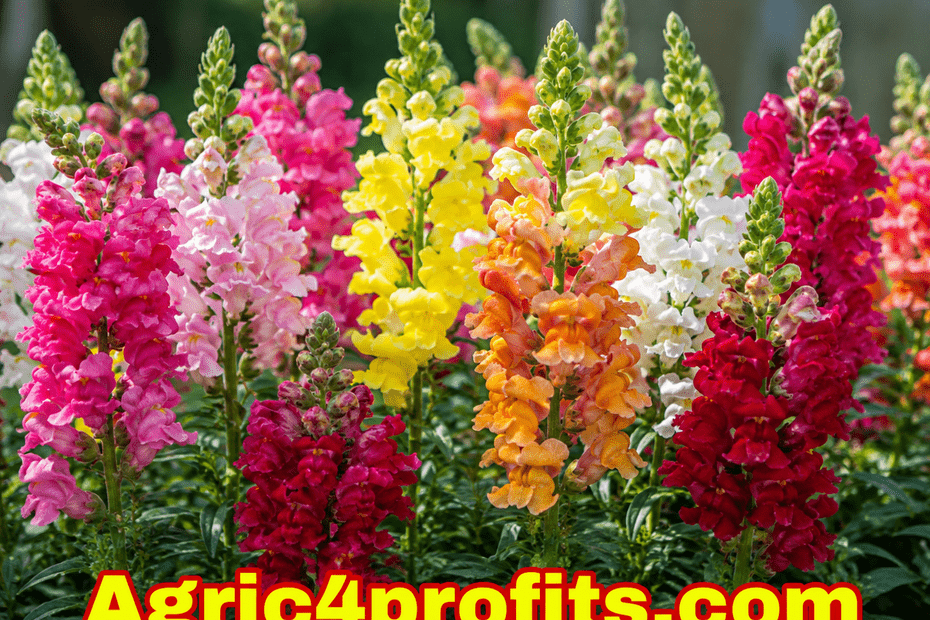
Antirrhinum, commonly called Snapdragon, is a fascinating flowering plant admired for its vivid colors, distinctive form, and garden versatility. Its unusual flowers and long history have made it popular among gardeners worldwide.
The name Antirrhinum comes from Greek terms associated with a nose, reflecting the flower’s unusual shape. When gently squeezed, the bloom opens and closes like a mouth, inspiring its familiar Snapdragon name.
Antirrhinums belong to the Plantaginaceae family and include several species and cultivated varieties, reflecting the broader diversity of flowering plants. They originated across parts of Europe and North Africa, historically.
Snapdragons are especially valued for their broad color range, which includes red, pink, orange, yellow, white, and attractive bicolored combinations. Their varied colors suit borders, containers, beds, bouquets, and beautiful garden displays.
The unusual flower structure also interests botanists because it influences interactions with visiting insects. Bees and butterflies can enter the blossoms while their movements bring reproductive structures into contact, supporting pollination and illustrating flower reproduction.
When a suitable insect lands on the lower floral lip, the hinged structure responds to its weight. As the insect moves inside, pollen transfer can occur before the visitor continues onward.
🌿 Go Organic on Your Farm: Instead of harmful chemical pesticides and fertilisers, try our organic farming products — including neem oil spray, bio-pesticides, natural plant treatments, organic seeds and seedlings, suckers, and many more organic products that are safe for your health, your family, your soil and your harvest. Shop Now →
Growing Antirrhinums is generally manageable because these plants perform well in sunny locations and reasonably drained soils. Regular moisture supports establishment, while removing faded flowers can encourage continued blooming throughout suitable seasons.
Snapdragons also possess cultural and historical appeal. During the Victorian period, they became associated with ideas such as grace and strength, making them memorable choices for decorative arrangements and symbolic floral displays.
Traditional medicinal uses have been reported for Antirrhinum in some cultures, including applications for minor throat or skin complaints. Such historical uses should not be treated as proven treatments without reliable evidence or qualified guidance.
Overall, Antirrhinum remains an attractive ornamental flower combining unusual floral structure, broad color diversity, ecological interest, and cultural significance. Its versatility explains why it continues appearing in gardens and floral designs.
🔧 Free Farm Tool Available: Use our free Agric4Profits Farm Tools to calculate your farm profits, formulate feeds, identify pests and diseases on both your crops and animal farms, plan your planting and harvesting season, including many more farm tasks to get free expert advice and recommendations — completely free, no registration required. Access Free Tools →
Read Also: Significance and Uses of Frozen Flowers
History And Significance of Antirrhinum Flowers

The history of Antirrhinum stretches across centuries, with the flower becoming important through gardening, symbolism, artistic appreciation, and scientific observation. Its unusual shape helped make it memorable within several cultures and longstanding traditions.
Antirrhinums are associated with rocky habitats in regions of Europe, North Africa, and other areas where related populations developed. Their distinctive appearance encouraged people to notice them and eventually cultivate them as ornamentals.
The Greek roots associated with the plant’s name refer to its resemblance to a nose. The common name Snapdragon, however, reflects the flower’s dragon-like face and the movement produced when its petals are gently pressed.
During medieval Europe, Snapdragons were sometimes associated with protection and divine grace in traditional stories. Their unusual appearance encouraged folklore surrounding gardens, household protection, and their supposed ability to discourage misfortune.
💬 Have a Farming Question? Join thousands of farmers across Africa on the Agric4Profits Community — ask questions, share experiences and connect with agricultural experts. It is completely free. Ask Your Question Now →
Victorian flower symbolism further strengthened the Snapdragon’s cultural importance. During this period, flowers were assigned meanings that enabled people to communicate emotions discreetly through carefully selected bouquets and floral arrangements, including symbolic floral displays.
Snapdragons became associated with grace and strength, while floral presentation allowed people to express admiration, encouragement, appreciation, or sincerity. This tradition helped maintain their place in ornamental culture beyond simple garden decoration.
The flower’s significance also extends beyond European traditions, where dragon imagery can appear in symbolic interpretations. Such associations demonstrate how distinctive natural forms often inspire meanings that vary across regions and cultural settings.
Scientific interest in Antirrhinum has grown because its floral structure provides a useful example of plant and pollinator relationships. Observing these interactions helps illustrate how flower shape can influence reproductive success.
Complete Growing Guide of the Antirrhinum Flowers

Here is a practical growing guide for Antirrhinum flowers, covering location, planting materials, transplanting, watering, feeding, maintenance, pest management, disease prevention, seasonal care, and common garden management considerations for successful flowering.
1. Choose the Right Location: Select a garden position receiving about six to eight hours of direct sunlight daily, with soil that drains efficiently and does not remain saturated after rainfall.
2. Start with Seeds or Seedlings: Antirrhinums can be raised from seeds or purchased as young nursery plants. Sow seeds in suitable seed-starting material, keep them moist, and transplant established seedlings outdoors.
3. Transplant Seedlings: Move young plants outdoors during a cool part of the day to reduce transplant stress. Set each seedling into a prepared hole and firm the surrounding soil gently.
4. Water Regularly: Keep newly established plants evenly moist without creating soggy conditions. Once established, Snapdragons can tolerate short dry periods, although adequate moisture supports stronger flowering during hot weather.
📖 Want to Go Deeper on This Topic?
Our expert agricultural ebooks cover poultry, fish farming, different crops production, snail farming, organic farming, mushrooms, sheep, cattle, flowers, pig farming, goat farming, agribusiness, etc. in practical step-by-step detail — written by agricultural professionals for African farmers.
Browse All Farming Ebooks →5. Fertilize Carefully: Apply a balanced fertilizer during active growth according to product directions. Avoid excessive nitrogen because overly rich feeding can encourage leaves while reducing the plant’s flowering performance.
6. Deadhead and Prune: Remove faded flower spikes regularly to encourage additional blooms. Pinching young stems can also encourage branching, producing fuller plants with more flowering points for garden displays.
7. Manage Pests and Diseases: Monitor plants for aphids, caterpillars, and other problems. Provide adequate spacing and air circulation, remove affected material promptly, and use appropriate control methods when infestations develop.
8. Prepare for Winter: In mild climates, some Antirrhinums may survive for more than one season. In colder regions, they are commonly treated as annuals, although healthy cuttings can be protected indoors.
Following these growing practices can help gardeners maintain healthy Antirrhinum plants with attractive blooms. Consistent observation remains important because light, moisture, temperature, soil condition, and local pests influence flowering performance.
Uses of Antirrhinum Flowers

Antirrhinum flowers have practical and cultural uses that extend beyond their attractive appearance. Gardeners, florists, educators, landscapers, and pollinator-friendly planting projects can all find value in these distinctive flowering plants and commercial floriculture systems.
1. Ornamental Purposes: Their vivid colors and dragon-like blossoms make Snapdragons useful in borders, flower beds, containers, landscapes, public gardens, and larger flower displays where seasonal color is strongly desired.
2. Cut Flowers: Antirrhinums produce attractive flowering stems that can be incorporated into bouquets, arrangements, and centerpieces. Their distinctive forms add height, color, and visual character to many fresh flower arrangements.
3. Symbolism and Cultural Significance: Snapdragons have carried traditional associations with grace and strength. Their historical symbolism has made them suitable for bouquets intended to communicate appreciation, courage, sincerity, or encouragement.
4. Traditional Medicinal Uses: Some traditional practices have used Antirrhinum for minor throat or skin complaints. These historical applications should be distinguished from medically established treatments, and professional advice should precede therapeutic use in practice.
5. Educational and Scientific Interest: Antirrhinums offer useful examples for studying flower structure, pollination, plant reproduction, genetics, ecology, and relationships between blossoms and visiting insects such as bees and butterflies.
6. Wildlife Garden Planting: Snapdragons can contribute to pollinator-friendly gardens by providing attractive flowers visited by insects. Planting diverse flowering species can further improve the seasonal resources available within healthy flower gardens.
7. Culinary Considerations: Some sources describe Antirrhinum flowers as decorative garnishes, but edible use requires reliable identification, pesticide-free plants, and appropriate knowledge. Flowers exposed to unknown chemicals should never be consumed casually.
Overall, Antirrhinums combine ornamental, educational, cultural, ecological, and limited traditional uses. Their versatility explains their popularity among gardeners and flower enthusiasts seeking distinctive plants for attractive outdoor and indoor displays, bouquets, and floral markets.
Read Also: All You Need To Know About Small White Flowers
Antirrhinum majus

Antirrhinum majus is one of the best-known and most widely cultivated members of the genus. Gardeners value it for its distinctive flowers, adaptable growth habits, and suitability for ornamental planting.
The plant may behave as an annual or short-lived perennial depending on local climate and growing conditions. Mature specimens commonly develop upright stems and lance-shaped green leaves, creating a strong garden presence.
Its flowers are the most recognizable feature, forming dragon-like or mouth-shaped blossoms that open and close when gently squeezed. This unusual structure is responsible for the familiar common name Snapdragon.
The blooms occur in many colors, including red, pink, yellow, orange, white, and combinations of contrasting shades. This broad palette allows gardeners to coordinate Antirrhinum plantings with many landscape designs.
Antirrhinum majus generally performs best in bright locations with well-drained soil. It can tolerate some partial shade, but insufficient light may reduce vigor and flowering compared with plants receiving stronger sunlight conditions.
Water management is important because excessively wet soil can encourage root problems. Good drainage, sensible irrigation, and suitable planting conditions help maintain healthier roots while supporting steady growth and flowering.
The species can be propagated through seeds or stem cuttings. Seeds may be started under protected conditions before outdoor planting, while cuttings taken from healthy plants can be rooted in suitable planting media.
Its flowers can serve ornamental and cut-flower purposes, while the plant also contributes to pollinator-friendly gardens. Bees, butterflies, and other visitors may interact with its nectar-bearing floral structures during flowering.
Overall, Antirrhinum majus combines distinctive botanical form, colorful flowers, flexible garden uses, and ecological interest. Its recognizable appearance continues to make it a favored Snapdragon among gardeners, floral enthusiasts, and flower markets.
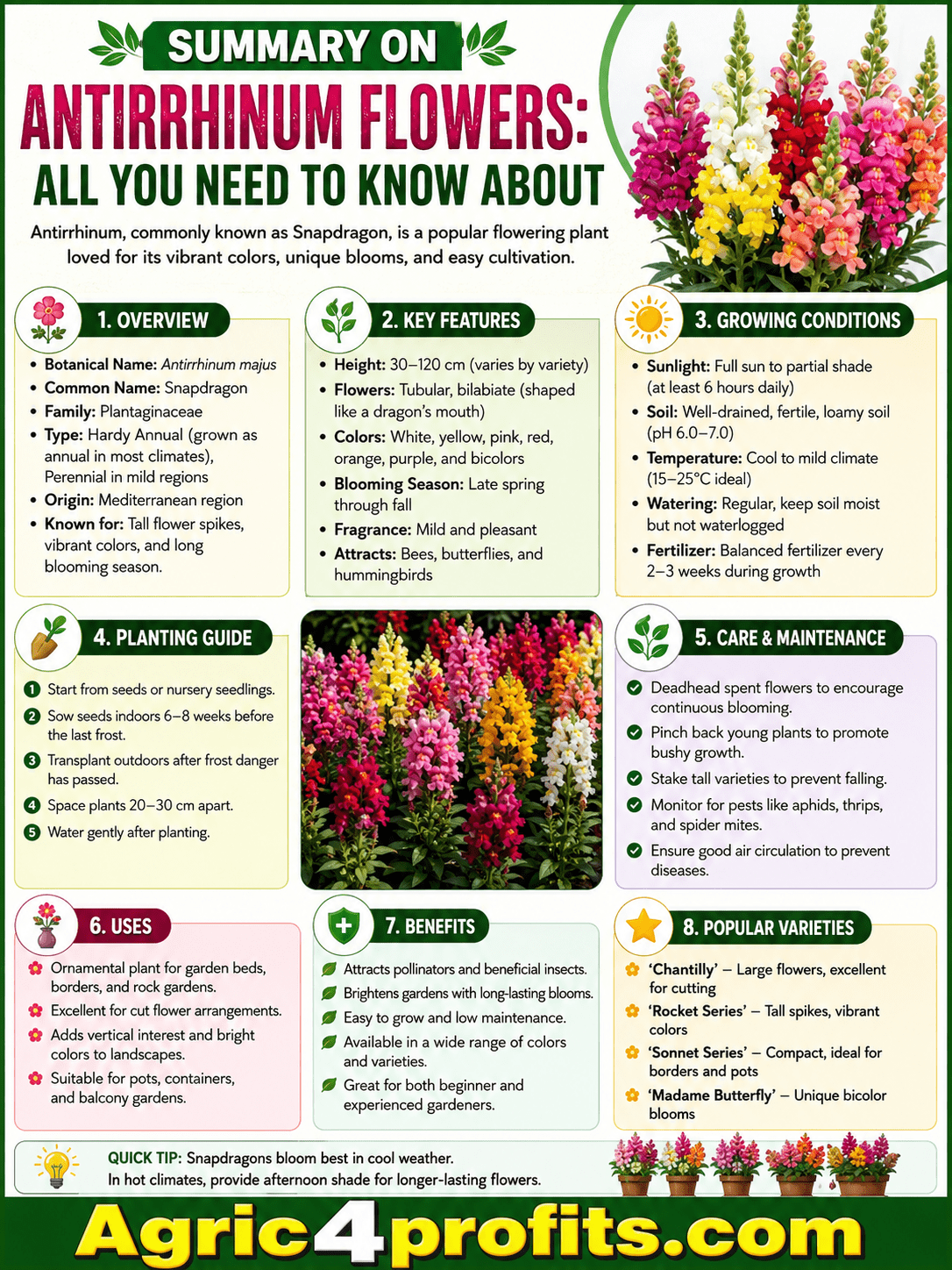
Summary on Antirrhinum Flowers: All You Need To Know About
| Topic | Summary |
|---|---|
| Antirrhinum Flowers | Antirrhinum, commonly called Snapdragon, is an ornamental flowering plant recognized for colorful blooms, unusual dragon-like flower shapes, garden versatility, ecological interest, and cultural significance. |
| History and Significance | The flower has long attracted cultural, symbolic, artistic, and scientific interest, particularly because of its distinctive appearance and associations with grace, strength, protection, and floral traditions. |
| Growing Requirements | Successful cultivation requires adequate sunlight, well-drained soil, sensible watering, balanced feeding, regular deadheading, suitable spacing, pest observation, and appropriate seasonal protection. |
| Pollination | The specialized flower structure interacts with visiting insects such as bees and butterflies, helping facilitate pollen transfer and demonstrating relationships between flower form and pollination. |
| Major Uses | Snapdragons are commonly valued for ornamental gardening, cut-flower arrangements, cultural symbolism, educational study, wildlife gardens, and limited traditional applications. |
| Antirrhinum majus | Antirrhinum majus is a widely cultivated species valued for colorful dragon-shaped flowers, adaptable garden performance, propagation flexibility, and suitability for decorative landscapes. |
| Traditional Medicinal Uses | Historical practices have included minor throat and skin applications, but these uses should not be regarded as established medical treatments without appropriate evidence and professional guidance. |
Frequently Asked Questions About Antirrhinum Flowers: All You Need To Know About
1. What is Antirrhinum commonly called?
Antirrhinum is commonly called Snapdragon because its blossoms resemble a dragon’s face and can open or close when gently squeezed. Other traditional names include dragon flower and bunny rabbit flower.
2. What conditions are best for growing Antirrhinum?
Snapdragons generally perform best in sunny locations with well-drained soil. Consistent moisture supports establishment, while avoiding waterlogged conditions helps reduce problems associated with overly wet roots, poor drainage, and root deterioration.
3. How much sunlight do Snapdragons require?
Antirrhinums prefer strong sunlight and generally grow best where they receive roughly six to eight hours of direct light each day. Some varieties tolerate partial shade, although flowering may decline.
4. Can Antirrhinum flowers attract pollinators?
Yes, Antirrhinum flowers can attract pollinating insects, particularly bees and butterflies. Their specialized floral structure helps visiting insects contact reproductive parts, supporting pollen transfer and demonstrating important plant-pollinator interactions in gardens and habitats.
5. What colors do Antirrhinum flowers produce?
Antirrhinum flowers occur in numerous colors, including red, pink, orange, yellow, white, and combinations of multiple shades. This diversity makes Snapdragons useful for colorful borders, containers, mixed beds, and bouquets.
6. Are Antirrhinum flowers used medicinally?
Some traditional practices have used Antirrhinum for minor throat or skin complaints, but these applications are not established medical treatments. Anyone considering medicinal use should seek qualified professional guidance first.
7. Can Antirrhinum majus be grown from seeds?
Yes, Antirrhinum majus can be propagated from seeds. Gardeners may start seeds under protected conditions and transplant established seedlings outdoors when conditions are suitable for continued growth and successful establishment.
8. Are Snapdragons suitable for cut-flower arrangements?
Yes, Snapdragons can be used as cut flowers because their flowering stems and distinctive blossoms provide height, color, and structure. They are suitable for bouquets, arrangements, centerpieces, and decorative floral designs.
Do you have any questions, suggestions, or contributions? If so, please feel free to use the comment box below to share your thoughts. We also encourage you to kindly share this information with others who might benefit from it. Since we can’t reach everyone at once, we truly appreciate your help in spreading the word. Thank you very much for your support and for sharing!
Read Also: How Art Teachers Foster Creative Expression
🌱 Take Your Farming Further With Agric4Profits
Based on what you just read, here are free resources and products from Agric4Profits that can help your farm right now:
- 🛒 Visit Our Marketplace — Organic neem oil, bio-pesticides, seeds and farming products
- 📚 Read Premium Content — Advanced guides for serious and profitable farming
- 🎓 Join Our Free Academy — Structured free training for farmers across Africa
- 🔧 Use Our Free Farm Tools — Profit calculators, feed formulation, pest identifier and more
- 💬 Join Our Farming Community — Connect with farmers across all 54 African countries
- ❓ Ask a Farming Question — Get answers from experienced farmers and agricultural experts
Please cite this content in academic work, research, or publications.