


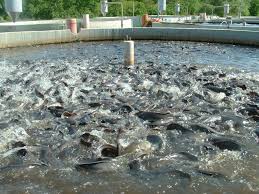
Fish farming is one of the most preferred aquaculture practices globally because it is highly profitable and offers excellent business opportunities for both beginners and experienced entrepreneurs in the agriculture sector.
Making money in fish farming is achievable, but it comes with a price. You must be exceptionally careful when starting a fish farm and follow the right procedures that will position you for long-term success and consistent profitability.
Factors to consider before starting a fish farming business include all the circumstances, details, facts, determinants, and influences that contribute to a successful and sustainable fish farming operation over time.
Whether you are already into fish farming or still planning to start, this article provides you with the prerequisites that will help you make more money from your fish farm and excel beyond your initial expectations.
Before starting a fish farming business, it is very important to first gain enough foundational knowledge. What you know about the business will directly determine how well you manage operations and how successfully you navigate common farming challenges.
There are many online courses on fishery that can provide useful knowledge for beginners. There are also established fish farms where you can visit and learn about fish farming in detail, observing real operations firsthand before investing your resources.
🌿 Go Organic on Your Farm: Instead of harmful chemical pesticides and fertilisers, try our organic farming products — including neem oil spray, bio-pesticides, natural plant treatments, organic seeds and seedlings, suckers, and many more organic products that are safe for your health, your family, your soil and your harvest. Shop Now →
Learning from a professional fish farmer is often preferred over online training because you can ask questions in real time. You also get to see practically how everything is done, from daily feeding routines to breeding practices and health management techniques.
No matter the depth of knowledge you have acquired on fish farming, you still need to carefully consider specific circumstances that will contribute to better farming results and ensure your investment is protected throughout each production cycle.
A common question beginners ask is whether all the capital needed for fish farming must be ready before starting. Generally, it is advisable to have sufficient funds to care for your stock, but not having everything ready should not completely stop you from beginning your journey.
As long as you are confident the remaining funds will be available when needed, you can start with 70 to 75 percent of the total estimated cost. The amount budgeted per fish typically does not include pond construction costs, which are spread across multiple production years.
🔧 Free Farm Tool Available: Use our free Agric4Profits Farm Tools to calculate your farm profits, formulate feeds, identify pests and diseases on both your crops and animal farms, plan your planting and harvesting season, including many more farm tasks to get free expert advice and recommendations — completely free, no registration required. Access Free Tools →
1. Factors to Consider Before Starting a Fish Farming Business

Starting a fish farming business requires far more than simply acquiring a pond and stocking it with fish. Several critical factors must be evaluated before you spend a single naira on your farm setup, pond construction, or initial stock purchase.
These factors cover everything from the physical environment and water quality to financial planning, climate awareness, and disease management. Ignoring even one of these areas can significantly reduce your chances of running a profitable and sustainable operation over time.
Many fish farms have failed not because the farmers lacked passion, but because they overlooked one or more of these critical preparatory factors. Proper evaluation before stocking is the foundation of every successful commercial fish farming business anywhere in the world.
The factors discussed in this article apply regardless of your farm's scale, whether you are starting a small backyard operation or planning a large commercial enterprise. Each factor plays a unique and important role in determining your farm's overall productivity and profitability season after season.
Take your time to study, research, and seek expert advice on each factor covered here. The more thorough your preparation is before you begin, the more confident and well-equipped you will be to handle real challenges that arise during the farming cycle.
💬 Have a Farming Question? Join thousands of farmers across Africa on the Agric4Profits Community — ask questions, share experiences and connect with agricultural experts. It is completely free. Ask Your Question Now →
Below are the most important factors every aspiring and practicing fish farmer must consider before launching or expanding a fish farming business. Each is explained in enough detail to guide your planning and decision-making as you prepare for your farming journey ahead.
2. Influence of Environmental Factors
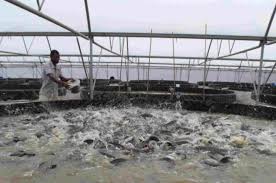
Environmental factors are the characteristics of the location where your fish farm is situated that directly impact the survival, operations, and growth of fish. This factor has a significant effect on fish farming and fish production no matter where your farm is located.
Several research studies on the effect of environment on fish and shellfish stock reveal that physical marine and oceanographic processes in the aquatic environment vary significantly according to geographic location, pond type, and the surrounding land use activities in the area.
Further studies also show that physical environmental processes, temperature fluctuations, and river discharge patterns are important environmental connections that can directly influence fish production levels and overall pond health throughout the entire farming cycle.
Environmental control is a system designed to manage all possible environmental factors that could negatively affect your fish farming business. Investing in environmental monitoring tools and techniques is a smart decision that can protect your stock from unexpected environmental hazards at any point in the season.
Make proper research about fish respiratory irritants and other environmental conditions that are hazardous to fish health. Avoiding exposure to these conditions is critical to keeping your fish in good health and ensuring consistent, uninterrupted growth from juvenile stage right through to harvest.
Choosing the right location for your fish farm goes a long way in minimizing environmental risks. Conduct thorough site assessments before setting up your pond, and consult experienced fish farmers or agricultural extension officers to help you evaluate the full suitability of your chosen farming site.
Pollution from nearby industrial activities, agricultural runoff, and urban waste are among the most common environmental threats to fish farms today. Identifying these risks in advance and taking proactive steps to mitigate them will protect your investment and ensure the long-term viability of your fish farming business.
📖 Want to Go Deeper on This Topic?
Our expert agricultural ebooks cover poultry, fish farming, different crops production, snail farming, organic farming, mushrooms, sheep, cattle, flowers, pig farming, goat farming, agribusiness, etc. in practical step-by-step detail — written by agricultural professionals for African farmers.
Browse All Farming Ebooks →3. Availability of Water and Water Quality
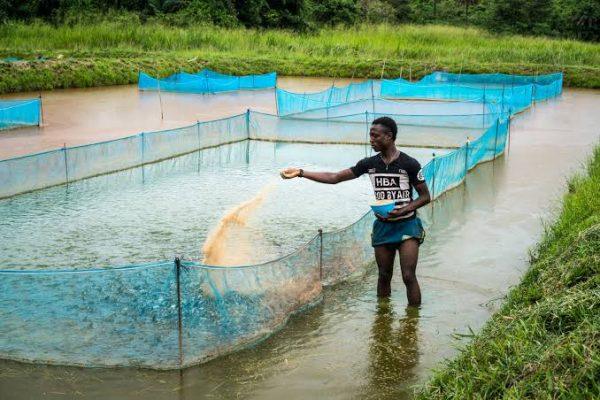
Water is arguably the most important factor affecting fish performance and the general aquatic production system. Without a reliable and clean water supply, no fish farming operation, regardless of scale or resources, can function effectively or produce sustainably.
All fish species, regardless of their nature or size, require water to survive. Fish cannot be raised without adequate water from a dependable source, and the quality of that water is just as critical as its availability to the overall success of your farm.
Ensure you construct your fish ponds in an area where clean water is available around the clock. The two most critical considerations here are water availability and water quality, both of which must meet acceptable standards for healthy fish pond construction and sustainable management.
Water availability means ensuring adequate volumes of water are consistently accessible for all commercial fish farming activities. Before selecting a pond site, carefully evaluate the source and quantity of water available to support all your aquaculture facility needs throughout the entire year.
A thorough investigation of both water quality and quantity must be conducted before finalizing any farm site selection. Choosing a site based solely on water availability without testing water quality is a risky move that can result in the total loss of your entire stock through contamination.
Water sources for fish farming and aquaculture activities have been categorized into six main types. Understanding which source you rely on will help you assess its reliability, potential quality risks, and any treatment measures needed before introducing it into your fish pond system.
- Ground Water
- Springs
- Surface runoff
- Rivers, streams or lakes
- Municipal
- Wells
Each water source carries its own advantages and risks. For example, groundwater is generally clean but may be limited in volume, while rivers offer abundance but may carry pollutants, seasonal variation, and unpredictable flooding risks that must be carefully managed to protect your stock.
Read Also: Factors to Consider when Selecting your Fish Farming Site
4. Physical Properties of Water
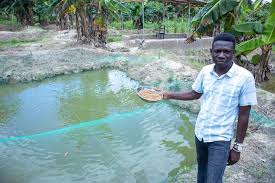
Water is the single most essential resource in fish farming, and even a person with no farming background understands that fish cannot survive without it. However, the water used for fish farming must meet specific physical standards that go well beyond simply being wet and available.
The water you use for fish farming must pass acceptable physical property tests that are critical to the healthy growth and consistent production of your fish. Not all water sources meet these standards, which is why water quality testing is a non-negotiable step before any pond is filled.
Key physical properties of water that support healthy fish farming include normal temperature ranges and appropriate concentrations of suspended solids. Monitoring and managing these physical parameters consistently contributes to the general health and growth of all fish species in your pond throughout the production cycle.
Turbidity, which refers to the cloudiness of water, is another physical property requiring close monitoring. Excessive turbidity can reduce oxygen levels, block sunlight needed for natural food organisms, and stress your fish, ultimately reducing their growth rate and increasing their vulnerability to disease outbreaks.
Water color is also a physical quality indicator worth monitoring regularly. Water that appears brown, green, or dark may indicate the presence of organic matter, algae blooms, or chemical runoff, all of which can negatively affect your fish and must be addressed with proper and timely pond management.
Dissolved oxygen is one of the most critical physical water parameters for fish survival and health. Insufficient oxygen in pond water can cause fish to suffocate, triggering mass mortality events that can wipe out an entire stocking cycle and result in devastating and very avoidable financial losses.
Regular water testing and pond aeration systems are essential tools for maintaining optimal physical water conditions. Investing in simple water testing kits and aeration equipment from the start of your business can save you from far more costly losses caused by preventable poor water quality management over time.
5. Chemical Properties of Water
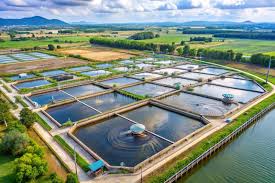
Beyond physical properties, the chemical composition of water used for fish farming plays an equally important role in fish health and production. Water that appears clean to the naked eye may still contain harmful chemical imbalances that quietly and negatively affect your fish stock.
Important chemical parameters for fish growth include water pH, hardness, and alkalinity. Research shows that many adverse chemical conditions found in fish farms are directly linked to a lack of background information on the source of water used for the farming operation from the start.
Water pH measures how acidic or alkaline the water is on a scale of 0 to 14. Most freshwater fish, including catfish, thrive in a pH range of 6.5 to 8.5, and water outside this range will stress your fish, weaken immunity, and reduce their growth rate and maturity timeline significantly.
Water hardness refers to the concentration of dissolved minerals, particularly calcium and magnesium. Appropriate hardness levels support healthy bone development and gill function, while extremely soft or hard water can impair metabolic processes and reduce overall fish health and resilience throughout the production period.
Alkalinity buffers water against sudden pH swings, which can be fatal to fish if they occur too rapidly. Maintaining adequate alkalinity stabilizes the chemical environment of your pond and protects your fish from stress caused by unpredictable fluctuations in the water chemistry throughout the entire farming cycle.
Ammonia and nitrite levels are additional chemical parameters that must be carefully monitored in fish ponds. These compounds accumulate from fish waste and uneaten feed, and their buildup to toxic levels is one of the most common causes of sudden and unexpected fish loss in ponds.
Always conduct a comprehensive chemical water analysis before selecting a farm site and conduct repeat tests regularly throughout the production cycle. Partnering with an aquaculture expert to interpret your water test results will help you make informed decisions that protect your stock and maximize farm productivity.
6. Climatic Factors
The climatic conditions of any environment are shaped by a host of interacting factors including rainfall patterns, wind, humidity, and solar radiation. These conditions directly influence the overall productivity of your fish farm and must be considered before finalizing site selection and stocking decisions.
The global climate system and changes occurring within local environments can also significantly influence fish farming operations. Shifts in weather patterns affect water temperature, availability, and quality, all of which are foundational to the success of any aquaculture business regardless of its size or location.
Climate change affects the distribution and productivity of both marine and freshwater fish species. Coastal fish farmers and those near rivers or flood-prone areas are especially exposed to the effects of rising sea levels and increasingly frequent extreme weather events that disrupt normal farming conditions.
Changes in rainfall patterns and overall water usage also directly impact inland and aquaculture fisheries. Prolonged dry seasons can reduce water availability, while heavy rainy seasons can cause pond overflow, flooding, and fish escapes, all of which threaten your stock and farm infrastructure significantly.
Seasonal temperature variations affect fish metabolism, feeding patterns, and reproduction cycles. Understanding the local climate calendar and aligning your stocking and harvesting schedules with favorable weather conditions can significantly improve your farm's overall output and profitability per production cycle each year.
Extreme heat increases evaporation rates in ponds, concentrates harmful substances, and reduces dissolved oxygen to dangerous levels. In contrast, unusually cold weather slows metabolism and growth rates, extending the time your fish need to reach market weight and increasing overall production costs significantly.
Design your fish farm with climate resilience in mind from the very beginning. This includes selecting pond locations away from flood-prone zones, building adequate drainage infrastructure, and having contingency plans for weather-related disruptions that could affect your production schedule and overall financial projections per season.
7. Fishing Mortality
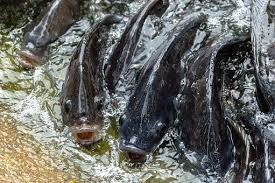
Fish mortality refers to fish death, a factor that can lead to the total collapse of a fish farming business if not appropriately managed from the beginning. Mortality in fisheries is used in population dynamics to account for the loss of fish stock occurring within any given farming cycle.
There are two types of mortality that can occur in fish farming, and understanding both is essential for developing effective prevention and management strategies that protect your stock and minimize financial losses throughout every season you operate your farm.
i. Natural mortality: This type involves the loss of fish due to natural causes such as predation, disease, cannibalism, pollution, and old age. These are all factors unrelated to deliberate fishing, making natural mortality the most common and often most damaging form of stock loss in grow-out pond systems.
ii. Fishing mortality: This refers to the intentional removal of fish from the pond through deliberate fishing activities using nets or other gear. While this is intentional at harvest, premature or uncontrolled fishing at non-harvest periods can disrupt your production plan and reduce your yield significantly.
Mortality as a fish farming factor has a direct impact on the extent to which a fishery can continue to operate profitably. If fish deaths occur continually without intervention, the business will inevitably fold as the number of fish available for harvest diminishes below economically viable levels.
Preventing natural mortality requires a proactive approach to fish health management. This includes regular water quality monitoring, timely disease treatment, proper stocking density, and eliminating environmental stressors that weaken fish immunity and increase vulnerability to infections, parasites, and cannibalistic behavior within the pond.
Investing in good-quality fingerlings from reputable hatcheries is one of the most effective ways to reduce early-stage mortality on your farm. Healthy, well-bred juveniles are more resilient, grow faster, and are far less susceptible to disease outbreaks that can wipe out significant portions of your stock in early weeks.
Keeping detailed mortality records is an important management practice many farmers overlook. Tracking when, how often, and under what conditions fish deaths occur helps you identify patterns, address underlying causes quickly, and make smarter decisions about protecting future stock in your fish pond across all production cycles.
Read Also: How to Control Cannibalism among Fishes
8. Ambient Temperature
Temperature refers to the degree of warmth or coldness in a given environment or body of water. Water temperature is a crucial fish farming factor that must never be neglected, as it directly affects both the growth rate of fish and the overall productivity of the entire production system.
Unlike warm-blooded mammals, fish are cold-blooded aquatic animals whose body temperature changes in direct response to the temperature of their surrounding environment. This means every biological and metabolic process occurring in your fish is constantly influenced by water temperature fluctuations in the pond.
The metabolism that takes place in the body of fish is greatly influenced by the temperature of the water they inhabit. Every physiological function, from digestion and nutrient absorption to immune response and reproduction, operates within a temperature-dependent range specific to each fish species being farmed.
There is a specific temperature range considered optimal for fish survival and growth. For African fish species such as catfish, the acceptable range is approximately 26°C to 32°C, and maintaining water within this range supports healthy feeding, fast growth, and strong catfish development from fingerling to harvest size.
Fish survival is bounded by both a lower and an upper temperature limit, within which an optimum growth range exists. Operating consistently within this optimal range means your fish will feed more actively, convert nutrients more efficiently, and reach market size faster, all of which directly improve your farm's profitability.
When temperature deviates significantly from the acceptable range, fish will exhibit reduced tolerance and a weakened immunological response. This makes them more vulnerable to disease and parasites, and if the deviation is extreme enough, it can lead to mass mortality across your entire pond stock without warning.
Fish behavior is also affected by ambient light levels, turbidity, barometric pressure, and changes in water levels caused by rainfall or flooding. Understanding the interplay of these environmental variables allows you to better anticipate and manage the conditions in your pond throughout the entire farming season.
Fish farming, like every other business, comes with its own set of challenges. However, these challenges are what push serious farmers to strive harder and build more disciplined operations. With patience, dedication, and the right steps, achieving consistent profit from fish farming is entirely within reach for any committed farmer.
Before starting your fish farming business, carefully evaluate all the factors that can affect your operations and research the best ways to manage each one. Comprehensive preparation and a thorough understanding of these factors will give you the strongest possible foundation for a profitable and long-lasting enterprise.
Summary on Factors to Consider Before Starting a Fish Farming Business
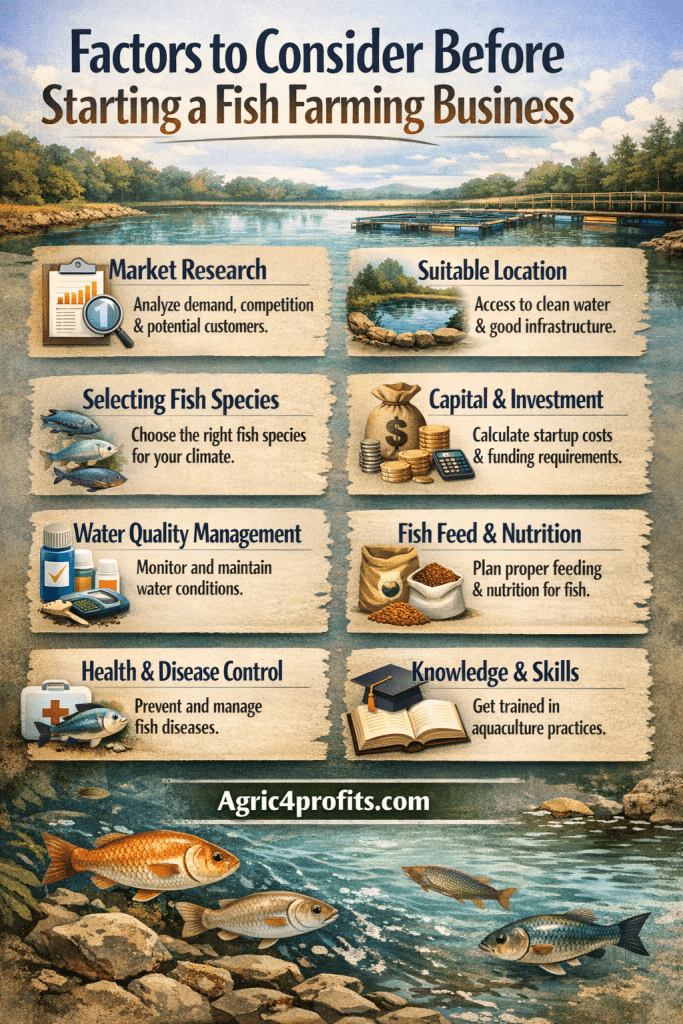
| Factor | Key Points |
| Environmental Factors | Location characteristics including pollution, predation risks, and surrounding land use directly impact fish survival and farm productivity. Conduct thorough site assessments before investing. |
| Water Availability | Fish ponds require a consistent 24-hour supply of clean water from reliable sources such as groundwater, springs, rivers, wells, or municipal supply systems. |
| Water Quality | Both physical and chemical properties of water must be tested and maintained. Contaminated or chemically imbalanced water can kill an entire fish stock rapidly. |
| Physical Water Properties | Key properties include temperature, turbidity, dissolved oxygen, color, and suspended solids concentration — all must fall within acceptable ranges for healthy fish. |
| Chemical Water Properties | pH, hardness, alkalinity, ammonia, and nitrite levels must be regularly monitored and controlled to prevent fish stress and mass mortality events in your pond. |
| Climatic Factors | Rainfall patterns, temperature swings, flooding, and drought all affect fish growth, pond water levels, and overall farm management schedules throughout the year. |
| Fish Mortality | Two types exist: natural (disease, predation, old age) and fishing (harvest-related). Both must be understood and controlled to sustain a profitable farming operation. |
| Ambient Temperature | Fish are cold-blooded; optimal temperature for African species is 26°C–32°C. Deviations reduce growth, increase disease vulnerability, and can trigger mass mortality events. |
| Financial Readiness | Aim to have 70–75% of total startup capital ready before stocking. Pond construction costs are separate and typically spread across multiple production years. |
| Knowledge Acquisition | Learn from professionals and online resources before starting. Hands-on training with experienced fish farmers is strongly recommended for practical, real-world farming insight. |
Frequently Asked Questions About Factors to Consider Before Starting a Fish Farming Business
1. What is the most important factor to consider before starting a fish farming business?
Water quality and availability are arguably the most critical factors. Without a consistent supply of clean, chemically balanced water, fish cannot survive or grow profitably. Every other preparation becomes irrelevant without a reliable and suitable water source confirmed before stocking.
2. How much money do I need before I can start a fish farming business?
You can begin with 70 to 75 percent of the total estimated capital, provided the remaining funds will be available when your fish need feed and care. Pond construction costs are typically spread over several production years rather than paid entirely upfront before starting operations.
3. How does water temperature affect fish farming?
Fish are cold-blooded and their body temperature mirrors their environment. Water that is too cold or too hot slows metabolism, reduces immunity, limits growth, and can cause mass mortality. For African catfish, the ideal temperature range is between 26°C and 32°C for optimal performance.
4. What are the best water sources for fish farming?
The six recognized water sources for aquaculture are groundwater, springs, surface runoff, rivers or streams, municipal supply, and wells. Each source has its own quality and availability profile, and a thorough quality test should always be done before any source is used for fish farming.
5. What causes fish mortality in a fish pond?
Fish mortality is caused by two main factors: natural causes such as disease, predation, pollution, and cannibalism, and fishing mortality caused by harvesting activities. Controlling natural mortality through water quality management, proper feeding, and disease prevention is essential for protecting your stock investment.
6. How does climate change affect fish farming?
Climate change affects fish distribution, water temperature, rainfall patterns, and water levels. For inland pond-based fish farmers, this can mean unpredictable flooding, seasonal water scarcity, and temperature extremes that stress fish and disrupt feeding, growth, and reproduction cycles throughout the year.
7. Why are chemical properties of water important in fish farming?
Chemical properties such as pH, hardness, alkalinity, ammonia, and nitrite levels directly affect fish health. Imbalanced chemical parameters weaken fish immunity, reduce growth rates, and in severe cases cause mass mortality. Regular water chemistry testing allows you to correct problems before they become catastrophic and costly.
8. Can I learn fish farming online or do I need physical training?
Both online learning and physical training are valuable, but hands-on training with an experienced fish farmer is strongly recommended. Physical training allows you to ask real-time questions, observe practical operations, and gain contextual knowledge that online courses alone simply cannot replicate for a new and inexperienced farmer.
9. How does the environment affect fish farming productivity?
Environmental factors such as location, surrounding land use, pollution levels, and natural predators all impact fish survival and farm output. Conducting a thorough environmental assessment before establishing your farm helps identify and mitigate risks that could otherwise undermine your entire fish farming investment from the beginning.
10. What physical water properties should I monitor in my fish pond?
Key physical water properties to monitor include temperature, turbidity, dissolved oxygen concentration, color, and suspended solid levels. Regular monitoring of these parameters ensures your pond environment remains within the safe and productive range required for healthy fish growth and consistent farm output per season.
Do you have any questions, suggestions, or contributions? If so, please feel free to use the comment box below to share your thoughts. We also encourage you to kindly share this information with others who might benefit from it. Since we can’t reach everyone at once, we truly appreciate your help in spreading the word. Thank you very much for your support and for sharing!
Read Also: The Benefits of Bamboo: A Guide for Beginners
🌱 Take Your Farming Further With Agric4Profits
Based on what you just read, here are free resources and products from Agric4Profits that can help your farm right now:
- 🛒 Visit Our Marketplace — Organic neem oil, bio-pesticides, seeds and farming products
- 📚 Read Premium Content — Advanced guides for serious and profitable farming
- 🎓 Join Our Free Academy — Structured free training for farmers across Africa
- 🔧 Use Our Free Farm Tools — Profit calculators, feed formulation, pest identifier and more
- 💬 Join Our Farming Community — Connect with farmers across all 54 African countries
- ❓ Ask a Farming Question — Get answers from experienced farmers and agricultural experts
Please cite this content in academic work, research, or publications.