


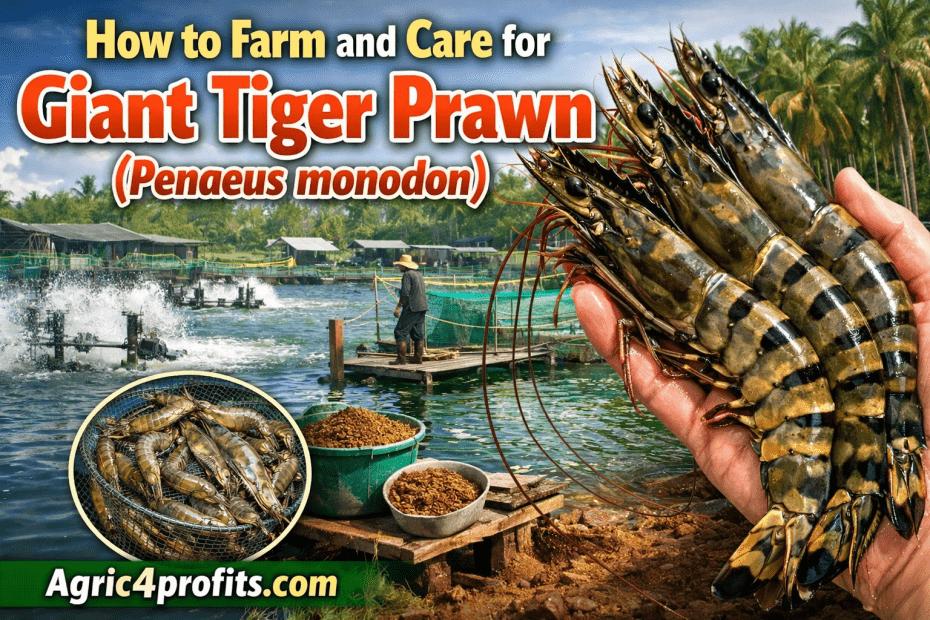
Giant tiger prawn, scientifically known as Penaeus monodon, is one of the most commercially valuable prawn species in the world. Found in warm coastal waters across Asia, Africa, and the Indo-Pacific region, this species has attracted serious attention from farmers and aquaculture investors alike.
These prawns grow up to 36 centimeters in length and have a robust body with brown to greenish-blue coloration. Their most recognizable feature is their tiger-like stripe pattern. They are strong swimmers, using their muscular tails to move quickly through the water.
Giant tiger prawns are opportunistic predators. They feed on small fish, crustaceans, and other organic matter. This feeding behavior supports rapid growth, which is one of the reasons they are so attractive for commercial farming.
Their life cycle involves several distinct stages, starting from larvae, progressing to post-larvae, and eventually reaching adulthood. Each stage requires specific care and environmental conditions. Understanding this cycle is key to running a successful farm.
Despite their economic value, these prawns are not without challenges. Disease outbreaks, water quality issues, and environmental changes can all affect production. Farmers who understand the biology of Penaeus monodon and apply sound management practices tend to achieve the best results.
Read Also: Breeds of Sheep and Breed Characteristics for Selecting Sheep
🌿 Go Organic on Your Farm: Instead of harmful chemical pesticides and fertilisers, try our organic farming products — including neem oil spray, bio-pesticides, natural plant treatments, organic seeds and seedlings, suckers, and many more organic products that are safe for your health, your family, your soil and your harvest. Shop Now →
1. Selecting the Right Giant Tiger Prawn Species for Your Farm
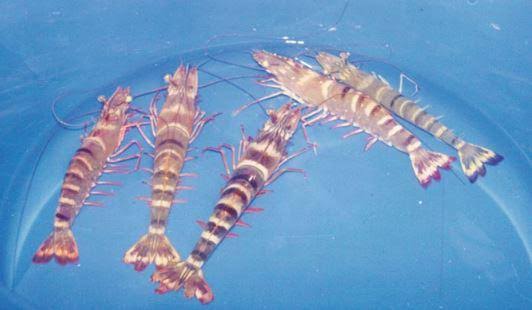
Choosing the right stock is the first major decision you will make as a prawn farmer. The quality of your seedstock directly influences the productivity of your entire operation.
Start by assessing your farm's environmental conditions. Giant tiger prawns need warm water with specific salinity and temperature ranges. Match your local conditions to the requirements of the species before investing in stock.
Think about the size of prawns you want to produce. Different markets prefer different sizes, so knowing your target buyers in advance helps you make a better selection.
Genetic diversity matters too. A diverse gene pool makes your stock more resilient to disease and environmental stress. Source your prawns from reputable hatcheries that maintain healthy breeding programs.
🔧 Free Farm Tool Available: Use our free Agric4Profits Farm Tools to calculate your farm profits, formulate feeds, identify pests and diseases on both your crops and animal farms, plan your planting and harvesting season, including many more farm tasks to get free expert advice and recommendations — completely free, no registration required. Access Free Tools →
Look for signs of good health when selecting stock. Active movement, vibrant color, and intact appendages are positive indicators. Avoid prawns that appear sluggish or show physical damage.
Also consider reproductive potential. If you plan to breed on your farm, choose stock that has shown good reproductive performance. Consult local aquaculture experts before making your final selection.
2. Setting Up Your Giant Tiger Prawn Fish Farm
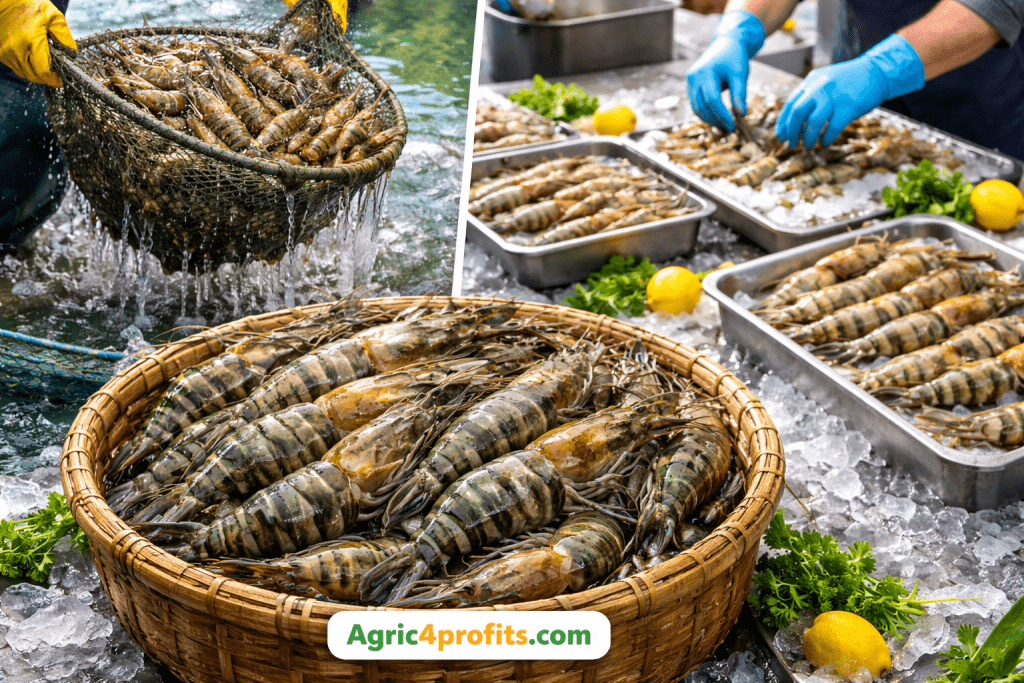
Setting up a prawn farm requires planning across several areas. Rushing this stage often leads to costly problems later.
The first thing to sort out is your site. Choose a coastal location with warm water, good drainage, and easy access to seawater. Make sure there is enough land for pond construction and future expansion.
Once you have your site, work with aquaculture professionals to design your ponds. Consider depth, shape, and size carefully. Install proper fencing to keep out unwanted intruders and protect your stock.
💬 Have a Farming Question? Join thousands of farmers across Africa on the Agric4Profits Community — ask questions, share experiences and connect with agricultural experts. It is completely free. Ask Your Question Now →
Water management comes next. Set up a reliable supply system with circulation and aeration equipment. Monitor temperature, salinity, and oxygen levels consistently to keep your prawns in good condition.
When it comes to seedstock, source healthy, genetically diverse prawns from trusted hatcheries. Prioritize disease resistance and choose sizes that match your target market. Do not cut corners here, as poor seedstock sets a weak foundation for the whole operation.
Feed your prawns a balanced mix of commercial pellets and natural food sources. Avoid overfeeding, since uneaten feed breaks down and degrades water quality fast. Check your prawns regularly for signs of illness or stress and work with aquaculture vets when problems arise.
Invest in reliable water testing equipment and use it daily. Track dissolved oxygen, ammonia, salinity, and temperature as core parts of your routine. Plan your harvest schedule around market demand and handle prawns carefully during collection to avoid injury.
Build relationships with buyers, restaurants, and distributors well before your first harvest. Attend training programs and stay connected with the broader aquaculture community. The industry changes constantly, and staying informed keeps your farm competitive over the long run.
3. Nutrition Essentials: Feeding Your Giant Tiger Prawn for Optimal Growth
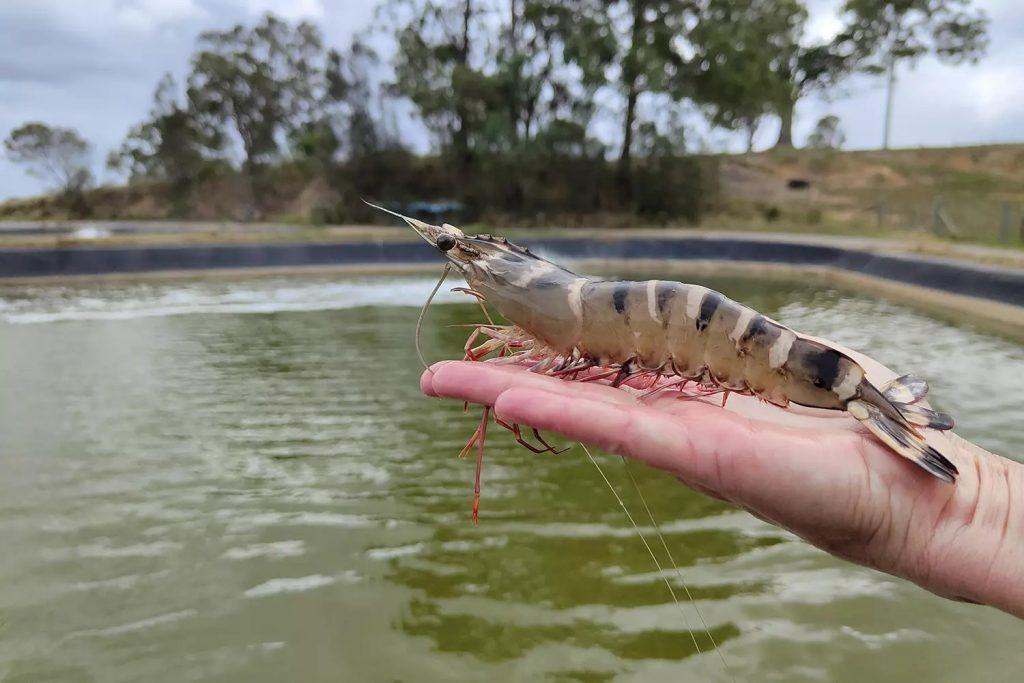
Feeding is one of the most critical aspects of prawn farming. Get it right and your prawns grow fast and stay healthy. Get it wrong and you will face slow growth, water quality problems, and financial losses.
Giant tiger prawns are omnivores. They eat both plant and animal matter, which gives you flexibility when formulating their diet. Commercial prawn pellets designed for Penaeus monodon contain proteins, lipids, carbohydrates, vitamins, and minerals in proportions that match their growth needs.
Protein is especially important. It supports muscle development and tissue repair. Pellets alone may not always be enough, so supplementing with natural food sources like small fish and crustaceans improves dietary diversity and overall health.
Watch how your prawns eat. If feed is left uneaten, you may be overfeeding. If prawns appear thin or slow-growing, they likely need more. Regular sampling and tissue analysis help you make smarter feeding decisions over time.
📖 Want to Go Deeper on This Topic?
Our expert agricultural ebooks cover poultry, fish farming, different crops production, snail farming, organic farming, mushrooms, sheep, cattle, flowers, pig farming, goat farming, agribusiness, etc. in practical step-by-step detail — written by agricultural professionals for African farmers.
Browse All Farming Ebooks →Water quality and nutrition are closely linked. Poor water makes it harder for prawns to absorb nutrients properly, which leads to poor growth and higher disease risk. Keep your water clean and well-oxygenated at all times.
Prawns also eat differently across seasons. Cooler months tend to slow their feeding activity. Adjusting your schedule to match seasonal changes ensures their nutritional needs are consistently met. Working with a nutritionist or aquaculture specialist can help you build a feeding plan that holds up throughout the year.
4. Disease Prevention and Control in Giant Tiger Prawn Fish Farming
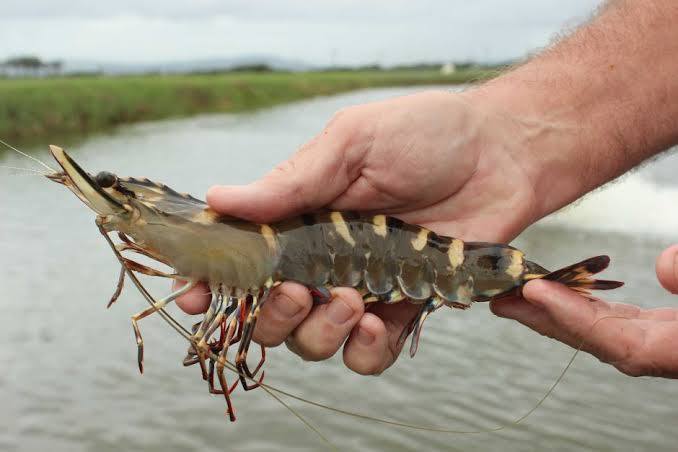
Disease is one of the biggest threats to any prawn farm. Prevention is far more effective and cheaper than treatment, so building strong habits early matters a lot.
Good water quality is your first line of defense. When conditions deteriorate, prawns become stressed and their immune systems weaken. Monitor your ponds daily and act quickly when any parameter shifts outside the acceptable range.
Biosecurity is equally important. Control who and what enters your farm. Disinfect equipment regularly, screen all incoming stock, and limit unnecessary access to pond areas. These steps may seem simple but they make a real difference in keeping pathogens out.
Quarantine all new prawns before introducing them to existing stock. A quarantine period of one to two weeks gives you time to observe and catch illness before it spreads to the rest of your population. Never skip this step, even when you trust your supplier.
Make health monitoring part of your daily routine. Watch for changes in feeding behavior, unusual movement patterns, or any physical abnormalities. Catching problems early saves you stock, time, and money.
Nutrition and disease resistance are directly connected. A well-nourished prawn has a stronger immune system. Adding probiotics to the diet can support gut health and reduce your farm's reliance on antibiotics over time.
Vaccination research for prawn diseases continues to develop. Stay informed about new developments in this area and work closely with veterinary professionals to build a disease management plan that fits the specific conditions of your farm.
Read Also: Strategies for Improving Cattle Production
5. Giant Tiger Prawn Breeding Techniques
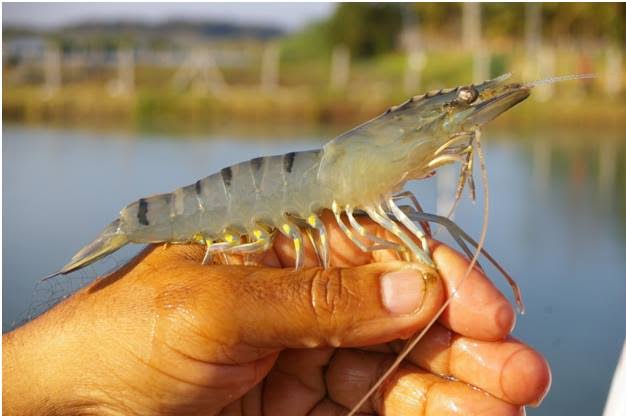
Breeding giant tiger prawns in captivity takes patience and attention to detail. The goal is to replicate natural conditions as closely as possible so the prawns feel comfortable enough to reproduce.
Maintain warm, stable water temperatures in your breeding tanks. Salinity and dissolved oxygen levels also need to stay consistent. These environmental cues signal to the prawns that conditions are right for reproduction.
Understanding the life cycle stages is fundamental. Larvae need different conditions than post-larvae and adults. Each stage requires specific substrates, appropriate feeds, and carefully managed water parameters. Skipping any of these details affects survival rates at every stage.
Feeding your breeding stock a nutrient-rich diet is non-negotiable. Good nutrition supports the development of reproductive organs and the production of healthy, viable eggs. Do not compromise on feed quality when working with broodstock.
Photoperiod management is a useful technique for triggering spawning. Adjusting the light-dark cycle to mimic natural sunrise and sunset patterns can stimulate reproductive activity in captive environments. This is especially helpful when natural light cues are limited or inconsistent.
Selective breeding helps improve your stock over time. Pair prawns that demonstrate the best size, growth rate, and disease resistance. Over successive breeding cycles, this practice gradually raises the overall quality of your population.
Once eggs are laid, protecting the larvae is critical. Maintain strict water quality, provide feeds that match the larvae's developmental stage, and take steps to prevent cannibalism among juveniles. The survival rate of your larvae directly determines the output of your entire farm.
6. Harvesting and Processing Your Giant Tiger Prawn Yield
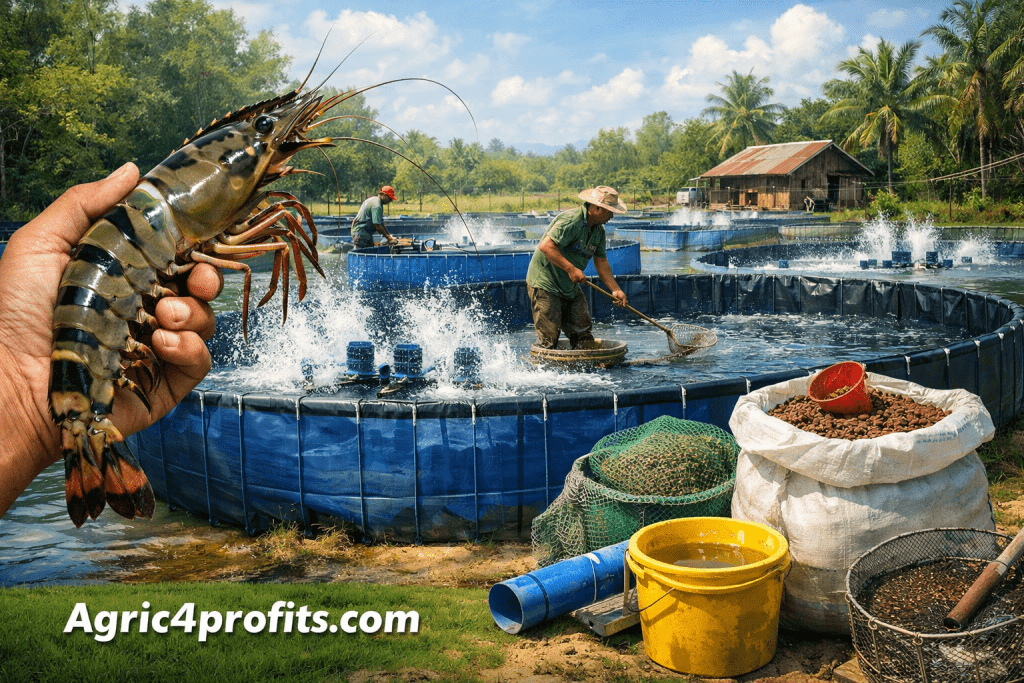
Harvest timing matters more than most new farmers realize. The right window depends on prawn size, market demand, and seasonal conditions. Missing it can cost you significantly in both quality and price.
Use proper nets and equipment to keep stress levels low during the harvest process. Stressed prawns produce lower quality meat and deteriorate faster after capture. Work efficiently, handle the stock with care, and avoid any rough treatment during collection.
Move harvested prawns to your processing facility as quickly as possible. Provide aeration during transport and avoid overcrowding the containers. Speed and careful handling at this stage are what protect the freshness of your product.
At the processing facility, sort prawns by size and quality right away. Then chill or freeze them immediately to stop bacterial growth. Rapid cooling is what preserves the texture, appearance, and overall appeal of the final product.
Clean and devein each prawn before packaging. This step improves both presentation and the culinary experience for the end consumer. Vacuum sealing is the most effective packaging method for extending shelf life and protecting quality during distribution.
Run quality control checks at every stage of processing. Only send top-grade prawns to market. Buyers notice consistency, and delivering a reliable product is what builds long-term relationships with distributors and retailers.
7. Marketing Strategies for Selling Your Giant Tiger Prawn Products
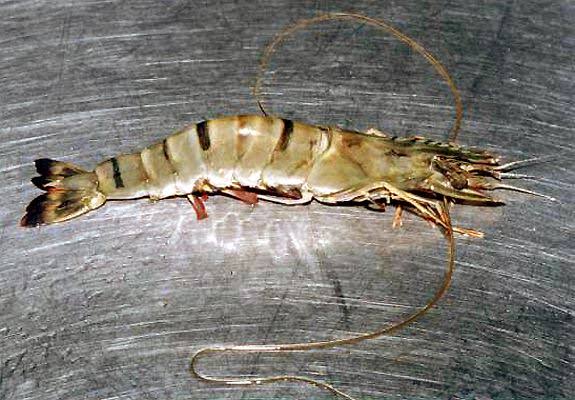
A good product without a clear marketing plan rarely succeeds. Start building your market connections well before your first harvest so you are not scrambling for buyers when the time comes.
Connect with distributors, restaurants, and retailers early. These relationships take time to develop and trust takes longer still. The sooner you start, the more stable your sales pipeline will be when your prawns are ready.
Attend seafood trade shows and local food events whenever possible. These are practical settings for meeting buyers, chefs, and industry contacts face to face. Personal connections made at events often lead to better business outcomes than cold outreach ever will.
Build a simple but professional online presence. A website showing your products, farming practices, and contact details helps buyers find and trust you. Use social media to share farm updates, cooking ideas, and behind-the-scenes content that keeps your audience engaged.
Sustainability certifications like ASC or BAP are worth pursuing. Many eco-conscious buyers and large retailers now require them. Certification also signals credibility and opens doors to premium market segments that other farms cannot access.
Partnering with chefs and food influencers is another practical strategy. When a respected chef features your prawns on their menu, it sends a strong signal of quality to consumers. That kind of endorsement is hard to replicate through advertising alone.
Keep a close eye on market trends and shift your approach when needed. Consumer preferences change, and the farms that adapt fastest tend to hold their market position the longest.
8. Sustainability Practices in Giant Tiger Prawn Fish Farming
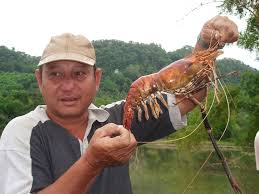
Sustainable farming is not just an ethical choice. It is a practical business decision that protects your operation from regulatory pressure, reputational risk, and long-term environmental damage.
Water efficiency is one of the most important areas to address. Recirculating systems and water reuse practices reduce overall consumption and cut the risk of nutrient runoff into surrounding ecosystems. Less waste also lowers your operating costs over time.
Site selection matters greatly for sustainability. Avoid ecologically sensitive areas such as mangrove forests and high-biodiversity coastal zones. Responsible location choices prevent habitat disruption and keep your farm on the right side of environmental regulations.
Reducing reliance on wild-caught fish in your feed formulations is another important step. Alternative protein sources and by-products from sustainable fisheries can replace traditional fish meal without compromising prawn health or growth rates.
Antibiotic use should be kept to a minimum. Rely instead on strong biosecurity practices, regular health monitoring, and probiotic supplementation. Responsible antibiotic management protects nearby aquatic ecosystems and makes your product more competitive in international markets.
Engaging with your local community builds goodwill and reduces conflict. Involve nearby residents and traditional fishers in decisions that affect shared water resources. A farm that operates with transparency and community respect tends to run more smoothly over the long term.
Pursuing formal certification through programs like ASC provides independent verification of your sustainability claims. This matters to buyers who need documented proof before committing to a supplier.
9. Common Issues and Solutions in Giant Tiger Prawn Fish Farming
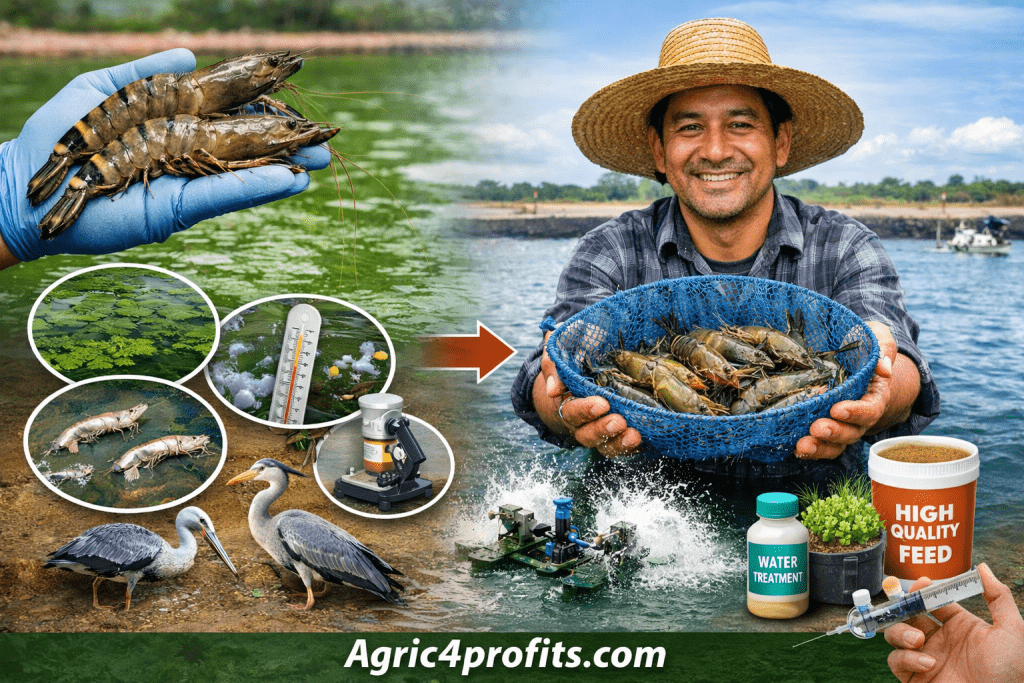
Every prawn farm faces challenges at some point. Knowing what to expect and having a plan ready makes the difference between a manageable setback and a serious loss.
Disease outbreaks are among the most damaging problems a farmer can face. They spread quickly and cause significant economic losses in a short time. The best response is prevention through strict biosecurity, consistent health monitoring, and fast veterinary intervention when symptoms first appear.
Poor water quality is another common issue that weakens prawns and slows growth. The solution is daily monitoring of key parameters including temperature, salinity, dissolved oxygen, and ammonia. Strong filtration, regular aeration, and timely water exchange keep conditions within a safe range.
Overcrowding puts pressure on your entire pond system. It raises stress levels, increases competition for resources, and makes disease spread much easier. Monitoring stocking densities carefully and adjusting them as prawns grow is the most straightforward way to keep this under control.
Inconsistent or poorly managed feeding leads to both health problems and water quality issues. A structured feeding schedule, combined with regular observation of how much the prawns are actually consuming, helps you stay in control of both nutrition and pond conditions.
Reproductive challenges can quietly undermine long-term farm viability. Low spawn rates or poor larvae survival reduce your ability to maintain production. Photoperiod management, selective breeding, and strong broodstock nutrition are the most effective tools for improving reproductive outcomes.
Breaking into competitive markets and finding reliable buyers is a real challenge, especially for newer farms. Building strong buyer relationships, developing an online presence, and pursuing quality certifications all help differentiate your product in a crowded space.
Environmental impact is a concern that regulators and consumers are paying more attention to than ever. Farms that ignore habitat protection, waste management, and community relations eventually face consequences. Proactive engagement with local communities and regulatory bodies is always the better path.
Summary on How to Farm and Care for Giant Tiger Prawn (Penaeus monodon)

| Topic | Key Points |
|---|---|
| Species Overview | Penaeus monodon; grows up to 36cm; omnivorous; prefers warm coastal waters |
| Stock Selection | Consider water conditions, size, genetic diversity, health, and reproductive capacity |
| Farm Setup | Site selection, pond design, water management, seedstock, feeding, monitoring, harvesting, marketing |
| Nutrition | Balanced pellets plus natural feed; monitor feeding behavior; link nutrition to water quality |
| Disease Prevention | Biosecurity, water quality, quarantine, health monitoring, probiotics, vaccination |
| Breeding | Mimic natural conditions; manage photoperiod; selective breeding; protect larvae |
| Harvesting | Minimize stress; chill quickly; sort, clean, devein, and vacuum seal before distribution |
| Marketing | Build buyer relationships; go online; pursue certifications; partner with chefs |
| Sustainability | Efficient water use; responsible site selection; reduce antibiotics; pursue ASC/BAP certification |
| Common Issues | Disease, water quality, overcrowding, feeding, reproduction, market access, environmental impact |
Frequently Asked Questions About How to Farm and Care for Giant Tiger Prawn (Penaeus monodon)
1. What is the ideal water temperature for farming giant tiger prawns?
Giant tiger prawns thrive in water temperatures between 23°C and 30°C. Temperatures outside this range can slow growth and increase disease risk.
2. How long does it take for giant tiger prawns to reach harvest size?
Under good conditions, they typically reach market size in four to six months from post-larvae stocking.
3. What do giant tiger prawns eat in a farm setting?
They eat commercial prawn pellets formulated for Penaeus monodon, supplemented with natural food sources like small fish and crustaceans.
4. How do I prevent disease outbreaks in my prawn farm?
Maintain good water quality, apply strict biosecurity measures, quarantine new stock, and monitor your prawns daily for signs of illness.
5. Can giant tiger prawns be farmed in freshwater?
No. They require brackish to marine conditions. Freshwater environments are not suitable for their growth or survival.
6. What certifications are useful for selling farmed giant tiger prawns?
The Aquaculture Stewardship Council (ASC) and Best Aquaculture Practices (BAP) certifications are widely recognized and help open doors to international and premium markets.
7. How do I select good quality seedstock for my farm?
Look for active movement, vibrant coloration, and intact appendages, and source from reputable hatcheries with documented health and genetic records.
8. What is the stocking density for giant tiger prawn ponds?
Typical stocking densities range from 10 to 30 post-larvae per square meter, depending on pond infrastructure and water management capacity.
9. How are giant tiger prawns harvested?
They are harvested using specialized nets, then transported quickly to a chilling or processing facility to preserve freshness and quality.
10. Is giant tiger prawn farming profitable?
Yes, when managed well. Their high market value, strong demand in seafood markets, and relatively fast growth cycle make them a commercially attractive species.
Do you have any questions, suggestions, or contributions? If so, please feel free to use the comment box below to share your thoughts. We also encourage you to kindly share this information with others who might benefit from it. Since we can’t reach everyone at once, we truly appreciate your help in spreading the word. Thank you very much for your support and for sharing!
Read Also: Environmental Management Tips for Businesses
🌱 Take Your Farming Further With Agric4Profits
Based on what you just read, here are free resources and products from Agric4Profits that can help your farm right now:
- 🛒 Visit Our Marketplace — Organic neem oil, bio-pesticides, seeds and farming products
- 📚 Read Premium Content — Advanced guides for serious and profitable farming
- 🎓 Join Our Free Academy — Structured free training for farmers across Africa
- 🔧 Use Our Free Farm Tools — Profit calculators, feed formulation, pest identifier and more
- 💬 Join Our Farming Community — Connect with farmers across all 54 African countries
- ❓ Ask a Farming Question — Get answers from experienced farmers and agricultural experts
Please cite this content in academic work, research, or publications.