


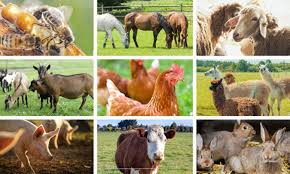
Animal production is an aspect of agricultural production. Agriculture is simply defined as the art and science of crop, animal, and fibre production for human consumption. As a branch of agriculture, animal production deals with the production of domesticated animals other than pets and game animals.
As a subject matter, it has roots in the natural sciences not only by the application o basic principles of science but also i theoretical foundations. Thus, animal production relate in certain aspect to zoology, pathology, genetics, microbiology, botany, biochemistry, chemistry, physics, statistics, mathematical and pharmaceutical sciences.
Since animal production forms a central theme in the provision of essential human needs, the evolution of its practices over time has benefited from skills and knowledge acquired through cultural and scientific techniques.
Both traditional and scientific skills have served useful purposes in the development and advancement of animal production. While the traditional technique often evolves slowly over several decades; is conservative; limited to a locality or group of people and possibly extended by ancestral linkage; the scientific techniques have proven to be more versatile, and considered a better alternative approach.
It is more dependable in conveying knowledge and skills from an individual or from one place to another. Science-based skills much more than cultural skills are indeed more sustainable and profitable for individual farmers and nations applying them in their production activities or systems.
Far beyond meeting social, economic, nutritional and profitability targets application of scientific principles in animal production has sustained productivity to barely satisfy the present level
of world demands for animal products.
🌿 Go Organic on Your Farm: Instead of harmful chemical pesticides and fertilisers, try our organic farming products — including neem oil spray, bio-pesticides, natural plant treatments, organic seeds and seedlings, suckers, and many more organic products that are safe for your health, your family, your soil and your harvest. Shop Now →
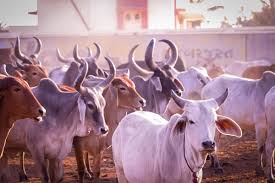
Under the traditional practice and knowledge system, taboos, custom and beliefs are associated with production, processing and consumption of livestock and livestock products. The Hindus religious sect of India, for example, forbids the slaughter of cattle and consumption of beef.
Similarly in Nigeria, the Fulani cattle owners derive social dignity in terms of number or heads of cattle owned by an individual rather than the productivity of the herd.
In addition, same herders are traditionally bound to a specific coat colour or breed of animals inherited from their ancestors and may not permit introduction of a different coat colour or breed even if the latter offers superior desirable traits.
Acceptance of certain beneficial technologies for adoption has suffered from rigid adherence to certain traditional beliefs or practices notwithstanding the potential advantages they hold. The use of artificial insemination as a cheaper means of cross-breeding exotic (foreign) bulls with the local breeds of cows for instance was resisted and rejected by local herdsmen because they considered it un-natural to inseminate animals by artificial method and processes.
🔧 Free Farm Tool Available: Use our free Agric4Profits Farm Tools to calculate your farm profits, formulate feeds, identify pests and diseases on both your crops and animal farms, plan your planting and harvesting season, including many more farm tasks to get free expert advice and recommendations — completely free, no registration required. Access Free Tools →
In some instances, the traditional skills have been of tremendous to support to the production and healthcare of animals especially in areas remote from access to orthodox drugs and healthcare services.
The use of herbs and bark of trees for disease treatment or to lessen reproductive difficulties has been shown to be effective. Indigenous knowledge has in recent time become an interesting subject of research study. However, limitations of extending the practice for wider adoption, ascertaining the quantity of active ingredient, determining the application rate or preserving such materials have constituted a major constraint, besides the slow rate of their discoveries.
The application of scientific principles and skills on the other hand has surpassed these limitations, and has greatly improved production and productivity of livestock with the aid of scientific principles; careful study of anatomy and physiology of the body systems of various
livestock species; formulation of different feed and nutrient requirements for varying production purposes or targets have been determined, and are in use.
On these principles diets are formulated and applied in accordance with body requirements of the class and specie of the animal.
In animal breeding, genetic studies have made provisions for crossing two or more breeds of animal with near predictable characteristics of the offspring, obtain higher hybrid vigour or determine how much of the character is heritable. Closely related to this is the artificial insemination technology which evolved from the accumulation of scientific knowledge on reproductive physiology and anatomy of animals.
💬 Have a Farming Question? Join thousands of farmers across Africa on the Agric4Profits Community — ask questions, share experiences and connect with agricultural experts. It is completely free. Ask Your Question Now →
It is possible to collect and extend genetic material from a productive and proven male animal to artificially inseminate several other female animals far away from the environment of the bull or its generation.
New advances in biotechnology application in animal production suggest production of several offspring’s from artificial initiation of stem cell division into many units, each of which is capable to grow into individual animal.
Several applications of scientific principles have evolved into skills and technologies with tremendous impact on improving animal production system, productivity and profitability.
One beauty of the application of science is the ease with which it can be extended over a wide geographical area, its potency to solve the problem being targeted and the assurance to bring results if the procedures are carefully followed as well as the fast rate of generating new discoveries.
Read Also: Reptiles and Birds: Species, Characteristics and their Economic Importance
🌱 Take Your Farming Further With Agric4Profits
Based on what you just read, here are free resources and products from Agric4Profits that can help your farm right now:
- 🛒 Visit Our Marketplace — Organic neem oil, bio-pesticides, seeds and farming products
- 📚 Read Premium Content — Advanced guides for serious and profitable farming
- 🎓 Join Our Free Academy — Structured free training for farmers across Africa
- 🔧 Use Our Free Farm Tools — Profit calculators, feed formulation, pest identifier and more
- 💬 Join Our Farming Community — Connect with farmers across all 54 African countries
- ❓ Ask a Farming Question — Get answers from experienced farmers and agricultural experts
Please cite this content in academic work, research, or publications.