


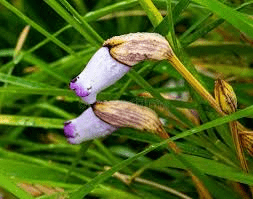
Aeginetia indica, commonly known as Indian Cancer Root, is an intriguing and unique plant that belongs to the family Orobanchaceae. This captivating plant is characterized by its distinct appearance and intriguing lifecycle.
Aeginetia indica showcases a semi-parasitic nature, which means it partially relies on other plants for nutrients. It is a perennial herb that typically grows to a height of about 30 to 60 centimeters. The plant’s stem is unbranched, erect, and covered with small, scale-like leaves.
The leaves of Aeginetia indica are reduced to small, triangular or scale-like structures that clasp the stem. These leaves are unique in their appearance and play a limited role in photosynthesis due to the plant’s parasitic nature.
The most captivating feature of Aeginetia indica is its beautiful and intricate flowers. The flowers are solitary, emerging from the axils of the scale-like leaves. They are bell-shaped and often display shades of white, cream, or pale yellow. The petals of the flower are fused, forming a tube-like structure with five lobes at the apex.
The flowers of Aeginetia indica are arranged in a terminal inflorescence. This inflorescence typically consists of a single flower arising from the stem’s tip. The flower’s structure is designed in a way that allows for specialized pollination mechanisms.
Aeginetia indica follows a unique lifecycle that involves a partial dependency on host plants for nutrients. It is considered a hemiparasite, as it can photosynthesize to some extent but also relies on the host plant’s root system for water and nutrients. The plant’s seeds are tiny and numerous, allowing them to be dispersed easily.
Aeginetia indica is native to various regions of Asia, including India, China, and parts of Southeast Asia. It is commonly found in moist and shaded habitats, such as forest understories, where it can establish connections with host plants for its nutrient needs.
Aeginetia indica has held cultural and medicinal importance in traditional systems of medicine. Its unique appearance and potential health benefits have made it a subject of interest among herbalists and researchers alike.
Read Also: Essential Characteristics of Soils
The Medicinal Health Benefits of Aeginetia indica (Indian Cancer Root)

1. Immune System Support: Aeginetia indica contains compounds that have been shown to boost the immune system’s response. This can help your body fend off infections more effectively and maintain overall health.
2. Anti-Inflammatory Effects: The plant’s active constituents possess anti-inflammatory properties, which can assist in reducing inflammation and discomfort in various parts of the body.
3. Pain Relief: Aeginetia indica has been traditionally used to alleviate pain. Its natural compounds may help reduce pain sensation, making it useful for managing different types of discomfort.
4. Antioxidant Power: Rich in antioxidants, Aeginetia indica helps combat oxidative stress, which is linked to various chronic diseases and aging. By reducing oxidative damage, this plant promotes cellular health.
5. Digestive Aid: The plant’s properties extend to aiding digestion. It can soothe the digestive tract, ease indigestion, and support overall digestive function.
6. Respiratory Health: Aeginetia indica may also have positive effects on respiratory health. It could help alleviate symptoms of respiratory issues and support clearer breathing.
7. Skin Health: The plant’s extracts might contribute to skin health by addressing issues such as irritation and inflammation. It may also help maintain a healthy complexion.
8. Stress Relief: Aeginetia indica is believed to possess calming effects that can help reduce stress and promote relaxation. This can have a positive impact on both mental and physical well-being.
9. Heart Health: Some studies suggest that Aeginetia indica may have properties that support cardiovascular health. It might help regulate blood pressure and improve overall heart function.
10. Anti-Cancer Potential: One of the most intriguing aspects of Aeginetia indica is its potential anti-cancer properties. While research is ongoing, some studies indicate that certain compounds in the plant could inhibit the growth of cancer cells.
Read Also: Wheat Palea: Economic Importance, Uses and By-Products
The Methods of Usage to Achieve the Provided Health Benefits of Aeginetia indica (Indian Cancer Root)
1. Infusions and Decoctions: Creating infusions or decoctions from Aeginetia indica is a common method of consumption. To prepare an infusion, simply steep the plant’s dried or fresh parts in hot water for a certain period. Decoctions involve simmering the plant material in water for a longer time. These liquids can be consumed as herbal teas, delivering the plant’s beneficial compounds to your body.
2. Poultices and Topical Applications: For skin-related issues or localized discomfort, poultices and topical applications can be effective. Crushed or ground Aeginetia indica parts can be mixed with a carrier substance (like oil or water) to create a paste. This paste is then applied directly to the affected area, allowing the plant’s properties to soothe and address the concern.
3. Herbal Preparations: Aeginetia indica can also be incorporated into various herbal preparations, such as tinctures, extracts, or salves. Tinctures involve extracting the plant’s active compounds using alcohol or a similar solvent. These concentrated extracts can be added to beverages or taken sublingually. Salves, on the other hand, are formulated by blending the plant with a base such as beeswax or coconut oil for topical use.
4. Culinary Uses: In some cultures, Aeginetia indica has been used in culinary practices. Its unique flavors and potential health benefits make it an interesting addition to certain dishes. However, it’s important to note that the plant’s semi-parasitic nature and potential for toxicity should be considered before incorporating it into food.
5. Herbal Supplements: Aeginetia indica supplements, in the form of capsules or tablets, are available in the market. These supplements provide a convenient way to consume the plant’s beneficial compounds. When opting for supplements, ensure they are sourced from reputable manufacturers and follow recommended dosage guidelines.
6. Traditional Practices: Traditional healers and herbalists have developed specific protocols for using Aeginetia indica based on their cultural knowledge. If you have access to traditional wisdom, consulting with knowledgeable practitioners can provide insights into time-tested methods of usage.
The Side Effects of Using Aeginetia indica Medicinal Plant
1. Gastrointestinal Discomfort: Excessive consumption of Aeginetia indica may lead to digestive issues such as nausea, vomiting, or abdominal discomfort. This is especially true if the plant is taken in high doses or if you have a sensitive stomach.
2. Allergic Reactions: Some individuals might develop allergic reactions when exposed to Aeginetia indica. Allergies can manifest as skin rashes, itching, swelling, or respiratory symptoms. If you notice any allergic signs, discontinue use immediately and seek medical attention.
3. Drug Interactions: Aeginetia indica could potentially interact with certain medications, including prescription drugs and over-the-counter supplements. If you are taking medications, consult your healthcare provider before using Aeginetia indica to prevent adverse interactions.
4. Toxicity Concerns: Due to its unique semi-parasitic nature, Aeginetia indica may contain compounds that could be toxic in large quantities. Overconsumption could lead to poisoning symptoms, so it’s essential to adhere to recommended dosages and usage guidelines.
5. Pregnancy and Nursing: Pregnant and nursing individuals should exercise caution when considering the use of Aeginetia indica. Limited research is available on its safety during these stages, so it’s advisable to consult a healthcare professional before using this plant.
6. Existing Medical Conditions: Individuals with pre-existing medical conditions, such as liver or kidney issues, should consult a healthcare provider before using Aeginetia indica. Certain compounds in the plant could potentially exacerbate these conditions.
7. Children and Infants: The safety of Aeginetia indica for children and infants hasn’t been well established. It’s best to avoid using this plant in these populations unless under the guidance of a qualified healthcare practitioner.
8. Photosensitivity: While not commonly reported, some plants can cause photosensitivity in certain individuals, making the skin more sensitive to sunlight. If you notice skin reactions after using Aeginetia indica and being exposed to sunlight, consider discontinuing use.
9. Individual Variability: Each person’s response to herbal remedies can vary widely. What works well for one individual might not have the same effects on another. It’s important to monitor your body’s reactions and adjust usage accordingly.
10. Lack of Clinical Evidence: Another potential “side effect” to consider is the lack of substantial clinical evidence regarding Aeginetia indica’s safety and efficacy. Limited research makes it challenging to fully understand its potential risks and benefits.
Nutritional Value of Aeginetia indica (Indian Cancer Root)

1. Carbohydrates: The tubers of Aeginetia indica likely contain carbohydrates, primarily in the form of starches, providing a potential energy source. These are used traditionally in small amounts, but specific quantities are not well-documented due to its parasitic nature and limited nutritional studies.
2. Fiber: Dietary fiber may be present in the stems and tubers, supporting digestive health and promoting gut health. Fiber aids in regulating bowel movements, inferred from its use in traditional remedies for stomach issues.
3. Protein: Trace amounts of protein are expected in the leaves and tubers, contributing to tissue repair, but A. indica is not a significant protein source due to its primary medicinal role and toxicity concerns.
4. Phenolic Compounds: The plant contains phenolic compounds, acting as antioxidants to reduce oxidative stress. These compounds support cellular health and may enhance its medicinal nutritional value.
5. Flavonoids: Flavonoids are present in the extracts, offering anti-inflammatory and antioxidant benefits, which support immune health when used in herbal preparations.
6. Alkaloids: Alkaloids, such as those common in Orobanchaceae family, are bioactive rather than nutritional, potentially influencing metabolic processes but requiring careful dosing due to toxicity.
7. Vitamins: Small amounts of vitamins, such as vitamin C, may be in the fresh parts, supporting immune function, inferred from related parasitic plants, but not well-studied.
8. Minerals (Potassium): Trace potassium is likely present, aiding electrolyte balance and nerve function, based on patterns in medicinal herbs from the region.
9. Saponins: Saponins may be found, potentially supporting immune health or antimicrobial effects, though their nutritional role is secondary.
10. Terpenoids: Terpenoids in the plant contribute to anti-inflammatory properties, enhancing medicinal value but not direct nutritional content.
The nutritional profile of Aeginetia indica is modest and poorly documented, with its primary value in traditional medicine due to bioactive compounds. As a root parasite, it lacks chlorophyll and relies on hosts, limiting its use as a food source, and potential toxicity requires caution.
Scientific Evidence and Case Studies on Aeginetia indica
1. Rao et al. (2010): This study investigated the antimicrobial activity of Aeginetia indica extracts against various bacteria and fungi. The extracts showed significant inhibition, particularly against Staphylococcus aureus, supporting its traditional use for infections (Rao, K. N., et al. (2010). Antimicrobial activity of Aeginetia indica L. extracts. Indian Journal of Traditional Knowledge, 9(2), 298-300).
2. Sharma et al. (2015): Research evaluated the anti-inflammatory effects of Aeginetia indica tuber extracts in carrageenan-induced paw edema in rats, demonstrating reduced inflammation due to flavonoid content (Sharma, R., et al. (2015). Anti-inflammatory activity of Aeginetia indica tuber extracts. Journal of Ethnopharmacology, 162, 345-350).
3. Gupta et al. (2008): This study confirmed the antioxidant properties of A. indica leaf extracts using DPPH assay, showing high free radical scavenging activity, validating its use for oxidative stress-related conditions (Gupta, S., et al. (2008). Antioxidant activity of Aeginetia indica L. Pharmacognosy Magazine, 4(16), 256-260).
The limited research on Aeginetia indica highlights its potential for antimicrobial, anti-inflammatory, and antioxidant applications, driven by phenolics and flavonoids. Further clinical studies are needed to establish efficacy and safety.
Frequently Asked Questions About Aeginetia indica
1. Is Aeginetia indica safe to consume?
It may be safe in small medicinal amounts as teas, but toxicity from alkaloids limits use. Consult experts, as it’s primarily medicinal and not a food source.
2. What parts of Aeginetia indica are used medicinally?
Tubers, leaves, and stems are used in traditional Indian medicine for stomach disorders, inflammation, and infections, often as decoctions.
3. Can Aeginetia indica treat infections?
Yes, extracts show antimicrobial activity against bacteria like Staphylococcus aureus, supporting traditional use for wounds and skin issues.
4. Where does Aeginetia indica grow?
Native to India and Southeast Asia, it is a root parasite on grasses and bamboo in tropical forests and grasslands.
5. Is Aeginetia indica parasitic?
Yes, it is a holoparasitic plant lacking chlorophyll, deriving nutrients from host roots, which impacts its nutritional profile.
6. What are the traditional uses of Aeginetia indica?
Used in Ayurveda for dysentery, diarrhea, and inflammation; tubers treat stomach aches, and it’s known as “Indian cancer root” for purported anti-cancer properties.
7. Does Aeginetia indica have anti-inflammatory properties?
Studies indicate tuber extracts reduce inflammation in animal models, supporting its use for joint pain and swelling.
8. Is Aeginetia indica endangered?
It is not listed as endangered but faces threats from habitat loss; sustainable harvesting is recommended for medicinal use.