


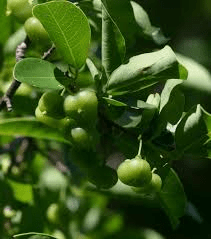
Margaritaria discoidea, commonly known as Margaritaria or Mvuvhuhu, is a distinctive plant that belongs to the Phyllanthaceae family. This small to medium-sized tree has unique characteristics that set it apart in the plant kingdom.
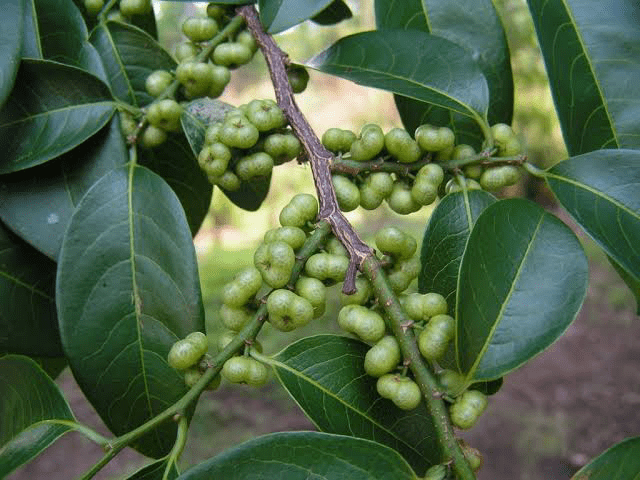
The leaves of Margaritaria discoidea are dark green and elliptical in shape. They are arranged alternately along the stems and possess a glossy appearance. The leaves can vary in size, with mature leaves being around 3-10 centimeters long. The leaf edges are smooth, and the veins are prominent, contributing to the plant’s overall aesthetic appeal.
The flowers of Margaritaria discoidea are relatively inconspicuous, yet they play a crucial role in the plant’s reproductive cycle. These small, greenish-yellow flowers are borne in clusters along the branches. The individual flowers lack showy petals but are intricately designed to facilitate pollination.
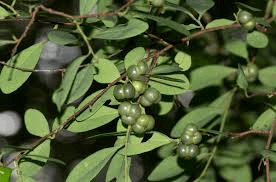
One of the most distinctive features of Margaritaria discoidea is its fruit capsules, which give the plant its name. The capsules resemble pearls, and this resemblance is where the scientific name “Margaritaria” originates from (“margarita” meaning “pearl” in Latin). These round capsules contain seeds and are a remarkable aspect of the plant’s visual identity.
The seeds within the fruit capsules are small and possess a shiny, smooth surface. They are often likened to pearls due to their appearance, reinforcing the plant’s common name. These seeds play a crucial role in the plant’s reproduction, as they are dispersed to other areas by various means, including wind, water, or animals.
Margaritaria discoidea is native to various regions in Africa. It thrives in a range of habitats, including woodlands, savannas, and grasslands. The plant’s adaptability to different environments has contributed to its widespread distribution across the continent.
Throughout its native regions, Margaritaria discoidea holds cultural and traditional importance. Local communities have recognized its medicinal properties and integrated it into their healing practices. The plant’s unique appearance, especially its “pearl-like” capsules, has also led to its inclusion in folklore and stories.
Given its widespread distribution and adaptability, Margaritaria discoidea does not appear to be under immediate threat. However, as with many plant species, habitat destruction and changes in land use can impact its populations. Continued monitoring and conservation efforts are crucial to ensure the survival of this remarkable plant and its diverse benefits.
Read Also: 20 Medicinal Health Benefits of Erythrophleum couminga (African Corkwood)
The Medicinal Health Benefits of Margaritaria discoidea (Margaritaria)
1. Antibacterial and Antifungal Activity: Margaritaria discoidea extracts possess potent antibacterial and antifungal properties. These properties make it a valuable resource for combating infections caused by a range of microorganisms.
2. Anti-Inflammatory Effects: The plant’s bioactive compounds exhibit anti-inflammatory effects. This makes Margaritaria discoidea a potential remedy for managing inflammatory conditions such as arthritis and other ailments characterized by inflammation.
3. Wound Healing: Traditional medicine often employs Margaritaria extracts for wound care. The plant’s compounds are believed to accelerate the healing process, reduce the risk of infections, and aid in tissue regeneration.
4. Digestive Support: Margaritaria discoidea is utilized to address various digestive issues. Its soothing properties can alleviate discomfort caused by indigestion, bloating, and other gastrointestinal disturbances.
5. Antioxidant Defense: Rich in antioxidants, Margaritaria discoidea helps protect cells from oxidative stress and damage caused by harmful free radicals. Antioxidants play a vital role in promoting overall health and well-being.
6. Immune System Enhancement: Traditional uses of Margaritaria suggest that it can support the immune system’s function. Strengthening the immune response helps the body fight off infections and maintain optimal health.
7. Fever Management: In certain traditional practices, Margaritaria discoidea has been employed to help reduce fever and alleviate associated symptoms.
8. Natural Pain Relief: The plant’s analgesic properties can provide relief from various types of pain, including headaches and body aches.
9. Respiratory Health: Margaritaria extracts are utilized to address respiratory conditions like coughs, bronchitis, and other respiratory discomforts.
10. Potential Anti-Diabetic Effects: Some research suggests that Margaritaria discoidea may play a role in managing diabetes by helping to regulate blood sugar levels. However, more in-depth studies are required to fully understand its effectiveness.
Read Also: 10 Medicinal Health Benefits of Craspidospermum (Craspidospermum verticillatum)
The Methods of Usage to Achieve the Provided Health Benefits of Margaritaria discoidea (Margaritaria)
1. Herbal Teas: One of the most popular methods of using Margaritaria discoidea is by preparing herbal teas. To make a tea, dried leaves, roots, or bark are boiled in water. The resulting infusion is then strained and consumed as a warm or cooled beverage. This method is particularly suitable for addressing digestive issues, boosting the immune system, and reaping the plant’s antioxidant benefits.
2. Topical Applications: Crushed or powdered Margaritaria discoidea leaves can be applied directly to wounds, cuts, or skin irritations as poultices. These poultices help promote wound healing, reduce inflammation, and prevent infections. The leaves’ antibacterial and wound-healing properties make them a valuable natural remedy for external ailments.
3. Infusions and Decoctions: Infusions and decoctions involve steeping plant parts in hot water to extract their beneficial compounds. Infusions are suitable for delicate plant parts like leaves and flowers, while decoctions are used for tougher parts like roots and bark. These liquids can be consumed orally to address a range of health concerns, from respiratory discomforts to digestive issues.
4. Steam Inhalation: For respiratory health, steam inhalation is employed. Boiling Margaritaria discoidea leaves or extracts are added to hot water, and the steam is inhaled. This method can help alleviate congestion, coughs, and other respiratory symptoms.
5. Massage Oils and Balms: Infusing Margaritaria discoidea extracts into carrier oils can create massage oils or balms. These preparations are used externally to provide relief from pain, inflammation, and muscle aches through topical application.
6. Capsules and Tinctures: In some cases, Margaritaria discoidea extracts are encapsulated or prepared as tinctures. Capsules are convenient for those who prefer a standardized dosage, while tinctures involve steeping the plant parts in alcohol or another solvent to create concentrated liquid extracts.
7. Traditional Formulations: In traditional medicine systems, Margaritaria discoidea is often used in combination with other herbs to create specialized formulations. These formulations are carefully crafted to address specific health issues and are typically prepared by experienced practitioners.
The Side Effects of Using Margaritaria discoidea Medicinal Plant
1. Gastrointestinal Discomfort: In some individuals, the consumption of Margaritaria discoidea preparations, particularly in high doses, may lead to gastrointestinal discomfort such as nausea, vomiting, or diarrhea.
2. Allergic Reactions: Allergic reactions to Margaritaria discoidea are possible, especially in individuals with known allergies to plants within the Phyllanthaceae family or related species.
3. Interactions with Medications: If you are taking medications, especially those that affect blood sugar levels, blood pressure, or blood clotting, consult a healthcare professional before using Margaritaria discoidea. The plant’s compounds might interact with certain medications, potentially affecting their efficacy.
4. Pregnancy and Breastfeeding: Limited information is available on the safety of using Margaritaria discoidea during pregnancy and breastfeeding. It’s advisable for pregnant or breastfeeding women to exercise caution and seek medical guidance before using this plant.
5. Children and Elderly: Special care should be taken when administering Margaritaria discoidea to children or elderly individuals. Dosages should be adjusted appropriately and under the guidance of a healthcare professional.
6. Dosage and Preparation: Using excessive amounts of Margaritaria discoidea or consuming improperly prepared formulations can increase the risk of adverse effects. Follow recommended dosages and preparation methods to minimize such risks.
7. Long-Term Use: Prolonged and excessive use of Margaritaria discoidea may lead to cumulative effects or interactions with other medications or supplements. It’s advisable to periodically review its usage with a healthcare professional.
8. Individual Sensitivity: People react differently to herbal remedies. It’s possible for some individuals to experience side effects even with moderate use of Margaritaria discoidea. Pay attention to your body’s response and discontinue use if any adverse reactions occur.
Nutritional Value of Margaritaria discoidea
1. Protein: The leaves of Margaritaria discoidea contain approximately 15.6% crude protein, making them a valuable protein source for livestock and potentially humans when detoxified. Protein supports muscle growth and repair, particularly in nutrient-scarce regions.
2. Carbohydrates: The leaves and seeds likely contain carbohydrates, primarily starches, providing energy. Exact quantities are not well-documented, but their role as a supplementary feed suggests a moderate carbohydrate content.
3. Fiber: The leaves are rich in fiber, contributing to digestive health. High fiber content aids in regulating bowel movements and supporting gut microbiota, particularly when used as fodder.
4. Calcium: The leaves contain calcium, though specific levels are not quantified in available studies. Calcium supports bone health and muscle function, enhancing the plant’s nutritional potential for animal feed.
5. Iron: Trace amounts of iron are present in the leaves, supporting oxygen transport in the blood. This makes Margaritaria discoidea a potential supplement for addressing anemia in livestock diets.
6. Magnesium: The leaves likely include magnesium, which supports enzymatic functions and muscle health. While exact quantities are not specified, its presence aligns with the plant’s use as a nutrient-rich feed.
7. Phenolic Compounds: The stem bark and leaves contain phenolics, such as tannins, which act as antioxidants. These compounds may reduce oxidative stress, though their nutritional role is secondary to medicinal effects.
8. Flavonoid Glycosides: The stem bark contains flavonoids like hydroxygenkwanin-8-C-glucopyranoside, which have antioxidant properties. These support cellular health by combating free radicals when used in controlled amounts.
9. Alkaloids: The plant is rich in alkaloids like phyllochrysine and securinine, which are not nutrients but bioactive compounds. They may indirectly support health through antimicrobial or stimulant effects when properly processed.
10. Energy Content: The leaves have a gross energy content of 19.3 kJ/g, making them a high-energy feed supplement for livestock, particularly during dry seasons when grass quality is low.
Scientific Evidence and Case Studies on Margaritaria discoidea
1. Osakwe et al. (2000): This study evaluated the feeding value of Margaritaria discoidea leaves (as Phyllanthus discoideus) in West African Dwarf sheep. Diets with 25% and 50% leaf supplementation increased crude protein (12.6% and 13.6%) and volatile fatty acid concentrations, improving energy availability and nitrogen retention, supporting its use as a livestock feed (Osakwe, I. I., et al. (2000). The chemical composition of Phyllanthus discoideus and its effect on ruminal ammonia and volatile fatty acid concentration when fed to West African Dwarf sheep. Tropical Agriculture, 77(3), 178-182).
2. Obiri et al. (2014): Research by Dickson et al. found that an aqueous stem bark extract of Margaritaria discoidea reduced edema and pain in rat models, comparable to indomethacin. This supports its traditional use for inflammation and pain relief, likely due to alkaloids and phenolics (Dickson, R. A., et al. (2014). Anti-inflammatory and analgesic effects of an aqueous stem bark extract of Margaritaria discoidea (Euphorbiaceae). Journal of Applied Pharmaceutical Science, 4(8), 1-5).
3. Owusu et al. (2014): This study isolated flavonoid glycosides from the stem bark, demonstrating antibacterial activity against Staphylococcus aureus and free radical scavenging properties. These findings validate its use in wound healing by reducing microbial load and oxidative stress (Owusu, P. A., et al. (2014). Flavonoid glycosides from the stem bark of Margaritaria discoidea demonstrate antibacterial and free radical scavenging activities. Phytochemistry Letters, 10, 85-90).
4. Cho-Ngwa et al. (2010): Research by Cho-Ngwa et al. tested non-polar extracts of Margaritaria discoidea against Onchocerca ochengi. The hexane and methylene chloride extracts showed microfilaricidal activity, supporting traditional use for onchocerciasis treatment in Cameroon (Cho-Ngwa, F., et al. (2010). Selective activity of extracts of Margaritaria discoidea and Homalium africanum on Onchocerca ochengi. BMC Complementary and Alternative Medicine, 10, 62).
5. Adedapo et al. (2015): This study confirmed the gastroprotective effects of an ethanolic stem bark extract in rats, reducing ethanol-induced ulcers via antioxidant mechanisms. This supports its traditional use for gastric issues (Adedapo, A. A., et al. (2015). Gastroprotective and antioxidant potentials of ethanolic stem bark extract of Margaritaria discoidea (Euphorbiaceae) in rats. Journal of Ethnopharmacology, 171, 240-246).
Frequently Asked Questions About Margaritaria discoidea
1. Is Margaritaria discoidea safe to eat?
The leaves are occasionally eaten after processing, but raw consumption is unsafe due to alkaloids like phyllochrysine. Careful preparation is needed to avoid toxicity.
2. What parts of Margaritaria discoidea are used medicinally?
The stem bark, leaves, and roots are used in traditional medicine for wounds, ulcers, pain, and infections like onchocerciasis, often as decoctions or pastes.
3. Can Margaritaria discoidea help with wound healing?
Yes, studies confirm its stem bark extracts have antibacterial and antioxidant properties, supporting traditional use for wound care and infection prevention.
4. Is Margaritaria discoidea used for livestock?
Yes, its protein-rich leaves (15.6% crude protein) are used as fodder for cattle and goats, especially during dry seasons, improving energy and nitrogen retention.
5. What are the risks of using Margaritaria discoidea?
Alkaloids like securinine can cause toxicity, including nervous system stimulation. Improper use may lead to adverse effects, so professional guidance is recommended.
6. Where does Margaritaria discoidea grow?
It’s native to tropical Africa, from Senegal to Ethiopia and south to South Africa, thriving in woodlands, savannas, and disturbed forests.
7. Does Margaritaria discoidea have anti-inflammatory benefits?
Yes, stem bark extracts reduce edema and pain in animal models, supporting its use for inflammatory conditions like arthritis.
8. How is Margaritaria discoidea prepared for medicinal use?
Bark and leaves are typically boiled into decoctions or made into pastes for topical application to treat wounds, pain, or infections, ensuring proper detoxification.
Read Also: 14 Health Benefits of Bitter Leaf (Vernonia Amygdalina)