


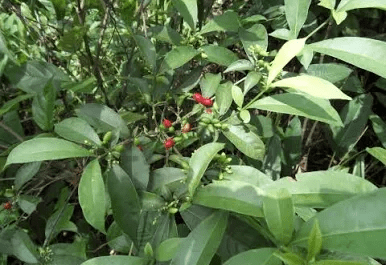
Rauvolfia mannii, commonly referred to as African Snake Root, is a distinctive plant that belongs to the Apocynaceae family. This botanical description will provide you with a detailed insight into the key characteristics of this remarkable species.
Rauvolfia mannii is a perennial shrub that typically reaches a height of about 1 to 2 meters. It boasts an upright growth habit, with its multiple stems giving it a bushy appearance. The plant’s branching structure contributes to its full and robust form.
The leaves of Rauvolfia mannii are simple, opposite, and elliptical in shape. They are characterized by a glossy, dark green color that adds to the plant’s visual appeal. The leaves are arranged in pairs along the stems, creating a symmetrical pattern. The leaf margins are smooth, without serrations or lobes.
The inflorescence of Rauvolfia mannii consists of clusters of small, tubular flowers. These flowers are typically white or pale pink in color and emit a delicate fragrance. The inflorescence is borne at the tips of the stems and branches, adding a touch of elegance to the plant’s overall appearance.
Rauvolfia mannii produces small, spherical fruits. These fruits are initially green and gradually mature to a darker shade, often approaching black when fully ripe. Each fruit contains seeds that can be collected and used for propagation.
The roots and bark of Rauvolfia mannii are of particular interest due to their medicinal properties. These parts of the plant contain valuable alkaloids and compounds that have been utilized in traditional medicine for various therapeutic purposes.
Rauvolfia mannii is native to regions of West and Central Africa, where it thrives in diverse habitats ranging from forest edges to open grasslands. Its natural distribution spans countries such as Nigeria, Cameroon, and Gabon. The plant’s adaptability to different environments underscores its resilience.
Throughout its native range, Rauvolfia mannii has held a significant place in traditional medicine systems. Indigenous communities have used various parts of the plant to address health issues such as hypertension, anxiety, and pain. The plant’s cultural importance extends beyond its medicinal value, as it has often been incorporated into rituals and practices.
Read Also: 5 Medicinal Health Benefits of Motandra guineensis (African Peach)
The Medicinal Health Benefits of Rauvolfia Mannii (African Snake Root)

1. Hypertension Management: Rauvolfia mannii has demonstrated its effectiveness in managing hypertension. The alkaloids present in the plant, particularly reserpine, play a vital role in relaxing blood vessels. This relaxation leads to a decrease in blood pressure levels, making it a potential natural remedy for individuals dealing with high blood pressure.
2. Antidepressant Properties: The reserpine compound found in Rauvolfia mannii has been studied for its potential antidepressant effects. By affecting neurotransmitter levels in the brain, it may contribute to managing depressive disorders and improving mood.
3. Sedative Effects: The calming properties of Rauvolfia mannii have been utilized to alleviate anxiety and promote relaxation. Its effects on the central nervous system can help reduce stress and tension.
4. Antiarrhythmic Activity: Rauvolfia mannii’s alkaloids exhibit antiarrhythmic properties, which means they can help regulate irregular heartbeats. This potential benefit is valuable for individuals with heart rhythm abnormalities.
5. Antimalarial Potential: Traditional medicine has utilized Rauvolfia mannii in the fight against malaria. The plant’s compounds may possess antiparasitic effects, making it a potential natural approach to combatting this disease.
6. Pain Relief: The plant’s extracts have been used traditionally to alleviate pain, making it a potential natural remedy for various types of pain, including headaches and muscle aches.
7. Antibacterial Actions: Rauvolfia mannii extracts have exhibited antibacterial activity. This suggests its potential in fighting bacterial infections and supporting the body’s immune system.
8. Diuretic Effect: The diuretic properties of Rauvolfia mannii can promote increased urine production. This can be helpful in managing conditions like edema and supporting kidney function.
9. Anticancer Properties: While more research is needed, there is some evidence to suggest that certain compounds in Rauvolfia mannii may have anticancer properties. However, further studies are required to fully understand and validate this potential benefit.
10. Sleep Aid: Rauvolfia mannii’s sedative effects make it useful for promoting better sleep and managing sleep disorders. Its ability to induce relaxation can contribute to improved sleep quality.
Read Also: 15 Medicinal Health Benefits of Erythrophleum suaveolens (Erythrophleum)
The Methods of Usage to Achieve the Provided Health Benefits of Rauvolfia Mannii (African Snake Root)
1. Herbal Teas: One common method of utilizing Rauvolfia mannii is by preparing herbal teas. The dried roots or bark can be boiled to create a soothing and potentially therapeutic tea. This method allows for the extraction of the plant’s beneficial compounds.
2. Tinctures: Tinctures are concentrated liquid extracts obtained by soaking the plant material in alcohol or another solvent. Rauvolfia mannii can be prepared as a tincture, offering a convenient way to consume the plant’s active constituents.
3. Capsules or Tablets: For standardized dosages, Rauvolfia mannii extracts can be encapsulated or pressed into tablets. This provides a controlled and measured way to ensure consistent intake of the plant’s medicinal components.
4. Poultices and Topical Applications: In some cases, Rauvolfia mannii can be used externally. Poultices or topical applications made from crushed or powdered plant parts may be applied to the skin to address issues such as pain or inflammation.
5. Infused Oils: Infused oils can be created by soaking Rauvolfia mannii plant material in carrier oils such as olive or coconut oil. These oils can then be used for massages or as part of skincare routines.
6. Consult a Professional: It’s important to emphasize that before using Rauvolfia mannii for any purpose, consulting a qualified healthcare professional is essential. They can provide personalized guidance on the appropriate dosage and method of usage based on individual health conditions and needs.
The Side Effects of Using Rauvolfia Mannii Medicinal Plant
1. Low Blood Pressure: Consuming Rauvolfia mannii in excessive amounts or without proper supervision can lead to a drop in blood pressure. The plant’s compounds, especially reserpine, have a pronounced hypotensive effect, which may result in symptoms like dizziness, lightheadedness, and even fainting.
2. Gastrointestinal Distress: Some individuals may experience gastrointestinal discomfort as a side effect of using Rauvolfia mannii. This can manifest as nausea, vomiting, or stomach upset. It’s important to monitor your body’s response and adjust your dosage accordingly.
3. Fatigue and Drowsiness: Due to its sedative properties, Rauvolfia mannii might cause feelings of fatigue and drowsiness. While these effects can be beneficial for those seeking relaxation or sleep aid, they can also interfere with daily activities if not managed properly.
4. Interaction with Medications: Rauvolfia mannii’s compounds, particularly reserpine, can interact with certain medications. It’s crucial to be aware of potential interactions, especially if you are taking medications for blood pressure or mental health conditions. Consult a healthcare professional before use.
5. Pregnancy and Breastfeeding Concerns: Pregnant and breastfeeding individuals should avoid using Rauvolfia mannii. The plant’s compounds can impact blood pressure and have potential effects on the developing fetus or nursing infants.
6. Allergic Reactions: While rare, some individuals might experience allergic reactions to Rauvolfia mannii. These reactions can range from mild skin irritation to more severe symptoms like difficulty breathing. If you suspect an allergic response, discontinue use and seek medical attention.
7. Central Nervous System Effects: The plant’s sedative and central nervous system effects can be intensified when combined with other sedatives or substances that affect the nervous system. This could lead to excessive drowsiness or impaired coordination.
8. Hormonal Changes: Rauvolfia mannii’s influence on neurotransmitters and hormones could potentially lead to hormonal changes. It’s advisable for individuals with hormonal imbalances or endocrine disorders to exercise caution and consult a healthcare professional.
Nutritional Value of Rauvolfia mannii (African Snake Root)

1. Indole Alkaloids: Rauvolfia mannii roots are rich in indole alkaloids, such as reserpine and ajmaline, known for their hypotensive and sedative effects, traditionally used to manage hypertension and anxiety.
2. Flavonoids: These polyphenolic compounds in the plant provide antioxidant properties, helping to combat oxidative stress and potentially supporting cardiovascular health.
3. Phytosterols: Present in the roots, phytosterols may contribute to cholesterol regulation and have anti-inflammatory effects, supporting traditional uses for heart-related conditions.
4. Tannins: Tannins in the plant have astringent properties, which may aid in wound healing and gastrointestinal health by reducing inflammation and promoting tissue repair.
5. Saponins: Found in small amounts, saponins in Rauvolfia mannii may exhibit antimicrobial and anti-inflammatory effects, contributing to its traditional use against infections.
6. Terpenoids: These compounds in the roots offer potential antimicrobial and anti-inflammatory benefits, supporting the plant’s role in treating infections and inflammation.
7. Phenolic Compounds: Phenolics in the plant provide additional antioxidant activity, protecting cells from damage and supporting overall health.
8. Carbohydrates: The roots contain small amounts of carbohydrates, providing energy and aiding in the plant’s traditional use as a general tonic.
9. Volatile Oils: Trace amounts of volatile oils in the plant contribute to its antimicrobial properties, useful in traditional remedies for infections.
10. Glycosides: Cardiac glycosides in Rauvolfia mannii may influence heart function, contributing to its use in managing arrhythmias, though caution is needed due to potential toxicity.
The bioactive compounds in Rauvolfia mannii, particularly its alkaloids, make it a potent medicinal plant in African traditional medicine. However, its high toxicity, especially in root extracts, necessitates careful use under professional supervision to avoid adverse effects.
Scientific Evidence and Case Studies on Rauvolfia mannii
1. Antihypertensive Potential: While specific studies on Rauvolfia mannii are limited, research on related species like Rauvolfia vomitoria by Campbell-Tofte et al. (2011) showed that a Rauvolfia-citrus tea reduced blood pressure and improved glycemic control in type II diabetics, suggesting similar alkaloid-driven hypotensive effects in mannii (Campbell-Tofte, J. I., Mølgaard, P., Josefsen, K., et al., 2011, Journal of Ethnopharmacology, 133(2), 402-411).
2. Antimicrobial Activity: Studies on Rauvolfia species, such as Rauvolfia serpentina, by Owk et al. (2016) found that root extracts exhibited antimicrobial activity against Gram-positive bacteria, likely due to indole alkaloids, which may extend to mannii given its similar phytochemical profile (Owk, A. K., & Lagudu, M. N., 2016, Notulae Scientia Biologicae, 8, 312-316).
3. Toxicity Concerns: Eluwa et al. (2010) reported teratogenic effects of Rauvolfia vomitoria root extracts on rat fetal hearts at high doses, indicating potential toxicity risks for Rauvolfia mannii due to shared alkaloids like reserpine, necessitating cautious use (Eluwa, M. A., Udoaffah, M. T., Vulley, M. B., et al., 2010, North American Journal of Medical Sciences, 2(12), 592-595).
4. Anti-inflammatory Effects: Research on Rauvolfia tetraphylla by Wesely et al. (2021) highlighted anti-inflammatory properties of root extracts, likely applicable to mannii due to similar indole alkaloids and flavonoids, supporting its use for inflammatory conditions (Wesely, J. D., 2021, Plants for Novel Drug Molecules: Ethnobotany to Ethnopharmacology, 445-465).
Frequently Asked Questions About Rauvolfia mannii
1. What is Rauvolfia mannii used for in traditional medicine?
It is used in African traditional medicine to treat hypertension, anxiety, fever, infections, and as an arrow poison supplement due to its potent alkaloids.
2. Is Rauvolfia mannii safe to use?
It is potentially unsafe due to toxic alkaloids like reserpine, which can cause low blood pressure, irregular heartbeat, or neurological effects. Use only under medical supervision.
3. How is Rauvolfia mannii administered?
Root extracts or powders are used in traditional settings, often as decoctions or infusions for hypertension or infections, but precise dosing requires professional guidance.
4. Can Rauvolfia mannii treat high blood pressure?
Its alkaloids, like reserpine, may lower blood pressure, as seen in related species, but scientific evidence specific to mannii is limited, and it should not be self-administered.
5. What are the side effects of Rauvolfia mannii?
Possible side effects include shakiness, low blood pressure, irregular heartbeat, and potential neurological issues like depression or seizures if overdosed.
6. Where is Rauvolfia mannii found?
It is native to tropical Africa, from Liberia to Kenya, and south to Angola and Tanzania, growing in wet rainforests and riverine forests up to 2,500 meters elevation.
7. Can Rauvolfia mannii be used during pregnancy?
It is likely unsafe, as related species have shown teratogenic effects in animal studies, potentially causing birth defects. Avoid use during pregnancy or breastfeeding.
8. Does Rauvolfia mannii have antimicrobial properties?
Preliminary studies on related Rauvolfia species suggest its alkaloids may combat bacteria and fungi, but direct evidence for mannii is limited and requires further research.
Do you have any questions, suggestions, or contributions? If so, please feel free to use the comment box below to share your thoughts. We also encourage you to kindly share this information with others who might benefit from it. Since we can’t reach everyone at once, we truly appreciate your help in spreading the word. Thank you very much for your support and for sharing!
Disclaimer: This article is for educational and informational purposes only. The health benefits described are based on scientific research and traditional knowledge. They are not a substitute for professional medical advice, diagnosis, or treatment. Always consult a healthcare professional before using any herb or natural remedy for medical purposes.
Read Also: The Health Benefits of Watermelon