


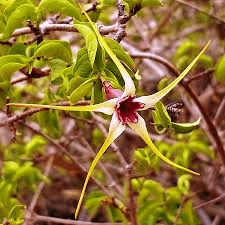
Strophanthus amboensis, commonly known as the Amboensis Climber is a remarkable woody vine belonging to the Apocynaceae family. This family encompasses various plants known for their diverse medicinal and ornamental properties. Strophanthus amboensis is indigenous to specific tropical regions and has garnered attention due to its unique botanical features.
This vine exhibits a climbing growth habit, using its slender tendrils to ascend and wind around supporting structures. The plant’s stems are sturdy yet flexible, allowing it to thrive in various conditions. Strophanthus amboensis can reach impressive heights, making it an eye-catching addition to its natural habitat.
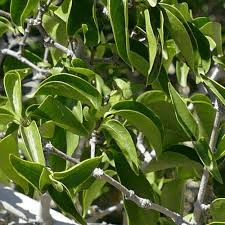
One of the distinctive characteristics of Strophanthus amboensis is its heart-shaped leaves. These leaves are glossy and deep green in color, with a prominent midrib that runs down the center. The leaves are arranged opposite each other along the stem, forming a symmetrical pattern.
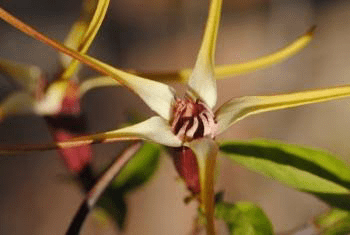
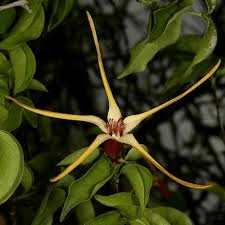
The trumpet-shaped flowers of Strophanthus amboensis are a true marvel. These flowers exhibit a color range from pale pink to white, adding a touch of elegance to the plant’s appearance. The flowers have a unique structure, with five petals that flare open, revealing intricate patterns and a central tube-like structure. These flowers not only contribute to the plant’s beauty but also hold medicinal significance.
Strophanthus amboensis produces distinctive fruit capsules. These capsules are elongated and contain seeds with tufts of silky fibers that aid in wind dispersal. The capsule’s structure contributes to the plant’s reproductive strategy, ensuring the propagation of its genetic material.
Strophanthus amboensis thrives in tropical environments with the right combination of sunlight, moisture, and well-draining soil. It is often found in forested areas and along the edges of clearings, making the most of available light while benefiting from the protection of taller vegetation.
Beyond its botanical characteristics, Strophanthus amboensis holds cultural and traditional importance in certain regions. It has been used in rituals and ceremonies, underscoring its role in local practices and beliefs.
Understanding the botanical description of Strophanthus amboensis provides insights into its growth patterns, distinctive features, and the ecological niches it occupies. This knowledge serves as a foundation for comprehending its medicinal properties and potential uses in traditional healing practices.
Read Also: 15 Medicinal Health Benefits of Prunus Africana (African Cherry)
The Medicinal Health Benefits of Strophanthus amboensis (Amboensis Climber)
1. Cardiovascular Health: Strophanthus amboensis is known for its positive effects on the cardiovascular system. It contains compounds that may help regulate heart rhythm and improve overall heart health.
2. Blood Pressure Regulation: This plant is believed to have properties that could assist in managing blood pressure levels. It might aid in dilating blood vessels, promoting smoother blood flow.
3. Digitalis Alternative: Strophanthus amboensis has been considered an alternative to the digitalis plant due to its potential to enhance heart contractions. However, proper medical guidance is essential before using it for such purposes.
4. Respiratory Support: Traditional uses suggest that this plant might offer respiratory benefits. It could aid in relieving symptoms of conditions like asthma and bronchitis.
5. Analgesic Properties: Some traditional practices utilize Strophanthus amboensis for its potential analgesic effects. It could be used to alleviate mild pain and discomfort.
6. Anti-Inflammatory Effects: Compounds found in this plant may exhibit anti-inflammatory properties, making it a potential remedy for inflammation-related issues.
7. Digestive Aid: Strophanthus amboensis could have a role in supporting digestive health. It might help in easing digestive disturbances and promoting better digestion.
8. Antioxidant Activity: The plant’s constituents may possess antioxidant properties, which can help combat oxidative stress and reduce cell damage.
9. Wound Healing: Traditional uses include using Strophanthus amboensis extracts for wound healing. Its application might aid in promoting faster recovery of minor wounds.
10. Traditional Rituals: Apart from its medicinal uses, Strophanthus amboensis holds cultural significance in certain communities. It’s used in rituals and ceremonies for various purposes.
Read Also: 10 Medicinal Health Benefits of Solenostemma (Solenostemma argel)
The Methods of Usage to Achieve the Provided Health Benefits of Strophanthus amboensis (Amboensis Climber)
1. Infusions: Prepare a tea by steeping dried leaves or flowers of Strophanthus amboensis in hot water. This infusion can be consumed to derive potential health benefits. The hot water helps extract the beneficial compounds from the plant material, resulting in a flavorful and potentially medicinal beverage.
2. Tinctures: Alcohol-based extracts of Strophanthus amboensis can be used under professional guidance. Tinctures are concentrated solutions where the plant’s active constituents are dissolved in alcohol. They allow for precise dosing and ease of administration, making them a popular choice for herbal remedies.
3. Topical Application: In certain cases, poultices or creams containing Strophanthus amboensis extracts might be applied topically. These applications can provide localized benefits, such as relieving minor skin irritations or promoting wound healing. The active compounds can be absorbed through the skin to exert their effects.
4. Traditional Formulations: Depending on cultural practices, Strophanthus amboensis might be used in traditional formulations unique to specific regions. These formulations could involve combining the plant with other herbs or natural ingredients to create remedies tailored to particular health concerns.
The Side Effects of Using Strophanthus amboensis Medicinal Plant
1. Heart Effects: Strophanthus amboensis has a direct impact on heart function. Incorrect usage or dosage could lead to adverse effects on heart rhythm. Individuals with pre-existing heart conditions should exercise caution and seek professional advice before using this plant medicinally.
2. Dosage: Proper dosage is crucial when using Strophanthus amboensis. Taking too much can lead to complications, including heart-related issues. It’s essential to follow recommended dosages and consult a healthcare provider to determine the right amount for your specific needs.
3. Allergic Reactions: As with any plant-based substance, there’s a possibility of allergic reactions. Some individuals may be sensitive to components of Strophanthus amboensis, leading to skin reactions, itching, or even more severe allergic responses. A patch test before using any new herbal remedy is advisable.
4. Interactions: Strophanthus amboensis may interact with certain medications, particularly those related to heart conditions. Combining this plant with prescribed medications without proper medical supervision can result in harmful interactions that jeopardize your health.
5. Toxicity: In higher doses, Strophanthus amboensis can be toxic. Overconsumption or improper preparation can lead to severe health issues, including cardiac complications. Avoid self-medication and always seek guidance from a qualified healthcare professional.
Nutritional Value of Strophanthus amboensis (Amboensis Climber)
1. Sarmentogenin: Sarmentogenin is a cardenolide aglycone found in the seeds of Strophanthus amboensis, known for its cardiac glycoside properties that support heart function by enhancing contractility and potentially aiding in the treatment of heart failure.
2. Sarverogenin: This steroidal aglycone, part of the sarmentogenin/sarverogenin group in the seeds, exhibits cardiotonic effects, contributing to the plant’s traditional use as a heart stimulant and arrow poison due to its toxicity.
3. Cardiac Glycosides: Various glycosides derived from sarmentogenin in the seeds provide potent inotropic effects on the heart, increasing myocardial contractility while requiring caution due to their narrow therapeutic index.
4. Ouabain-like Compounds: Though primarily in other Strophanthus species, related cardenolides in S. amboensis seeds offer potential antihypertensive and antiarrhythmic benefits by inhibiting Na+/K+-ATPase.
5. Alkaloids: Indole and other alkaloids present in the plant contribute to its antimicrobial and neuroprotective properties, supporting traditional medicinal applications.
6. Flavonoids: These polyphenolic compounds in the leaves and stems provide antioxidant activity, helping to reduce oxidative stress and inflammation in the body.
7. Phenolic Compounds: Phenolics such as gallic acid derivatives in the extracts offer additional antioxidant and anti-inflammatory effects, potentially aiding in wound healing.
8. Triterpenoids: Found in the roots and seeds, triterpenoids like lupeol exhibit anti-inflammatory and hepatoprotective properties, aligning with ethnomedicinal uses.
9. Saponins: Saponins in the seeds contribute to the plant’s foaming properties and antimicrobial activity, useful in traditional treatments for infections.
10. Tannins: These astringent compounds in the bark and leaves provide antimicrobial benefits and support digestive health by reducing inflammation.
The bioactive compounds in Strophanthus amboensis, particularly its cardiac glycosides, highlight its potential in traditional African medicine for heart-related conditions, but its high toxicity from seeds used as arrow poison necessitates extreme caution and professional supervision for any use.
Scientific Evidence and Case Studies on Strophanthus amboensis
1. Cardenolide Classification: Joubert (1984) classified Strophanthus species based on seed glycosides, placing S. amboensis in the sarmentogenin/sarverogenin group, demonstrating its cardiotonic potential through structural analysis of isolated aglycones, supporting heart health benefits (Joubert, P. H., 1984, South African Medical Journal, 66(20), 763-766).
2. Phytochemical Grouping: Neuwinger (1996) reviewed arrow poisons from Strophanthus species, including S. amboensis, identifying sarmentogenin-based cardenolides with potent cardiotoxic effects that validate traditional uses for hunting and potential therapeutic cardiac stimulation (Neuwinger, H. D., 1996, African Ethnobotany: Poisons and Drugs, Chapman & Hall).
3. Traditional and Pharmacological Review: Orhan et al. (2017) summarized preclinical studies on Strophanthus species, noting cardiotonic effects from glycosides in S. amboensis, with evidence of improved myocardial contractility in animal models, though human data is limited (Orhan, I. E., Gokbulut, A., & Senol, F. S., 2017, Current Pharmaceutical Design, 23(7), 1051-1059).
4. Biochemical Properties: Włodarczyk and Gleńsk (2022) analyzed saponins and glycosides in Strophanthus seeds, including those from S. amboensis, showing antioxidant and anti-inflammatory activities via HPLC and bioassays, indicating benefits for oxidative stress-related conditions (Włodarczyk, M., & Gleńsk, M., 2022, Planta Medica, 88(5), 576-586).
Frequently Asked Questions About Strophanthus amboensis
1. What is Strophanthus amboensis used for in traditional medicine?
It is used to treat rheumatism, venereal diseases, and scabies, with seeds historically employed as arrow poison in African tribes for hunting.
2. Is Strophanthus amboensis safe to use?
No, it is highly toxic due to cardiac glycosides, potentially causing irregular heartbeat or death; it should only be used under strict medical supervision.
3. Can Strophanthus amboensis benefit heart health?
Its cardenolides may enhance heart contractility similar to digitalis, but evidence is limited to traditional and preclinical uses, with significant risks.
4. What parts of Strophanthus amboensis are used medicinally?
Seeds are primarily used for their glycosides, while leaves and roots may be applied topically for skin conditions like scabies.
5. Does Strophanthus amboensis have antimicrobial properties?
Yes, its alkaloids and saponins show potential against infections, supporting traditional treatments for venereal diseases, though studies are preliminary.
6. Where is Strophanthus amboensis native to?
It is native to tropical Africa, including Angola, Namibia, and the Democratic Republic of the Congo, growing as a shrub or climber in savannas.
7. Can Strophanthus amboensis be used during pregnancy?
It is unsafe, as cardiac glycosides may cause uterine contractions leading to miscarriage; avoid completely during pregnancy or breastfeeding.
8. What are the side effects of Strophanthus amboensis?
Side effects include nausea, vomiting, irregular heartbeat, and potential cardiac arrest due to toxicity; interactions with heart medications like digoxin are dangerous.
Do you have any questions, suggestions, or contributions? If so, please feel free to use the comment box below to share your thoughts. We also encourage you to kindly share this information with others who might benefit from it. Since we can’t reach everyone at once, we truly appreciate your help in spreading the word. Thank you very much for your support and for sharing!
Disclaimer: This article is for educational and informational purposes only. The health benefits described are based on scientific research and traditional knowledge. They are not a substitute for professional medical advice, diagnosis, or treatment. Always consult a healthcare professional before using any herb or natural remedy for medical purposes.
Read Also: Effect of Tropical Climate on Animal Parasites, Vectors and Diseases