


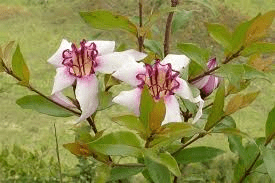
Strophanthus welwitschii, commonly known as Welwitsch’s arrow poison, is a distinctive plant that belongs to the Apocynaceae family. This family includes various plants known for their medicinal and toxic properties. Strophanthus welwitschii, in particular, has gained attention for its use in traditional medicine due to the active compounds found within its various parts.
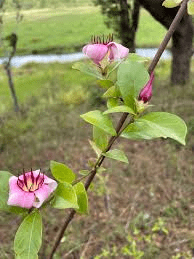
Strophanthus welwitschii is a woody climbing vine that can reach considerable heights. The plant’s stem is covered in a light grey to brownish bark, and it tends to twine around other vegetation for support. The leaves of Strophanthus welwitschii are oblong and glossy, typically measuring around 5 to 15 centimeters in length. These leaves grow in an alternate arrangement along the stem and have a distinctive dark green color.
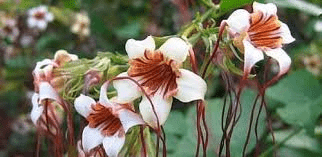
The plant produces tubular flowers that are known for their intricate structure and intriguing appearance. The flowers are typically pale yellow or cream-colored, sometimes with a tinge of pink or purple. These blooms possess a strong fragrance that can be quite captivating. The flowers are grouped in clusters, creating an eye-catching display when the plant is in bloom.
The fruit of Strophanthus welwitschii is a follicle, which is a dry, elongated capsule that splits open to release seeds when mature. The seeds are dark brown and have a flattened shape. These seeds are the primary source of the plant’s active compounds and are of particular interest due to their potential medicinal and toxic properties.
Strophanthus welwitschii is renowned for its toxic properties, particularly its ability to produce cardiac glycosides. These compounds are known to have effects on the heart and are often associated with their use as arrow poisons. While these compounds are toxic in high concentrations, they have also been harnessed for their potential medicinal applications in carefully controlled doses.
Strophanthus welwitschii has been utilized for its effects on the cardiovascular system. The cardiac glycosides found in the plant have been used to manage heart conditions, albeit with caution due to their potent nature. The plant’s toxicity has also led to its use as an arrow poison in some cultures, where the potent compounds are applied to the tips of hunting arrows.
Read Also: 15 Medicinal Health Benefits of Prunus Africana (African Cherry)
The Medicinal Health Benefits of Strophanthus welwitschii (Welwitsch’s arrow poison)

1. Cardiovascular Health: Strophanthus welwitschii has been known for its positive effects on heart health. Its active compounds can support healthy heart function and help manage cardiovascular conditions.
2. Blood Pressure Regulation: The plant’s extracts have been used to regulate blood pressure levels, potentially assisting individuals with hypertension.
3. Pain Relief: Traditional remedies employing Strophanthus welwitschii have been used to alleviate pain, ranging from mild discomfort to more severe conditions.
4. Respiratory Support: This plant has been employed to address certain respiratory issues due to its potential bronchodilatory properties.
5. Anti-inflammatory Effects: Strophanthus welwitschii contains compounds that exhibit anti-inflammatory actions, making it relevant in managing inflammatory ailments.
6. Digestive Aid: Traditional practices have utilized this plant as a digestive aid, possibly helping with various gastrointestinal concerns.
7. Analgesic Properties: The plant’s extracts may offer analgesic effects, potentially contributing to pain management strategies.
8. Traditional Poisoning Treatment: In some traditional systems, Strophanthus welwitschii has been employed to counteract the effects of poisoning, although caution is warranted.
9. Wound Healing: The plant’s potential to promote healing has led to its use in traditional wound care remedies.
10. Mental Wellness: Some traditional uses suggest that Strophanthus welwitschii might have benefits for mental well-being, although further research is needed.
Read Also: 15 Medicinal Health Benefits of Prunus Africana (African Cherry)
The Methods of Usage to Achieve the Provided Health Benefits of Strophanthus welwitschii (Welwitsch’s arrow poison)
1. Infusions: Brewing the leaves or seeds into herbal teas or infusions for oral consumption.
2. Topical Applications: Preparing balms or poultices using the plant’s extracts for external use on wounds or affected areas.
3. Tinctures: Creating tinctures by steeping the plant material in alcohol to extract its active compounds.
4. Caution: Due to the potent nature of Strophanthus welwitschii, it is crucial to consult a healthcare professional before using it for medicinal purposes. Incorrect usage can lead to adverse effects.
The Side Effects of Using Strophanthus welwitschii Medicinal Plant
1. Cardiac Effects: The plant’s compounds can affect heart function and should be used cautiously, especially by those with heart conditions.
2. Nausea and Vomiting: Improper usage can result in digestive discomfort, including nausea and vomiting.
3. Allergic Reactions: Some individuals might experience allergic reactions upon contact or ingestion.
4. Toxicity: Excessive use can lead to toxicity, causing serious health issues.
Nutritional Value of Strophanthus welwitschii (Welwitsch’s Arrow Poison)
1. Sarmentogenin: Sarmentogenin is a key cardenolide aglycone found in the seeds of Strophanthus welwitschii, classified in the sarmentogenin/sarverogenin group, known for its cardiotonic properties that enhance heart muscle contractility and support traditional uses for cardiac conditions.
2. Sarverogenin: This steroidal aglycone, present in the seeds, contributes to the plant’s potent cardiotoxic and therapeutic effects, aiding in heart stimulation while highlighting its historical use as an arrow poison due to toxicity.
3. Cardiac Glycosides: Derived from sarmentogenin and sarverogenin in the seeds, these glycosides provide inotropic effects on the heart, potentially beneficial for treating heart failure but requiring extreme caution due to their narrow therapeutic window.
4. Saponins: Identified in the seeds through fingerprinting and isolation studies, saponins exhibit antimicrobial and anti-inflammatory properties, supporting the plant’s role in traditional treatments for infections.
5. Alkaloids: Indole and other alkaloids in the plant contribute to neuroprotective and antimicrobial activities, aligning with ethnomedicinal applications for various ailments.
6. Flavonoids: These polyphenolic compounds in the leaves and stems offer antioxidant benefits, helping to reduce oxidative stress and inflammation in the body.
7. Phenolic Compounds: Phenolics such as gallic acid derivatives provide additional antioxidant and anti-inflammatory effects, potentially aiding in wound healing and cellular protection.
8. Triterpenoids: Present in the roots and seeds, triterpenoids like lupeol exhibit anti-inflammatory and hepatoprotective properties, supporting traditional uses for swelling and infections.
9. Tannins: These astringent compounds in the bark and leaves contribute to antimicrobial activity and digestive health by reducing inflammation and promoting wound healing.
10. Steroids: Plant steroids in the extracts support hormonal balance and have cholesterol-lowering effects, contributing to overall cardiovascular health in moderated use.
The bioactive compounds in Strophanthus welwitschii, especially its cardiac glycosides and saponins, emphasize its ethnomedicinal importance in African traditional medicine. However, its high toxicity, particularly from seeds used as arrow poison, makes it unsuitable for self-administration, and professional medical supervision is essential.
Scientific Evidence and Case Studies on Strophanthus welwitschii
1. Cardenolide Classification: Joubert et al. (1984) classified Strophanthus welwitschii in the sarmentogenin/sarverogenin group based on seed glycoside analysis, demonstrating its cardiotonic potential through structural elucidation of aglycones, supporting benefits for heart function (Joubert, P. H., 1984, South African Medical Journal, 66(20), 763-766).
2. Saponin Identification: Włodarczyk et al. (2022) performed fingerprinting, isolation, and content estimation of saponins in Strophanthus seeds, including welwitschii, using HPLC-MS, revealing antimicrobial and anti-inflammatory activities that validate traditional uses for infections (Włodarczyk, M., & Gleńsk, M., 2022, Planta Medica, 88(5), 576-586).
3. Cardiotonic Review: Orhan et al. (2017) reviewed preclinical and clinical studies on Strophanthus species, including welwitschii, highlighting cardiotonic effects from glycosides that improve myocardial contractility in animal models, though emphasizing toxicity risks (Orhan, I. E., Gokbulut, A., & Senol, F. S., 2017, Current Pharmaceutical Design, 23(7), 1051-1059).
4. Anti-inflammatory Synergy: John Kenneth et al. (2019) investigated co-extracts from related Strophanthus species, showing phytochemical synergy in reducing inflammation markers in preclinical assays, suggesting similar benefits for welwitschii due to shared compounds (John Kenneth, M., Amina, I., & Yakubu, J., 2019, Archives of Pharmacy and Pharmaceutical Sciences, 3(2), 89-100).
Frequently Asked Questions About Strophanthus welwitschii
1. What is Strophanthus welwitschii used for in traditional medicine?
It is used to treat respiratory conditions, gonorrhoea, scabies, and infections, with seeds historically employed as arrow poison in African communities for hunting.
2. Is Strophanthus welwitschii safe to use?
No, it is highly toxic due to cardiac glycosides, potentially causing irregular heartbeat or death; it should only be used under strict medical supervision.
3. Can Strophanthus welwitschii benefit heart health?
Its cardenolides may enhance heart contractility similar to digitalis, but evidence is from traditional and preclinical uses, with significant toxicity risks.
4. What parts of Strophanthus welwitschii are used medicinally?
Seeds are primarily used for their glycosides in arrow poisons and heart treatments, while leaves and roots may be applied topically for skin conditions like scabies.
5. Does Strophanthus welwitschii have antimicrobial properties?
Yes, its saponins and alkaloids show potential against bacteria and fungi, supporting traditional treatments for gonorrhoea and infections, though studies are preliminary.
6. Where is Strophanthus welwitschii native to?
It is native to tropical Africa, including the Democratic Republic of Congo, Tanzania, Angola, and Zambia, growing in forests and rocky woodlands.
7. Can Strophanthus welwitschii be used during pregnancy?
It is unsafe, as cardiac glycosides may cause uterine contractions leading to miscarriage; avoid completely during pregnancy or breastfeeding.
8. What are the side effects of Strophanthus welwitschii?
Side effects include nausea, vomiting, irregular heartbeat, and potential cardiac arrest due to toxicity; it interacts dangerously with heart medications like digoxin.
Do you have any questions, suggestions, or contributions? If so, please feel free to use the comment box below to share your thoughts. We also encourage you to kindly share this information with others who might benefit from it. Since we can’t reach everyone at once, we truly appreciate your help in spreading the word. Thank you very much for your support and for sharing!
Disclaimer: This article is for educational and informational purposes only. The health benefits described are based on scientific research and traditional knowledge. They are not a substitute for professional medical advice, diagnosis, or treatment. Always consult a healthcare professional before using any herb or natural remedy for medical purposes.
Read Also: Onions Farming Complete Business Guide