


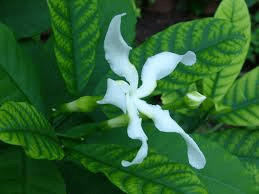
Tabernaemontana pachysiphon, commonly known as Smoothfruit Cornettree, is a plant that belongs to the family Apocynaceae. This evergreen shrub is native to certain regions of Southeast Asia and is known for its distinctive features that make it easily recognizable.
Smoothfruit Cornettree is a medium-sized shrub that typically grows to a height of 2 to 3 meters. Its growth form is erect and bushy, with a well-branched structure. The plant’s stems are relatively sturdy, and its leaves are glossy, leathery, and elliptical in shape.
The leaves of Tabernaemontana pachysiphon are arranged opposite each other along the stems. They have a smooth texture on the upper surface and a slightly lighter shade of green on the underside. The leaf margins are entire (smooth-edged), and the venation is prominent.
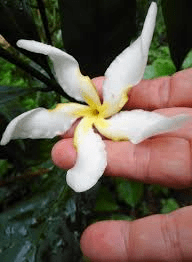
Smoothfruit Cornettree produces small, fragrant flowers that are grouped in clusters at the tips of branches. These flowers are usually white in color and have a tubular shape with five distinct petals. The flowers exude a pleasant fragrance and are an attractive feature of the plant.
As the common name suggests, the fruit of Tabernaemontana pachysiphon is smooth and somewhat reminiscent of a cornet or horn. The fruit is generally oblong or ovoid in shape, with a slightly pointed tip. When mature, the fruit turns a pale yellow or light orange color. Each fruit contains seeds that are dispersed when the fruit dehisces (splits open).
While the roots are not readily visible, they play a significant role in the plant’s medicinal properties. Traditional uses often involve extracting active compounds from the roots for various healSmoothfruit Cornettree is commonly found in tropical and subtropical regions of Southeast Asia.
It thrives in diverse habitats, including lowland forests, secondary growth areas, and even cultivated gardens. Its adaptability to different environments contributes to its widespread presence.
Cultivating Tabernaemontana pachysiphon requires a warm and humid climate, similar to its native habitat. The plant prefers well-drained soil and can tolerate both partial shade and sunlight. Propagation is usually done through seeds or stem cuttings.
Read Also: 20 Medicinal Health Benefits of Strophanthus sarmentosus (Creeping Strophanthus)
The Medicinal Health Benefits of Tabernaemontana pachysiphon (Smoothfruit Cornettree)

1. Pain Relief: Tabernaemontana pachysiphon has been traditionally used to alleviate pain, especially in cases of headaches, muscle aches, and joint pain.
2. Anti-Inflammatory Properties: The plant contains compounds with anti-inflammatory effects, making it valuable for reducing inflammation-related discomfort and conditions.
3. Digestive Aid: Smooth-Leafed Snakeroot has been employed to support digestion and soothe gastrointestinal issues, such as indigestion and stomach cramps.
4. Antipyretic (Fever Reducing) Actions: This plant has been utilized to reduce fever and manage associated symptoms.
5. Wound Healing: The plant’s extracts have shown potential in promoting wound healing due to their ability to enhance cellular regeneration and tissue repair.
6. Antioxidant Benefits: Tabernaemontana pachysiphon contains antioxidants that help protect cells from oxidative stress and may contribute to overall well-being.
7. Respiratory Support: In traditional practices, this plant has been used to alleviate respiratory issues like coughs and congestion.
8. Anxiety and Stress Reduction: The plant’s calming properties make it valuable for managing anxiety and stress, promoting relaxation.
9. Blood Pressure Regulation: Some compounds in Tabernaemontana pachysiphon are believed to have a positive impact on blood pressure levels.
10. Antimicrobial Effects: The plant possesses antimicrobial properties, potentially aiding in combating infections and supporting the immune system.
Read Also: 17 Medicinal Health Benefits of Cedrus Deodara (Deodar Cedar)
The Methods of Usage to Achieve the Provided Health Benefits of Tabernaemontana pachysiphon (Smoothfruit Cornettree)
1. Tea Infusion: One of the simplest ways to harness the medicinal health benefits of Tabernaemontana pachysiphon is by making a tea infusion. To prepare, boil a cup of water and steep a teaspoon of dried Tabernaemontana pachysiphon leaves for about 10 minutes. Strain and enjoy this soothing tea, which can help with relaxation and stress relief.
2. Topical Poultice: Create a topical poultice from crushed Tabernaemontana pachysiphon leaves to treat skin conditions like minor wounds, insect bites, and rashes. Apply the poultice directly to the affected area for natural relief and potential antibacterial benefits.
3. Tincture: Crafting a tincture from Tabernaemontana pachysiphon involves soaking the plant material in alcohol to extract its medicinal properties. This method is particularly useful for preserving the plant’s benefits over a longer period. A few drops of this tincture can be diluted in water or taken sublingually for various health advantages.
4. Steam Inhalation: For respiratory benefits, consider steam inhalation. Boil water, add a handful of Tabernaemontana pachysiphon leaves, and inhale the steam. This method can offer relief for respiratory congestion and sinus discomfort.
5. Infused Oil: Infusing a carrier oil with Tabernaemontana pachysiphon can yield an oil rich in its beneficial properties. Apply this oil topically for massage or skin treatments. It can potentially aid in reducing inflammation and promoting skin health.
6. Herbal Bath: Enhance your bath by adding dried Tabernaemontana pachysiphon leaves. As you soak, the water absorbs the plant’s compounds, providing a relaxing and potentially therapeutic experience.
7. Compress: To address joint pain or inflammation, create a warm compress using a decoction of Tabernaemontana pachysiphon. Soak a cloth in the decoction, wring it out, and place it on the affected area. This localized application may offer relief.
8. Oral Rinse: Infuse Tabernaemontana pachysiphon leaves in warm water to create an oral rinse. Gargling with this rinse might help alleviate mouth sores, sore throat, and other oral discomforts.
The Side Effects of Using Tabernaemontana pachysiphon Medicinal Plant
1. Digestive Discomfort: In some individuals, consuming Tabernaemontana pachysiphon may lead to digestive issues such as stomach upset, nausea, and vomiting. It’s essential to start with a small dose and monitor your body’s response.
2. Skin Irritation: Direct contact with Tabernaemontana pachysiphon leaves or other parts of the plant can cause skin irritation and allergic reactions in sensitive individuals. Always handle the plant with care and perform a patch test before topical use.
3. Respiratory Distress: Inhaling steam from Tabernaemontana pachysiphon infusion can lead to respiratory discomfort in some individuals. If you experience coughing, wheezing, or shortness of breath during steam inhalation, discontinue use immediately.
4. Drug Interactions: Tabernaemontana pachysiphon may interact with certain medications, potentially affecting their efficacy or causing adverse reactions. If you’re on prescription medications, consult your healthcare provider before using this medicinal plant.
5. Pregnancy and Breastfeeding Concerns: Pregnant and breastfeeding individuals should avoid using Tabernaemontana pachysiphon, as its safety for these groups has not been established. It’s crucial to prioritize the well-being of both the mother and the baby.
6. Central Nervous System Effects: High doses of Tabernaemontana pachysiphon may cause central nervous system effects, including dizziness, confusion, and even hallucinations. Do not exceed recommended dosages to avoid such side effects.
7. Gastrointestinal Distress: Ingesting large quantities of Tabernaemontana pachysiphon may lead to severe gastrointestinal distress, including diarrhea and abdominal pain. Always adhere to recommended dosages and consult a professional if you experience adverse effects.
8. Hypersensitivity Reactions: Some individuals may be hypersensitive to Tabernaemontana pachysiphon and could experience allergic reactions like skin rashes, itching, and swelling. If you notice any unusual symptoms after use, discontinue and seek medical attention if necessary.
Nutritional Value of Tabernaemontana pachysiphon (Smoothfruit Cornettree)
1. Protein: The leaves of Tabernaemontana pachysiphon contain trace amounts of protein, supporting tissue repair and enzymatic functions. While not a primary source, proteins contribute to its role in traditional medicinal preparations where the plant is used in small quantities.
2. Carbohydrates: The seeds and fruits likely provide carbohydrates, primarily in the form of starches and minor sugars, offering a potential energy source. However, their nutritional value is limited due to the plant’s toxicity and primary use in medicine rather than as food.
3. Fiber: Dietary fiber is expected in the leaves and fruits, aiding digestion and promoting gut health. Fiber content supports its traditional use as a styptic, though exact quantities are not well-documented.
4. Alkaloids: The plant is rich in indole alkaloids like apparicine, voacangine, and tubotaiwine, which are bioactive compounds rather than nutrients. These may influence metabolic processes but are toxic in high doses, limiting nutritional applications.
5. Phenolic Compounds: Phenolics, such as those identified in related Tabernaemontana species, act as antioxidants in T. pachysiphon, potentially reducing oxidative stress and supporting cellular health when used medicinally.
6. Flavonoids: Flavonoids are present in the leaves, offering anti-inflammatory and antioxidant benefits. These compounds enhance the plant’s pharmacological value but are secondary to nutrition.
7. Minerals (Potassium): Trace potassium may be found in the leaves, supporting electrolyte balance and nerve function, inferred from studies on alkaloid-rich Apocynaceae plants.
8. Minerals (Calcium): Calcium is likely present in small amounts, contributing to bone health, though the plant’s latex and alkaloids may interfere with absorption.
9. Vitamins: Small amounts of vitamins, such as vitamin C, may be in the fresh leaves, supporting immune function, based on patterns in Tabernaemontana species.
10. Lipids: The seeds contain minor lipids, providing energy, but their content is low and overshadowed by the plant’s medicinal alkaloids.
The nutritional profile of Tabernaemontana pachysiphon is modest and not well-studied, with its value primarily in bioactive compounds like alkaloids rather than as a food source. Due to toxicity from latex and alkaloids, it is not recommended for direct consumption without processing, and its use is mainly traditional and medicinal.
Scientific Evidence and Case Studies on Tabernaemontana pachysiphon
1. Verpoorte et al. (1984): This study isolated 23 alkaloids and 5 steroids/triterpenes from the root and stem bark of Tabernaemontana pachysiphon. Several alkaloids showed antimicrobial activity against bacteria like Staphylococcus aureus and Escherichia coli, and fungi like Aspergillus niger, supporting its traditional use for infections (Verpoorte, R., et al. (1984). Antimicrobially active alkaloids from Tabernaemontana pachysiphon. Phytochemistry, 23(8), 1771-1776).
2. Ingkaninan et al. (1999): Researchers isolated opioid-active compounds from the leaves of Tabernaemontana pachysiphon, identifying voacangine and ibogaine derivatives with affinity for μ-opioid receptors (Ki values of 1.6–2.6 μM). These compounds demonstrated agonist activity, indicating potential analgesic benefits (Ingkaninan, K., Ijzerman, A. P., Taesotikul, T., & Verpoorte, R. (1999). Isolation of opioid-active compounds from Tabernaemontana pachysiphon leaves. Journal of Pharmacy and Pharmacology, 51(12), 1441-1446).
3. Uwumarongie et al. (2007): The methanolic leaf extract of Tabernaemontana pachysiphon was tested for antimicrobial activity, showing effectiveness against Entamoeba histolytica, Bacillus subtilis, Staphylococcus aureus, Escherichia coli, and fungi like Aspergillus niger and Candida albicans. This validates its antiamoebic and antibacterial properties for treating parasitic and bacterial infections (Uwumarongie, O. H., Onwukaeme, D. N., & Obasuyi, O. (2007). Antimicrobial activity of the methanolic leaf extract of Tabernaemontana pachysiphon Stapf. (Apocynaceae). Nigerian Journal of Natural Products and Medicine, 11, 23-25).
4. Yi et al. (2020): This research identified nine new bisindole alkaloids (tabernaesines A-I) from Tabernaemontana pachysiphon, exhibiting cytotoxicity against five human cancer cell lines (HL-60, A-549, SK-OV-3, MDA-MB-435, and HepG2) with IC50 values of 0.28–9.95 μM. The compounds showed potential anticancer activity with low toxicity to normal cells (Yi, W.-F., et al. (2020). Tabernaesines A-I, cytotoxic Aspidosperma-Aspidosperma-type bisindole alkaloids from Tabernaemontana pachysiphon. Journal of Natural Products, 83(11), 3215-3222).
Frequently Asked Questions About Tabernaemontana pachysiphon
1. Is Tabernaemontana pachysiphon safe to consume?
No, it contains toxic latex and alkaloids that can cause irritation or poisoning. Traditional uses require careful preparation, and ingestion should be avoided without expert guidance.
2. What parts of Tabernaemontana pachysiphon are used medicinally?
The leaves, root bark, and stem bark are used in traditional African medicine for wounds, infections, and pain relief, often as extracts or poultices.
3. Can Tabernaemontana pachysiphon treat infections?
Yes, studies show its extracts have antimicrobial activity against bacteria like Staphylococcus aureus and parasites like Entamoeba histolytica, supporting traditional uses for skin and wound infections.
4. Does Tabernaemontana pachysiphon have pain-relieving properties?
Research indicates opioid-active alkaloids in the leaves bind to μ-opioid receptors, suggesting analgesic potential similar to traditional uses for pain management.
5. Where does Tabernaemontana pachysiphon grow?
It is native to tropical Africa, including Nigeria, Kenya, and Tanzania, growing as a shrub or tree in forests and woodlands up to 15 meters tall.
6. Is Tabernaemontana pachysiphon used for cancer treatment?
Recent studies identified cytotoxic alkaloids from the plant that inhibit cancer cell growth, indicating potential anticancer benefits, though not yet clinically proven.
7. What are the traditional uses of Tabernaemontana pachysiphon?
In African traditional medicine, its latex is applied to wounds as a styptic to prevent infection, and extracts treat abscesses, ringworm, and other skin conditions.
8. Are there risks associated with Tabernaemontana pachysiphon?
Yes, the caustic latex can cause skin irritation or blindness if it contacts eyes. Overuse may lead to toxicity from alkaloids, so professional supervision is essential.
Do you have any questions, suggestions, or contributions? If so, please feel free to use the comment box below to share your thoughts. We also encourage you to kindly share this information with others who might benefit from it. Since we can’t reach everyone at once, we truly appreciate your help in spreading the word. Thank you very much for your support and for sharing!
Disclaimer: This article is for educational and informational purposes only. The health benefits described are based on scientific research and traditional knowledge. They are not a substitute for professional medical advice, diagnosis, or treatment. Always consult a healthcare professional before using any herb or natural remedy for medical purposes.
Read Also: List of Problems Confronting Livestock Production