


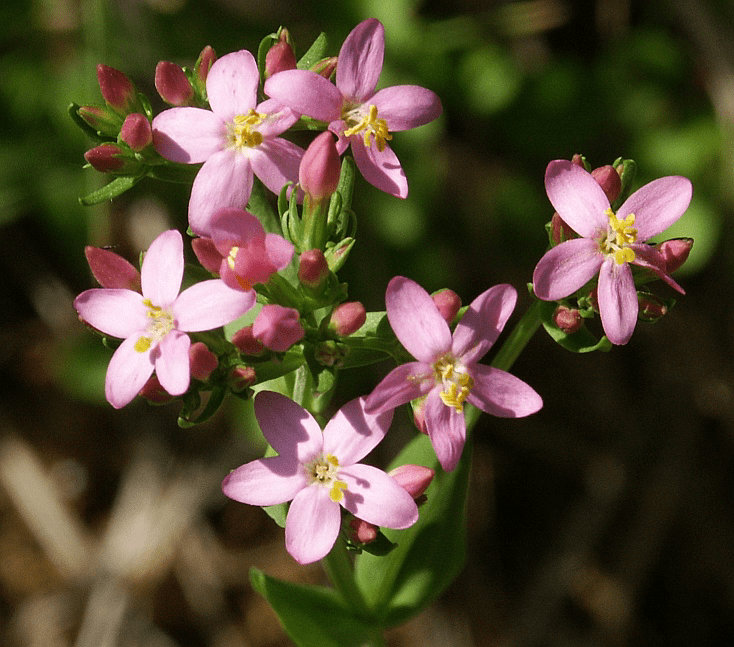
Common Centaury (Centaurium erythraea) is a charming herbaceous plant belonging to the Gentianaceae family. This distinctive plant is known for its delicate appearance and vibrant pink flowers.
Common Centaury is a perennial herb, which means it lives for several years and regrows each season. It typically reaches a height of 15 to 30 centimeters (6 to 12 inches). The plant has an erect and slender stem covered with fine, downy hairs.
The leaves of Common Centaury are arranged oppositely along the stem. They are lance-shaped and often have a reddish tint, especially near the base. The leaves can vary in size but are generally small, measuring around 1 to 3 centimeters in length.
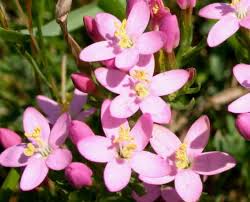
Common Centaury is renowned for its eye-catching pink flowers, which bloom from late spring to early autumn. The flowers are star-shaped and have five petals, each measuring about 8 to 12 millimeters in length. They are arranged in terminal clusters and have a distinct, delicate appearance. The vibrant pink color makes these flowers highly attractive to pollinators like bees and butterflies.
Common Centaury has a fibrous root system that anchors the plant in the soil. The roots are not typically used for medicinal purposes the aerial parts of the plant are the primary focus of herbal remedies.
Common Centaury is native to Europe but can also be found in parts of Asia and North Africa. It thrives in a variety of habitats, including grasslands, meadows, and open woodlands. It prefers well-drained, slightly alkaline soils.
The plant has a bitter taste, which is indicative of its traditional medicinal uses. Common Centaury is often found in sunny or partially shaded areas. It is a resilient plant and can tolerate different environmental conditions.
Read Also: 13 Medicinal Health Benefits of Ensete Superbum (Wild Banana)
The Medicinal Health Benefits of Centaurium erythraea (Common Centaury)
1. Digestive Aid: Common Centaury stimulates gastric juices and aids in digestion, relieving issues like indigestion, bloating, and flatulence.
2. Liver Health: It supports liver function, assisting in detoxification and metabolic processes.
3. Appetite Enhancement: Common Centaury can increase appetite, making it beneficial for those with poor or reduced appetite.
4. Anti-Inflammatory: Its anti-inflammatory properties can alleviate minor aches, pains, and skin irritations.
5. Blood Sugar Regulation: Research suggests it may help regulate blood sugar levels, potentially assisting in diabetes management.
6. Heart Health: Common Centaury may contribute to cardiovascular health by promoting healthy circulation.
7. Anxiety and Stress Reduction: It has mild calming effects, aiding in relaxation and stress management.
8. Wound Healing: Applied topically, it can help speed up the healing of minor wounds and skin irritations.
9. Detoxification: It supports the body’s natural detox processes, aiding in the removal of toxins.
10. Anti-Microbial: Common Centaury exhibits mild antimicrobial properties, which can help combat certain infections.
11. Anti-Ulcer: It may have a protective effect on the stomach lining, potentially reducing the risk of ulcers.
12. Respiratory Health: It can be used to alleviate mild respiratory issues like coughs and congestion.
13. Menstrual Support: Some women use Common Centaury to relieve menstrual discomfort and irregularities.
14. Immune System Booster: It can contribute to a healthy immune system, helping the body defend against illness.
15. Skin Health: Common Centaury’s antimicrobial and anti-inflammatory properties can be beneficial for maintaining healthy skin.
Read Also: List of “23” Healing Herbs in the Bible
The Methods of Usage to Achieve the Provided Health Benefits of Centaurium erythraea (Common Centaury)
1. Herbal Tea: Prepare an herbal tea by steeping 1-2 teaspoons of dried Common Centaury in a cup of hot water for 10-15 minutes. This is a common and gentle way to enjoy its benefits.
2. Tincture: Tinctures are concentrated extracts. You can take Common Centaury as a tincture, but it’s essential to follow recommended dosages, as tinctures are potent.
3. Infused Oil: Common Centaury-infused oil can be applied topically to promote wound healing and alleviate skin irritations. To make it, steep dried Common Centaury in a carrier oil like olive oil.
4. Poultice: Create a poultice by crushing fresh or dried Common Centaury and mixing it with a small amount of water to make a paste. Apply this paste to the affected area for localized relief.
5. Herbal Capsules: Some herbal supplement manufacturers offer Common Centaury in capsule form. Follow the recommended dosage on the product label.
6. Culinary Use: In some regions, Common Centaury leaves are used in salads or as a culinary herb. However, it’s essential to use them sparingly due to their bitter taste.
7. Herbal Bath: Infuse Common Centaury into your bathwater to soothe skin irritations and promote relaxation. Place dried Common Centaury in a cloth bag and let it steep in your bath.
8. Compress: Soak a cloth in a Common Centaury infusion and use it as a warm or cold compress, depending on the desired effect. Apply it to sore muscles or inflamed areas.
9. Inhalation: Inhale the steam from a bowl of hot water infused with Common Centaury to alleviate respiratory discomfort, such as coughs and congestion.
10. Mouthwash: Common Centaury can be used as an ingredient in herbal mouthwash formulations to promote oral health. Consult with a herbalist or dentist for appropriate recipes and usage guidelines.
The Side Effects of Using Centaurium erythraea Medicinal Plant
1. Gastrointestinal Discomfort: Some individuals may experience mild gastrointestinal issues like nausea, diarrhea, or stomach cramps when consuming Common Centaury.
2. Allergic Reactions: Allergic reactions, although rare, can occur. These may include skin rashes, itching, swelling, or difficulty breathing. If you suspect an allergy, discontinue use immediately and seek medical attention.
3. Interactions with Medications: Common Centaury may interact with certain medications, including blood thinners, antidiabetic drugs, and medications for high blood pressure. Consult with a healthcare professional before using it if you are taking any prescription medications.
4. Low Blood Pressure: Due to its potential to relax blood vessels, Common Centaury could lead to a drop in blood pressure, which may cause dizziness or fainting in some individuals.
5. Photosensitivity: Common Centaury can make the skin more sensitive to sunlight. If you are exposed to sunlight for extended periods while using this herb, it may lead to sunburn or skin irritation.
6. Pregnancy and Lactation: Pregnant and breastfeeding women should avoid using Common Centaury, as its effects on these conditions have not been thoroughly studied.
7. Not Suitable for Children: Common Centaury is generally not recommended for use in children, as their bodies may react differently to herbal remedies.
8. Stomach Ulcers: While Common Centaury has anti-ulcer potential, excessive consumption may irritate existing stomach ulcers or gastritis.
9. Hypersensitivity Reactions: In rare cases, hypersensitivity reactions, including severe skin rashes or difficulty breathing, have been reported. Discontinue use if any unusual symptoms occur.
10. Drug Sensitivity: Individuals with a history of allergies or sensitivities to plants in the Gentianaceae family (such as gentian or bitter herbs) may be more likely to experience adverse effects.
11. Discomfort from Bitter Taste: Common Centaury is known for its intense bitterness. Some people may find the taste unpleasant when preparing and consuming herbal remedies.
Nutritional Value of Centaurium erythraea (Common Centaury)
1. Secoiridoids: Centaurium erythraea is rich in secoiridoids such as gentiopicroside and sweroside, which contribute to its bitter taste and support digestive health by stimulating appetite and enzyme production.
2. Xanthones: These phenolic compounds, including eustomin and demethyleustomin, act as potent antioxidants, helping to protect cells from oxidative damage and reduce inflammation.
3. Flavonoids: Flavonoids like quercetin and kaempferol provide antioxidant properties, neutralizing free radicals and potentially supporting cardiovascular health.
4. Phenolic Acids: Compounds such as p-coumaric, ferulic, and sinapic acids offer anti-inflammatory and antioxidant benefits, aiding in the prevention of chronic diseases.
5. Amino Acids: The plant contains various amino acids, the building blocks of proteins, which support tissue repair and overall nutritional value when used in herbal preparations.
6. Terpenoids: Terpenoids contribute to antimicrobial activity and may enhance immune function, making them valuable for traditional infection remedies.
7. Alkaloids: Trace alkaloids provide mild stimulant effects, potentially aiding digestion and metabolic processes.
8. Minerals: Centaurium erythraea offers essential minerals like potassium and calcium, supporting electrolyte balance, bone health, and muscle function.
9. Vitamins: It contains small amounts of vitamins, particularly vitamin C precursors from flavonoids, which boost immunity and collagen production.
10. Carbohydrates: The aerial parts provide carbohydrates for energy, though primarily utilized for their bioactive rather than caloric content.
Centaurium erythraea, primarily used as a medicinal herb rather than a staple food, delivers a profile of bioactive compounds and micronutrients that enhance its role in traditional tonics and infusions for digestive and overall wellness support.
Scientific Evidence and Case Studies on Centaurium erythraea
1. Guedes et al. (2019): This study assessed the antioxidant activity and enzyme inhibition of Centaurium erythraea decoctions, revealing strong free radical scavenging and inhibition of acetylcholinesterase (AChE) and HMG-CoA reductase (HMGR), suggesting benefits for cognitive health and cholesterol management (Guedes, L., Reis, P. B. P. S., Machuqueiro, M., Ressaissi, A., Pacheco, R., & Serralheiro, M. L., 2019).
2. Đorđević et al. (2017): Researchers examined the methanol extract of Centaurium erythraea in streptozotocin-induced diabetic rats, finding protection against oxidative damage in red blood cells, with improved antioxidant enzyme activity, supporting its antidiabetic potential (Đorđević, M., Mihailović, M., Arambašić Jovanović, K., et al., 2017).
3. Tülüce et al. (2011): The gastroprotective effects of Centaurium erythraea were tested in rats with aspirin-induced gastric damage, showing reduced ulcer index and lipid peroxidation, indicating benefits for stomach health and inflammation reduction (Tülüce, Y., Ozkol, H., Koyuncu, I., & İne, H., 2011).
4. Mihailović et al. (2022): This investigation demonstrated that Centaurium erythraea methanol extract mitigated hyperglycemia-induced oxidative stress in diabetic rat liver and kidney, reducing protein glycosylation and boosting antioxidant defenses for organ protection (Mihailović, M., et al., 2022).
Frequently Asked Questions About Centaurium erythraea
1. What is Centaurium erythraea used for?
It is traditionally used to stimulate appetite, treat indigestion, fever, and as a tonic for digestive and liver health in herbal medicine.
2. Is Centaurium erythraea safe to consume?
In moderate amounts as tea or infusion, it is generally safe, but excessive use may cause digestive upset; avoid if pregnant or with peptic ulcers.
3. Can Centaurium erythraea help with digestion?
Yes, its bitter compounds promote gastric secretions and appetite, supporting relief from dyspepsia and bloating.
4. What are the active compounds in Centaurium erythraea?
Key components include secoiridoids (gentiopicroside), xanthones, flavonoids, phenolic acids, and terpenoids for antioxidant and anti-inflammatory effects.
5. How is Centaurium erythraea prepared?
Aerial parts are dried and brewed as tea (1-2 tsp per cup, steeped 10 minutes) or used in tinctures for medicinal purposes.
6. Where does Centaurium erythraea grow?
Native to Europe, North Africa, and western Asia, it thrives in sunny, calcareous grasslands and meadows.
7. Are there side effects of Centaurium erythraea?
Possible side effects include nausea or heartburn in high doses; it may interact with blood sugar-lowering medications.
8. Can Centaurium erythraea support diabetes management?
Studies indicate its extracts protect against oxidative stress in diabetic organs, potentially aiding blood sugar control.
Do you have any questions, suggestions, or contributions? If so, please feel free to use the comment box below to share your thoughts. We also encourage you to kindly share this information with others who might benefit from it. Since we can’t reach everyone at once, we truly appreciate your help in spreading the word. Thank you very much for your support and for sharing!
Disclaimer: This article is for educational and informational purposes only. The health benefits described are based on scientific research and traditional knowledge. They are not a substitute for professional medical advice, diagnosis, or treatment. Always consult a healthcare professional before using any herb or natural remedy for medical purposes.
Read Also: 7 Amazing Health Benefits of Cherries