


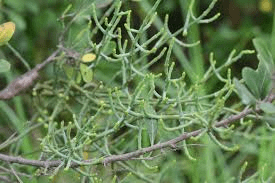
Viscum capense, commonly known as Cape Mistletoe, is a unique plant that holds a special place in traditional medicine due to its remarkable health benefits. This plant, with its distinct features and properties, has been used for generations to promote well-being and address various health concerns.
Viscum capense is a hemiparasitic evergreen shrub that belongs to the Santalaceae family. It is native to the southern regions of Africa, particularly the Cape region, from which it derives its common name. This plant forms aerial connections with host trees, allowing it to draw nutrients and water from them. The leaves of Viscum capense are leathery, elliptical, and glossy, while its small, inconspicuous flowers are often greenish-yellow in color.
Cape Mistletoe thrives in a variety of habitats, including forests, woodlands, and scrublands. It has a versatile nature when it comes to choosing host trees, often latching onto both deciduous and evergreen species. This hemiparasitic plant establishes a connection with its host through specialized structures known as haustoria, which penetrate the host’s tissues and enable the exchange of nutrients.
Viscum capense has been valued for its medicinal properties by indigenous cultures for centuries. Traditional healers have harnessed its potential to treat a range of health issues, including immune system disorders, heart conditions, and inflammation-related ailments. The plant’s extracts are prepared in various forms, such as teas, tinctures, and ointments, to address specific health concerns.
The health benefits of Viscum capense are attributed to its diverse array of bioactive compounds. These include flavonoids, lignans, and phenolic acids, which contribute to the plant’s antioxidant and anti-inflammatory effects. Some compounds found in Cape Mistletoe are believed to stimulate the immune system, making it a valuable ally in fighting infections and promoting overall immune health.
Viscum capense holds cultural significance in the regions where it grows. It has been used in rituals and ceremonies, often symbolizing vitality, connection, and harmony with nature. The plant’s ability to form bonds with host trees has led to interpretations of unity and interdependence.
As interest in traditional medicine and herbal remedies continues to grow, sustainable harvesting practices for Viscum capense are crucial. Unregulated harvesting can lead to a decline in plant populations and disruption of ecosystems. Efforts are underway to promote responsible harvesting and cultivation, ensuring that the plant’s benefits can be enjoyed by future generations.
Read Also: 10 Medicinal Health Benefits of Tulbaghia violacea (Society Garlic)
The Medicinal Health Benefits of Viscum capense (Cape Mistletoe)
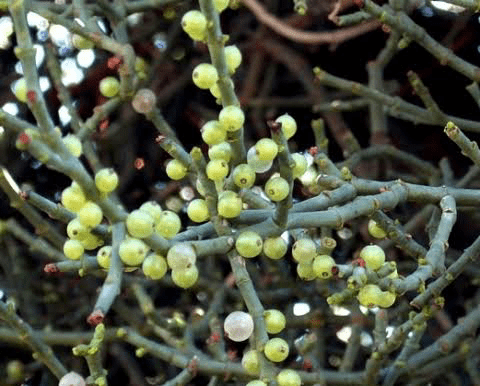
1. Immune System Enhancement: Viscum capense contains compounds that can stimulate immune cell activity, bolstering the body’s defense against infections and illnesses.
2. Cardiovascular Support: This plant may contribute to better heart health by regulating blood pressure and cholesterol levels, reducing the risk of cardiovascular issues.
3. Anti-Inflammatory Properties: Viscum capense’s anti-inflammatory compounds can help alleviate conditions like joint pain, arthritis, and skin inflammations.
4. Antioxidant Defense: The antioxidants in Viscum capense protect cells from oxidative stress, potentially reducing the risk of chronic diseases.
5. Stress Reduction: Traditional use suggests that this plant has calming effects on the nervous system, aiding in stress reduction and relaxation.
6. Mental Clarity: Viscum capense’s properties may improve mental focus and clarity, contributing to overall cognitive well-being.
7. Digestive Aid: It’s believed that this plant can support digestion and alleviate digestive discomfort, promoting gastrointestinal health.
8. Respiratory Health: Viscum capense may have benefits for the respiratory system, aiding in conditions like coughs and congestion.
9. Antiviral Potential: Some compounds in Viscum capense exhibit antiviral properties, potentially aiding in combating certain viral infections.
10. Wound Healing: Topical applications of Viscum capense extracts might assist in wound healing by promoting tissue repair.
11. Anti-Anxiety Effects: Traditional use suggests that this plant could have anxiety-reducing effects, contributing to emotional well-being.
12. Anti-Cancer Properties: Preliminary studies hint at potential anti-cancer properties in Viscum capense, though more research is needed.
13. Joint Health: The anti-inflammatory effects of this plant might extend to joint health, making it valuable for those with arthritis.
14. Blood Sugar Regulation: Some compounds may play a role in regulating blood sugar levels, benefiting individuals dealing with diabetes.
15. Immune Support for Chronic Conditions: Viscum capense’s immune-boosting properties may offer support to individuals with chronic immune-related conditions.
Read Also: 15 Medicinal Health Benefits of Curcuma Zanthorrhiza (Temulawak)
The Methods of Usage to Achieve the Provided Health Benefits of Viscum capense (Cape Mistletoe)
1. Herbal Tea: Prepare a soothing herbal tea by steeping dried Viscum capense leaves in hot water. This method is ideal for immune support and stress reduction.
2. Tinctures: Tinctures made from Cape Mistletoe extracts offer a concentrated form of its beneficial compounds. A few drops in water or juice can provide various health benefits.
3. Topical Application: For wound healing and inflammation relief, create a diluted Viscum capense extract and apply it topically to the affected area.
4. Inhalation: Inhaling steam infused with Viscum capense extracts can provide respiratory benefits and alleviate congestion.
5. Capsules or Tablets: Supplement your health routine with Viscum capense capsules or tablets, ensuring a consistent intake of its medicinal properties.
6. Poultices: Create a poultice by combining crushed Viscum capense leaves with a base like coconut oil. Apply this directly to the skin for localized relief.
7. Bath Soaks: Add Viscum capense extracts to your bath for a relaxing soak that can contribute to stress reduction and skin health.
The Side Effects of Using Viscum capense Medicinal Plant
1. Allergic Reactions: Some individuals may experience allergic reactions to Viscum capense. Skin rashes, itching, or respiratory discomfort could occur upon contact or ingestion.
2. Digestive Issues: Excessive consumption of Viscum capense may lead to digestive problems such as nausea, vomiting, or stomach discomfort.
3. Interaction with Medications: Viscum capense may interact with certain medications, potentially affecting their efficacy or causing adverse effects. Consult your healthcare provider before use.
4. Pregnancy and Breastfeeding: Due to limited research, it’s advisable for pregnant and breastfeeding individuals to avoid Viscum capense, as its effects on these conditions are not well understood.
5. Blood Pressure Concerns: Cape Mistletoe’s potential blood pressure-regulating effects might interact with medications meant to control blood pressure. Monitor levels closely if using both.
6. Autoimmune Conditions: For individuals with autoimmune conditions, Viscum capense’s immune-stimulating properties might exacerbate symptoms. Consult a healthcare professional before use.
Nutritional Value of Viscum capense (Cape Mistletoe)

1. Viscotoxins: Viscum capense contains viscotoxins, which are small basic peptides with antimicrobial and potential anticancer properties, supporting immune health and infection control.
2. Lectins: These proteins in the plant may enhance immune modulation and exhibit cytotoxic effects against cancer cells, contributing to its traditional medicinal uses.
3. Flavonoids: Flavonoids provide antioxidant benefits, helping to neutralize free radicals and reduce oxidative stress for cellular protection.
4. Alkaloids: Alkaloids contribute to the plant’s antimicrobial and anticonvulsant properties, aiding in the treatment of infections and seizures.
5. Tannins: Tannins offer astringent and antimicrobial effects, supporting digestive health and wound healing in traditional applications.
6. Saponins: Saponins may have anti-inflammatory and immune-boosting properties, potentially aiding in reducing inflammation and enhancing defense mechanisms.
7. Triterpenoids: These compounds provide anti-inflammatory and antioxidant effects, supporting overall health and potentially preventing chronic diseases.
8. Phenolic Compounds: Phenolics act as antioxidants, helping to protect against cellular damage and supporting the plant’s role in traditional remedies.
9. Polysaccharides: Polysaccharides contribute to immunomodulatory effects, enhancing immune response and providing energy as complex carbohydrates.
10. Proteins: The plant contains proteins that support tissue repair and overall nutritional value when used in herbal teas.
Scientific Evidence and Case Studies on Viscum capense
1. Antimicrobial and Anticonvulsant Activities (Amabeoku et al., 1998): Amabeoku et al. tested dichloromethane, methanol, and water extracts of Viscum capense, finding that the methanol extract inhibited the growth of Staphylococcus aureus and showed anticonvulsant activity in mice against seizures induced by pentylenetetrazole, bicuculline, and N-methyl-DL-aspartic acid, supporting its traditional use for infections and epilepsy. Reference: Amabeoku, G. J., Leng, M. J., & Syce, J. A. (1998). Antimicrobial and anticonvulsant activities of Viscum capense. Journal of Ethnopharmacology, 61(3), 237–241.
2. Antifungal Activity (Oluwadare et al., 2016): Oluwadare et al. investigated the antifungal properties of Viscum capense leaf extracts on Dioscorea rotundata tuber rot disease, demonstrating significant inhibition of fungal growth, validating its potential in treating plant and possibly human fungal infections. Reference: Oluwadare, O. O., Ilobu, B. P., & Oluwadare, T. A. (2016). Antifungal activity of Viscum capense (African mistletoe) leaf extract on Dioscorea rotundata (poir) (white yam) tuber rot disease. International Journal of Advanced Science and Engineering Technology, 4, 189–191.
Frequently Asked Questions About Viscum capense
1. What is Viscum capense used for in traditional medicine?
It is used in South African traditional medicine as a tea to treat diarrhea, asthma, infections, and seizures due to its bioactive compounds.
2. Is Viscum capense poisonous?
Yes, the plant is poisonous if not properly prepared, but boiling it into tea reduces toxicity for medicinal use.
3. Can Viscum capense help with infections?
Studies show its extracts have antimicrobial activity against bacteria like Staphylococcus aureus and fungi, supporting its use for infections.
4. How is Viscum capense typically prepared?
It is boiled to make a herbal tea, known as voëlent or lidjiestee, for internal use in treating various ailments.
5. Does Viscum capense have anticonvulsant properties?
Yes, research indicates its methanol extract protects against chemically induced seizures in animal models.
6. Is Viscum capense safe for consumption?
In traditional small doses as tea, it is generally safe, but excessive use can cause toxicity; consult a healthcare provider.
7. Can Viscum capense be used for asthma?
Traditional use includes boiling the plant to make a tea that soothes asthma symptoms.
8. Where does Viscum capense grow?
It is indigenous to South Africa, from Cape Town north to Namibia and east to the Eastern Cape, growing as a parasite on host trees.
Do you have any questions, suggestions, or contributions? If so, please feel free to use the comment box below to share your thoughts. We also encourage you to kindly share this information with others who might benefit from it. Since we can’t reach everyone at once, we truly appreciate your help in spreading the word. Thank you very much for your support and for sharing!
Disclaimer: This article is for educational and informational purposes only. The health benefits described are based on scientific research and traditional knowledge. They are not a substitute for professional medical advice, diagnosis, or treatment. Always consult a healthcare professional before using any herb or natural remedy for medical purposes.
Read Also: Farming Tractor Operation Guide