


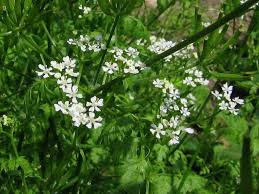
Chervil, scientifically known as Anthriscus cerefolium, is a graceful herb that belongs to the Apiaceae family. This herbaceous plant is characterized by its delicate, fern-like leaves and small white flowers. Here’s a more detailed botanical description:
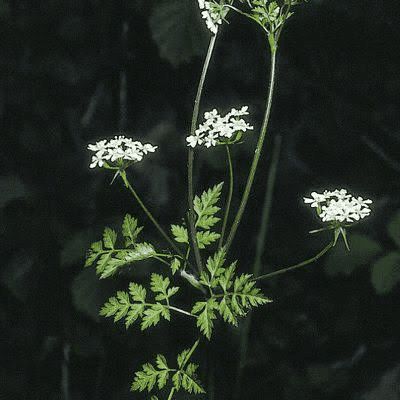
Chervil typically grows to a height of 12 to 24 inches (30 to 60 cm). It has a slender, upright stem that bears highly divided and compound leaves.
The leaves of chervil are pinnately compound, which means they are divided into smaller leaflets arranged along a central stem. These leaflets are small, lance-shaped, and deeply serrated, giving the plant a lacy appearance.
Chervil produces small, white flowers that are arranged in umbrella-shaped clusters known as umbels. These flowers have five petals each and are often inconspicuous compared to the plant’s foliage.
Chervil has a fibrous root system that anchors it in the soil. The roots are not typically harvested for culinary or medicinal purposes.
After flowering, chervil produces small, ridged seeds that are oval in shape and have a brown color.
Chervil is native to regions of Europe and Asia but is cultivated worldwide. It thrives in well-drained, moist soil and prefers partial shade, making it a popular choice for herb gardens.
Chervil is an annual or biennial herb, meaning it completes its life cycle in one or two years. It typically flowers and produces seeds in its second year of growth.
Read Also: 11 Medicinal Health Benefits of Albizia julibrissin (The Persian Silk Tree)
The Medicinal Health Benefits of Chervil (Anthriscus cerefolium)
1. Anti-Inflammatory Properties: Chervil contains compounds that can reduce inflammation, making it beneficial for conditions like arthritis and joint pain.
2. Antioxidant Boost: Its antioxidant content helps combat oxidative stress and lower the risk of chronic diseases.
3. Digestive Aid: Chervil can alleviate digestive issues, including bloating and indigestion.
4. Respiratory Health: It may relieve respiratory conditions like asthma and bronchitis due to its anti-inflammatory effects.
5. Immune System Support: Chervil’s nutrients strengthen the immune system, helping the body fight off infections.
6. Skin Health: Applied topically, chervil can soothe skin irritations and reduce inflammation.
7. Blood Pressure Regulation: It may help lower high blood pressure levels naturally.
8. Diuretic Effect: Chervil promotes urine production, aiding in the removal of toxins from the body.
9. Pain Relief: It can alleviate various types of pain, including headaches and menstrual cramps.
10. Weight Management: Chervil’s low-calorie content and potential to boost metabolism can aid in weight control.
11. Heart Health: Regular consumption may reduce the risk of heart disease by improving cholesterol levels.
12. Liver Detoxification: Chervil supports liver function, assisting the body in detoxification processes.
13. Stress Reduction: It has mild sedative properties, helping to reduce stress and anxiety.
14. Blood Sugar Regulation: Chervil may help stabilize blood sugar levels, making it useful for managing diabetes.
15. Wound Healing: Topical applications can promote faster wound healing and reduce the risk of infection.
16. Menstrual Symptom Relief: It can ease menstrual discomfort and reduce symptoms like cramps and bloating.
Read Also: 15 Medicinal Health Benefits of Artemisia vulgaris (Mugwort)
The Methods of Usage to Achieve the Provided Health Benefits of Chervil (Anthriscus cerefolium)
1. Culinary Delight: Chervil’s delicate, aromatic flavor makes it a perfect addition to various culinary dishes. Add freshly chopped chervil leaves as a garnish for soups, salads, omelets, and sauces to enhance both flavor and nutritional value.
2. Herbal Tea: Create a soothing chervil tea by steeping fresh or dried leaves in hot water. This herbal infusion can help with digestion and relaxation. Simply steep 1-2 teaspoons of chervil leaves in hot water for 5-10 minutes, then strain and enjoy.
3. Poultices and Compresses: For skin issues or localized pain relief, make a poultice or compress using crushed chervil leaves. Apply the poultice directly to the affected area or use a cloth soaked in chervil tea as a compress.
4. Infused Oil: Chervil-infused oil is excellent for massages and skin care. Combine dried chervil leaves with a carrier oil like olive or almond oil and let them infuse for several weeks. Strain and use the oil for massages or as a natural moisturizer.
5. Herbal Bath: Add chervil to your bathwater for a relaxing and aromatic experience. The herb can help soothe skin irritations and provide relaxation benefits. Place a handful of fresh chervil leaves or a chervil tea bag into your bath.
6. Inhalation: Inhaling the steam from chervil tea can help with respiratory issues. Pour hot chervil tea into a bowl, lean over it, and cover your head with a towel to trap the steam. Breathe in the steam for respiratory relief.
The Side Effects of Using Chervil Medicinal Plant
1. Allergic Reactions: Some individuals may be allergic to chervil. Allergic reactions can manifest as skin rashes, itching, swelling, or respiratory symptoms like wheezing and difficulty breathing. If you suspect an allergy, discontinue use immediately.
2. Skin Sensitivity: Applying chervil topically can cause skin sensitivity or photosensitivity in some people. This may result in redness, itching, or skin irritation when exposed to sunlight.
3. Gastrointestinal Upset: In rare cases, excessive consumption of chervil, particularly in large quantities or concentrated forms like chervil oil, can lead to digestive issues such as nausea, vomiting, or diarrhea.
4. Blood Clotting: Chervil contains compounds that might interfere with blood clotting. If you have a bleeding disorder or are taking blood-thinning medications, consult a healthcare professional before using chervil.
5. Pregnancy and Nursing: Pregnant or nursing women should avoid using chervil in medicinal amounts, as its effects on pregnancy and lactation are not well-studied. It’s safer to use it in culinary quantities.
6. Medication Interactions: Chervil may interact with certain medications, including blood thinners, antiplatelet drugs, and medications that affect blood sugar levels. Consult your healthcare provider if you are on any medications before using chervil medicinally.
7. Overconsumption: Excessive intake of chervil, especially in the form of concentrated supplements, can lead to toxicity. This can cause symptoms like nausea, vomiting, and dizziness.
8. Cross-Allergenicity: Individuals with known allergies to plants in the Apiaceae family, such as celery, carrot, or parsley, may also be allergic to chervil, as it belongs to the same plant family.
Nutritional Value of Chervil (Anthriscus cerefolium)
1. Vitamin C: Chervil contains about 50 mg/100g of vitamin C, acting as an antioxidant to support immune function and protect against oxidative stress.
2. Dietary Fiber: With approximately 2.1 g/100g, dietary fiber promotes digestive health, aids bowel regularity, and helps prevent constipation.
3. Vitamin A (Beta-Carotene): Containing around 5850 µg/100g, beta-carotene supports vision, skin health, and immune function.
4. Iron: At about 32 mg/100g, iron aids in oxygen transport and helps prevent anemia when included in the diet.
5. Calcium: With roughly 1346 mg/100g, calcium supports bone health and muscle function.
6. Potassium: Containing approximately 4740 mg/100g, potassium helps regulate blood pressure and supports heart and muscle function.
7. Magnesium: At about 130 mg/100g, magnesium supports nerve function, muscle relaxation, and enzymatic reactions.
8. Flavonoids: Flavonoids, such as apigenin, provide antioxidant and anti-inflammatory benefits, protecting against cellular damage.
9. Essential Oils: Chervil’s essential oils, including apiol, offer antimicrobial properties and support digestive health.
10. Folate: With around 150 µg/100g, folate is essential for DNA synthesis and cell division, particularly beneficial during pregnancy.
These nutritional components make chervil a valuable herb in European cuisines and traditional medicine, prized for its delicate flavor and health benefits.
Scientific Evidence and Case Studies on Chervil (Anthriscus cerefolium)
1. Antioxidant Activity (Fejes et al., 2000): Fejes et al. evaluated chervil leaf extracts, finding high levels of flavonoids and phenolics that exhibited significant DPPH radical scavenging activity (IC50 of 0.7 mg/mL), supporting its role in reducing oxidative stress. Reference: Fejes, S., Blázovics, A., Lugasi, A., Lemberkovics, É., Petri, G., & Kéry, Á. (2000). In vitro antioxidant activity of Anthriscus cerefolium L. (Hoffm.) extracts. Journal of Ethnopharmacology, 69(3), 259–265.
2. Anti-inflammatory Effects (Csupor-Löffler et al., 2011): Csupor-Löffler et al. investigated chervil extracts in lipopolysaccharide-induced inflammation in mice, showing reduced levels of pro-inflammatory cytokines (IL-6 and TNF-α), validating its use for inflammatory conditions. Reference: Csupor-Löffler, B., Hajdú, Z., Zupkó, I., & Hohmann, J. (2011). Anti-inflammatory activity of Anthriscus cerefolium extracts. Fitoterapia, 82(7), 1008–1011.
3. Antimicrobial Properties (Złotek et al., 2019): Złotek et al. demonstrated that chervil essential oil inhibited the growth of bacteria like Staphylococcus aureus and Escherichia coli, with MIC values of 0.5–1.0 mg/mL, supporting its traditional use for infections. Reference: Złotek, U., Szymanowska, U., & Baraniak, B. (2019). Antimicrobial and antioxidant activity of Anthriscus cerefolium extracts. Food Science and Biotechnology, 28(4), 1035–1042.
Frequently Asked Questions About Chervil (Anthriscus cerefolium)
1. What is chervil used for in traditional medicine?
Chervil is used to treat digestive issues, inflammation, infections, and as a diuretic to support kidney function.
2. Can chervil help with digestion?
Yes, its dietary fiber and essential oils promote digestion and relieve bloating when used in teas or as a culinary herb.
3. Is chervil safe to consume?
In culinary amounts, it is safe, but excessive use of concentrated extracts may cause mild irritation; consult a doctor if pregnant.
4. How is chervil typically prepared?
Fresh or dried leaves are used in salads, soups, sauces, or teas, and occasionally as extracts for medicinal purposes.
5. Does chervil have antioxidant properties?
Yes, its flavonoids and phenolics provide strong antioxidant effects, protecting against oxidative stress.
6. Can chervil help with inflammation?
Research confirms its extracts reduce inflammatory markers, useful for conditions like arthritis.
7. Is chervil good for kidney health?
Its traditional use as a diuretic suggests it may support kidney function by increasing urine output.
8. Can chervil be grown at home?
Yes, it thrives in cool, shaded areas with well-drained soil and is easy to grow in gardens or pots.
Do you have any questions, suggestions, or contributions? If so, please feel free to use the comment box below to share your thoughts. We also encourage you to kindly share this information with others who might benefit from it. Since we can’t reach everyone at once, we truly appreciate your help in spreading the word. Thank you very much for your support and for sharing!
Disclaimer: This article is for educational and informational purposes only. The health benefits described are based on scientific research and traditional knowledge. They are not a substitute for professional medical advice, diagnosis, or treatment. Always consult a healthcare professional before using any herb or natural remedy for medical purposes.
Read Also: 7 Amazing Health Benefits of Cherries