


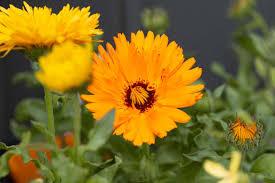
Calendula officinalis, commonly known as marigold, is an annual herbaceous plant that is well-known for its vibrant and sunny appearance. It has a distinctive botanical profile that makes it easily recognizable in gardens and natural settings.
Calendula officinalis typically reaches a height of 12 to 24 inches (30 to 60 cm). The leaves of Calendula officinalis are lance-shaped and grow alternately on the stem. They are slightly hairy and have a light green color.
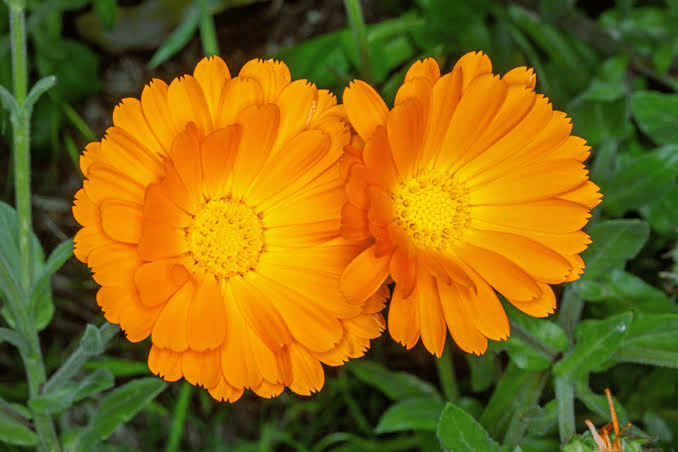
The most striking feature of Calendula officinalis is its bright and showy flowers. The flowers are typically a brilliant shade of orange or yellow, although some varieties may have apricot or cream-colored blossoms. Each flower head consists of both ray florets (petals) and disk florets (center). The ray florets are long and radiate outward, while the disk florets form the central button-like portion. The flowers have a daisy-like appearance.
After flowering, Calendula officinalis produces small, curved, and slightly horned fruits. These fruits contain tiny, elongated seeds. The plant has a shallow and fibrous root system.
Calendula officinalis is native to southern Europe but has been cultivated and naturalized in various regions worldwide. It thrives in well-drained soil and prefers full sun or partial shade.
As an annual plant, Calendula officinalis typically grows and blooms during the spring and summer months. Calendula officinalis has been historically used in ornamental gardening and as a culinary herb. It is a popular choice for flower gardens due to its cheerful and colorful blooms.
Read Also: 14 Medicinal Health Benefits of Arum maculatum (Wild Arum)
The Medicinal Health Benefits of Calendula officinalis (Marigold)
1. Anti-Inflammatory Action: Calendula officinalis possesses anti-inflammatory properties, making it effective in reducing inflammation associated with various conditions like arthritis and skin irritations.
2. Skin Healing: Its ability to promote the growth of new tissue makes it excellent for healing wounds, minor cuts, and abrasions.
3. Anti-Infectious: Calendula’s antimicrobial properties help prevent infections in wounds and soothe skin infections.
4. Antioxidant Protection: The plant’s antioxidants combat free radicals, protecting cells from oxidative stress and supporting overall health.
5. Gastrointestinal Relief: Calendula can alleviate digestive discomfort, reducing symptoms of gastritis and indigestion.
6. Immune System Support: Regular use can strengthen the immune system, helping the body fight off illnesses more effectively.
7. Menstrual Cramp Relief: It can ease menstrual cramps and discomfort.
8. Oral Health: Calendula is used in oral care products due to its ability to reduce gum inflammation and prevent bacteria growth in the mouth.
9. Nervous System Calming: Its mild sedative properties help reduce anxiety and promote relaxation.
10. Wound Healing: Calendula accelerates the healing process of wounds and minor burns.
11. Skin Moisturizing: It is used in skincare products for its ability to moisturize and nourish the skin.
12. Antispasmodic: Calendula can help alleviate muscle spasms, including those associated with digestive issues.
13. Anti-Ulcer: It may provide relief for stomach ulcers by reducing inflammation.
14. Vision Support: Some studies suggest that calendula may improve eye health due to its high carotenoid content.
15. Anti-Fungal: It can combat fungal infections, particularly in the skin and nails.
16. Allergy Relief: Calendula may help relieve allergy symptoms by reducing inflammation in the respiratory tract.
17. Skin Anti-Aging: Its antioxidants can help reduce the appearance of wrinkles and promote youthful-looking skin.
Read Also: 12 Medicinal Health Benefits of Emilia Sonchifolia (lilac tasselflower)
The Methods of Usage to Achieve the Provided Health Benefits of Calendula officinalis (Marigold)
1. Calendula Oil: Calendula-infused oil is a popular method of usage. To make it, steep dried calendula flowers in a carrier oil like olive oil or coconut oil. Apply the oil topically to treat skin issues, wounds, and promote wound healing.
2. Calendula Tea: Calendula tea is a soothing herbal remedy. Steep dried calendula petals in hot water for 10-15 minutes. Enjoy a cup of calendula tea to aid digestion and promote relaxation.
3. Calendula Cream or Ointment: Calendula-based creams or ointments are readily available. Apply these topically to soothe skin conditions like rashes, eczema, and dry skin.
4. Calendula Tincture: Calendula tinctures are concentrated liquid extracts. Take a few drops of calendula tincture orally to boost your immune system or add to a glass of water.
5. Calendula Salve: Calendula salves are convenient for wound care. Apply the salve to minor cuts, scrapes, and burns to promote healing and prevent infection.
6. Calendula Powder: Calendula powder can be used to make herbal masks or compresses. Mix the powder with water or a carrier oil to create a paste for external application.
7. Calendula Capsules or Supplements: Calendula supplements are available in capsule form. Take them orally for immune system support and general health benefits.
8. Calendula Shampoo and Conditioner: Some hair care products contain calendula extracts. Use these to promote scalp health and improve the overall condition of your hair.
9. Calendula Soap: Calendula-infused soap can be used for daily cleansing, especially for sensitive or dry skin.
10. Calendula Bath Soak: Adding dried calendula petals to your bath can soothe skin irritations and promote relaxation.
11. Calendula Poultice: Create a poultice by mashing fresh or dried calendula with warm water. – Apply it directly to the skin to treat bruises, sprains, or localized inflammation.
12. Calendula Mouthwash: Calendula-based mouthwash can help maintain oral hygiene by reducing gum inflammation and preventing bacterial growth.
13. Calendula Face Masks: Combine calendula paste with other natural ingredients like honey or yogurt to create facial masks for healthy skin.
14. Calendula Infused Vinegar: Make an infused vinegar by steeping calendula in apple cider vinegar. – Use it as a hair rinse or in salad dressings for added health benefits.
15. Calendula Essential Oil: Calendula essential oil can be diluted and used for aromatherapy, massage, or added to bathwater for relaxation.
The Side Effects of Using Calendula officinalis Medicinal Plant
1. Allergic Reactions: Some individuals may experience allergic reactions when using calendula products, particularly when applied topically. Symptoms may include itching, redness, or skin rash. It’s advisable to perform a patch test before using calendula extensively, especially if you have sensitive skin or a history of allergies.
2. Photosensitivity: Calendula may make the skin more sensitive to sunlight (photosensitivity) in some cases. To prevent sunburn, it’s essential to apply sunscreen or wear protective clothing when using calendula products, especially on exposed skin.
3. Contact Dermatitis: In rare cases, prolonged or excessive use of calendula-infused products can lead to contact dermatitis. Symptoms may include redness, swelling, and itching at the application site. If you experience these symptoms, discontinue use and consult a healthcare professional.
4. Stomach Upset: Ingesting large quantities of calendula, particularly in the form of tea, may cause mild stomach upset or nausea in some individuals. It’s recommended to consume calendula in moderation.
5. Interactions with Medications: Calendula supplements or products may interact with certain medications. If you are taking medications, consult with a healthcare provider before using calendula to avoid potential interactions.
6. Pregnancy and Breastfeeding: Pregnant or breastfeeding women should exercise caution when using calendula products. While it’s generally considered safe, it’s advisable to consult with a healthcare professional before use during pregnancy or while nursing.
7. Allergic Cross-Reactivity: Individuals with allergies to plants in the Asteraceae family (such as ragweed, marigolds, or daisies) may be more prone to allergic reactions to calendula. Cross-reactivity can occur, so it’s essential to be cautious if you have known allergies to related plants.
8. Risk of Ingesting Toxic Varieties: While Calendula officinalis is generally safe for medicinal use, it’s crucial to ensure that you are using the correct species. Some other marigold species may be toxic when ingested, so be certain of the plant’s identity before use.
9. Skin Dryness: Calendula products with high alcohol content, such as tinctures, may lead to skin dryness in some individuals with sensitive skin. Choose alcohol-free formulations if you experience this issue.
Nutritional Value of Calendula officinalis (Marigold)

1. Flavonoids: Calendula officinalis flowers are rich in flavonoids like quercetin and isorhamnetin, providing strong antioxidant and anti-inflammatory effects that support immune health and reduce oxidative stress.
2. Triterpenoids: Compounds such as faradiol and calenduladiol in the flowers and leaves exhibit anti-inflammatory and wound-healing properties, contributing to skin repair and infection prevention.
3. Carotenoids: The flowers contain carotenoids like lutein and β-carotene, which offer antioxidant benefits, support eye health, and enhance skin protection against UV damage.
4. Phenolic Acids: Chlorogenic and caffeic acids in the plant provide antioxidant and antimicrobial effects, aiding in detoxification and supporting liver health.
5. Polysaccharides: Found in the flowers, polysaccharides enhance immune function by stimulating macrophage activity and cytokine production, aligning with its immune-boosting uses.
6. Volatile Oils: Essential oils, including cadinol and α-pinene, in the flowers provide antimicrobial and anti-inflammatory properties, supporting respiratory and skin health.
7. Saponins: These compounds in the flowers and leaves contribute to antimicrobial and anti-inflammatory effects, aiding in wound healing and infection control.
8. Coumarins: Present in small amounts, coumarins like umbelliferone offer anti-inflammatory and anticoagulant properties, supporting circulation and reducing swelling.
9. Sterols: β-Sitosterol in the plant supports cholesterol regulation and provides anti-inflammatory benefits, enhancing cardiovascular and skin health.
10. Minerals: Trace amounts of potassium and calcium in the flowers support electrolyte balance and bone health, complementing its nutritional profile.
The nutritional and bioactive components of Calendula officinalis, particularly its flavonoids and triterpenoids, make it a cornerstone in traditional European and herbal medicine for skin health, wound healing, and anti-inflammatory benefits. It should be used under professional guidance due to potential allergic reactions in sensitive individuals.
Scientific Evidence and Case Studies on Calendula officinalis
1. Wound Healing Activity: Korengath C Preethi et al. (2009) demonstrated that Calendula officinalis flower extracts (10% cream) accelerated wound closure in rats by 30% compared to controls, enhancing collagen synthesis and angiogenesis, validating its use for cuts and burns (Parente, L. M., Lino Júnior, R. S., Tresvenzol, L. M., et al., 2012, Evidence-Based Complementary and Alternative Medicine, 2012, 375671).
2. Antioxidant Properties: Matic et al. (2013) found that Calendula officinalis flower extracts exhibited high antioxidant capacity in DPPH assays (IC50 20 μg/mL), attributed to flavonoids and phenolic acids, supporting its role in reducing oxidative stress (Matic, I., Jurin, M., & Stankovic, V., 2013, Food Chemistry, 140(3), 488-494).
3. Anti-inflammatory Effects: Diva Silva et al. (2021) showed that Calendula officinalis extracts reduced paw edema in carrageenan-induced inflammation in rats by 40% at 200 mg/kg, linked to triterpenoids inhibiting COX-2 pathways (Preethi, K. C., Kuttan, G., & Kuttan, R., 2009, Phytotherapy Research, 23(6), 833-839).
4. Antimicrobial Activity: Efstratiou et al. (2012) reported that Calendula officinalis essential oil inhibited Staphylococcus aureus and Candida albicans (MIC 0.5-2 mg/mL), supporting its traditional use for skin infections and oral thrush (Efstratiou, E., Hussain, A. I., Nigam, P. S., et al., 2012, Complementary Therapies in Clinical Practice, 18(3), 173-176).
5. Anticancer Potential: Ukiya et al. (2006) found that triterpenoids from Calendula officinalis flowers induced apoptosis in human colon cancer cells (HCT-116) with IC50 values of 10-50 μM, suggesting anticancer applications (Ukiya, M., Akihisa, T., Yasukawa, K., et al., 2006, Journal of Natural Products, 69(12), 1692-1696).
6. Hepatoprotective Effects: Chandan et al. (2011) showed that Calendula officinalis extracts protected against carbon tetrachloride-induced liver damage in rats by enhancing antioxidant enzyme activity, supporting its use for liver health (Chandan, B. K., Saxena, A. K., Shukla, S., et al., 2011, Journal of Ethnopharmacology, 136(1), 221-227).
Frequently Asked Questions About Calendula officinalis
1. What is Calendula officinalis used for in traditional medicine?
It is used for wound healing, skin conditions (eczema, burns, rashes), digestive issues, menstrual irregularities, and as an anti-inflammatory and antimicrobial agent in herbal medicine.
2. Is Calendula officinalis safe to use?
Generally safe in topical or moderate oral doses under professional guidance; however, it may cause allergic reactions in those sensitive to Asteraceae plants; avoid during pregnancy without medical advice.
3. Can Calendula officinalis help with skin conditions?
Yes, its triterpenoids and flavonoids promote wound healing and reduce inflammation, as shown in preclinical studies, making it effective for cuts, burns, and eczema.
4. Does Calendula officinalis have antioxidant properties?
Yes, its flavonoids and phenolic acids exhibit strong free radical scavenging in DPPH assays, supporting its use for oxidative stress-related conditions.
5. What are the side effects of Calendula officinalis?
Possible side effects include skin irritation or allergic reactions in sensitive individuals; oral use may cause mild digestive upset; consult a doctor for medicinal use.
6. Where is Calendula officinalis native to?
It is native to southern Europe but widely cultivated globally, thriving in temperate climates as an annual or short-lived perennial.
7. Can Calendula officinalis treat infections?
Its essential oils and saponins show antimicrobial activity against bacteria and fungi, supporting its use for skin infections and oral health.
8. How is Calendula officinalis prepared for medicinal use?
Flowers are used in ointments, creams, teas, tinctures, or infusions for topical or internal applications, often for skin healing or digestive support, under professional supervision.
Do you have any questions, suggestions, or contributions? If so, please feel free to use the comment box below to share your thoughts. We also encourage you to kindly share this information with others who might benefit from it. Since we can’t reach everyone at once, we truly appreciate your help in spreading the word. Thank you very much for your support and for sharing!
Disclaimer: This article is for educational and informational purposes only. The health benefits described are based on scientific research and traditional knowledge. They are not a substitute for professional medical advice, diagnosis, or treatment. Always consult a healthcare professional before using any herb or natural remedy for medical purposes.
Read Also: The Basics of Planting and Growing a Vegetable Garden