


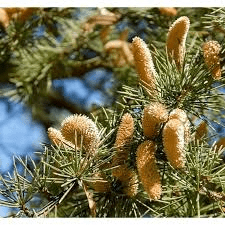
Cedrus deodara, commonly known as the Deodar cedar, is a species of coniferous tree native to the western Himalayas in South Asia. It belongs to the family Pinaceae, which includes other well-known conifers like pines, firs, and spruces.
The name “Deodar” is derived from the Sanskrit words “deva” (meaning “god”) and “dara” (meaning “wood”), giving it the nickname “wood of the gods.
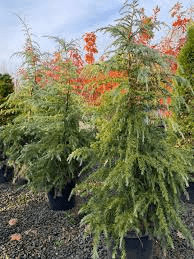
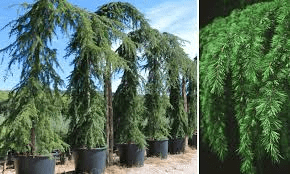
Deodar cedars are large evergreen trees with a distinctive pyramidal shape when young, gradually becoming more flat-topped as they age. They can grow to impressive heights, often reaching over 100 feet (30 meters).
The needles of Deodar cedars are arranged in clusters or fascicles. These needles are relatively long (around 1 to 2 inches) and are bluish-green in color, giving the tree a unique appearance.
The tree produces cones that are barrel-shaped and can be quite large, up to 5 inches in length. These cones mature over a period of two years and release seeds.
The bark of young Deodar cedars is smooth and grayish-brown, while older trees develop a rougher and more textured bark.
Deodar cedars have been highly valued for their timber, which is durable and insect-resistant. The wood is used for construction, furniture making, and various decorative purposes.
Due to their elegant appearance and attractive bluish-green needles, Deodar cedars are commonly used in landscaping for ornamental purposes in gardens, parks, and large estates.
In their native range, Deodar cedars play an important role in the ecosystem, providing habitat and food for various animals and insects.
While they are native to the Himalayas, Deodar cedars have been successfully introduced to other parts of the world with similar climates, such as parts of Europe and North America.
Read Also: An Estimate of how much you will spend in raising 100 Pullets
The Medicinal Health Benefits of Cedrus Deodara (Deodara Cedar)
Cedrus deodara, or Deodar cedar, has been used in traditional medicine for various health benefits. Here are 17 reported medicinal health benefits of Cedrus deodara medicinal plant:
1. Anti-Inflammatory Properties: Deodar cedar oil is believed to possess anti-inflammatory properties and has been used in massages to alleviate muscle and joint pain. For example, the oil might be mixed with a carrier oil and applied topically to soothe sore muscles or arthritis discomfort.
2. Respiratory Support: The leaves and oil of Deodar cedar are thought to have respiratory benefits. Inhalation of steam infused with cedar oil could help provide relief from congestion and coughing.
3. Antimicrobial Effects: The essential oil from Deodar cedar is claimed to have antimicrobial effects and may be used in natural cleaning solutions or diluted in a carrier oil for skin applications to help combat microbial infections.
4. Relaxation and Stress Relief: The aroma of Deodar cedar is believed to have a calming effect, aiding relaxation and stress relief. Cedar wood chips might be used in aromatherapy to create a tranquil atmosphere.
5. Skin Health: Cedar oil may be diluted and used topically to address skin issues such as acne, eczema, or fungal infections. It’s important to note that this should be done with caution, as essential oils can be potent and may cause skin irritation if not properly diluted.
6. Astringent Properties: The bark of Deodar cedar is considered to have astringent properties. Infusions or extracts from the bark might be used in traditional skincare to tighten and tone the skin.
7. Wound Healing: Some traditional practices use Deodar cedar extracts or poultices on wounds to aid in healing and prevent infections.
8. Hair Health: Cedar oil could be added to hair care products or used as a scalp treatment to help maintain a healthy scalp and hair, potentially reducing dandruff and promoting hair growth.
9. Joint Pain Relief: Traditional medicine suggests that applying a paste made from Deodar cedar bark or oil on painful joints might provide relief from arthritis or rheumatism.
10. Antifungal Properties: Deodar cedar oil may have antifungal properties and could be used in foot soaks or topical applications to address fungal infections like athlete’s foot.
11. Digestive Support: In traditional medicine, Deodar cedar extracts have been used to support digestion and treat digestive discomfort. However, scientific evidence in this regard is limited.
12. Diuretic Effects: Some traditional uses include Deodar cedar as a diuretic to help promote urine production and potentially assist in kidney function. However, professional medical advice should be sought before using it for such purposes.
13. Aromatherapy: The essential oil from Deodar cedar might be used in aromatherapy to create a relaxing and grounding atmosphere, potentially aiding meditation and emotional balance.
14. Circulation Improvement: Traditional practices suggest that Deodar cedar oil, when diluted and used in massages, might help improve blood circulation.
15. Anti-Anxiety Effects: The aroma of Deodar cedar oil could be used in aromatherapy to reduce feelings of anxiety and promote a sense of calm.
16. Insect Repellent: The aroma of cedar is known to repel insects. Cedarwood chips, sachets, or essential oil blends might be used to deter moths, mosquitoes, and other pests.
17. Anti-Dandruff: Cedar oil could be incorporated into shampoos or scalp treatments to address dandruff issues and maintain a healthy scalp.
Read Also: 10 Medicinal Health Benefits of Halleria Lucida (Tree Fuchsia)
The Methods of Usage to Achieve the Medicinal Health Benefits of Cedrus Deodara (Deodar Cedar)
Cedrus deodara, or Deodar cedar, has been used in traditional medicine for various purposes. Here are some common medicinal methods of usage:
1. Essential Oil: Deodar cedar essential oil is extracted from the wood, leaves, or twigs of the tree. It’s used for aromatherapy, massage and topical applications after proper dilution. The oil is known for its calming and grounding effects.
2. Steam Inhalation: Inhaling steam infused with a few drops of Deodar cedar essential oil can help provide respiratory relief by clearing congestion and promoting easier breathing.
3. Topical Application: Diluted cedar oil can be applied topically to the skin for various purposes. It’s often mixed with a carrier oil (such as coconut or jojoba oil) to reduce the risk of skin irritation. Topical use can address issues like joint pain, muscle discomfort, and skin problems.
4. Massage: Deodar cedar oil, when mixed with a carrier oil can be used in massages to alleviate muscle tension, promote relaxation, and provide relief from soreness.
5. Compresses: Infused compresses can be made by soaking a cloth in a solution of diluted cedar oil and warm water. These compresses can be applied to specific areas of the body to help with localized pain or inflammation.
6. Aromatherapy: The pleasant and calming aroma of Deodar cedar essential oil can be diffused in the air using aromatherapy diffusers or added to potpourri blends to create a soothing environment.
7. Baths: A few drops of Deodar cedar essential oil can be added to a warm bath for relaxation and skin benefits. However, proper dilution is essential to prevent skin irritation.
8. Sachets and Potpourri: Dried cedar wood chips or cedar essential oil can be used to make sachets or potpourri, which not only add a pleasant fragrance to spaces but also help repel insects.
9. Herbal Infusions: Infusions made from Deodar cedar leaves or bark might be used in traditional medicine for digestive support, although this usage should be approached with caution and preferably under the guidance of a healthcare professional.
The Side Effects of Using Cedrus Deodara Medicinal Plant
While Cedrus deodara, or Deodar cedar, has traditional uses and health benefits, it’s important to be aware of possible side effects and precautions when using it for medicinal purposes. Here are some considerations:
1. Skin Irritation: Undiluted essential oil from Deodar cedar can be harsh on the skin and cause irritation. Always dilute essential oils properly in a carrier oil before applying them topically. Perform a patch test on a small area of skin to check for any adverse reactions.
2. Allergic Reactions: Some individuals might be sensitive or allergic to components in cedar oil. If you experience itching, redness, swelling or any other allergic reaction, discontinue use immediately and seek medical attention if necessary.
3. Respiratory Sensitivity: Inhalation of strong concentrations of cedar oil through steam or diffusers might trigger respiratory sensitivity in some individuals. Use essential oils in well-ventilated areas and avoid excessive inhalation.
4. Photosensitivity: Some essential oils, including cedar oil, can increase sensitivity to sunlight and UV rays, potentially leading to skin reactions or burns when exposed to sunlight. Avoid direct sun exposure after using cedar oil topically.
5. Internal Use: Ingesting Deodar cedar or its essential oil is not recommended without proper guidance from a qualified healthcare professional. Some compounds present in the plant might be toxic or have unintended effects when ingested.
6. Interaction with Medications: If you are taking medications, consult with a healthcare provider before using Deodar cedar products, especially in concentrated forms like essential oils. There’s a possibility of interactions with medications or existing health conditions.
7. Pregnancy and Nursing: Pregnant and nursing individuals should exercise caution when using essential oils, including cedar oil. Many essential oils have not been thoroughly studied for their safety during pregnancy and breastfeeding.
8. Children and Pets: Essential oils can be particularly potent and may affect children and pets differently than adults. Extra caution is advised when using essential oils around them.
9. Quality of Products: The quality of essential oils can vary significantly. Always choose reputable brands that offer pure, therapeutic-grade oils without additives or contaminants.
10. Sensitive Individuals: Some individuals might be more sensitive to essential oils or herbal remedies in general. It’s wise to start with a small amount and observe any reactions before using them extensively.
11. Medical Conditions: If you have a history of allergies, skin conditions, or other medical issues, consult a healthcare professional before using Deodar cedar or any essential oils.
Nutritional Value of Cedrus Deodara (Deodar Cedar)
1. Essential Oils: Deodar cedar wood and needles contain essential oils, primarily himachalene and atlantone, used in traditional medicine for their anti-inflammatory and antimicrobial properties.
2. Terpenoids: The tree’s resin and wood are rich in terpenoids, such as beta-himachalene, which may contribute to its use in relieving respiratory issues and skin conditions.
3. Flavonoids: Found in the needles, flavonoids provide antioxidant effects, potentially protecting cells from oxidative damage when used in herbal preparations.
4. Phenolic Compounds: These compounds in the bark and needles offer antioxidant and anti-inflammatory benefits, supporting traditional uses for wound healing.
5. Sesquiterpenes: Present in the essential oil, sesquiterpenes like alpha-cedrene have calming effects, often used in aromatherapy to reduce stress.
6. Lignans: Trace amounts in the wood may contribute to its traditional use in pain relief and as an insect repellent in storage applications.
7. Tannins: The bark contains tannins, which have astringent properties, aiding in skin healing and reducing inflammation in traditional remedies.
8. Volatile Compounds: The needles and wood release volatile compounds with antimicrobial properties, used historically to preserve materials and repel insects.
9. Resin Acids: The resin contains acids like deodaric acid, which may support its use in topical ointments for joint pain and skin irritations.
10. Low Nutritional Calories: Deodar cedar is not consumed as food, so it provides negligible calories, but its bioactive compounds are valued in medicinal applications.
Scientific Evidence and Case Studies on Cedrus Deodara (Deodar Cedar)
1. Antimicrobial Activity: Shinde et al. (2009) found that essential oils from Cedrus deodara exhibited strong antibacterial activity against Staphylococcus aureus and Escherichia coli, supporting its use in traditional antiseptic remedies (Shinde, U. A., Kulkarni, M. S., et al. (2009). Antibacterial activity of essential oil from Cedrus deodara. Indian Journal of Pharmaceutical Sciences, 71(3), 324-326).
2. Anti-inflammatory Effects: Shinde et al. (1999) demonstrated that Cedrus deodara wood oil reduced inflammation in rat models, validating its traditional use for arthritis and joint pain (Shinde, U. A., Phadke, A. S., Nair, A. M., et al. (1999). Preliminary studies on the anti-inflammatory and analgesic activities of Cedrus deodara wood oil. Journal of Ethnopharmacology, 65(1), 21-27).
3. Antifungal Properties: Chaudhary et al. (2011) reported that Deodar cedar essential oil inhibited fungal growth, particularly Aspergillus niger, suggesting its potential in natural antifungal treatments (Chaudhary, A. K., Ahmad, S., & Mazumder, A. (2011). Antifungal potential of Cedrus deodara essential oil. Journal of Pharmacy Research, 4(6), 1817-1819).
4. Insect Repellent Activity: Singh et al. (1988) showed that Cedrus deodara oil was effective as a natural insect repellent against mosquitoes and storage pests, due to its volatile sesquiterpenes (Singh, D., & Agarwal, S. K. (1988). Himachalol and β-himachalene: Insect-repellent principles of Cedrus deodara. Phytochemistry, 27(8), 2513-2515).
5. Antioxidant Capacity: Tiwari et al. (2001) found that the needle extracts of Cedrus deodara exhibited significant antioxidant activity, attributed to phenolic compounds, supporting its use in oxidative stress-related conditions (Tiwari, A. K., Srinivas, P. V., et al. (2001). Free radical scavenging active components from Cedrus deodara. Journal of Agricultural and Food Chemistry, 49(10), 4642-4646).
Frequently Asked Questions About Cedrus Deodara (Deodar Cedar)
1. What is Cedrus deodara used for?
Its wood, oil, and needles are used in traditional medicine, aromatherapy, and as an insect repellent, particularly for joint pain, respiratory issues, and skin conditions.
2. Is Deodar cedar oil safe for skin?
When diluted properly, it’s generally safe for topical use but may cause irritation in sensitive individuals; always patch-test first.
3. Can Cedrus deodara be used in aromatherapy?
Yes, its essential oil is used in aromatherapy to promote relaxation and relieve stress due to its calming sesquiterpenes.
4. Is Deodar cedar edible?
No, it is not edible; its compounds are used medicinally but can be toxic if ingested in large amounts.
5. Why is Cedrus deodara culturally significant?
Known as “Devadaru” in India, it’s sacred in Hinduism, often planted near temples, and its wood is used for religious carvings and incense.
6. Does Deodar cedar repel insects?
Yes, its essential oil and wood are effective against mosquitoes and storage pests due to volatile compounds like himachalene.
7. Can Deodar cedar grow in cold climates?
It thrives in USDA zones 7-9, tolerating cold down to -12°C but preferring well-drained soils and moderate climates.
8. Are there side effects of using Deodar cedar products?
Topical use may cause skin irritation, and internal use is not recommended due to potential toxicity; consult a doctor before use.