


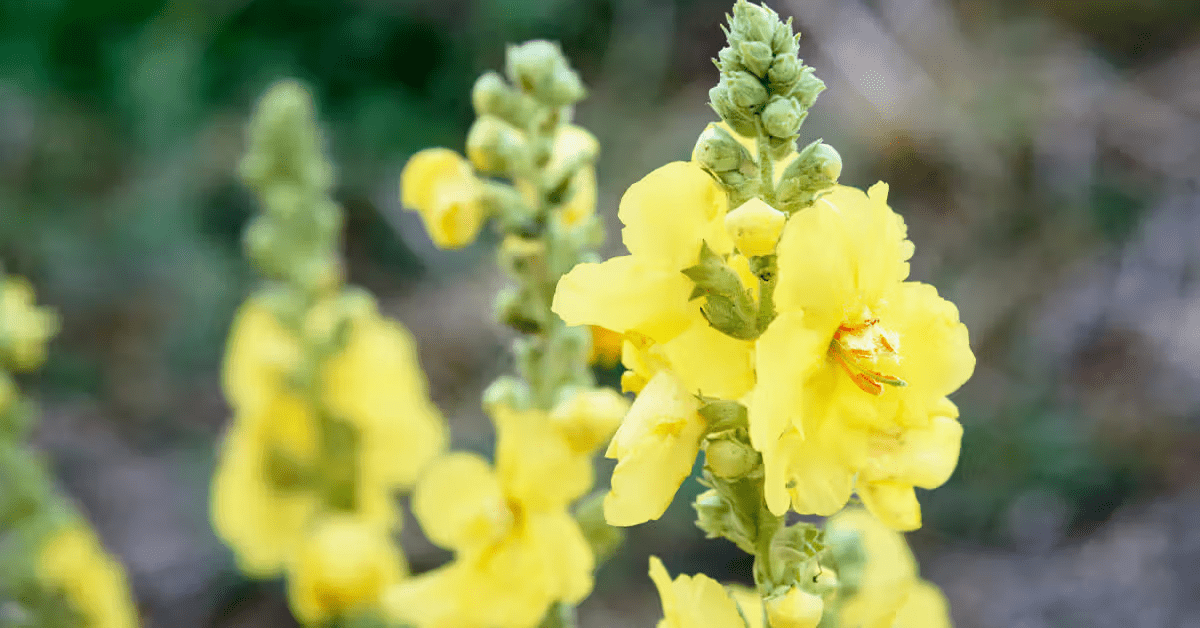
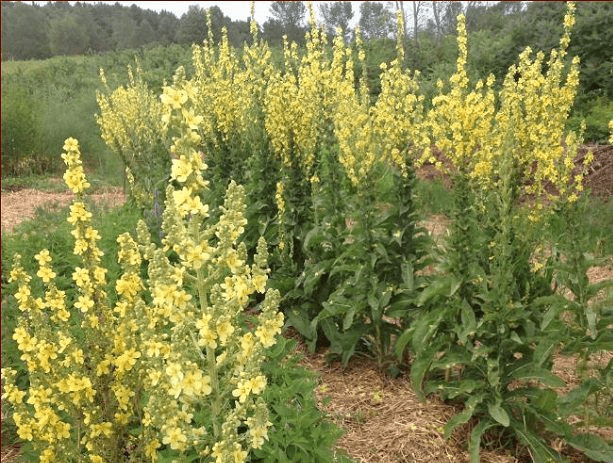
The common mullein (Verbascum thapsus) has a single stem, large, thick, velvety leaves, and pale-yellow, slightly asymmetrical flowers. It can reach heights of up to seven feet. This variety is the one that shops typically carry.
Any of the more than 300 species of the Verbascum genus, which are huge biennial or perennial herbs indigenous to northern temperate climates, particularly eastern Eurasia, are referred to as mullein. Due to the plant’s height and yellow blossoms, it is sometimes called Aaron’s rod.
Since ancient times, mullein has been used, and its use and popularity only seem to be growing with time. One of the best herbs for healing, the plant’s leaves, blossoms, and roots are used to cure a variety of inflammatory disorders, diarrhea, asthma coughs, and other lung-related conditions.
Children and adults alike frequently use an oil derived from the mullein plant’s blooms to relieve the discomfort and swelling brought on by earaches. Even the influenza virus, herpes viruses, and several bacteria that cause respiratory illnesses may be able to be defeated by this plant.
A nutritious tea that has been used in folk medicine can be made from mullein leaves. You can create your own mullein leaf tea at home or get it at your neighborhood health or food store.
This yellow-flowered plant’s tea can aid with conditions like bronchitis, a sore throat, a cough, a cold, and hoarseness. Some people also take it to treat joint pain and digestive complaints like diarrhea.
The leaves are simply cooked in boiling water and filtered to make tea.
According to research, the plant also contains carbohydrates, proteins, lipids, oils, terpenoids, saponins, tannins, flavonoids, and glycosides.
Additionally, it has a mucilage content of about 3%, which is regarded to be the reason for the herb’s calming effects on the mucous membranes of the body. The herb’s expectorant properties are thought to be due to mullein’s saponins.
The therapeutic properties of mullein as an emollient and astringent have a long history in medicine. Great mullein has been used as a treatment for skin, throat, and respiratory issues since the dawn of time.
Dioscorides, an ancient Greek physician, pharmacologist, and botanist, suggested the herb for lung ailments.
Traditional Irish folk medicine for tuberculosis involves consuming fresh leaves daily after they have been boiled in milk.
Mullein has historically been used for purposes other than medicine! Torches and coloring agents have both been made using it. Yellow hair dye has historically been produced from yellow mullein flowers. Additionally, it is a flavoring component in alcoholic drinks.
Read Also: 6 Health Benefits of Psyllium Husk (Plantago ovate)
6 Health Benefits of Mullein (Verbascum thapsus)
1. Ear Infections
A mullein is a great option for erratic ear conditions because of its well-known emollient and astringent qualities.
A popular natural treatment for earaches and infections can be bought at health stores (and online) in the form of a tincture that either contains the plant exclusively or a mixture of mullein and other herbs.
According to a 2001 study published in The Archives of Pediatrics and Adolescent Medicine, herbal ear drops containing mullein were just as effective as anesthetic drops.
Mullein oil is also successfully used by people to treat their dogs’ ear infections and other health issues naturally. That’s true, keep in mind that you can treat your animal pals with natural therapies as well.
The therapeutic properties of mullein as an emollient and astringent have a long history in medicine. Great mullein has been used as a treatment for skin, throat, and respiratory issues since the dawn of time.
Dioscorides, an ancient Greek physician, pharmacologist, and botanist, suggested the herb for lung ailments.
Traditional Irish folk medicine for tuberculosis involves consuming fresh leaves daily after they have been boiled in milk.
Mullein has historically been used for purposes other than medicine! Torches and coloring agents have both been made using it. Yellow hair dye has historically been produced from yellow mullein flowers. Additionally, it is a flavoring component in alcoholic drinks.
2. Calm Bursitis
The tiny, fluid-filled sacs (called bursae) that cushion the bones, tendons, and muscles close to your joints can become inflamed and cause bursitis, a painful ailment. According to a study, mullein has anti-inflammatory properties and can treat bursitis, which is caused by inflamed bursae.
Bursitis most frequently occurs in the shoulder, elbow, and hip. You can just make some mullein tea and dunk a clean towel in the warm tea to treat bursitis naturally.
The affected area can then be covered with the cloth daily, which should help to reduce inflammation and act as a home cure for joint and bone pain. Another option is to make a healing poultice.
Read Also: 6 Health Benefits of Passion Flower (Passiflora)
3. Potent Disinfectant
A powerful disinfectant that can treat both internal and exterior infections is mullein oil. The plant has antibacterial qualities and can be utilized to treat infectious disorders, according to a recent study that was published in the journal Medicinal Chemistry.
Internally, it has been used to treat infections of the kidneys, urinary system, colon, ear, and vaginal yeast. It can aid in the treatment of skin infections when applied externally.
4. Ease Respiratory Illness
Numerous upper respiratory conditions, such as tonsillitis, bronchitis, dry coughs, sore throats, and general hoarseness, can be naturally treated with mullein tea. Folk medicine also makes use of mullein for COPD.
The leaves have a potent antioxidant and anti-inflammatory extract that aids in clearing the body of mucus and calms irritated, inflamed organ tracts including the throat. Mullein’s calming effect on the bronchioles makes it potentially effective as a treatment for asthma.
Some people use mullein smoking to treat respiratory problems. According to traditional medicine, you can smoke dried herbs in a pipe to relieve lung congestion. But if employed, it should never be done for an extended period of time because it is a dubious manner to use it.
Additionally, employing mullein’s beneficial properties through smoking is one of the least efficient methods. Smoking mullein instead of tobacco can be beneficial if you smoke and have lung congestion.
Read Also: 6 Health Benefits of Vitex (Vitex agnus-catus)
Scientific Evidence and Case Studies on Mullein (Verbascum thapsus)
1. Otitis Media (Ear Infections): A randomized, double-blind clinical trial by Sarrell et al. compared the efficacy of an herbal ear drop containing mullein, garlic, and St. John’s Wort against a standard anesthetic ear drop in children with acute ear pain. The study found that the herbal drops were statistically just as effective as the anesthetic drops in reducing pain, validating the traditional use of mullein oil for earaches.
2. Antimicrobial Activity: Research conducted by Turker et al. investigated the antibacterial activity of Verbascum thapsus extracts against various strains of bacteria, including Klebsiella pneumoniae and Staphylococcus aureus. The results demonstrated that the methanol extracts of the plant exhibited significant inhibitory activity against these pathogens, supporting its use in treating respiratory and wound infections.
3. Antiviral Properties: An investigation by Zgorniak-Nowosielska et al. screened various plant extracts for antiviral activity against the herpes simplex virus and influenza virus. The study indicated that extracts from the Mullein family showed antiviral effects, likely inhibiting the replication of the virus, which aligns with its historical use for treating flu and colds.
4. Wound Healing: A study by Mehmood et al. evaluated the wound-healing potential of Verbascum thapsus leaf extract in rabbits. The findings revealed that the application of the extract significantly accelerated the rate of wound contraction and epithelialization compared to the control group, attributed to the plant’s anti-inflammatory and antioxidant profile.
5. Anti-Inflammatory and Antinociceptive Effects: Research by Tatli et al. isolated specific compounds (iridoid glycosides and saponins) from Verbascum species to test their efficacy in reducing inflammation and pain in animal models. The data showed that these compounds possessed significant anti-inflammatory activity, comparable in some instances to standard drugs like indomethacin.
Nutritional Value Of Mullein (Verbascum thapsus)
1. Mucilage: This is the most significant constituent of mullein leaves and flowers. It is a gelatinous polysaccharide that swells in water to form a soothing, protective film over mucous membranes, making it highly effective for calming irritated throats and dry coughs.
2. Verbascoside: A phenylethanoid glycoside found in the plant. It is a potent pharmacologically active compound known for its strong anti-inflammatory, antioxidant, and antimicrobial properties, particularly in combating respiratory pathogens.
3. Saponins: Mullein contains triterpene saponins, which act as natural expectorants. These compounds help stimulate the production of fluid in the lungs, thinning mucus and making it easier to expel phlegm during chest congestion.
4. Aucubin: An iridoid glycoside present in the leaves. Aucubin has been studied for its ability to inhibit inflammation and protect the liver, contributing to the herb’s overall detoxifying and soothing nature.
5. Flavonoids (Hesperidin and Rutin): The plant is rich in flavonoids like hesperidin and rutin. These antioxidants help strengthen capillaries and reduce oxidative stress, supporting the immune system and cardiovascular health.
6. Vitamin C: Mullein leaves provide a source of Vitamin C. This essential nutrient supports the immune response to infections and aids in the repair of tissues damaged by chronic coughing or inflammation.
7. Magnesium: The herb contains magnesium, a mineral that acts as a natural muscle relaxant. This contributes to mullein’s antispasmodic effects, helping to stop the spasmodic coughing reflex.
Frequently Asked Questions About Mullein (Verbascum thapsus)
1. Can you smoke mullein?
Yes, dried mullein leaf is a traditional herbal smoke often used to relax the lungs and soothe spasmodic coughing, though smoking anything can irritate the lungs.
2. Is mullein tea good for asthma?
Yes, due to its mucilage and anti-inflammatory properties, it helps soothe the bronchial tubes and reduce inflammation, though it should not replace rescue inhalers.
3. Why is mullein called “Cowboy Toilet Paper”?
The large, soft, and fuzzy leaves are highly absorbent and have been traditionally used as a natural toilet paper by campers and travelers.
4. Does mullein help with ear infections?
Yes, mullein flower oil (often infused with garlic) is a classic herbal remedy used topically in the ear to relieve the pain and inflammation of earaches.
5. Are the seeds of the mullein plant safe?
No, mullein seeds contain rotenone, a compound that is toxic to fish (piscicide) and potentially harmful to humans if ingested in large quantities.
6. How do I prepare mullein tea?
Steep dried leaves in boiling water for 15 minutes, but be sure to strain it through a coffee filter or fine cloth to remove the tiny hairs, which can irritate the throat.
7. Is mullein safe during pregnancy?
While generally considered gentle, there is not enough clinical data to confirm its safety, so it is usually recommended to avoid it during pregnancy and breastfeeding.
8. Can mullein grow in my garden?
Yes, it is a hardy biennial weed that grows easily in poor soil, but it can become invasive if not managed, as it produces thousands of seeds.
Do you have any questions, suggestions, or contributions? If so, please feel free to use the comment box below to share your thoughts. We also encourage you to kindly share this information with others who might benefit from it. Since we can’t reach everyone at once, we truly appreciate your help in spreading the word. Thank you very much for your support and for sharing!
Disclaimer: This article is for educational and informational purposes only. The health benefits described are based on scientific research and traditional knowledge. They ayre not a substitute for professional medical advice, diagnosis, or treatment. Always consult a healthcare professional before using any herb or natural remedy for medical purposes.
Read Also: Top 20 Proven Benefits of Ginger Plant