


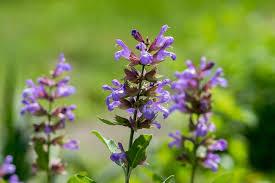
Sage, scientifically known as Salvia officinalis is an evergreen perennial shrub with woody stems and grayish-green leaves. The most prevalent variety reaches a maximum height and width of two feet.
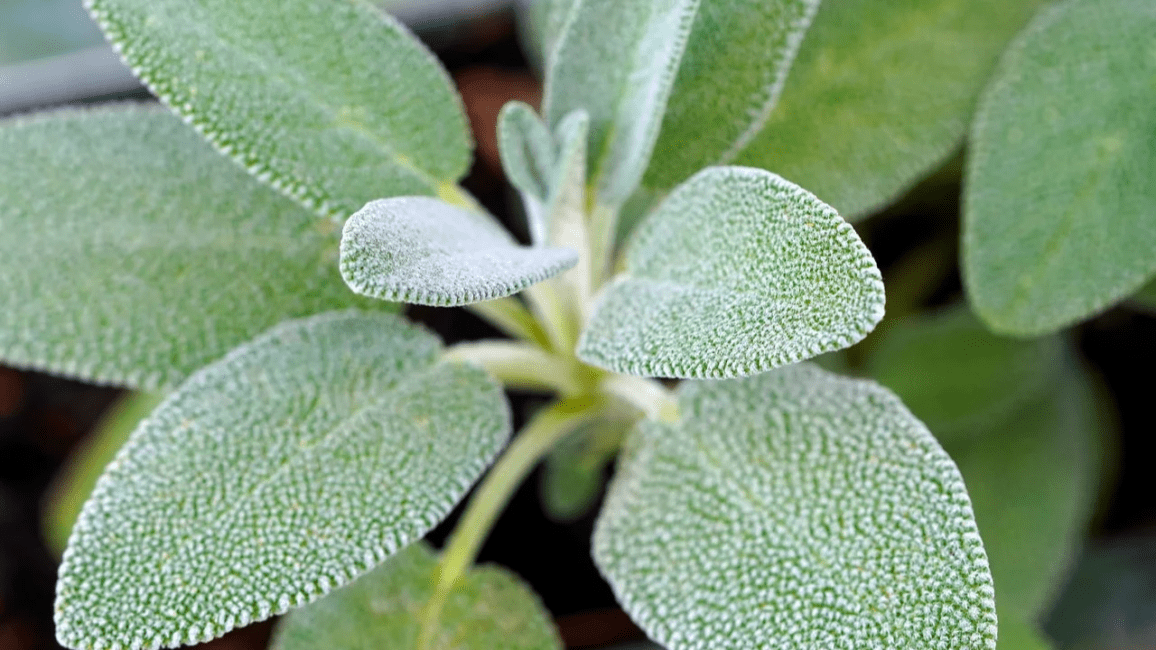
Sage bushes produce flowers that range in color from lavender and white to pink and purple in the late spring or early summer. The texture of sage plants is another distinguishing characteristic. Trichomes, which resemble microscopic hairs, are found on every leaf.
The mint family includes common sage (Salvia officinalis), which is believed to have its roots in the Mediterranean. Now that it is widely available, this popular culinary herb is a favorite of cooks all over the world. Also employed as ornamental shrubs are sage plant variants.
Salvia officinalis, the common sage’s Latin name, alludes to the herb’s extensive usage as a remedy. The word salvia derives from the Latin root Salvere, which also means to be saved or to cure.
The phrase Officinalis alludes to an Officina, a particular room in a monastery. Herbs and medications were stored in the office.
The Roman scientist and historian Pliny the Elder first mentions sage in writing. Sage was employed as a styptic, a diuretic, and a local anesthetic, according to Pliny.
The Holy Roman Emperor Charlemagne ordered all farms in his realm to cultivate sage for the benefit of the country in 800 A.D.
Sage was one of the ingredients in the Four Thieves vinegar that medieval herbalists used. It was believed that this mixture, which also included sage, powerful white vinegar, wormwood, cloves, and other herbs, would stop the spread of the plague.
Read Also: 4 Health Benefits of Vervain (Verbena Officinalis)
The aromatics found in sage and other herbs may have actually served as a flea repellent, according to modern experts. The fleas, not the medieval herbalist, were the true carriers and spreaders of the plague.
Both fresh and dried sage is required in recipes that call for it. Sage that has been rubbed refers to a powder that has actually been removed from the plant’s leaves.
This powder is incredibly fluffy and delicate. Additionally, sage is accessible as extracts and essential oils, all of which provide some very amazing health advantages.
Sage has been a crucial component of conventional medicine for thousands of years. Sage has been used traditionally by herbalists to treat a wide range of illnesses and concerns, such as swelling, infection, pain alleviation, and memory improvement.
Sage tea has been touted for its capacity to improve digestion, stop diarrhea, and offer comfort to women dealing with severe menstruation discomfort.
Additionally, oral sores and infections had been successfully treated with sage. These are just a few of the traditional, safe advantages and uses. It can also be prepared as a mouthwash or gargle to relieve discomfort from sore throats, bleeding gums, and mouth ulcers.
Researchers have focused on sage in an effort to examine these sage advantages in clinical studies, possibly as a result of the herb’s popularity in conventional herbal therapy. The findings of this study are rather unexpected considering how well sage works to heal a variety of illnesses.
Read Also: 5 Health Benefits of Sassafras (Sassafras albidum)
4 Health Benefits of Sage (Salvia officinalis)
1. Helps Soothe Dementia
Spanish sage (Salvia lavandulaefolia), Chinese sage (Salvia Miltiorrhiza), and common sage (Salvia officinalis) have all long been advised by traditional medicine to cure memory loss and deteriorating mental abilities linked to diseases like Alzheimer’s disease.
Clinical tests were performed utilizing the Spanish sage extract researchers. The benefits of essential oil supplementation on cognition were found to be significant in a study of healthy volunteers utilizing both participants and in vivo tests employing Alzheimer’s-affected rats and humans.
Participants in the trial reported fewer neuropsychiatric symptoms as well as an overall improvement in mental focus. This supports the idea that sage benefits include its capacity to aid in enhancing mental abilities linked to dementia and Alzheimer’s disease were given doses of Spanish sage essential oil.
In memory-related tasks, these subjects demonstrated an improvement in recall speed. Additionally, they saw an improvement in their general alertness, calmness, and contentedness.
Researchers who treat Alzheimer’s disease and dementia are particularly interested in these mood-enhancing properties. Patients with these ailments frequently go through phases of extreme irritation, thus the sage oil treatments may provide some alleviation from those symptoms.
2. Antidiabetic
In experiments on animals, the ability of sage to reduce glucose levels was demonstrated. For instance, to investigate the anti-diabetic properties of common sage, researchers offered tea to mice and rats.
They came to the conclusion that sage may be useful as a food supplement in the prevention of type 2 diabetes mellitus by lowering the plasma glucose of individuals at risk, based on its effects on fasting glucose levels in healthy animals and its effects rat hepatocytes that are similar to those of metformin.
Additionally, obese mice who had been fed a high-calorie diet were given sage treatment to test if the herb had any effects on their diabetes. For five weeks, the mice were given either sage methanol extract or a control.
Read Also: 8 Health Benefits of Parsley (Petroselinum crispum)
3. Regulates Cholesterol
In a published study, six healthy female volunteers between the ages of 40 and 55 evaluated the advantages of sage tea. Researchers specifically examined cholesterol, lipid profiles, and blood glucose control.
They discovered that four weeks of sage tea consumption had no discernible effects on the regulation of blood sugar, but that the lipid profile had improved, with lower plasma levels of LDL cholesterol and total cholesterol and higher plasma levels of HDL cholesterol both during and two weeks after treatment.
4. Aids Treatment of PMS
Menopause symptoms include overnight perspiration, hot flashes, insomnia, headaches, dizziness, and irregular heartbeats. These signs and symptoms are brought on by hormonal abnormalities, specifically low estrogen levels.
Researchers confirmed an old wives’ tale that sage tea could help with hot flashes and other menopausal symptoms. A once-daily pill of fresh sage leaves was administered to 71 individuals in this trial for two months.
Patients reported a considerable reduction in hot flashes throughout this time, with extremely severe flashes being completely eliminated and severe flashes being decreased by 79 percent.
The findings provide patients and caregivers with natural therapy alternatives and demonstrate that sage is a workable treatment for menopausal symptoms.
Read Also: 5 Health Benefits of St. John’s Wort (Hypericum perforatum)
Scientific Evidence and Case Studies on Sage (Salvia officinalis)
1. Cognitive Performance and Memory: A randomized, double-blind, placebo-controlled crossover study by Scholey et al. investigated the effects of sage extract on cognitive performance in healthy older adults. The results demonstrated that the 333 mg dose of sage extract significantly enhanced secondary memory performance and increased alertness compared to the placebo, suggesting its potential for treating age-related cognitive decline.
2. Management of Menopausal Hot Flashes: A multicenter clinical trial conducted by Bommer et al. evaluated the safety and efficacy of a fresh sage leaf preparation in women suffering from menopausal hot flashes. The study found that the daily number of hot flashes decreased significantly by 50% after 4 weeks and by 64% after 8 weeks, with the intensity of the flashes also significantly reduced.
3. Alzheimer’s Disease: A randomized, double-blind study by Akhondzadeh et al. assessed the efficacy of Salvia officinalis extract in the treatment of mild to moderate Alzheimer’s disease. The findings indicated that the patients receiving the sage extract showed significantly better cognitive function scores (ADAS-cog) compared to the placebo group after 4 months, and the extract appeared to reduce agitation.
4. Lipid Profile in Type 2 Diabetes: Research by Kianbakht et al. examined the effects of sage leaf extract on the lipid profile of hyperlipidemic type 2 diabetic patients. The results showed that the extract significantly lowered total cholesterol, triglycerides, and LDL (bad) cholesterol, whilst increasing HDL (good) cholesterol levels without affecting liver or kidney function.
5. Acute Sore Throat (Pharyngitis): A randomized, double-blind study by Hubbert et al. compared the efficacy of a sage and echinacea spray against a placebo spray in patients with acute sore throats. The data revealed that the sage-echinacea combination was significantly more effective than the placebo in relieving throat pain, providing a response rate of nearly 64% compared to the placebo’s 41%.
Nutritional Value Of Sage (Salvia officinalis)
1. Rosmarinic Acid: This is a polyphenol and the primary antioxidant compound found in sage. It is readily absorbed from the gastrointestinal tract and possesses strong anti-inflammatory and antimicrobial properties, contributing to the herb’s ability to boost the immune system.
2. Thujone: Sage contains volatile ketones known as alpha- and beta-thujone. While responsible for the herb’s distinct aroma and some of its antiseptic qualities, thujone acts as a GABA receptor antagonist; it is the compound that necessitates moderation, as high doses can be neurotoxic.
3. Vitamin K: Sage is an incredibly dense source of Vitamin K. A small serving provides a significant portion of the daily requirement, which is essential for blood clotting and maintaining bone density by facilitating calcium transport.
4. Carnosic Acid: This diterpene is found in sage and rosemary and acts as a potent neuroprotective agent. It protects brain cells from oxidative stress and has been shown to induce the production of nerve growth factor, potentially aiding in memory retention.
5. Camphor: A terpene found in the essential oil of sage, camphor provides a cooling, numbing sensation. It contributes to the herb’s topical analgesic (pain-relieving) properties and its ability to clear respiratory congestion when inhaled.
6. Flavonoids (Luteolin and Apigenin): These plant pigments act as antioxidants and anti-inflammatories. Luteolin and apigenin have been studied for their potential to inhibit cancer cell growth and improve cardiovascular health by relaxing blood vessels.
7. Ursolic Acid: A pentacyclic triterpenoid found in the waxy coating of sage leaves. It possesses anti-inflammatory, antimicrobial, and antitumor properties, and is often studied for its ability to preserve muscle mass and reduce body fat.
Frequently Asked Questions About Sage (Salvia officinalis)
1. Is culinary sage the same as the sage used for smudging?
No, culinary sage is Salvia officinalis, while the white sage typically used for smudging ceremonies is Salvia apiana; they are different species.
2. Can sage dry up breast milk?
Yes, sage contains anti-galactagogue properties and is traditionally used by women to help stop the production of breast milk during weaning.
3. Is sage safe to consume during pregnancy?
Large medicinal doses should be avoided during pregnancy due to the thujone content, which can stimulate the uterus, though small culinary amounts are generally considered safe.
4. Can I eat raw sage leaves?
Yes, but they have a very strong, pungent, and slightly fuzzy texture, so they are usually chopped finely or cooked to mellow the flavor.
5. Does sage tea contain caffeine?
No, pure sage tea made from the leaves is naturally caffeine-free.
6. What is the maximum amount of sage tea I should drink?
Due to the thujone content, it is generally recommended to limit consumption to 3–6 cups per day and not to drink it daily for extended periods without a break.
7. Can sage darken gray hair?
Traditionally, strong sage tea has been used as a rinse to darken gray hair over time, though the effects are subtle and temporary.
8. Does sage interact with diabetes medication?
Yes, because sage can lower blood sugar levels, taking it alongside diabetes medications may cause hypoglycemia, requiring close monitoring.
Do you have any questions, suggestions, or contributions? If so, please feel free to use the comment box below to share your thoughts. We also encourage you to kindly share this information with others who might benefit from it. Since we can’t reach everyone at once, we truly appreciate your help in spreading the word. Thank you very much for your support and for sharing!
Disclaimer: This article is for educational and informational purposes only. The health benefits described are based on scientific research and traditional knowledge. They ayre not a substitute for professional medical advice, diagnosis, or treatment. Always consult a healthcare professional before using any herb or natural remedy for medical purposes.
Read Also: All You Need to Know About Periwinkles