


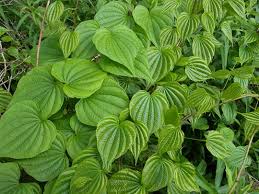
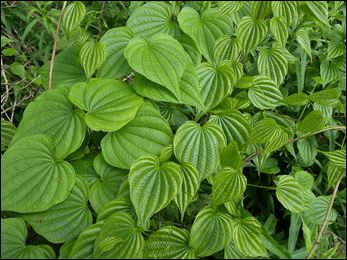
Wild yam scientifically known as Dioscorea villosa is a perennial vine that often has a long, slender, twisted tuberous rootstock. The heart-shaped leaves can range in size from two to six inches long and almost as wide.
The plant produces tiny greenish-yellow blooms with a strong cinnamon scent, and the lower leaves frequently grow in groups of two and four. Numerous kinds produce edible tubers that resemble potatoes.
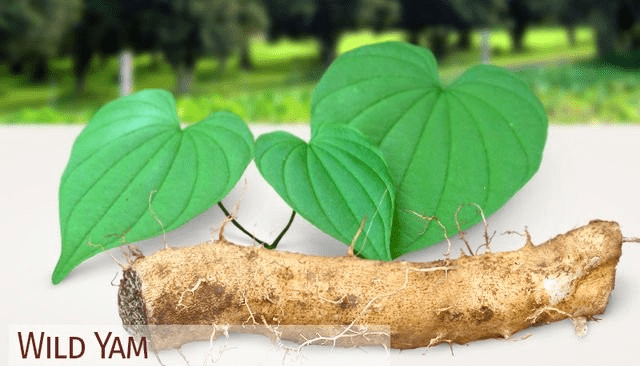
The rhizome or dried roots are the components used. The yam’s roots contain diosgenin, a plant-based estrogen that can be converted into progesterone. It’s crucial to remember that our bodies cannot turn the chemical into the hormone estrogen; this can only be done in a lab.
Regarding the proper dosage of wild yam, it’s vital to take a few things into account. Age and physical condition are significant factors, particularly if the person is pregnant.
Given the lack of current research regarding the yam, it is always advised to speak with a doctor. Pay attention to the instructions on the labels and start by talking to your doctor.
Read Also: 4 Health Benefits of Valerian Root (Valeriana officinalis)
The most common forms of wild yam are liquid extracts, dried herbs, powders, capsules, and tablets. The liquid form can be prepared as tea.
You can also buy creams that contain wild yam, but unless it has been via a lab, it probably won’t have the necessary chemical to influence hormones. Our bodies do not naturally convert it.
Ask your doctor about the optimum application before adding it to a tincture. Children should not use wild yam for therapeutic purposes. Simply put, the evidence for its safety is insufficient.
The herb black cohosh, which has properties resembling those of estrogen, is frequently mixed with wild yam. Given that they are made in laboratories, wild yam lotions, pills, and powders may include synthetic hormones. Examine the ingredients thoroughly, then talk to a doctor.
Let’s reiterate that there aren’t enough studies on wild yam. Therefore, you should first get advice from a physician or herbalist, especially if you are expecting, breastfeeding, sick, or using medication.
Scientists caution that eating the yam extract while taking estradiol, an active component that may be included in your birth control pill or hormone replacement medication, could have negative effects.
It is advised to stop using wild yam extract if you suffer rashes, swelling of the tongue or lips, trouble breathing, or swelling of the throat since allergic reactions can occur.
Read Also: 5 Health Benefits of Moringa (moringa Oleifera)
5 Health Benefits of Wild Yam (Dioscorea villosa)
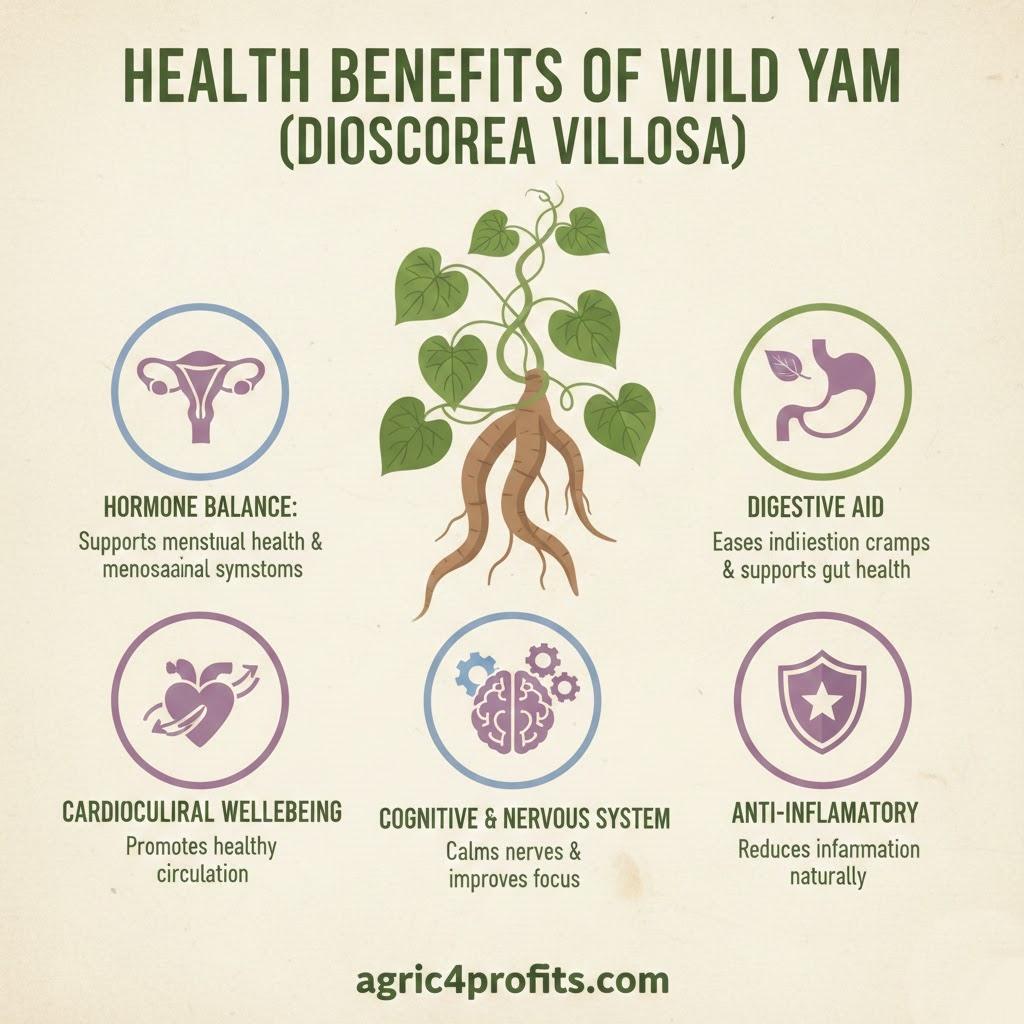
There are many alleged uses and advantages of Dioscorea villosa, although there is little scientific evidence for some of them, such as menopausal treatment and hormonal balance.
However, among the top five scientifically confirmed advantages of the yam are its capacity to control blood sugar levels, enhance cholesterol, and lessen photoaging.
The most common forms of wild yam are liquid extracts, dried herbs, powders, capsules, and tablets. The liquid can also be used to brew tea, and creams are readily available.
But keep in mind that since our bodies do not naturally convert it, unless it has been via a laboratory, it probably does not have the chemical necessary to impact hormones.
1. Anticancer
A study was done in Japan to find out if the yam could assist in lowering the chances of cancer due to the widespread use in Japan for wellness advantages, the study was started.
The researchers did discover that the rhizome of the wild yam plant, which generates the main ingredient dioscin, had antiproliferative effects on leukemia cells, albeit there isn’t enough data to draw firm conclusions and more research is required.
Although it’s frequently used as a supplement, wild yam is used as a health food in northern Japan, and this research suggests it may be a food that fights cancer.
Additionally, studies have shown that the wild yam extract inhibits cell proliferation in human breast cancer MCF-7 cells and functions as a weak phytoestrogen.
2. Can Improve Levels of Cholesterol
According to a published study, the diosgenin present in wild yam may aid in increasing HDL (the good cholesterol) and lowering LDL (the bad cholesterol).
In order to find out if diosgenin suppresses cholesterol absorption, rats were given wild yam for a week. It was discovered that the rats had better HDL-to-LDL ratios.
According to a second study done on mice and rats, supplementing with wild yam may help manage hypercholesterolemia.
Read Also: 7 Health Benefits of Fenugreek (Trigonella foenum-graecum)
3. May Aid Diverticulosis Relief

Diverticulosis is an intestine disorder that may be helped by wild yam. Small pouches that develop on the colon wall causing this. Constipation, diarrhea, and occasionally even fever can result from them being inflamed, which is known as diverticulosis.
Records show that a highly refined, low-fiber diet is the primary cause of diverticulosis, which affects 30 to 40% of adults over the age of 50. What benefits does wild yam have for diverticulosis?
Wild yam possesses anti-inflammatory and antispasmodic properties. It may aid in easing any discomfort brought on by abdominal cramps near the inflamed area because it is anti-spasmodic. Wild yam, valerian, cramps bark, and peppermint tincture could provide relief.
4. Anti-photo aging
Studies suggest that the diosgenin present in wild yam extract may have a “depigmenting effect,” meaning that it may be beneficial for conditions including melasma, Melanodermatitis, and solar lentigo, conditions that ultimately lead to hyperpigmentation.
Although hyperpigmentation is a normal and rather common skin condition, it can be annoying because it manifests itself most obviously as darker regions of skin.
What about comfort during menopause? Many people have promoted it as a terrific way to lessen menstruation problems and help with hormone replacement throughout menopause, but is it actually effective? Maybe not so much, according to a recent study.
5. Helps In Regulating Blood Sugar Levels
According to research, the yam may assist in controlling blood sugar. This has been linked to a chemical called discretize, which has produced promising outcomes in research. According to a study, giving tuber-extracted discretize to diabetic rabbits decreased their blood sugar levels.
Read Also: 11 Unique Health Benefits of Feverfew (Tanacetum parthenium)
Nutritional value of Wild Yam (Dioscorea villosa)
1. Diosgenin: This key steroidal sapogenin is abundant in the roots and serves as a precursor for synthesizing hormones in labs, though the body doesn’t convert it directly. It contributes to the plant’s therapeutic reputation.
Diosgenin supports various potential bioactivities, including anti-inflammatory effects.
2. Steroidal saponins: Compounds like dioscin and others provide anti-inflammatory and antioxidant properties, helping combat oxidative stress in the body.
These saponins are linked to membrane interactions and potential protective effects against certain conditions.
3. Flavonoids: Present as antioxidants that help neutralize free radicals and support overall cellular health.
Flavonoids in wild yam aid in reducing oxidative damage.
4. Beta-carotene: A precursor to vitamin A, which promotes skin health, immune function, and vision.
It contributes to the plant’s role in traditional remedies for related issues.
5. Vitamin C: An essential antioxidant that boosts immunity and collagen production.
This vitamin enhances the herb’s supportive role in wellness.
6. Starch and carbohydrates: The tubers are a source of energy-providing starches, making wild yam a potential dietary staple in some contexts.
They offer sustained energy release.
7. Trace minerals (e.g., copper, iron, zinc, manganese): These support enzyme functions, blood health, and metabolic processes.
Minerals like copper and iron are notably present in some Dioscorea species, aiding nutritional balance.
8. Alkaloids: Contribute to traditional medicinal effects, potentially including mild therapeutic actions.
They add to the phytochemical diversity.
9. Tannins: Provide astringent properties that may support digestive and tissue health.
Tannins offer protective benefits in herbal applications.
10. Proteins (including dioscorin): Storage proteins like dioscorin make up a significant portion and may have immune-stimulatory or other functional roles.
These enhance the overall nutrient profile.
Wild yam (Dioscorea villosa) stands out more for its phytochemicals than everyday macronutrients, differing from edible yams, but its compounds offer notable value in herbal contexts.
Scientific Evidence and Case Studies on Wild Yam (Dioscorea villosa)
1. Aumsuwan et al. (2015): Evaluation of wild yam root extract as a potential epigenetic agent in breast cancer cells, showing effects on gene expression in triple-negative breast cancer models.
It highlighted potential anticancer mechanisms via saponins like diosgenin and dioscin.
2. Araghiniknam et al. (1996): Antioxidant activity of Dioscorea and DHEA in older humans.
This demonstrated antioxidant effects from wild yam components.
3. Komesaroff et al. (study referenced in reviews, around 2001): Clinical trial on wild yam cream for menopausal symptoms, finding no significant hormonal conversion or benefits.
It emphasized that diosgenin does not convert to progesterone in the body.
4. Hudson et al. (1997): Clinical and endocrinological effects of a menopausal botanical formula including wild yam.
Observed limited or no substantial effects on symptoms.
5. Zagoya et al. (1971): Studies on cholesterol metabolism regulation using diosgenin.
Diosgenin influenced cholesterol levels in animal models.
6. Son (2007): Isolated diosgenin decreased total cholesterol and increased HDL in rats.
Suggested cardiovascular benefits from the compound.
7. Aumsuwan et al. (another 2015 study): Anticancer potential of dioscin from wild yam in invasive breast cancer cells.
Showed cytotoxicity and growth inhibition.
8. Wojcikowski et al. (2008): Dioscorea villosa induces chronic kidney injury via pro-fibrotic pathways in some models.
Highlighted potential risks with prolonged use.
Studies on wild yam often focus on diosgenin rather than the whole herb, with mixed results—promising in vitro for anti-inflammatory, antioxidant, and anticancer effects, but limited clinical evidence for hormonal benefits in humans, and some safety concerns noted.
Summary of Wild Yam (Dioscorea villosa)
| Aspect | Details |
|---|---|
| Plant Description | Perennial climbing vine native to North America, with medicinal roots/rhizomes. |
| Key Compound | Diosgenin (steroidal sapogenin), plus saponins, flavonoids, alkaloids, tannins. |
| Traditional Uses | Hormonal balance (especially women’s health), menopausal relief, anti-inflammatory for arthritis/digestion, respiratory support, cramps. |
| Health Benefits Listed | 1. Hormonal balance; 2. Menopausal symptom relief; 3. Anti-inflammatory; 4. Digestive support; 5. Respiratory health; plus others like antioxidant, muscle relaxant. |
| Scientific Backing | Limited; some studies on diosgenin show potential anti-inflammatory/antioxidant effects, but little evidence for direct hormone conversion or strong clinical benefits. |
| Precautions | Consult healthcare provider; not a hormone source; possible side effects with overuse. |
Frequently Asked Questions About Wild Yam (Dioscorea villosa)
1. What is wild yam (Dioscorea villosa) mainly used for?
It is traditionally used for women’s hormonal issues like menstrual cramps, menopause symptoms, and general anti-inflammatory support.
2. Does wild yam contain progesterone or estrogen?
No, it contains diosgenin, which labs convert to hormones, but the human body cannot make this conversion naturally.
3. Can wild yam help with menopausal hot flashes?
Traditional use suggests it may, but scientific studies show limited or no significant relief from creams or extracts.
4. Is wild yam safe for everyone?
Generally considered safe in moderation, but avoid if you have hormone-sensitive conditions (e.g., breast cancer) or consult a doctor first.
5. How is wild yam typically consumed?
As teas, capsules, tinctures, or creams from the dried root; not commonly eaten as food due to bitterness.
6. What are the main active compounds in wild yam?
Diosgenin, steroidal saponins (like dioscin), flavonoids, and trace minerals.
7. Does wild yam lower cholesterol?
Some animal studies on diosgenin suggest it may reduce total cholesterol and boost HDL, but human evidence is limited.
8. Can wild yam be used for digestive problems?
Yes, traditionally for soothing gastrointestinal discomfort due to anti-inflammatory properties.
9. Are there side effects of wild yam?
Possible mild issues like nausea or skin reactions; rare reports of kidney concerns with high doses in studies.
10. Is wild yam the same as Chinese yam or sweet potatoes?
No, Dioscorea villosa is a different species focused on medicinal use, unlike edible yams or sweet potatoes.
Read Also: Handling of Wastes and Treatment Methods