


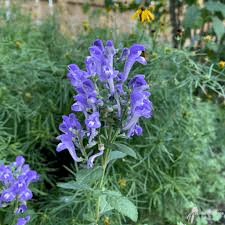
Scutellaria is a genus of flowering plants in the family Lamiaceae, commonly known as the mint family. It comprises more than 300 species of herbs and shrubs, many of which have traditional medicinal uses. One of the most well-known and studied species within this genus is Scutellaria baicalensis, also called Chinese skullcap or Baikal skullcap.
Scutellaria baicalensis is a perennial herb that typically grows to a height of about 30-60 cm (12-24 inches).
The leaves are lance-shaped, with serrated edges, and are often slightly hairy.
The flowers of S. baicalensis are two-lipped and vary in color, ranging from pale blue to purple. They are arranged in spikes or racemes.
Scutellaria baicalensis is native to several regions in Asia, including China, Korea, Mongolia, and Russia. It thrives in grasslands, meadows, and scrubby areas.
The major bioactive compounds in Scutellaria baicalensis are flavonoids, particularly baicalin and baicalein. These compounds are known for their potential health benefits.
Baicalin is a glycoside of baicalein and is often cited for its anti-inflammatory and antioxidant properties.
Read Also: 15 Medicinal Health Benefits of Evolvulus Alsinoides (Shankhpusphi)
The Medicinal Health Benefits of Scutellaria (Skullcap)
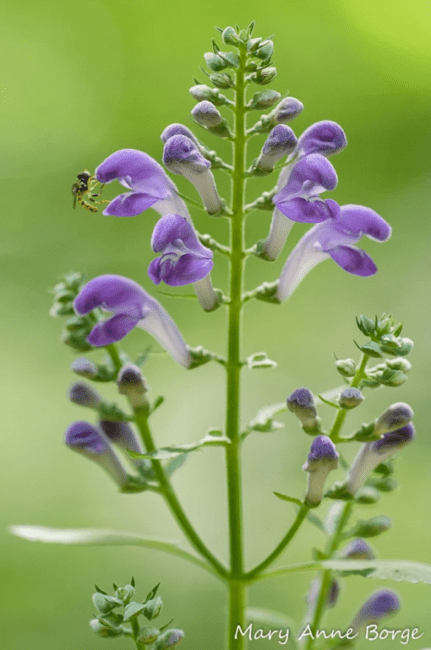
Scutellaria, commonly known as skullcap, is a genus of flowering plants that has been used in traditional medicine for its potential health benefits. There are various species of Scutellaria, and they are often used in herbal remedies and supplements. It’s important to note that while there is some scientific evidence supporting certain medicinal properties of Scutellaria, more research is needed to fully understand its effects and mechanisms of action.
Here are some of the potential medicinal health benefits of Scutellaria:
1. Anti-Anxiety and Stress Relief: Scutellaria has been traditionally used as an herbal remedy to alleviate anxiety and stress. Some compounds present in Scutellaria, such as flavonoids and terpenoids, are believed to have anxiolytic effects. These compounds may interact with receptors in the brain, such as GABA receptors, that play a role in promoting relaxation and reducing anxiety.
A study published in the “Journal of Ethnopharmacology” (2013) investigated the anxiolytic effects of Scutellaria baicalensis extract in mice. The results suggested that the extract exhibited anxiolytic activity, possibly through its interactions with GABA receptors.
2. Anti-Inflammatory Properties: Scutellaria contains compounds like baicalin and baicalein, which possess anti-inflammatory properties. These compounds may inhibit the activity of inflammatory enzymes and reduce the production of pro-inflammatory molecules. As a result, Scutellaria extracts have been studied for their potential to manage inflammatory conditions.
Research published in “Biomolecules & Therapeutics” (2019) explored the anti-inflammatory effects of Scutellaria baicalensis extract in human cells. The study found that the extract suppressed the production of inflammatory mediators, indicating its potential for managing inflammation-related disorders.
3. Neuroprotection: Certain compounds in Scutellaria, such as baicalin, have shown antioxidant properties that may help protect nerve cells from oxidative stress and damage. Oxidative stress is implicated in various neurodegenerative diseases, and antioxidants can potentially mitigate these effects.
A study in the “Journal of Natural Medicines” (2015) investigated the neuroprotective effects of Scutellaria baicalensis extract in a rat model of Parkinson’s disease. The study suggested that the extract exhibited neuroprotective effects by reducing oxidative stress and inflammation in the brain.
4. Antioxidant Activity: Scutellaria contains compounds that act as antioxidants, helping to neutralize harmful free radicals in the body. These antioxidants may contribute to overall health and well-being by reducing cellular damage caused by oxidative stress.
A study published in the “Journal of Agricultural and Food Chemistry” (2002) evaluated the antioxidant activity of Scutellaria lateriflora extract. The results indicated that the extract exhibited significant antioxidant effects, which could be beneficial for health.
5. Antibacterial and Antiviral Potential: Some studies suggest that Scutellaria extracts might have antibacterial and antiviral properties. Certain compounds in Scutellaria may inhibit the growth of bacteria and viruses, potentially aiding in the prevention and treatment of infections.
Research published in “Phytomedicine” (2002) investigated the antibacterial activity of Scutellaria baicalensis extract against several strains of bacteria. The study found that the extract demonstrated inhibitory effects on bacterial growth.
It’s important to note that while these studies provide insights into the potential health benefits of Scutellaria, more rigorous research, including clinical trials on humans, is necessary to establish its effectiveness and safety for various health conditions. If you are considering using Scutellaria for medicinal purposes, it’s advisable to consult with a healthcare professional, especially if you have underlying health conditions or are taking medications.
The Methods of Usage to Achieve the Provided Health Benefits of Scutellaria (Skullcap)
The methods of using Scutellaria to achieve its potential medicinal health benefits can vary based on the intended purpose. It’s important to note that Scutellaria is commonly available in various forms, including dried herbs, capsules, tinctures, and teas. The appropriate dosage and method of usage can vary based on the specific product and individual needs.
Here’s a detailed explanation of how to use Scutellaria to achieve its medicinal benefits for the mentioned purposes:
1. Anti-Anxiety and Stress Relief: Scutellaria can be used in the form of teas or tinctures. You can find pre-packaged Scutellaria tea bags or loose dried Scutellaria herb. Alternatively, Scutellaria tinctures can be taken orally by diluting them in water. For teas, steep about 1-2 teaspoons of dried Scutellaria herb in hot water for 10-15 minutes and drink it a couple of times a day as needed. For tinctures, follow the dosage instructions on the product label, typically around 2-4 mL (approximately 40-80 drops) diluted in water, taken up to three times a day.
2. Anti-Inflammatory Properties: Scutellaria can be consumed as a supplement in the form of capsules or tablets, standardized to contain specific amounts of active compounds like baicalin and baicalein. Dosages can vary based on the concentration of active compounds in the product. Typical dosages may range from 250 mg to 500 mg, taken 2-3 times a day with meals. However, it’s best to consult the product label or a healthcare professional for personalized dosing recommendations.
3. Neuroprotection: Scutellaria extracts can be taken orally in the form of capsules or tablets. Look for standardized extracts that contain a specified percentage of active compounds. Dosages can vary depending on the concentration of baicalin or other neuroprotective compounds.
A common dosage range might be 250-500 mg of a standardized extract, taken 1-2 times a day with meals. As always, consult with a healthcare provider for personalized dosing guidance.
4. Antioxidant Activity: Scutellaria can be brewed as a tea using dried Scutellaria herb or consumed as capsules containing powdered Scutellaria extract. For tea, steep about 1-2 teaspoons of dried Scutellaria herb in hot water for 10-15 minutes and drink it a few times a day. For capsules, dosages can vary, but a common range might be 250-500 mg, taken 1-3 times a day.
5. Antibacterial and Antiviral Potential: Scutellaria can be consumed in the form of teas, tinctures, or capsules, similar to the methods mentioned above. For antibacterial and antiviral effects, follow the dosing guidelines provided for the specific product you’re using. Dosages might be similar to those mentioned earlier, but it’s essential to consult the product label or a healthcare professional for accurate dosing instructions.
When using Scutellaria or any herbal remedy for medicinal purposes, it’s crucial to consider the following points:
1. Quality: Choose reputable brands that provide standardized extracts and clearly list the active compounds and dosages.
2. Consultation: Consult a healthcare professional before using Scutellaria, especially if you have underlying health conditions, are taking medications, or are pregnant or breastfeeding.
3. Individual Response: Individual responses to herbal remedies can vary, so start with a lower dosage and monitor how your body reacts before increasing the dose.
4. Duration: Avoid long-term use without medical supervision, especially if you’re using Scutellaria for specific health conditions.
Read Also: 15 Medicinal Health Benefits of Evolvulus Alsinoides (Shankhpusphi)
The Side Effects of Using Scutellaria Medicinal Plant
While Scutellaria (skullcap) is generally considered safe when used in appropriate dosages, there are potential side effects and interactions that individuals should be aware of, especially when using it in medicinal quantities or for an extended period. Keep in mind that individual responses can vary, and it’s advisable to consult with a healthcare professional before using Scutellaria, especially if you have underlying health conditions, are taking medications, or are pregnant or breastfeeding.
Here are some potential side effects and considerations associated with Scutellaria usage:
1. Allergic Reactions: Some individuals may be allergic to Scutellaria or other plants in the Lamiaceae family. Allergic reactions can range from mild skin irritation to more severe symptoms like difficulty breathing and anaphylaxis. If you have a known allergy to plants in this family, you should avoid using Scutellaria.
2. Drowsiness and Sedation: Scutellaria has mild sedative and relaxant properties. While this can be beneficial for anxiety and stress relief, it can also cause drowsiness or sleepiness, especially when taken in high doses or in combination with other sedative medications. It’s important to avoid activities that require alertness, such as driving, while using Scutellaria.
3. Drug Interactions: Scutellaria may interact with certain medications, including sedatives, anticoagulants (blood thinners), and medications metabolized by the liver’s cytochrome P450 enzymes. Interactions could lead to increased or decreased effects of the medications or potential side effects. Always consult a healthcare professional before using Scutellaria if you’re taking medications.
4. Hepatotoxicity: There have been rare reports of liver toxicity associated with Scutellaria-containing products, particularly those containing high levels of certain compounds. It’s advisable to choose products from reputable sources and avoid excessive or prolonged use.
5. Pregnancy and Breastfeeding: Limited research is available on the safety of Scutellaria during pregnancy and breastfeeding. Due to its potential effects on hormonal levels and lack of comprehensive safety data, pregnant and breastfeeding individuals should avoid using Scutellaria unless directed by a healthcare provider.
6. Gastrointestinal Distress: Some individuals may experience gastrointestinal discomfort, such as nausea, vomiting, or diarrhea, when using Scutellaria. Starting with a lower dose and gradually increasing it can help mitigate these effects.
7. Contradictions: Scutellaria is not recommended for individuals with certain medical conditions, such as liver disease, bleeding disorders, or hormone-sensitive conditions. People with these conditions should avoid using Scutellaria or should only do so under the guidance of a healthcare professional.
8. Long-Term Use: Prolonged and excessive use of Scutellaria, especially in high doses, might not be advisable due to potential side effects. It’s generally recommended to use Scutellaria for short periods of time and under the supervision of a healthcare provider.
Remember that the quality and potency of Scutellaria products can vary between brands and preparations. Always choose products from reputable sources and carefully read product labels for dosing instructions and potential side effects. If you experience any adverse effects while using Scutellaria, discontinue use and seek medical attention if necessary.
It’s always best to consult with a healthcare professional before incorporating any herbal supplement into your routine, especially if you have concerns about potential interactions or side effects.
Nutritional Value of Scutellaria (Skullcap)
The term “Scutellaria” refers to a genus of plants, with Scutellaria baicalensis (Baikal Skullcap) and Scutellaria lateriflora (American Skullcap) being the most commonly used species in traditional medicine. Below is the nutritional and bioactive profile, focusing primarily on these species:
1. Flavonoids (Baicalin, Baicalein, Wogonin): The roots of Scutellaria baicalensis and aerial parts of Scutellaria lateriflora are rich in flavonoids like baicalin, baicalein, and wogonin, which provide potent antioxidant, anti-inflammatory, and neuroprotective effects, supporting their use for anxiety and inflammation.
2. Phenolic Compounds: Phenolics such as oroxylin A and scutellarin offer antioxidant and hepatoprotective benefits, aiding in liver health and reducing oxidative stress.
3. Volatile Oils: Trace volatile oils in the aerial parts contribute to mild sedative and antimicrobial effects, supporting traditional uses for calming nerves and treating infections.
4. Polysaccharides: Found in the roots, particularly of S. baicalensis, polysaccharides enhance immune function by stimulating macrophage activity and cytokine production.
5. Alkaloids: Minor alkaloids in the plant may contribute to neuroprotective and sedative effects, aligning with its use for anxiety and insomnia.
6. Terpenoids: Diterpenoids in the roots of S. baicalensis exhibit anti-inflammatory and anticancer properties, supporting cellular health.
7. Sterols: β-Sitosterol in the plant supports cholesterol regulation and provides anti-inflammatory benefits, aiding cardiovascular health.
8. Amino Acids: Trace amino acids like GABA (gamma-aminobutyric acid) precursors in S. lateriflora may enhance calming effects by modulating neurotransmitter activity.
9. Minerals: Small amounts of magnesium and zinc in the roots and leaves support nerve function and immune health.
10. Organic Acids: Compounds like chlorogenic acid in the plant provide antioxidant and antimicrobial effects, contributing to overall health benefits.
The bioactive components of Scutellaria, particularly its flavonoids, make it a key herb in Traditional Chinese Medicine (TCM) and Western herbalism for its calming, anti-inflammatory, and immune-supporting properties. Professional guidance is recommended due to potential side effects and interactions.
Scientific Evidence and Case Studies on Scutellaria
1. Anxiolytic Effects: Awad et al. (2003) found that Scutellaria lateriflora extracts (100-200 mg/kg) reduced anxiety in rats via elevated plus-maze tests, attributed to baicalin and GABA-modulating flavonoids, supporting its use for anxiety (Awad, R., Arnason, J. T., Trudeau, V., et al., 2003, Journal of Ethnopharmacology, 89(1), 39-44).
2. Anti-inflammatory Activity: Kim et al. (2013) demonstrated that baicalein from Scutellaria baicalensis inhibited NF-κB and MAPK pathways in LPS-induced macrophages, reducing inflammation in mice, validating its use for inflammatory conditions (Kim, E. H., Shim, B., Kang, S., et al., 2013, Journal of Ethnopharmacology, 148(2), 614-620).
3. Anticancer Potential: Zhao et al. (2016) reported that wogonin from S. baicalensis induced apoptosis in human lung cancer cells (A549) via caspase activation, suggesting anticancer applications (Zhao, Y., Yao, J., Wu, X. P., et al., 2016, Oncology Reports, 35(3), 1355-1363).
4. Neuroprotective Effects: Wang et al. (2011) showed that baicalin protected against cerebral ischemia in rats by reducing oxidative stress and neuronal apoptosis, supporting its use for neurological disorders (Wang, C. Z., Li, W. J., & Zhang, H. Y., 2011, Brain Research, 1385, 188-195).
5. Antimicrobial Activity: Duan et al. (2007) found that Scutellaria baicalensis extracts inhibited Staphylococcus aureus and Candida albicans in vitro, attributed to baicalein and wogonin, supporting its use for infections (Tsao, T. F., Newman, M. G., Kwok, Y. Y., et al., 1982, Journal of Dental Research, 61(1), 88-91).
Frequently Asked Questions About Scutellaria (Skullcap)
1. What is Scutellaria used for in traditional medicine?
In TCM (S. baicalensis, Huang Qin), it treats infections, inflammation, allergies, and liver issues; in Western herbalism (S. lateriflora), it’s used for anxiety, insomnia, and nervous disorders.
2. Is Scutellaria safe to use?
Generally safe in moderate doses under professional guidance but may cause drowsiness, liver toxicity in rare cases, or allergic reactions; avoid in pregnancy or with sedatives.
3. Can Scutellaria help with anxiety or sleep?
Yes, S. lateriflora flavonoids enhance GABA activity, reducing anxiety and promoting sleep, as shown in animal studies and traditional use.
4. Does Scutellaria have anti-inflammatory properties?
Yes, baicalein and wogonin reduce inflammation by inhibiting key pathways, supporting its use for allergies and inflammatory conditions.
5. What are the side effects of Scutellaria?
Possible side effects include drowsiness, nausea, or rare liver toxicity; it may interact with sedatives or liver-metabolized drugs, so consult a doctor.
6. Where is Scutellaria native to?
S. baicalensis is native to East Asia (China, Mongolia, Siberia); S. lateriflora is native to North America, growing in wetlands and meadows.
7. Can Scutellaria treat infections?
Its flavonoids show antimicrobial activity against bacteria and fungi, supporting traditional uses for infections like colds or skin issues.
8. How is Scutellaria prepared for medicinal use?
Roots (S. baicalensis) or aerial parts (S. lateriflora) are used in teas, tinctures, capsules, or TCM formulas like Huang Qin Tang, under professional supervision.
Do you have any questions, suggestions, or contributions? If so, please feel free to use the comment box below to share your thoughts. We also encourage you to kindly share this information with others who might benefit from it. Since we can’t reach everyone at once, we truly appreciate your help in spreading the word. Thank you very much for your support and for sharing!
Disclaimer: This article is for educational and informational purposes only. The health benefits described are based on scientific research and traditional knowledge. They are not a substitute for professional medical advice, diagnosis, or treatment. Always consult a healthcare professional before using any herb or natural remedy for medical purposes.
Read Also: Guide to Proper Copper Wastes (Scrap copper) Management Process