


The tropical rain woods of South and Central America are home to its native Ua de Gato. In North America and Europe, cat claws from two different species are frequently employed.
These have various qualities and medical applications, and they are Uncaria Tomentosa and Uncaria Guianensis. When it comes to medical application and immune regulation, Uncaria Tomentosa has received increasing attention from researchers and is utilized more frequently.
Cat’s claw is also known as the “Peruvian life-giving vine”. It was used for medicinal purposes by the ancient Inca culture in Peru.
The most revered plant among the Ashaninkas, Campo, and other Amazonian tribes is cat’s claw, or a de Gato. Ua de Gato, according to indigenous Shamans, acts as a link and stabilizer between the material and spiritual realms, which is beneficial for health issues as they think that poor health has spiritual causes.
Arturo Brell, a German naturalist, is credited with popularizing a cat’s claw in the 20th century. He relocated from Munich to Pozuzo, a small settlement established by German colonists in the Peruvian rain forest, in 1926.
Uncaria Tomentosa gets its name from thorns that resemble cat claws and are shaped like hooks. U. Tomentosa can climb up these thorns to reach a length of up to 30 m (100 ft).
The leaves are oppositely paired, elliptic, and have a smooth edge. Cat’s claw is only found in the tropical regions of South and Central America, where it is native to the Amazon jungle.
Read Also: Which Herbs and Spices are good for you (cinnamon, paprika, etc)
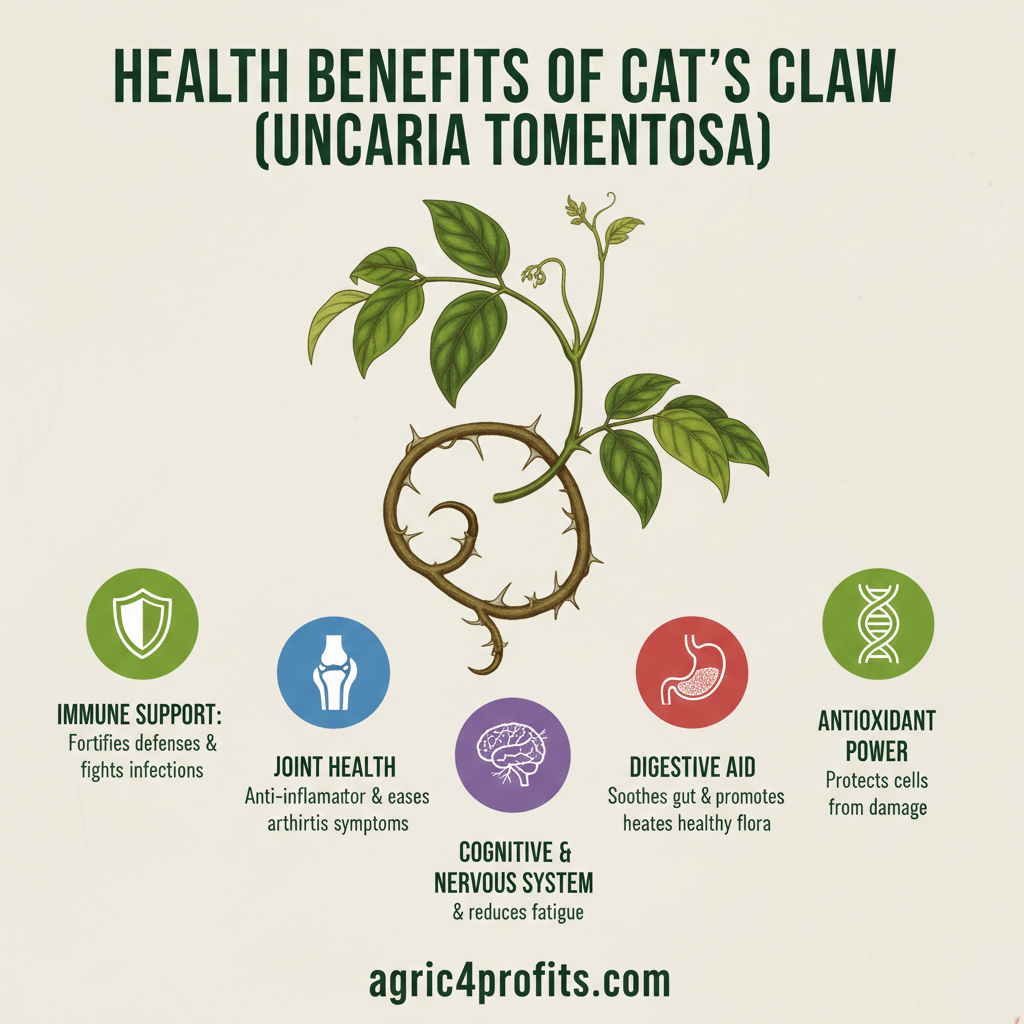
6 Health Benefits of Cat’s Claw (Uncaria tomentosa)
1. Treats Arthritis
Numerous studies have demonstrated that a cat’s claw can help relieve the symptoms of rheumatoid arthritis and osteoarthritis naturally. In a 2001 trial, 45 participants with osteoarthritis of the knee were given either a placebo or 100 milligrams of freeze-dried cat’s claw daily for four weeks.
Within the first week of therapy, advantages were observed in terms of pain related to activity, medical, and patient assessment ratings, which were all significantly lower.
During the brief experiment, a cat’s claw did not significantly reduce knee discomfort at rest or at night or knee circumference, but the data convinced the researchers that a cat’s claw is a safe and effective treatment for osteoarthritis.
Cat’s claw was tested on people with active rheumatoid arthritis (RA) who were also taking traditional RA medications in a study that was published in the Journal of Rheumatology.
In this double-blind trial, the cat’s claw extract treatment for 24 weeks reduced the number of bothersome joints compared to the placebo. The extract was taken from a particular strain of cat’s claw that includes pentacyclic oxindole alkaloids, which are substances that seem to have immune system-modulating properties.
2. May Fights Cancer
According to scientific investigations, cat’s claw may aid in the destruction of tumor and cancer cells in test tubes. According to a 2001 in vivo investigation, the cat’s claw (Uncaria tomentosa) bark has antimutagenic and antiproliferative properties that inhibit the growth of the human breast cancer cell line MCF7.
Leukemia has also been successfully combated by cat’s claw. First research on the antiproliferative and apoptotic properties of five highly pure oxindole alkaloids from Uncaria tomentosa, including isopteropodine, pteropodine, isomitraphylline, uncarine F, and mitraphylline, appeared in the British Journal of Haematology in 2006.
3. Repairs DNA
Water-soluble cat’s claw extracts (C-Med-101) have been proven in in vivo tests to improve DNA repair, mitogenic response, and leukocyte recovery following chemotherapy-induced DNA damage.
The DNA of healthy cells can be damaged by chemotherapy, a frequent traditional cancer treatment that also has a number of unfavorable side effects.
In a 2001 trial, adult volunteers who had previously undergone chemotherapy were given water-soluble cat’s claw extract (250 and 350 mg per day) for eight weeks.
The outcomes were simply amazing. When compared to the control group, both cat’s claw supplement groups significantly reduced DNA damage while increasing DNA repair.
Since chemotherapy frequently lowers white blood cell counts and raises the risk of infection, the supplement groups also experienced an increase in white blood cell growth.
A 2006 study looked at a water-soluble cat’s claw extract’s potential to improve DNA repair in human skin.
Researchers discovered that the extract shielded human skin cells from degeneration brought on by UV light using skin cultures. How? via improving skin cells’ capacity to repair DNA damage brought on by UV radiation.
According to research, a cat’s claw extract should be taken into consideration for use as a natural sunscreen.
Read Also: 7 Health Benefits of Calendula (Calendula officinalis)
4. Lowers High Blood Pressure
Studies on cat’s claw as a hypertension medication suggest that it might help lower high blood pressure naturally. Uncaria rhynchophylla, a species of cat’s claw, has been used in Traditional Chinese Medicine to reduce blood pressure and alleviate a number of neurological problems.
Cat’s claw has also been demonstrated to prevent the formation of blood clots and platelet aggregation.
This suggests that cat’s claw might be useful in preventing heart attacks and strokes by suppressing the development of plaque and blood clots in the arteries, heart, and brain, in addition to lowering blood pressure and improving circulation.
An alkaloid known as Hirsutine is thought to be responsible for a cat’s claw’s ability to lower blood pressure. This alkaloid has been proven to selectively function as a calcium channel blocker in the calcium channels of the heart and blood vessels.
What makes this important? Calcium cannot enter the cells of the heart or blood vessel walls, so calcium channel blockers can lower blood pressure by preventing it. Calcium channel blockers also assist blood flow in a healthy, smooth manner by relaxing and enlarging the blood vessels themselves.
5. Combats Herpes
Regarding herpes, a cat’s claw also seems to have beneficial immune-system benefits. Herpes can remain dormant inside the immune system of a person for a lifetime, periodically causing blisters to pop and develop into open cold sores or ulcers before recovering.
Uncaria Tomentosa formulations showed antimutagenic and antiherpetic activity when herpes in vitro was examined in a 2011 study that was published in Food and Chemical Toxicology.
Cat’s claw’s capacity to combat herpes is thought to be a result of its polyphenols collaborating with its oxindole alkaloids or quinovic acid glycosides.
6. Improves Digestive System
Researchers are investigating the potential advantages of a cat’s claw for Crohn’s disease patients. An inflammatory bowel illness called Crohn’s causes the lining of your digestive tract to inflame, which can cause severe diarrhea, abdominal pain, exhaustion, weight loss, and malnutrition.
Uncaria Tomentosa, a type of cat’s claw, is thought to be able to lessen Crohn’s disease-related inflammation. For those who have Crohn’s disease, the recommended daily dosage is 250 mg. Unwanted Crohn’s symptoms should significantly decrease if you can naturally reduce the inflammation.
Additionally, a variety of digestive conditions like colitis, diverticulitis, gastritis, hemorrhoids, stomach ulcers, and leaky gut syndrome are all treated with cat’s claw.
Nutritional value of Cat’s Claw (Uncaria tomentosa)
1. Oxindole alkaloids: Cat’s claw contains oxindole alkaloids such as pteropodine and mitraphylline, which are key bioactive compounds supporting immune modulation and anti-inflammatory effects.
These alkaloids are central to many of the herb’s traditional medicinal properties.
2. Polyphenols: High levels of polyphenols, including flavonoids and tannins, provide strong antioxidant activity to combat oxidative stress.
They contribute significantly to cellular protection and overall health support.
3. Proanthocyanidins: These condensed tannins are abundant, offering potent antioxidant and anti-inflammatory benefits.
They help neutralize free radicals and support vascular health.
4. Quinovic acid glycosides: Present in the bark and roots, these compounds exhibit immune-modulating and potential anti-inflammatory actions.
They add to the plant’s broad therapeutic profile.
5. Plant sterols (beta-sitosterol, stigmasterol, campesterol): Includes beta-sitosterol as a major sterol, which may aid in cholesterol management and anti-inflammatory processes.
These sterols support cardiovascular and general wellness.
6. Triterpenes (ursolic acid, oleanolic acid): Triterpenes like ursolic and oleanolic acids provide anti-inflammatory and antioxidant effects.
They contribute to potential metabolic and protective benefits.
7. Flavonoids (quercetin): Quercetin and related flavonoids offer antioxidant protection and help reduce inflammation.
They enhance the herb’s free radical scavenging capacity.
8. Pentacyclic triterpenes: These specialized triterpenes support anti-inflammatory and immune-related activities.
They are linked to many pharmacological effects observed.
9. Indole alkaloids: Includes compounds like rhynchophylline, contributing to neuroprotective and vascular benefits.
They play a role in traditional uses for brain and circulatory health.
10. Plant polysaccharides: These carbohydrates aid in immune stimulation and provide minor structural support.
They complement the herb’s adaptogenic qualities.
Scientific Evidence and Case Studies on Cat’s Claw (Uncaria tomentosa)
1. Anti-inflammatory and immunomodulatory effects: Systematic review and meta-analysis of in vivo studies showed Uncaria tomentosa extracts reduce inflammation markers in animal models, supporting traditional use for inflammatory conditions.
2. Rheumatoid arthritis treatment: Mur et al. (2002) conducted a randomized double-blind trial finding that extract from the pentacyclic alkaloid-chemotype improved symptoms in rheumatoid arthritis patients.
3. Antioxidant properties: Goncalves et al. (2005) demonstrated that proanthocyanidins from Uncaria tomentosa bark decoction exhibit strong antioxidant activity, contributing to anti-inflammatory mechanisms.
4. Osteoarthritis relief: Clinical trials with Uncaria guianensis (related species) showed pain reduction in knee osteoarthritis, with similar mechanisms proposed for U. tomentosa.
5. Immune enhancement: Studies indicate oxindole alkaloids stimulate immune function, with one trial showing prolonged lymphocyte survival and improved vaccine response.
6. Potential anticancer activity: In vitro and animal research shows antiproliferative effects on cancer cells, linked to proanthocyanidins and alkaloids, though human trials are limited.
7. Neuroprotective effects: Specific proanthocyanidins inhibit and reduce brain plaques and tangles in models relevant to Alzheimer’s disease.
8. Gastrointestinal and antiviral support: Extracts demonstrate gastroprotective and antiviral properties in preclinical studies, aligning with traditional uses.
Summary of Cat’s Claw (Uncaria tomentosa)
| Aspect | Details |
|---|---|
| Plant Description | Woody vine native to Amazon rainforest and Central/South America; known as Una de Gato due to hook-like thorns; inner bark and roots used medicinally; two main species: Uncaria tomentosa and Uncaria guianensis. |
| Traditional Uses | Immune support, anti-inflammatory for arthritis and infections, digestive aid, adaptogen for stress, wound healing, fever, viral issues, and overall wellness. |
| Key Phytochemicals | Oxindole and indole alkaloids, quinovic acid glycosides, triterpenes (ursolic, oleanolic, quinovic), plant sterols (beta-sitosterol), polyphenols, proanthocyanidins, flavonoids (quercetin), tannins, polysaccharides. |
| Health Benefits Listed | Immune modulation, anti-inflammatory, antioxidant protection, joint health, gastrointestinal support, cardiovascular benefits, plus additional like antiviral, antifungal, wound healing, cognitive support, anticancer potential, allergy relief, diabetes management, and more (up to 20 mentioned). |
| Preparation Methods | Teas/decoctions from bark, tinctures, capsules/supplements, topical creams, liquid extracts, powdered form, combination blends. |
| Safety Notes | Generally well-tolerated in moderation; possible GI upset, allergic reactions, blood pressure changes, immune overstimulation; avoid in pregnancy, breastfeeding, autoimmune diseases, before surgery; potential drug interactions (anticoagulants, immunosuppressants); consult healthcare provider; use reputable sources. |
Frequently Asked Questions About Cat’s Claw (Uncaria tomentosa)
1. What is cat’s claw primarily used for?
It is traditionally used for immune support, reducing inflammation, joint pain relief, and as an adaptogen to help manage stress.
2. How do I prepare cat’s claw tea?
Simmer 1-2 teaspoons of dried inner bark in water for 10-15 minutes; strain and drink 1-3 times daily.
3. Is cat’s claw safe during pregnancy?
Avoid during pregnancy and breastfeeding due to limited safety data and potential risks; consult a healthcare provider.
4. Can cat’s claw help with arthritis?
Some studies suggest it reduces inflammation and symptoms in rheumatoid arthritis and osteoarthritis, though more research is needed.
5. What are common side effects?
Possible nausea, stomach upset, allergic reactions, lowered blood pressure, or dizziness; use in moderation.
6. Does cat’s claw interact with medications?
It may interact with blood thinners, blood pressure drugs, immunosuppressants, or chemotherapy; check with a doctor.
7. Is cat’s claw effective for immune boosting?
Traditional use and some studies support immune-modulating effects, but evidence from high-quality human trials is limited.
8. How should I store cat’s claw supplements?
Keep in a cool, dark, dry place in an airtight container to preserve potency.
9. Can children use cat’s claw?
Not recommended for children due to insufficient safety data; consult a pediatrician if considering use.
10. Where does cat’s claw grow best?
It thrives in tropical rainforests of the Amazon and Central/South America; sustainable sourcing is important for ethical harvesting.
Read Also: 9 Health Benefits of Burdock Root (Bardanae Radix)
Do you have any questions, suggestions, or contributions? If so, please feel free to use the comment box below to share your thoughts. We also encourage you to kindly share this information with others who might benefit from it. Since we can’t reach everyone at once, we truly appreciate your help in spreading the word. Thank you very much for your support and for sharing!
Disclaimer: This article is for educational and informational purposes only. The health benefits described are based on scientific research and traditional knowledge. They ayre not a substitute for professional medical advice, diagnosis, or treatment. Always consult a healthcare professional before using any herb or natural remedy for medical purposes.
Read Also: The Three (3) Major Soil Types of the World