



Hyssop (Hyssopus officinalis) has a long history of usage as an antiseptic, and it is frequently utilized as an essential oil for medical and aromatic purposes. Hyssop oil has been used for spiritual purposes for thousands of years.
What exactly is hyssop used for? Hyssop is a plant that has been used for hundreds of years as a purifier and cleaner; the Romans even employed it because they thought it would shield them from plagues.
The herbaceous plant known as hyssop, or Hyssopus officinalis, is native to Southern Europe, the Middle East, and the area around the Caspian Sea. Its name is derived from the Hebrew word adobe, sometimes known as ezob, which means “holy herb” in English.
Hyssop is currently used to treat digestive and intestinal issues, such as liver and gallbladder disorders, intestinal pain, and appetite loss. Additionally, it has a variety of uses for respiratory issues, including treating coughs, preventing colds and other respiratory infections, easing sore throats, and acting as one of the home remedies for asthma.
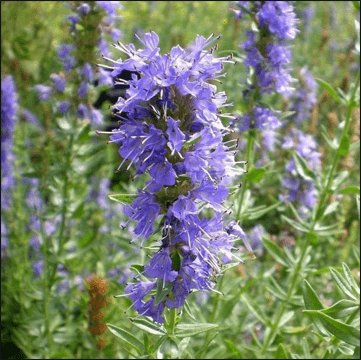
Does hyssop resemble lavender? Even though both produce attractive violet blooms, it most definitely is not. A shrub with a height of 12 to 24 inches, hyssop. It has a woody stem that acts as the foundation and gives rise to its straight branches.
The plant has dark-green leaves and produces purple-blue, pink, and white flowers during the summer. The flowers are also fragrant and colorful.
Twice a year, at the start of the fall and the end of the spring, the stalks are cut. After being sliced, they must be dried, which takes about six days. The leaves and blossoms are coarsely chopped once it dries, and the combination can be kept for up to 18 months.
Read Also: 7 Health Benefits of Horseradish Root
7 Health Benefits of Hyssop (Hyssopus officinalis)
1. Helps Regulate Respiratory Conditions
Because hyssop has antispasmodic properties, it can calm coughs and ease respiratory spasms. It also functions as an expectorant, releasing mucus that has built up in the respiratory passages.
This characteristic aids in the healing of viral infections like the common cold and respiratory ailments like bronchitis when used as natural medicine.
Hyssop is a great natural remedy for coughs and other respiratory conditions because of its antispasmodic and antiseptic properties. Coughing is a common response of the respiratory system trying to expel harmful microbes, dust, or irritants.
Hyssop is an excellent aid for people who use their voices all day long, such as teachers, singers, and lecturers, as it also relieves sore throats.
2. Helps In Combatting Parasites
Hyssop has the power to combat parasites, which are living things that eat other things’ nutrients. Flukes, fleas, hookworms, and tapeworms are a few examples of parasites. Hyssop oil eliminates parasites since it is a vermifuge, especially in the intestines.
A parasite that lives inside and feeds on its host prevents nutrients from being absorbed, which results in sickness and weakness. The digestive and immunological systems are interfered with if the parasite is residing in the intestines.
Hyssop can therefore be a crucial component of a parasite cleanse because it supports numerous bodily processes and makes sure that these harmful organisms don’t steal your essential nutrients.
Read Also: 6 Health Benefits of Milk Thistle (Silybum marianum)
3. Fights Infections
Hyssop stops cuts and wounds from becoming infected. When applied to a skin opening, its antiseptic qualities help it fight illness and eradicate microorganisms.
Additionally, hyssop aids in the recovery of deep wounds, scars, and insect bites, and it can even be used as one of the best acne home treatments.
Plaque reduction was used in a study at the Department of Virology, Hygiene Institute in Germany to examine the effectiveness of hyssop oil in treating genital herpes.
As a sexually transmitted disease, genital herpes is a chronic, persistent infection that spreads quickly and covertly. The research demonstrated that hyssop oil interacted with the virus and helped treat herpes by reducing plaque development by more than 90%.
4. Improves Blood Circulation
The heart and the body’s muscles and arteries benefit from increased blood flow or circulation. Due to its anti-rheumatic qualities, hyssop enhances and stimulates circulation. Hyssop can be used as a natural treatment for edema, gout, rheumatism, and arthritis by boosting circulation.
When your blood flows freely throughout your body, your heart rate decreases, your heart muscles relax, and your blood pressure flows uniformly throughout your body, influencing every organ.
Because it may be a debilitating ailment, so many people are looking for natural arthritis treatments. The most prevalent form of arthritis, osteoarthritis, is brought on by the breakdown of the cartilage between joints, which results in swelling and discomfort.
Read Also: 5 Health Benefits of Licorice Root (Glycyrrhiza glabra)

5. Relieves Muscle Pain
Almost everyone has probably felt pain in their muscles at some point. This kind of discomfort can be felt in almost any place on the body because muscle tissue covers almost every part of it.
When hyssop oil was tested on guinea pig and rabbit intestines, researchers from the Department of Pharmacology of Natural Substances and General Physiology in Italy discovered that it exhibited muscle-relaxing properties. Hyssop oil therapy decreased the amplitude of spontaneous movements and inhibited contractions.
The natural antispasmodic effects of hyssop oil can aid in the treatment of Charley horses, muscle cramps, and pains.
6. Support’s Immune System
Hyssop boosts the immune system’s ability to function correctly by enhancing circulation, digesting, and killing bacteria and parasites. Hyssop oil keeps the entire body functioning by reducing inflammation and allowing blood to flow through our organs.
Hyssop extracts contain caffeic acid, unknown tannins, and possibly a third class of unidentified higher molecular weight compounds that exhibit strong anti-HIV activity, according to a promising study conducted at the Department of Medicine, North Shore University Hospital in New York. As a result, it may be helpful in the treatment of patients with AIDS.
7. Aids Digestion
As a stimulant, hyssop oil boosts the production of secretions such as bile, digestive enzymes, and acid. Food must be broken down in the gastric juices before it can be digested in the stomach. In order to speed up internal chemical processes and convert food into nutrients, our bodies produce digestive juices that contain enzymes.
Hyssop oil aids in digestion and aids in the breakdown of complex proteins, carbs, and nutrients. Hyssop serves a very advantageous role as a stimulant since the digestive system interacts with all other body systems, including the neurological, endocrine, and immune systems. Intestinal gas, indigestion, and appetite loss can all be helped with hyssop oil.
Read Also: 3 Health Benefits of Mugwort (Artemisia vulgaris)
Scientific Evidence and Case Studies on Hyssop (Hyssopus officinalis)
1. Asthma and Airway Inflammation: A study conducted by Ma et al. investigated the effect of hyssop on asthmatic reactions in mice. The research demonstrated that hyssop extract significantly inhibited airway inflammation and hyperresponsiveness by modulating the production of cytokines and IgE, suggesting potential therapeutic benefits for managing mild to moderate asthma.
2. Anti-Ulcerogenic Activity: Research by Fathiazad et al. evaluated the protective effects of Hyssop extracts against gastric ulcers induced by ethanol and indomethacin in rats. The study concluded that the extract possessed significant anti-ulcer activity, likely protecting the gastric mucosa through antioxidant mechanisms and cytoprotective properties.
3. Antiviral Effects (Herpes Simplex): An in vitro study by Koch et al. analyzed the efficacy of hyssop essential oil and extracts against Herpes Simplex Virus type 1 (HSV-1) and type 2 (HSV-2). The findings indicated that the essential oil exhibited significant antiviral activity, reducing plaque formation by over 90% for both viral strains, attributed to the presence of phenylpropanoids.
4. Antimicrobial Properties: A study by Kizil et al. examined the antimicrobial activity of hyssop essential oil against various food-borne pathogens. The results showed that the oil was effective in inhibiting the growth of bacteria such as E. coli, Salmonella typhi, and Staphylococcus aureus, highlighting its potential as a natural preservative and antibacterial agent.
5. Muscle Relaxation and Spasms: Research by Lu et al. investigated the effect of hyssop on smooth muscle contractions. The study found that extracts of the plant demonstrated a dose-dependent relaxant effect on intestinal smooth muscle, validating its traditional use as an antispasmodic for digestive cramping and respiratory spasms.
Nutritional Value Of Hyssop (Hyssopus officinalis)
1. Pinocamphone: This ketone is the primary constituent of hyssop essential oil. While it is responsible for the herb’s potent antiseptic and expectorant properties, it is also the compound that necessitates caution, as high concentrations can be neurotoxic.
2. Rosmarinic Acid: Hyssop is a source of rosmarinic acid, a polyphenol antioxidant. This compound is well-documented for its anti-inflammatory and antimicrobial capabilities, contributing to the herb’s ability to support the immune system.
3. Flavonoids: The plant contains various flavonoids, including apigenin, quercetin, and diosmin. These compounds act as antioxidants that scavenge free radicals, support cardiovascular health, and improve circulation.
4. Tannins: Hyssop contains tannins, which provide astringent properties. These biomolecules help tighten tissues, reduce inflammation in mucous membranes, and can aid in stopping minor bleeding or treating sore throats.
5. Caffeic Acid: This organic compound found in hyssop has anti-inflammatory and immunomodulatory effects. It is known to help reduce fatigue and may play a role in inhibiting the replication of certain viruses.
6. Marrubiin: A bitter principle often found in the Lamiaceae family, marrubiin contributes to the herb’s expectorant qualities. It helps stimulate the secretion of fluids in the respiratory tract, making it easier to expel phlegm.
7. Triterpenoids: Hyssop contains triterpenoids such as ursolic acid and oleanolic acid. These compounds are recognized for their hepatoprotective (liver-protecting), anti-inflammatory, and antitumor properties.
Frequently Asked Questions About Hyssop (Hyssopus officinalis)
1. What is hyssop traditionally used for? It is traditionally used to treat respiratory conditions like coughs, colds, and bronchitis, as well as digestive issues like gas and bloating.
2. Is hyssop safe for everyone to use? No, it should be avoided by people with epilepsy or a history of seizures due to the convulsant properties of pinocamphone found in the essential oil.
3. Can pregnant women take hyssop? No, hyssop is a uterine stimulant and emmenagogue, meaning it can stimulate menstrual flow and potentially cause miscarriage.
4. How is hyssop typically consumed? It is most commonly consumed as a steeped tea, a tincture, or applied topically as a diluted essential oil or poultice.
5. Is the hyssop in the Bible the same as Hyssopus officinalis? Likely not; most biblical scholars believe the “hyssop” mentioned in the Bible refers to Syrian marjoram or a similar oregano species, not the European Hyssopus officinalis.
6. Does hyssop interact with medications? Yes, it may interact with anti-seizure medications and drugs that affect the central nervous system.
7. Can I use hyssop essential oil undiluted? No, hyssop essential oil is very potent and potentially toxic; it must always be diluted with a carrier oil before applying to the skin.
8. What does hyssop tea taste like? Hyssop tea has a somewhat bitter, earthy, and minty flavor with hints of camphor.
Do you have any questions, suggestions, or contributions? If so, please feel free to use the comment box below to share your thoughts. We also encourage you to kindly share this information with others who might benefit from it. Since we can’t reach everyone at once, we truly appreciate your help in spreading the word. Thank you very much for your support and for sharing!
Disclaimer: This article is for educational and informational purposes only. The health benefits described are based on scientific research and traditional knowledge. They ayre not a substitute for professional medical advice, diagnosis, or treatment. Always consult a healthcare professional before using any herb or natural remedy for medical purposes.
Read Also: Complete Composting Guide for Beginners