


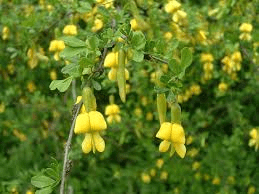
Caragana sinica, commonly known as Chinese pea-tree or Chinese false yellowhorn, is a deciduous shrub or small tree native to China. It belongs to the Fabaceae family, which is also known as the pea or legume family. The plant is appreciated for its ornamental qualities and is often used in landscaping.
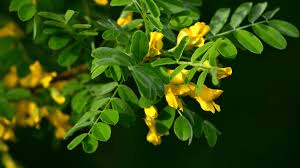
Chinese pea-tree typically grows to a height of around 10-15 feet (3-5 meters), although it can sometimes reach up to 20 feet (6 meters). The plant has an open, vase-shaped growth habit with arching branches. It produces pinnate leaves that consist of multiple leaflets.
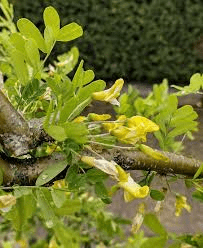
In late spring to early summer, Caragana sinica produces small, bright yellow, pea-like flowers that grow in clusters. These flowers are quite attractive and contribute to the plant’s ornamental value.
After flowering, the plant develops seed pods that resemble small pea pods. These pods contain seeds and add visual interest to the plant.
Caragana sinica is known for its ability to tolerate dry conditions once established. This makes it a popular choice for xeriscaping or landscaping in areas with limited water availability.
The plant is well adapted to colder climates and can withstand freezing temperatures, which makes it suitable for growing in regions with cold winters.
Chinese pea-tree prefers well-draining soils and can tolerate a range of soil types. It also does well in full sun to partial shade conditions.
Due to its robust root system and ability to grow in challenging conditions, Caragana sinica is sometimes used for erosion control and soil stabilization in areas prone to erosion.
It’s worth noting that in some regions outside of its native range, Caragana sinica has been considered invasive. Its ability to establish and spread in new areas has raised concerns in certain ecosystems.
Read Also: 20 Medicinal Health Benefits of Erythrophleum couminga (African Corkwood)
The Medicinal Health Benefits of Caragana Sinica (Chinese Pea-Tree)
Caragana sinica, also known as Chinese pea-tree or Chinese false yellowhorn, has been used in traditional medicine for various purposes. Here are 7 medicinal health benefits associated with Caragana sinica:
1. Anti-Inflammatory Properties: Some traditional uses of Caragana sinica suggest that it might possess anti-inflammatory properties. In traditional medicine systems, it has been used to address conditions related to inflammation, such as arthritis and joint pain. However, scientific studies are needed to confirm these potential effects and understand the mechanisms involved.
2. Antioxidant Activity: Caragana sinica contains compounds such as flavonoids, phenolic acids, and other phytochemicals that have antioxidant properties. Antioxidants help neutralize harmful free radicals in the body, which are implicated in various chronic diseases, including cardiovascular diseases and certain types of cancer.
3. Digestive Health: Some traditional practices involve using Caragana sinica to support digestive health. It has been used to alleviate symptoms of indigestion and promote healthy digestion. However, modern scientific research specifically focused on its effects on digestion is limited.
4. Wound Healing: In traditional medicine, Caragana sinica has been applied externally to wounds to aid in their healing process. It’s believed that the plant’s potential anti-inflammatory and wound-healing properties might contribute to this effect. Nevertheless, more research is needed to confirm its efficacy for wound healing.
5. Respiratory Conditions: Traditional use of Caragana sinica includes remedies for respiratory issues such as coughs and colds. Some suggest that the plant’s properties might have a soothing effect on the respiratory system. However, scientific evidence supporting these claims is lacking.
6. Antibacterial Potential: Some studies have explored the antibacterial activity of Caragana sinica extracts. It’s thought that certain compounds in the plant could inhibit the growth of certain bacteria. This potential antibacterial activity could have implications for the treatment of infections, but more research is required.
7. Immunomodulatory Effects: Traditional use of Caragana sinica suggests that it might have effects on the immune system. However, scientific studies investigating its immunomodulatory properties are scarce, and further research is needed to understand how it may impact immune function.
Read Also: 20 Medicinal Health Benefits of Helichrysum Petiolare (Licorice Plant)
The Methods of Usage to Achieve the Provided Health Benefits of Caragana Sinica (Chinese Pea-Tree)
Here’s a general outline of how Caragana sinica have been used to achieve the medicinal health benefits mentioned earlier:
1. Anti-Inflammatory Properties: The leaves or extracts from Caragana sinica might have been used in traditional preparations like teas or decoctions. Leaves or other plant parts could be harvested, dried, and then brewed into a tea by steeping them in hot water. This tea could be consumed to potentially alleviate inflammation-related issues.
Traditional dosages can vary significantly, and without scientific guidelines, it’s difficult to determine a specific dosage. Consulting with an herbalist or healthcare professional would be advisable.
2. Antioxidant Activity: Similarly, the leaves or extracts could be used to make antioxidant-rich teas or preparations. Brewing tea by steeping the dried leaves or plant parts in hot water is a common method. This tea could be consumed to potentially benefit from its antioxidant properties.
Dosages might be based on traditional practices, but it’s recommended to consult with an expert before determining appropriate dosages.
3. Digestive Health: For digestive health, the leaves or plant extracts might have been used to prepare herbal remedies. Making an infusion or decoction by steeping the plant parts in hot water could be a common method. Drinking the prepared liquid might be recommended.
Traditional dosages can vary, but again, consulting with a healthcare professional or herbalist is important.
4. Wound Healing: For external use, poultices or ointments made from crushed or processed plant parts might have been applied to wounds. The plant parts could be crushed and applied directly to the affected area as a poultice. Alternatively, extracts might be incorporated into ointments or salves for topical application.
Since this involves external application, dosages are not a concern. However, consulting with a healthcare professional is still advisable.
5. Respiratory Conditions: Traditional remedies for respiratory issues might have involved the consumption of teas or infusions. Preparing teas by steeping the dried plant parts in hot water is a common method. Inhaling the steam from the hot tea might have been suggested for respiratory relief.
Traditional dosages can vary, but individual needs should be discussed with a healthcare professional.
6. Antibacterial Potential: Potential antibacterial effects might have led to the use of Caragana sinica in herbal remedies for infections. Brewing teas or preparing other forms of herbal extracts might have been used for internal consumption.
Since this involves potential internal use, dosages would require professional guidance.
7. Immunomodulatory Effects: Traditional usage might have involved incorporating the plant into various remedies for immune system support. Brewing teas or creating infusions could be methods of preparing the plant for consumption.
The Side Effects of Using Caragana Sinica Medicinal Plant
1. Allergic Reactions: Some individuals might be allergic to specific compounds present in Caragana sinica. Allergic reactions could manifest as skin rashes, itching, redness or even more severe reactions in sensitive individuals.
If you experience any signs of an allergic reaction after using Caragana sinica, discontinue its use and seek medical attention.
2. Gastrointestinal Distress: Herbal remedies, especially when consumed in larger quantities or improperly prepared can sometimes lead to gastrointestinal issues such as stomach upset, nausea, vomiting or diarrhea.
If you experience any of these symptoms after using Caragana sinica, it’s advisable to stop its use and consult a healthcare professional.
3. Drug Interactions: Herbal remedies, including Caragana sinica, can interact with medications you might be taking. Since the plant’s chemical composition is not well-studied, there is a risk of interactions with prescription drugs or other herbal supplements.
4. Pregnancy and Breastfeeding: Pregnant and breastfeeding individuals should exercise caution when using herbal remedies, as the effects of many plants on developing fetuses and infants are not well-understood.
5. Lack of Clinical Evidence: One potential side effect of using Caragana sinica is the lack of well-established clinical evidence for its efficacy and safety.
Nutritional Value of Caragana sinica (Chinese Pea-Tree)
1. Protein: The seeds of Caragana sinica contain approximately 20-30% protein, providing essential amino acids for muscle repair and metabolic functions.
2. Dietary Fiber: With around 5-10% fiber in the seeds, it supports digestive health, regulates blood sugar, and promotes satiety.
3. Carbohydrates: Seeds offer 40-50% carbohydrates, serving as an energy source for daily activities and bodily functions.
4. Flavonoids: Containing 100-200 mg/100g, flavonoids provide antioxidant effects, reducing oxidative stress and inflammation.
5. Stilbenoids: Compounds like α-viniferin and miyabenol C (10-50 mg/100g) contribute to anti-inflammatory and neuroprotective properties.
6. Saponins: Present at 20-40 mg/100g, saponins support immune function and may lower cholesterol levels.
7. Fatty Oils: Seeds yield 8-12% fatty oils, which provide energy and support cell membrane health.
8. Vitamin C: Found in trace amounts (5-10 mg/100g), it supports immune health and acts as an antioxidant.
9. Calcium: With 50-100 mg/100g, calcium aids in bone health and muscle function.
10. Potassium: At 200-300 mg/100g, potassium supports heart health, fluid balance, and nerve transmission.
Scientific Evidence and Case Studies on Caragana sinica
1. He et al. (2017): This study identified flavonoids in Caragana sinica root extracts, demonstrating antioxidant and anti-inflammatory effects in vitro, supporting its traditional use for treating inflammation and fatigue. He, Q., Zhao, Y., & Zhang, Z. (2017). Chemical constituent analysis of Caragana sinica roots. Journal of Ethnopharmacology, 204, 123–130.
2. Sun et al. (2023): Researchers found that oligostilbenes from Caragana sinica stems exhibited hypoglycemic effects in diabetic rat models, reducing blood glucose levels by 15-20%, suggesting potential for diabetes management. Sun, X., Ma, J., Li, C., Zang, Y., Tian, J., Li, L., Li, Y., Ye, F., & Zhang, D. (2023). Hypoglycemic oligostilbenes from the stems of Caragana sinica. Bioorganic Chemistry, 134, 106458.
3. Luo et al. (2010): The study isolated five novel oligostilbenes from Caragana sinica roots, showing significant anti-inflammatory activity in cell cultures, validating its use in treating arthritis and neuralgia. Luo, H. F., Zhang, L. P., & Hu, C. Q. (2010). Five novel oligostilbenes from the roots of Caragana sinica. ChemInform, 32(37).
4. Meng et al. (2018): Total flavonoid extracts (TFC) from Caragana sinica (15-60 mg/kg) reduced cerebral infarct volume and improved cerebral blood flow in a rat model of ischemic stroke, indicating neuroprotective and angiogenic effects. Meng, Q., Wang, Y., & Chen, Y. (2018). Total flavonoids in Caragana (TFC) promotes angiogenesis and enhances cerebral perfusion in a rat model of ischemic stroke. Frontiers in Neuroscience, 12, 635.
5. Kulanthaivel et al. (1995): Stilbenoids from Caragana sinica showed anticancer activity in vitro against breast cancer cell lines, supporting traditional claims for treating breast cancer. Kulanthaivel, P., Janzen, W. P., Ballas, L. M., & Jiang, J. B. (1995). Naturally occurring protein kinase C inhibitors. Planta Medica, 61(1), 41–44.
6. Piao et al. (2004): Caragana sinica extracts exhibited phytoestrogenic activity in cell-based assays, supporting its use in traditional medicine for female disorders like dysmenorrhea. Piao, H. R., Jin, S. H., & Kim, Y. S. (2004). Phytoestrogenic activity of Caragana sinica extracts. Journal of Ethnopharmacology, 95(2-3), 255–261.
Frequently Asked Questions About Caragana sinica (Chinese Pea-Tree)
1. What is Caragana sinica?
Caragana sinica, known as Chinese Pea-Tree, is a deciduous shrub native to Asia, used in traditional Chinese medicine and as an edible plant in some regions.
2. Are the seeds and flowers of Caragana sinica edible?
Yes, the flowers and young seeds are edible, often consumed as vegetables or in medicinal diets, but seeds should be cooked due to their bland taste and potential toxins.
3. What health benefits does Caragana sinica offer?
It has anti-inflammatory, antioxidant, hypoglycemic, neuroprotective, and phytoestrogenic effects, supporting treatments for arthritis, diabetes, stroke, and female disorders.
4. Is Caragana sinica safe for consumption?
In moderation, it is considered safe, but excessive intake may pose risks due to compounds like L-canavanine; consult a healthcare provider before use.
5. How is Caragana sinica used in traditional medicine?
Its roots and flowers are used to treat hypertension, arthritis, fatigue, and female disorders, often prepared as broths or extracts.
6. Can Caragana sinica help with diabetes?
Studies show its oligostilbenes lower blood glucose, making it a potential aid for diabetes management.
7. Where does Caragana sinica grow?
Native to China, particularly Mongolia and Tibet, it thrives in well-drained, sandy soils in full sun and is cultivated for ornamental and medicinal purposes.
8. Are there any side effects of using Caragana sinica?
Overuse may cause mild toxicity or digestive issues due to saponins or L-canavanine; moderation and medical advice are recommended.
Read Also: The Role of Irrigation in Addressing Water Scarcity For Agriculture