


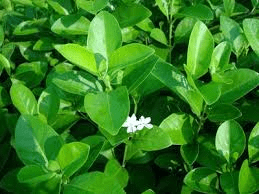
Clerodendrum phlomidis, commonly known as “Wild Jasmine” or “Clerodendrum,” is a plant species belonging to the Verbenaceae family. This shrub is native to tropical and subtropical regions of Asia, including countries like India, Nepal, and Sri Lanka. It is known for its ornamental and medicinal uses.
Clerodendrum phlomidis is a deciduous shrub that can grow up to 2-3 meters in height. It has opposite, ovate to lanceolate leaves that are about 5-10 cm in length. The leaves are dark green in color with a slightly serrated margin.
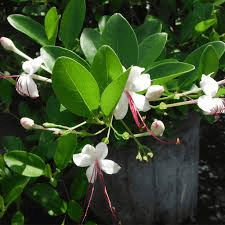
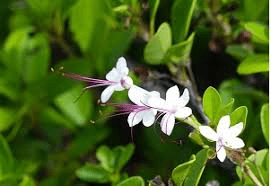
The plant produces clusters of tubular flowers that are typically white or pale pink in color. These flowers are fragrant and have a star-like appearance with four or five petals. The inflorescences are held at the tips of branches and can be quite showy, making the plant attractive to pollinators like butterflies and bees.
After the flowers, small fleshy berries form, which start out green and turn purplish-black as they ripen. These berries are not typically consumed by humans but can attract birds and other wildlife.
In traditional medicine, various parts of Clerodendrum phlomidis have been used for their potential medicinal properties. The leaves, roots, and flowers are often used in herbal preparations to treat various ailments. For example, they are believed to have anti-inflammatory, analgesic and antimicrobial properties.
However, scientific research on its medicinal properties is limited, and it’s important to consult with a healthcare professional before using any herbal remedies.
Read Also: 10 Medicinal Health Benefits of Pomegranate (Punica granatum)
The Medicinal Health Benefits of Clerodendrum Phlomidis
1. Anti-inflammatory Properties: Clerodendrum phlomidis has been used in traditional medicine systems as an anti-inflammatory agent. The leaves of Clerodendrum phlomidis might be crushed and applied topically to inflamed skin or joints to reduce swelling and discomfort.
2. Analgesic (Pain-Relieving) Effects: In traditional practices, Clerodendrum phlomidis has been employed for its potential analgesic properties to alleviate pain. A poultice made from the leaves could be used to soothe minor injuries like bruises or sprains, providing relief from pain and discomfort.
3. Antimicrobial Activity: Clerodendrum phlomidis has been used traditionally for its potential antimicrobial effects. Infusions or extracts of Clerodendrum phlomidis might have been used to clean and dress wounds, as it was believed to help prevent infection due to its antimicrobial properties.
4. Digestive Aid: Some traditional medicine systems suggest that Clerodendrum phlomidis could aid digestion and relieve gastrointestinal discomfort. An herbal tea made from the leaves or flowers might have been consumed after a heavy meal to ease digestion and prevent bloating.
5. Fever Reduction: Clerodendrum phlomidis has been used traditionally to help reduce fever. In some cultures, an herbal decoction prepared from the plant’s parts might have been administered to individuals with fever as part of a traditional remedy to lower body temperature.
6. Respiratory Support: It’s believed that Clerodendrum phlomidis could have respiratory benefits. Traditional preparations containing Clerodendrum phlomidis might have been used to alleviate symptoms of respiratory conditions, such as coughs and colds.
7. Anti-diabetic Potential: In some traditional practices, Clerodendrum phlomidis has been used for its potential anti-diabetic effects. Components from the plant might have been included in herbal formulations aimed at managing blood sugar levels in individuals with diabetes.
Read Also: 10 Medicinal Health Benefits of Pycnobotrya angolensis (Pycnobotrya)
The Methods of Usage to Achieve the Provided Health Benefits of Clerodendrum Phlomidis
1. Topical Application for Inflammation and Pain Relief: Crush fresh leaves of Clerodendrum phlomidis to create a paste. Apply this paste to the affected area and gently massage. The anti-inflammatory and analgesic properties of the plant might help reduce swelling and provide relief from pain in conditions like sprains, bruises or arthritis.
2. Herbal Infusion for Digestive Aid: Prepare an herbal infusion by steeping dried Clerodendrum phlomidis leaves or flowers in hot water for about 10-15 minutes. Strain and drink the tea. Consuming this herbal infusion after meals might help soothe digestive discomfort, reduce bloating, and promote healthy digestion.
3. Herbal Decoction for Fever Reduction: Boil crushed Clerodendrum phlomidis leaves or a combination of leaves and flowers in water for 10-15 minutes. Strain the liquid and let it cool before consumption.
Traditional use suggests that consuming this decoction might help lower body temperature and reduce fever symptoms. However, fever can have various underlying causes, and medical attention is important.
4. Steam Inhalation for Respiratory Support: Boil water and add a handful of fresh Clerodendrum phlomidis leaves or flowers. Lean over the pot and inhale the steam (keeping a safe distance to avoid burns) for a few minutes.
Inhaling the aromatic steam might help relieve congestion and ease respiratory discomfort, such as in cases of coughs and colds.
5. Herbal Formulation for Blood Sugar Management (Anti-diabetic Potential): Consult with a qualified herbalist or healthcare professional for guidance on creating an herbal formulation that includes Clerodendrum phlomidis along with other appropriate herbs. The formulation could be taken as directed.
Traditional practices suggest that certain components of Clerodendrum phlomidis might assist in managing blood sugar levels. However, diabetes management requires comprehensive medical care and lifestyle changes, and herbal remedies should be used with caution and under supervision.
The Side Effects of Using Clerodendrum Phlomidis Medicinal Plant
1. Skin Irritation: Applying Clerodendrum phlomidis leaves or extracts topically may cause skin irritation, especially in individuals with sensitive skin. Redness, itching, or a rash could occur at the site of application.
2. Gastrointestinal Distress: Ingesting Clerodendrum phlomidis preparations, especially in excessive amounts, may lead to gastrointestinal issues such as nausea, vomiting, stomach cramps, or diarrhea.
3. Allergic Reactions: Some individuals might be allergic to certain compounds present in Clerodendrum phlomidis. Allergic reactions could manifest as skin reactions, respiratory symptoms (like coughing or difficulty breathing), or other allergic responses.
4. Interaction with Medications: Clerodendrum phlomidis could potentially interact with certain medications, leading to adverse effects or reducing the effectiveness of the medications. This is particularly important for individuals taking medications for chronic conditions.
5. Pregnancy and Breastfeeding Concerns: Limited information is available on the safety of Clerodendrum phlomidis during pregnancy and breastfeeding. It’s advisable for pregnant or breastfeeding individuals to avoid using this herb due to potential risks to the developing fetus or infant.
Nutritional Value of Clerodendrum phlomidis (Wild Jasmine)
1. Flavonoids: Flavonoids such as quercetin, pectolinaringenin, and scutellarein in the leaves and roots provide potent antioxidant activity, helping to combat oxidative stress and inflammation.
2. Phenolic Compounds: Phenols like gallic acid and verbascoside in the plant contribute to its antioxidant and anti-inflammatory properties, supporting cardiovascular and cellular health.
3. Triterpenoids: Compounds like lupeol and betulinic acid in the roots exhibit anti-inflammatory, antimicrobial, and potential anticancer effects, used traditionally for various ailments.
4. β-Sitosterol: This phytosterol, found in the aerial parts, supports cholesterol regulation and has anti-inflammatory and immunomodulatory effects.
5. Alkaloids: Present in the leaves and roots, alkaloids contribute to the plant’s neuroprotective and antimicrobial properties, aligning with its use in nervous disorders.
6. Tannins: Tannins in the leaves and bark offer astringent and antimicrobial benefits, aiding in wound healing and digestive health.
7. Saponins: Found in the roots, saponins have antimicrobial and immune-boosting properties, supporting traditional uses for infections and inflammation.
8. Phenylethanoid Glycosides: Compounds like verbascoside, leucosceptoside A, and martynoside in the roots exhibit antioxidant and estrogenic/antiestrogenic activities, potentially aiding hormonal balance.
9. β-Carotene: Identified in the leaves, β-carotene acts as an antioxidant and provitamin A, supporting eye health and immune function.
10. Carbohydrates: The plant contains carbohydrates, providing energy and supporting its use as a digestive stimulant in Ayurvedic medicine.
The nutritional and bioactive components of Clerodendrum phlomidis make it a significant plant in Ayurveda, particularly for its antioxidant, anti-inflammatory, and antimicrobial properties. However, its use should be cautious due to potential toxicity, and professional guidance is essential.
Scientific Evidence and Case Studies on Clerodendrum phlomidis
1. Anti-diarrheal Activity: Rani et al. (1999) demonstrated that methanolic leaf extracts of Clerodendrum phlomidis (600 and 800 mg/kg) significantly inhibited castor oil-induced diarrhea and PGE2-induced enteropooling in rats, reducing gastrointestinal motility in charcoal meal tests, validating its traditional use for diarrhea (Rani, S., Ahamed, N., Rajaram, S., et al., 1999, Journal of Ethnopharmacology, 68(1-3), 315-319).
2. Antioxidant Potential: Marimuthu et al. (2022) found that leaf extracts of Clerodendrum phlomidis exhibited significant antioxidant activity via DPPH and ABTS assays, attributed to flavonoids and phenolics, suggesting benefits for oxidative stress-related conditions (Marimuthu, S., Gurav, A. M., & Prasad, G. P., 2022, Pharmacognosy Research, 14(2), 166-171).
3. Acetylcholinesterase Inhibition: Raja et al. (2017) reported that crude polyamine fractions from Clerodendrum phlomidis leaves showed 67.38% inhibition of acetylcholinesterase, indicating potential for treating nervous disorders and memory enhancement (Raja, M. K. M., et al., 2017, Indo American Journal of Pharmaceutical Research, 7(4)).
4. Hypoglycemic Effects: Raja et al. (2024) showed that hydroalcoholic bark extracts (120 mg/kg) significantly reduced blood glucose levels in alloxan-induced diabetic rats, stimulating pancreatic β-cell insulin secretion, supporting its use as a hypoglycemic agent (Raja, M. K. M., et al., 2024, Journal of Chinese Integrative Medicine).
5. Antimicrobial Activity: Chidrawar et al. (2012) identified phenyl acetic acid and other compounds in root extracts, showing activity against Staphylococcus aureus, Escherichia coli, and Candida albicans, validating traditional uses for infections (Chidrawar, V. R., Patel, K. N., Chitme, H. R., et al., 2012, Asian Pacific Journal of Tropical Biomedicine, 2, S1509-S1519).
6. Anti-inflammatory Effects: Bhangale et al. (2020) found that crude leaf extracts reduced inflammation in FCA-induced arthritis in rats, attributed to flavonoids and triterpenoids, supporting its use for rheumatoid arthritis (Bhangale, J., Patel, R. V., Jat, J. O., 2020, World Journal of Pharmaceutical Research, 9, 715-729).
Frequently Asked Questions About Clerodendrum phlomidis
1. What is Clerodendrum phlomidis used for in traditional medicine?
It is used in Ayurveda for nervous disorders, diabetes, inflammation, rheumatoid arthritis, digestive issues, asthma, and as a bitter tonic to boost appetite and digestion.
2. Are any parts of Clerodendrum phlomidis edible?
The plant is not typically consumed as food due to potential toxicity; its leaves, roots, and bark are used medicinally in controlled doses under professional guidance.
3. Can Clerodendrum phlomidis help with diabetes?
Studies show its bark extracts reduce blood glucose in diabetic rats, suggesting potential as a hypoglycemic agent, but human studies are needed, and medical advice is essential.
4. Does Clerodendrum phlomidis have antimicrobial properties?
Yes, root and leaf extracts show activity against bacteria like Staphylococcus aureus and fungi like Candida albicans, supporting its use for infections.
5. What are the side effects of Clerodendrum phlomidis?
Overuse may cause digestive upset or toxicity due to alkaloids and glycosides; it should be avoided in pregnancy and requires professional supervision.
6. Where is Clerodendrum phlomidis native to?
It is native to the Indian subcontinent and Myanmar, thriving in seasonally dry tropical biomes as a large shrub or small tree.
7. How is Clerodendrum phlomidis used in Ayurveda?
Its roots are part of Dashmool formulations for vigor and health, used as decoctions or powders for inflammation, neuralgia, and digestive disorders.
8. Can Clerodendrum phlomidis treat nervous disorders?
Its extracts show acetylcholinesterase inhibition, suggesting potential for memory enhancement and nervous disorder treatment, but clinical evidence is limited.
Do you have any questions, suggestions, or contributions? If so, please feel free to use the comment box below to share your thoughts. We also encourage you to kindly share this information with others who might benefit from it. Since we can’t reach everyone at once, we truly appreciate your help in spreading the word. Thank you very much for your support and for sharing!
Disclaimer: This article is for educational and informational purposes only. The health benefits described are based on scientific research and traditional knowledge. They are not a substitute for professional medical advice, diagnosis, or treatment. Always consult a healthcare professional before using any herb or natural remedy for medical purposes.
Read Also: The Complete Classification of Crops