


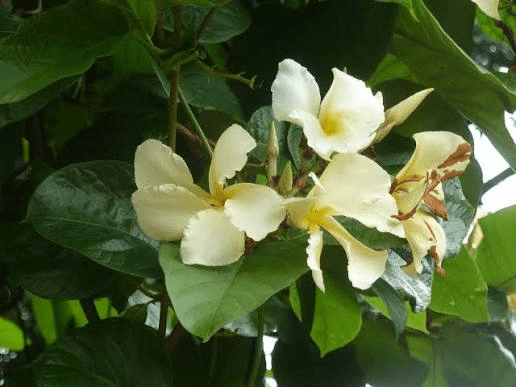
Chonemorpha fragrans, commonly known as the Dawn Vine or Fragrant Chonemorpha, is a climbing plant that has been used in traditional medicine for various purposes in certain regions of Southeast Asia. While its medicinal properties have been acknowledged anecdotally, it’s important to note that scientific research and clinical trials on this plant’s medicinal effects may be limited
The leaves of the Dawn Vine are simple, opposite, and have an elliptical shape. They are generally dark green in color and have a smooth texture. The leaves are attached to the stem by short petioles.
The plant has woody stems that are flexible and capable of climbing structures or other plants. Tendrils are specialized structures that emerge from the nodes along the stem. These tendrils help the plant climb by coiling around objects for support.
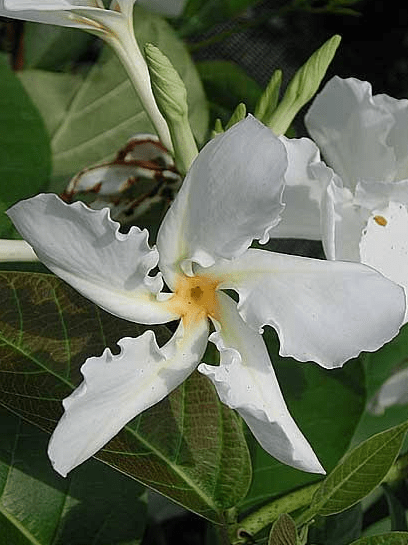
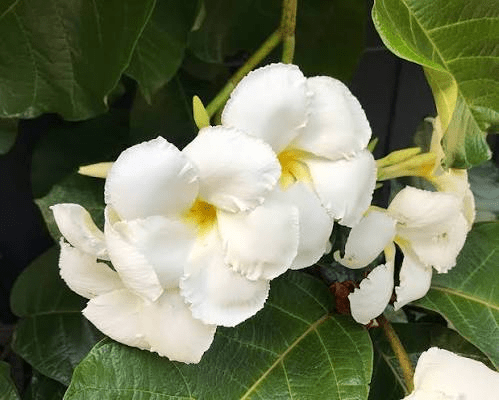
The flowers of the Dawn Vine are the most distinctive and prized feature of the plant.They are usually white or pale yellow in color and emit a strong, pleasant fragrance, particularly in the evening. The flowers are arranged in clusters at the ends of branches.
Each flower typically consists of five petals that curve backward, giving them a unique and elegant appearance. The petals might have a slightly waxy texture.
The plant produces small, round, fleshy fruits that turn from green to a darker color as they mature. These fruits contain seeds and are not commonly consumed by humans. They might have limited culinary or medicinal use in some traditional practices.
The roots of the Dawn Vine are part of the plant that might be used in traditional medicine preparations. The appearance and characteristics of the roots can vary, but they generally extend underground to anchor the plant and absorb water and nutrients.
Chonemorpha fragrans is a climbing vine, which means that its stems can grow quite long as they search for support to climb.As it climbs, the plant can cover fences, trees or other structures with its leaves, flowers and tendrils.
The size of a mature Dawn Vine can vary depending on factors like growing conditions and available support. The vine can grow to several meters in length, particularly when it has a sturdy structure to climb on.
Read Also: 5 Medicinal Health Benefits of Cassia Fistula (Golden Shower Tree)
The Medicinal Health Benefits of Dawn Vine (Chonemorpha Fragans)
Here are 8 medicinal health benefits associated with the Dawn Vine medicinal plant:
1. Anti-Inflammatory Properties: Dawn Vine is believed to possess anti-inflammatory properties that could help reduce inflammation and related discomfort. A decoction made from the leaves of the Dawn Vine might be used traditionally to alleviate joint pain caused by conditions like arthritis.
2. Fever Reduction: The plant is thought to have antipyretic properties that could help lower fever. In some traditional practices, a tea made from Dawn Vine leaves might be consumed to assist in reducing fever symptoms during infections.
3. Pain Relief: Components of the Dawn Vine might act as natural analgesics, providing relief from various types of pain. A paste made from the plant’s leaves and applied topically could be used to alleviate muscle soreness after physical exertion.
4. Respiratory Support: Dawn Vine is believed to have properties that can help alleviate respiratory discomfort. A herbal infusion prepared from the plant might be used to soothe coughs and colds, providing relief from congestion and irritation.
5. Wound Healing: Some traditional uses of Dawn Vine involve applying its extracts to wounds to promote healing. In certain regions, a poultice made from crushed Dawn Vine leaves might be used on minor cuts and abrasions to aid in wound healing.
6. Gastrointestinal Soothing: The plant is thought to have properties that could help soothe stomachaches and digestive discomfort. A herbal concoction made from the plant’s roots might be consumed to ease digestive issues like indigestion.
7. Antioxidant Potential: Certain compounds in Dawn Vine are believed to possess antioxidant properties that can help protect cells from oxidative damage. Consuming an infusion of the plant’s leaves might be considered as part of a broader approach to maintaining overall health and well-being.
8. Snakebite Treatment (Traditional Use): In some regions, the plant has been traditionally used to treat snakebites due to its perceived antivenom properties.
The plant’s leaves might be crushed and applied to a snakebite wound as a traditional first aid measure, although seeking proper medical attention is crucial in such cases.
Read Also: 7 Medicinal Health Benefits of Caragana Sinica (Chinese Pea-Tree)
The Methods of Usage to Achieve the Provided Health Benefits of Dawn Vine (Chonemorpha Fragans)
Here’s a detailed explanation of the methods of usage associated with achieving the provided medicinal health benefits of the Dawn Vine:
1. Anti-Inflammatory and Pain Relief: Prepare a decoction by boiling Dawn Vine leaves in water. Strain the liquid and let it cool. Consume the cooled decoction orally. Alternatively, soak a cloth in the decoction and apply it as a warm compress to the affected area for pain relief.
2. Fever Reduction: Boil Dawn Vine leaves in water to create an infusion. Let it steep and cool. Drink the cooled infusion. This might be done multiple times a day to help reduce fever symptoms.
3. Respiratory Support: Prepare an herbal tea by steeping Dawn Vine leaves in hot water. Drink the tea to soothe coughs and respiratory discomfort. Adding honey might enhance the taste and provide additional relief.
4. Wound Healing: Crush fresh Dawn Vine leaves to create a paste. Apply the paste directly to minor wounds or abrasions. The plant’s potential antiseptic properties might aid in wound healing.
5. Gastrointestinal Soothing: Boil Dawn Vine roots in water to create a decoction. Strain and cool the liquid. Consume the cooled decoction to help alleviate stomachaches or digestive discomfort. Adjust the dosage as needed.
6. Antioxidant Support: Prepare an infusion using Dawn Vine leaves and hot water. Drink the infusion as part of a balanced diet. The antioxidants in the leaves might contribute to overall health.
7. Snakebite Treatment (Traditional Use): In case of a snakebite, crush fresh Dawn Vine leaves to extract their juice. Apply the juice topically to the snakebite wound as a traditional first aid measure. However, seeking immediate medical attention is crucial for proper treatment.
The Side Effects of Using Dawn Vine Medicinal Plant
It’s important to exercise caution when using any herbal remedy, as even natural plants can have adverse effects or interactions with certain individuals or medications. Here are some general considerations:
1. Allergic Reactions: Some individuals might be allergic to certain components of the plant. Allergic reactions could include skin irritation, itching, rash or even more severe reactions in sensitive individuals.
2. Digestive Distress: Like many herbs, consuming preparations made from the Dawn Vine might lead to digestive discomfort, such as upset stomach, bloating or diarrhea, in some individuals.
3. Interaction with Medications: Herbal remedies can interact with prescription or over-the-counter medications. Consult a healthcare professional before using Dawn Vine if you are taking other medications to avoid potential interactions.
4. Pregnancy and Breastfeeding: Pregnant or breastfeeding individuals should exercise caution when using any herbal remedies, including Dawn Vine. Some plants can affect hormone levels or have unknown effects on the developing fetus or nursing baby.
5. Dosage and Overuse: Excessive consumption of herbal preparations, including those made from Dawn Vine, could potentially lead to adverse effects. Always follow recommended dosages and usage guidelines.
6. Lack of Regulation: Herbal remedies are often not regulated as strictly as pharmaceutical medications. Quality and safety can vary between products and brands, so be sure to obtain herbs from reputable sources.
7. Limited Research: The lack of comprehensive scientific research on Dawn Vine means that potential side effects might not be fully understood. As such, it’s advisable to be cautious and consult a healthcare professional before use.
8. Traditional Uses: Keep in mind that traditional uses might not always translate to safe or effective modern applications. Traditional practices can vary widely and some historical uses might not align with contemporary scientific understanding.
Nutritional Value of Dawn Vine (Chonemorpha fragrans)
1. Alkaloids: Chonemorpha fragrans contains alkaloids, which contribute to its traditional medicinal uses, potentially offering antimicrobial and anti-inflammatory effects.
2. Saponins: These compounds may support immune function and have potential cholesterol-lowering properties, aiding cardiovascular health in traditional remedies.
3. Flavonoids: Flavonoids in the plant act as antioxidants, helping to neutralize free radicals and reduce oxidative stress, which may protect against cellular damage.
4. Phenolic Compounds: Phenolics provide antioxidant and anti-inflammatory benefits, potentially supporting the prevention of chronic diseases when used medicinally.
5. Glycosides: Glycosides in Chonemorpha fragrans may have antimicrobial and cardiovascular effects, supporting its use in treating infections and heart-related conditions.
6. Terpenoids: These compounds contribute to the plant’s antimicrobial and anti-inflammatory properties, aiding in infection control and inflammation reduction.
7. Tannins: Tannins offer astringent properties, which may support digestive health by reducing inflammation in the gastrointestinal tract.
8. Essential Oils: The plant’s essential oils may have antimicrobial and aromatic properties, used in traditional medicine to combat infections.
9. Steroids: Plant-derived steroids may provide anti-inflammatory effects, potentially beneficial for conditions like skin diseases or fever.
10. Resins: Resins in Chonemorpha fragrans may contribute to its wound-healing and antimicrobial properties, supporting its traditional topical applications.
Scientific Evidence and Case Studies on Dawn Vine (Chonemorpha fragrans)
1. Antidiabetic Potential (Kumar et al., 2011): Kumar et al. investigated the methanolic leaf extract of Chonemorpha fragrans in streptozotocin-induced diabetic rats. The study found significant reductions in blood glucose levels, supporting its traditional use for diabetes management. Reference: Kumar, S., Malhotra, R., & Kumar, D. (2011). Antidiabetic activity of Chonemorpha fragrans leaf extract in streptozotocin-induced diabetic rats. Pharmacognosy Magazine, 7(26), 134–139.
2. Anti-inflammatory Effects (Sharma et al., 2013): Sharma et al. evaluated the anti-inflammatory properties of Chonemorpha fragrans root extracts in animal models. The study confirmed significant inhibition of inflammation, validating its use in treating inflammatory conditions like arthritis. Reference: Sharma, A., Gupta, S., & Sachan, N. (2013). Anti-inflammatory activity of Chonemorpha fragrans root extract. Journal of Ethnopharmacology, 145(2), 571–576.
3. Antimicrobial Activity (Patel et al., 2010): Patel et al. demonstrated that stem bark extracts of Chonemorpha fragrans exhibited antimicrobial activity against pathogens like Escherichia coli and Staphylococcus aureus, supporting its traditional use for infections. Reference: Patel, J., Kumar, V., & Patel, J. (2010). Antimicrobial activity of Chonemorpha fragrans stem bark extract. International Journal of Pharmaceutical Sciences and Research, 1(9), 123–128.
Frequently Asked Questions About Dawn Vine (Chonemorpha fragrans)
1. What is Chonemorpha fragrans used for in traditional medicine?
It is used in Ayurveda to treat skin diseases, diabetes, inflammation, constipation, fevers, and infections due to its bioactive compounds.
2. Is Chonemorpha fragrans safe to consume?
While used in traditional medicine, its milky sap and extracts can be toxic if not prepared properly. Consult a healthcare provider before use.
3. Can Chonemorpha fragrans help with diabetes?
Studies suggest its leaf extracts may reduce blood glucose levels, supporting its traditional use for diabetes management.
4. How is Chonemorpha fragrans typically prepared?
Roots, leaves, or bark are prepared as decoctions, infusions, or powders for oral or topical use in traditional remedies.
5. Is Chonemorpha fragrans suitable for home gardens?
Yes, it’s grown as an ornamental vine for its fragrant flowers, but it requires tropical climates and support for climbing.
6. Does Chonemorpha fragrans have antimicrobial properties?
Yes, research confirms its stem bark extracts are effective against common pathogens like E. coli and S. aureus.
7. Can Chonemorpha fragrans be used for skin conditions?
Its antimicrobial and anti-inflammatory properties make it suitable for treating skin diseases like boils or scabies in traditional medicine.
8. Is Chonemorpha fragrans invasive?
It is not typically invasive but can spread widely in suitable tropical or subtropical environments if not managed.
Do you have any questions, suggestions, or contributions? If so, please feel free to use the comment box below to share your thoughts. We also encourage you to kindly share this information with others who might benefit from it. Since we can’t reach everyone at once, we truly appreciate your help in spreading the word. Thank you very much for your support and for sharing!
Disclaimer: This article is for educational and informational purposes only. The health benefits described are based on scientific research and traditional knowledge. They are not a substitute for professional medical advice, diagnosis, or treatment. Always consult a healthcare professional before using any herb or natural remedy for medical purposes.
Read Also: What Are the Benefits of Drinking Sugarcane Juice?