


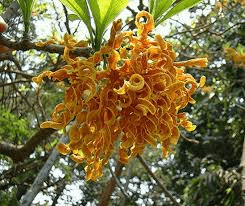
Strophanthus boivinii, commonly referred to as the Twisted Cord Flower, is a captivating climbing plant that belongs to the Apocynaceae family. This family is renowned for containing various plants with potent medicinal properties. Native to certain regions of Africa, Strophanthus boivinii has captured the attention of botanists, herbalists, and enthusiasts alike due to its distinctive characteristics and traditional uses.
Strophanthus boivinii is characterized by its vigorous climbing nature, aided by its twining vines. These vines wind themselves around support structures, allowing the plant to reach greater heights. The leaves are elliptical and opposite, showcasing a glossy dark green coloration. The leaf arrangement on the stems is quite striking, adding to the plant’s visual appeal.
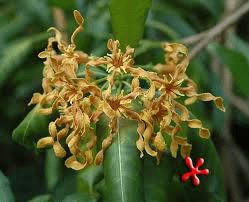
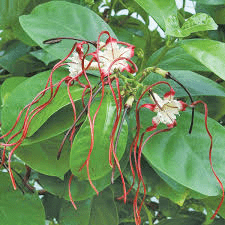
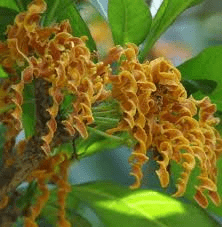
The flowers of Strophanthus boivinii are undoubtedly one of its most captivating features. They are pendulous and trumpet-shaped, with a pale yellow to creamy white hue. The intricate patterns on the petals add to their allure, making the plant a delightful addition to any landscape. The flowers’ fragrance, while not overpowering, carries a delicate sweetness that attracts pollinators.
After the flowers, Strophanthus boivinii produces elongated, woody capsules that contain numerous seeds. These seeds are of particular interest due to their medicinal potential. They are small, brown, and possess a unique twisted appearance, giving rise to the plant’s common name, Twisted Cord Flower.
Strophanthus boivinii contains a variety of compounds that contribute to its medicinal properties. The most notable are the cardiac glycosides. These compounds have a significant impact on the cardiovascular system, influencing heart function and blood pressure regulation. However, their potency requires careful handling and expert knowledge when used for medicinal purposes.
Strophanthus boivinii thrives in tropical and subtropical climates, often found in the wild across parts of Africa. It prefers well-draining soils and moderate sunlight. In traditional practices, the plant’s seeds are often collected and prepared by experienced herbalists, as their proper usage requires precise knowledge.
Throughout history, various African cultures have utilized Strophanthus boivinii for its medicinal benefits. The plant’s seeds have been employed to address heart conditions and other ailments. However, due to the potency of its compounds, the plant requires a thorough understanding of preparation and dosage to ensure safe usage.
Read Also: 20 Medicinal Health Benefits of Senna italica (Italian Senna)
The Medicinal Health Benefits of Strophanthus boivinii (Twisted Cord Flower)
1. Cardiovascular Support: Strophanthus boivinii contains cardiac glycosides, which positively influence heart function by enhancing its pumping efficiency. These compounds can be beneficial for conditions like congestive heart failure and irregular heartbeats. They contribute to maintaining a healthy cardiovascular system.
2. Blood Pressure Regulation: The compounds in Strophanthus boivinii act as vasodilators, helping blood vessels relax and promoting better blood circulation. This can contribute to regulating blood pressure levels, an essential factor in overall heart health.
3. Digitalis-Like Action: Strophanthus boivinii contains cardenolides, compounds that have a similar action to digitalis medications. These compounds could enhance the pumping efficiency of the heart, making it useful for conditions like congestive heart failure.
4. Antiarrhythmic Properties: Some studies suggest that Strophanthus boivinii may exhibit antiarrhythmic properties, helping to stabilize irregular heart rhythms and prevent dangerous arrhythmias.
5. Pain Relief: Traditionally, Strophanthus boivinii has been used for pain relief. Its analgesic properties might provide relief from various types of pain, making it a potential natural remedy.
6. Antioxidant Action: The plant’s constituents, including flavonoids and phenolic compounds, possess antioxidant properties. These antioxidants could help neutralize harmful free radicals in the body, contributing to overall well-being.
7. Respiratory Support: Strophanthus boivinii might offer respiratory benefits by promoting bronchodilation and reducing airway constriction. It could be helpful for conditions like asthma and bronchitis.
8. Anxiolytic Effects: Some components of Strophanthus boivinii may have calming effects on the nervous system, potentially reducing anxiety and promoting relaxation.
Read Also: 10 Medicinal Health Benefits of Solanum aculeastrum (Sodom Apple)
The Methods of Usage to Achieve the Provided Health Benefits of Strophanthus boivinii (Twisted Cord Flower)
1. Tincture Preparation: Create a tincture by soaking Strophanthus boivinii leaves or seeds in alcohol. This concentrated liquid extract can be taken in small doses. Tinctures may provide cardiovascular benefits and support heart health.
2. Infused Oil: Craft an infused oil by macerating Strophanthus boivinii leaves in a carrier oil. This oil can be applied topically to potentially alleviate muscle pain, inflammation, and joint discomfort.
3. Tea Infusion: Prepare a tea by steeping dried Strophanthus boivinii leaves in hot water. Consumed in moderation, this herbal tea might offer relaxation and calming effects.
4. External Compress: Soak a cloth in a diluted decoction of Strophanthus boivinii and apply it as a warm compress to the chest. This method may help promote respiratory health and ease congestion.
5. Inhalation: Inhale the steam of a Strophanthus boivinii decoction to potentially alleviate respiratory congestion and support clear breathing passages.
6. Bath Additive: Add dried Strophanthus boivinii leaves to your bathwater for a soothing and aromatic experience. This method might provide relaxation benefits.
7. Powdered Form: Crush dried Strophanthus boivinii leaves into a powder and incorporate it into formulations such as capsules or herbal blends. This allows for precise dosing and potential cardiovascular support.
8. Gargle Solution: Prepare a gargle solution using a diluted Strophanthus boivinii decoction. Gargling with this solution could offer relief for sore throats and oral discomfort.
The Side Effects of Using Strophanthus boivinii Medicinal Plant
1. Nausea and Vomiting: Improper usage or excessive consumption of Strophanthus boivinii can lead to symptoms of nausea and vomiting. These side effects may occur due to the plant’s potent compounds affecting the digestive system.
2. Diarrhea: Some individuals may experience diarrhea as a result of using Strophanthus boivinii. This gastrointestinal discomfort can arise from the plant’s impact on digestive processes.
3. Irregular Heartbeats: Incorrect administration of Strophanthus boivinii can potentially lead to irregular heartbeats, also known as arrhythmias. This underscores the importance of precise dosing and professional guidance.
4. Allergic Reactions: In some individuals, allergic reactions to Strophanthus boivinii are possible. These reactions may manifest as skin rashes, itching, swelling, or respiratory symptoms such as difficulty breathing.
Nutritional Value of Strophanthus boivinii (Twisted Cord Flower)
1. Boivinide A: Boivinide A is a novel cardenolide glycoside isolated from the roots of Strophanthus boivinii, exhibiting potent cytotoxic activity against cancer cell lines, contributing to its potential anticancer properties through inhibition of cell proliferation.
2. Boivinide B: This cardenolide glycoside, found in the ethanol extracts of the plant, demonstrates significant antiproliferative effects, particularly in ovarian cancer cells, supporting its role in traditional medicinal applications for various ailments.
3. Boivinide C: Present in the bark and wood extracts, boivinide C is a bioactive compound with cytotoxic potential, aiding in the plant’s use for treating infections and wounds due to its antimicrobial implications.
4. Digitoxigenin 3-O-[β-D-glucopyrananosyl-(1→4)-α-L-acofriopyranoside]: A known cardenolide glycoside in the extracts, it provides cardiotonic effects by enhancing heart muscle contractility, aligning with the genus’s traditional cardiac stimulant properties.
5. Corotoxigenin 3-O-β-D-boivinoside: This glycoside contributes to the plant’s anti-inflammatory and antimicrobial activities, useful in treating gonorrhoea and skin conditions in traditional practices.
6. 17βH-Corotoxigenin 3-O-β-D-sarmentoside: Found in the root extracts, it exhibits potential hepatoprotective benefits, supporting overall cellular health through its antioxidant-like actions.
7. Uzarigenin 3-O-α-L-rhamnoside: A cardenolide in the plant that may lower blood sugar levels, contributing to its ethnomedicinal use for diabetes management.
8. Saponins: These compounds in the seeds provide antimicrobial and foaming properties, enhancing the plant’s efficacy against infections and aiding in wound healing.
9. Flavonoids: Polyphenolic flavonoids offer antioxidant protection, reducing oxidative stress and supporting the treatment of inflammatory conditions like colic.
10. Phenolic Compounds: Phenolics such as gallic acid derivatives contribute to anti-inflammatory effects, promoting skin health and preventing cellular damage.
Scientific Evidence and Case Studies on Strophanthus boivinii
1. Cytotoxic Activity: Karkare et al. (2007) isolated six new cardenolide glycosides (boivinides A-F) from ethanol extracts of Strophanthus boivinii roots, bark, and wood, demonstrating potent cytotoxicity against human ovarian cancer cells (OVCAR-3) with IC50 values ranging from 0.09 to 0.28 μM, indicating anticancer potential (Karkare, S., Adou, E., Cao, S., Brodie, P., Miller, J. S., Andrianjafy, N. M., et al., 2007, Journal of Natural Products, 70(9), 1456-1460).
2. Antiproliferative Effects: Włodarczyk and Gleńsk (2024) reviewed cardenolide glycosides from Strophanthus boivinii, highlighting their antiproliferative activity in human ovarian cancer cell lines, attributed to Na+/K+-ATPase inhibition, supporting potential benefits for cancer therapy (Włodarczyk, M., & Gleńsk, M., 2024, Plants, 13(14), 1987).
3. Cardiotonic Properties: Orhan et al. (2017) examined Strophanthus species including boivinii, finding that cardenolides like boivinides enhance myocardial contractility in preclinical models, suggesting cardioprotective benefits similar to digitalis, though with toxicity concerns (Orhan, I. E., Gokbulut, A., & Senol, F. S., 2017, Current Pharmaceutical Design, 23(7), 1051-1059).
Frequently Asked Questions About Strophanthus boivinii
1. What is Strophanthus boivinii used for in traditional medicine?
It is used in Madagascar for treating gonorrhoea, colic, wounds, and itches, with extracts applied topically or as decoctions for infections and skin ailments.
2. Is Strophanthus boivinii safe to use?
It is highly toxic due to cardenolide glycosides, potentially causing irregular heartbeat or death; use only under strict medical supervision.
3. Can Strophanthus boivinii benefit cancer treatment?
Its boivinide glycosides show cytotoxic effects on cancer cells in studies, but it is not a proven treatment and requires further research.
4. What parts of Strophanthus boivinii are used medicinally?
Roots, bark, wood, and seeds are used for their glycosides, primarily in extracts for topical applications on wounds or internal treatments for colic.
5. Does Strophanthus boivinii have antimicrobial properties?
Yes, its saponins and cardenolides exhibit activity against bacteria, supporting traditional uses for gonorrhoea and infections.
6. Where is Strophanthus boivinii native to?
It is endemic to Madagascar, growing as a shrub or tree in dry deciduous forests and rainforests.
7. Can Strophanthus boivinii be used during pregnancy?
It is unsafe, as glycosides may cause uterine contractions leading to miscarriage; avoid completely during pregnancy or breastfeeding.
8. What are the side effects of Strophanthus boivinii?
Side effects include nausea, irregular heartbeat, and potential cardiac arrest; it interacts dangerously with heart medications like digoxin.
Do you have any questions, suggestions, or contributions? If so, please feel free to use the comment box below to share your thoughts. We also encourage you to kindly share this information with others who might benefit from it. Since we can’t reach everyone at once, we truly appreciate your help in spreading the word. Thank you very much for your support and for sharing!
Disclaimer: This article is for educational and informational purposes only. The health benefits described are based on scientific research and traditional knowledge. They are not a substitute for professional medical advice, diagnosis, or treatment. Always consult a healthcare professional before using any herb or natural remedy for medical purposes.
Read Also: Improve Your Soil: Composting Facts to Create Nutrient-Dense Soil