


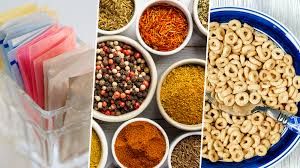
In the previous article, food additives, their uses, advantages, and disadvantages were discussed. Major food additives such as food colors, preservatives, and antioxidants were also explored.
Food additives are essential in food processing as they prolong the shelf life of foods that would otherwise spoil quickly.
They also enhance the organoleptic properties of foods, such as color, texture, and flavor, thereby increasing their acceptability. In this article, additional food additives and their roles in food processing will be examined.
Read Also: Small Ruminants: Sheep and Goats Classification
Other Common Food Additives in Processing
1. Acidity Regulators in Food
Acidity regulators are used to change or control the acidity and alkalinity of foods or maintain a sour or sharp taste. An acidified food can retard the growth of some microorganisms. Types of acidity regulators include:
- Acid
- Acidifier
- Acidity regulator
- Alkali
- Base
- Buffer
- Buffering agent
- pH adjusting agent
Examples of acidity regulators include: Sodium lactate, Potassium lactate, Calcium lactate, Citric acid, Sodium citrates, Potassium citrates, Calcium citrates, Potassium tartrates, Sodium potassium tartrate, Phosphoric acid, Sodium phosphates, Potassium phosphates, Calcium phosphates, Sodium malates, Potassium malate, Calcium malates, Metatartaric acid, Calcium tartrate.
2. Thickeners, Stabilizers, Emulsifiers, and Gelling Agents in Food
Thickeners, stabilizers, emulsifiers, and gelling agents have become integral parts of the current food manufacturing industry. Thickeners increase the volume, change the viscosity, and improve the processability of food items.
Stabilizers, as the name implies, stabilize food products, sometimes through the use of fillers. Emulsifiers facilitate the miscibility of otherwise immiscible substances. For instance, water-in-oil (e.g., margarine) or oil-in-water (e.g., salad dressing) emulsions used in the food industry are made possible by emulsifiers.
Gelling agents mainly contribute to the viscosity and sensory properties of food products. In sum, thickeners, stabilizers, emulsifiers, and gelling agents contribute to the stability and palatability of food products.
Examples include: Starch, food gums like Gum Arabic, Xanthan gum, Karaya gum, Tara gum, Gellan gum, Konjac, Soybean hemicellulose, Cassia gum, Polyoxyethylene sorbitan monolaurate (Polysorbate 20), Polyoxyethylene sorbitan mono-oleate (Polysorbate 80), Polyoxyethylene sorbitan monopalmitate (Polysorbate 40), Polyoxyethylene sorbitan monostearate (Polysorbate 60), Polyoxyethylene sorbitan tristearate (Polysorbate 65), Pectins.
3. Anti-Caking Agents in Food
Anti-caking agents prevent the formation of lumps, making products manageable for packaging, transport, and use by the end consumer. An anti-caking agent is a food additive that prevents agglomeration in certain solids, permitting a free-flowing condition.
It reduces the tendency of food particles to adhere to one another. Types of anti-caking agents include:
- Anti-caking agent
- Anti-stick agent
- Drying agent
- Dusting agent
Anti-caking agents consist of substances such as starch, magnesium carbonate, and silica and are added to fine-particle solids, such as food products like table salt, flours, coffee, and sugar.
Common examples of foods that contain anti-caking agents include: Vending machine powders (coffee, cocoa, soup), milk and cream powders, grated cheese, icing sugar, baking powder, cake mixes, instant soup powders, drinking chocolate, table salt.
4. Flavors and Flavor Enhancers in Food
i. Flavors
Flavors are additives that give food a particular taste or smell and may be derived from natural ingredients or created artificially.
ii. Flavor Enhancers
Flavor enhancers enhance a food’s existing flavors. They may be extracted from natural sources (through distillation, solvent extraction, maceration, among other methods) or created artificially. Types of flavor-enhancing agents include:
- Flavor enhancer
- Flavor synergist
Some flavor enhancers include: Dioctyl sodium sulfosuccinate (used in processed foods), Disodium guanylate (used in canned meats, meat-based foods), Hydrolyzed vegetable protein (used in mixes, stock, processed meats), Monosodium glutamate (MSG) (used in Chinese food, dry mixes, stock cubes, and canned, processed, and frozen meats).
Read Also: Complete Guide on Sheep and Goats Production
Additional Food Additives in Processing
1. Humectants in Food
A humectant is a hygroscopic (water-absorbing) substance used to keep things moist; it attracts and retains moisture in the air nearby via absorption, drawing water vapor into or beneath the surface of the food. Examples of humectants include:
i. Natural: Aloe vera gel, egg yolk and egg white, honey, molasses.
ii. Artificial: Propylene glycol, hexylene glycol, butylene glycol, alpha hydroxy acids such as lactic acid, glyceryl triacetate, lithium chloride, polymeric polyols such as polydextrose, Quillaia, sodium hexametaphosphate, sugar alcohols (sugar polyols) such as glycerol, sorbitol, xylitol, maltitol.
Humectants are used in foods such as cakes and breads.
2. Bleaching Agents in Food
A bleaching agent is used to lighten or whiten a substrate through a chemical reaction. Bleaching reactions usually involve oxidative or reductive processes that degrade color systems. A food bleaching agent is used to decolorize food.
For example, food manufacturers add flour bleaching agents to flour to make it appear whiter, oxidize the surfaces of flour grains, and aid in the development of gluten.
Common bleaching agents include: Organic peroxides (namely benzoyl peroxide), calcium peroxide, nitrogen dioxide, chlorine, chlorine dioxide, azodicarbonamide, atmospheric oxygen (used during the natural aging of flour).
3. Glazing Agents in Food
A glazing agent, when applied to the external surface of a food, imparts a shiny appearance or provides a protective coating. Glazing agents like egg white are used in baked products to create a glossy surface. Types of glazing agents include:
- Coating agent
- Film-forming agent
- Glazing agent
- Polishing agent
- Sealing agent
- Surface-finishing agent
Miscellaneous Food Additives in Processing
1. Mineral Salts in Food
Mineral salts are added as nutritional additives, though they may have other properties such as acting as antioxidants or preservatives. Many are essential nutrients that need to be included in daily diets, as they are sources of important nutrients required for the body.
The important natural mineral salts that should be consumed include sodium, phosphorus, potassium, chlorine, sulfur, and calcium. These are the macro elements of natural mineral salts, while the micro elements, which are essential nutrients for the human body, include iodine, iron, fluoride, and zinc.
2. Propellants and Sequestrants in Food
Propellants help propel food from a container. A sequestrant is a food additive that improves the quality and stability of food products. Sequestrants form chelate complexes with polyvalent metal ions, especially copper, iron, and nickel, which serve as catalysts in the oxidation of fats in food. Sequestrants are a type of preservative.
3. Antibiotics in Food
Antibiotics are used in the food industry to increase the shelf life of numerous food items, especially perishable items such as milk. Although not directly added during food processing, non-vegetarian food may contain a certain amount of antibiotics since antibiotics are frequently used in animal production.
However, any antibiotic used for human therapeutic purposes or as an animal feed additive is banned for use in the food industry. Tetracycline is a classic example. Antibiotics frequently used in food manufacturing include: Nisin, Natamycin, Subtilin, Tylosin, Phytoncides.
Food additives play a vital role in food processing, enhancing shelf life, stability, and sensory attributes such as flavor, texture, and appearance.
This article has explored additional food additives, including acidity regulators, thickeners, stabilizers, emulsifiers, gelling agents, anti-caking agents, flavors, flavor enhancers, humectants, bleaching agents, glazing agents, mineral salts, propellants, sequestrants, and antibiotics.
While these additives are crucial for improving food quality and acceptability, they must be used within recommended levels to ensure safety and efficacy in food production.
Do you have any questions, suggestions, or contributions? If so, please feel free to use the comment box below to share your thoughts. We also encourage you to kindly share this information with others who might benefit from it. Since we can’t reach everyone at once, we truly appreciate your help in spreading the word. Thank you so much for your support and for sharing!