


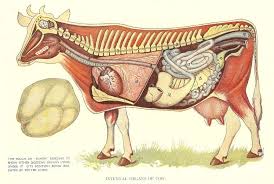
Meat consists primarily of muscular tissue, with amounts of fatty tissue varying not only with the breed, age, sex, and diet of the animal but also with the anatomical location.
Primary Composition of Meat
Meat is primarily composed of muscle, with variable amounts of epithelial and all types of connective tissues. Skeletal muscle serves as the principal source of muscle tissue in meat, though a small amount of smooth muscle (blood corpuscles) is also present.
While all connective tissue types are found in meat, adipose tissue (fat), bone, cartilage, and connective tissue proper predominate.
Muscle and connective tissue are the gross components of the meat animal carcass, contributing almost exclusively to the qualitative and quantitative characteristics of meat.
Chemical Composition of Meat
Meat consists primarily of muscular tissue, with amounts of fatty tissue varying not only with the breed, age, sex, and diet of the animal but also with the anatomical location. As a guide, the approximate composition of a typical mammalian muscle is 75% water, 19% protein, 3.5% fat, and 2.5% soluble non-protein materials.
A crude relationship between moisture (M) and protein (P) contents in a given meat cut is P = M/4. The mineral content of deboned meat is low, and the carbohydrate content is negligible. Variations result from differences in species, breed, sex, age, nutritional regimes, and muscle location within the animal.
Read Also: Anatomy of Fishes: Female Fish and their Reproductive Strategies
Structure and Composition of Meat
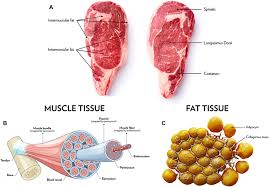
Before considering slaughter, post-mortem events, meat quality, and meat preservation in the tropics, it is necessary to examine the fine structure and composition of mammalian tissue.
1. Muscle Structure and Function
Meat consists primarily of muscular tissue, with amounts of fatty tissue varying not only with the breed, age, sex, and diet of the animal but also with the anatomical location.
As a guide, the approximate composition of a typical mammalian muscle is 75% water, 19% protein, 3.5% fat, and 2.5% soluble non-protein materials.
Most skeletal muscles are attached directly to bone, although some are attached to ligaments, fascia, cartilage, or skin. A muscle can be physically divided into successively smaller longitudinal units, each surrounded by a sheath of connective tissue. Surrounding the muscle as a whole is a sheath of connective tissue known as epimysium.
From the inner surface of the epimysium, septa of connective tissue penetrate into the muscle, separating muscle fibers into bundles; these separating septa constitute the perimysium, which contains larger blood vessels and nerves.
From the perimysium, a fine connective tissue framework extends inward to surround each individual fiber, the essential structural unit of each muscle. The connective tissue surrounding each fiber is the endomysium, and below it lies the sarcolemma.
Each muscle fiber is composed of several long, thin, cylindrical rods known as myofibrils, the essential contractile units of muscle, separately enwrapped in the sarcoplasmic reticulum, a highly specialized mesh of tubules concerned with calcium ion control and, hence, the initiation and arrest of contraction.
The myofibrils are bathed in an aqueous fluid, the sarcoplasm, which is about 75–80% water and contains lipid droplets, glycogen granules, ribosomes, numerous proteins, non-protein nitrogen substances, and several inorganic constituents.
When viewed under a microscope, cross-sections reveal an orderly formation of two types of filaments lying parallel to the fiber’s axis, making up the myofibrils. The cross-sections are formed by alternate ranks of myosin and actin filaments.
The thicker myosin filaments form the dark A-bands, while fine actin filaments extend into the dark bands, overlapping the myosin filaments. The dark A-band has a central clear area, the H-zone, and the light I-band has a central dark division, the Z-line. The functional unit of the myofibril, known as the sarcomere, extends from one Z-line to the next.
i. Muscle Tissue Characteristics
The structural unit of muscle is a specialized cell, the muscle fiber, constituting 72–92% of the muscle volume. The membrane surrounding the muscle fiber is called the sarcolemma, and the intracellular substance is the sarcoplasm.
The muscle fiber comprises many myofibrils, which consist of thick and thin filaments (myofilaments). The special arrangement of these and the bands of myofibrils give the fiber a striated appearance under a microscope (cross-striated muscle).
The filaments consist almost entirely of the myofibrillar proteins actin (thin, 20–25%) and myosin (thick, 50–55%). Although they make up only 7% of muscle weight, they are primarily responsible for a critical property of meat: its ability to retain water and bind added water (water-holding capacity, WHC). The water-holding capacity is particularly important in meat processing.
2. Connective Tissue in Meat
Connective tissues are distributed throughout all body components—skeleton, skin, organs, fat, tendons, and muscles. Three kinds of connective tissue fibers exist: collagen, reticulum, and elastin.
Collagen constitutes 20–25% of total protein and has a major (negative) influence on meat tenderness. Skin (from pigs only) has excellent swelling and binding abilities due to its high collagen content, making it ideal for meat products such as emulsion-type cooked sausages, provided it is properly scalded, completely de-haired, usually singed, scraped, washed, and defatted.
Fatty Tissue Distribution
The main fatty tissue deposits are found in septa between muscle bundles (intramuscular fat), spaces between muscles (intermuscular), and between skin and muscles (subcutaneous or back fat). Fat depots are also found around internal organs, with the main depot around the kidneys (perirenal, leaf, or kidney fat).
Fatty tissues can be graded as “firm” (back fat, jowl, and brisket) or “soft” (leaf or perirenal fat), depending mainly on their connective tissue content.
Read Also: Guide On How To Increase Goats Milk
Internal Organs in Meat Processing
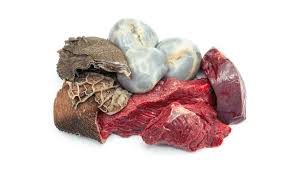
Depending on local regulations and eating habits, the following organs are commonly used in sausage manufacture:
i. Heart: After removing the pericardium, it is used as any other kind of meat.
ii. Liver: Used for making various types of liver sausage and paste due to its proteins’ high emulsifying capacity.
iii. Tongue: Trimmed of all hyoid bones, tonsils, and mucous membranes, it can be cured and dried whole, used to make meat batter, or cured and canned (ox or pork tongues).
iv. Lungs: Beef lungs can be used for cooked sausages. Pork lungs are frequently unfit for human consumption due to contamination by scalding water.
v. Kidneys: Often contaminated with heavy metals or other residual substances, their consumption in higher quantities is not recommended in some countries.
vi. Tripe: The rumen and reticulum of ruminants, opened and rinsed, with all dark tissues (internal linings) removed by cooking (62–65°C).
vii. Stomach: Pig stomachs, properly cleaned, are used as natural casings for cooked sausages.
viii. Intestines: Mainly used as casings for various sausages.
ix. Blood: Highly perishable, it must be handled carefully to avoid contamination during collection. To prevent coagulation, blood is either defibrinated or mixed with a solution of 1.6% sodium citrate or 1% phosphate.
Blood plasma, obtained by centrifuging, should be cooled to 0°C as quickly as possible. Whole blood is used to make blood sausage, liver sausage, and blood pudding, while blood plasma can be used for meat emulsions (batter).
All raw materials must be fit for human consumption. After inspection, final dressing, removal of condemned and dirty parts, and washing, all meat and organs must be immediately hung on hooks and moved to a cooler to await processing.
Carcasses may be fully or partially boned before chilling, provided high hygienic standards are observed. A high degree of skill and special organization of labor are required. If small-scale producers cannot chill carcasses, they may use hot-boned meat for sausage production or meat batter.
Hot-boned meat has high WHC, so the use of phosphate is avoided. However, beef must be processed within four hours and pork within one hour of slaughter.
Pre-slaughter stress may result in abnormal muscle conditions called “pale, soft, and exudative” (PSE) and “dark, firm, and dry” (DFD). PSE meat, frequently found in pork, is caused by sudden stress before slaughter, raising glycogen levels and leading to elevated post-slaughter glycolysis, a rapid pH drop below 5.8 within one hour, partial protein denaturation, reduced WHC, and increased drip loss.
Prolonged stress, such as fighting during transport and lairage, causes exhaustion and glycogen depletion, reducing post-mortem glycolysis and lactic acid production, slowing pH decline, and reducing protein degradation.
The resulting DFD meat, found in pork and beef, has high WHC but spoils quickly due to high pH and a dry surface favoring bacterial growth. Manufacturers must aim for uniform meat product quality by standardizing raw materials.
Good-quality carcasses are usually divided into primal cuts (ham, shoulder, loin, neck, etc.). The remainder of the carcass and trimmings from primal cuts are standardized into different qualities. Poorer-quality carcasses are used entirely for processing after being deboned and trimmed.
Basic parameters for quality standards include the size and shape of meat pieces, the amount of visible fatty and connective tissues, and chemical composition. Meat must not contain skin, lymphatic glands, bone particles, bristles, large blood vessels, or blood clots.
Process of Livestock Slaughtering
1. Lairage Rest and Care
The first stage in well-organized livestock slaughter is lairage rest and care. For convenience, the lairage should be close to but screened from the slaughter slab or floor.
Animals in the lairage should not be exposed to the stressful sight of their comrades being slaughtered until their turn, hence the screening. Unobstructed access from the lairage to the killing floor is necessary, with a narrow entrance restraining only one to two animals at a time.
2. Stunning, Sticking, and Bleeding
Stunning minimizes animal struggle during sticking and bleeding, facilitating smooth operation of the slaughter line. Common stunning methods include hammer or pole axe, captive bolt, electric shock, and CO2 suffocation.
The chosen method must render the animal unconscious without destroying the medulla oblongata, which controls heart and lung actions needed to pump out blood during exsanguination. Stunning should be followed quickly by sticking/killing and bleeding to prevent the animal from regaining consciousness.
Sticking/killing is commonly achieved by cutting neck blood vessels. Bleeding is best done on a hoist with the animal hanging head downward to ensure rapid exsanguination assisted by gravity, rapid blood collection from the killing floor, and minimal carcass contamination by blood.
3. Evisceration
After bleeding, while the carcass is still hanging from a chain shackled around the hind legs, as practiced in organized operations, the head is skinned and removed. The legs or shanks are removed.
After the hide is skinned or pulled off, the carcass is opened, and abdominal viscera (e.g., intestines, stomach) are removed. For cattle, this follows bleeding.
For swine, carcasses are placed in a scalding tank at 57.2–71.1°C. The carcass is then opened by a cut down the belly from hock to breast, avoiding cutting the intestines. The bung is loosened, and the intestinal tract is removed.
4. Washing of the Carcass
All blood must be washed off both the inside and outside of the carcass.
5. Cutting-Up
When cutting up the carcass, start by cutting through lean meat and sawing through bone to minimize contamination with bone, which leads to early putrefaction or taint. Cutting along natural seams forming the muscles minimizes injury to muscle and consequent drip loss of meat juice.
Muscular Tissue and Tenderization
1. Muscular Tissue Structure
A muscle can be physically divided into successively smaller longitudinal units, each surrounded by a sheath of connective tissue. Surrounding the muscle as a whole is a sheath known as the epimysium.
From the inner surface of the epimysium, septa of connective tissue penetrate the muscle, separating muscle fibers into bundles. These separating septa constitute the perimysium, which contains larger blood vessels and nerves.
From the perimysium, a fine connective tissue framework extends inward to surround each individual muscle fiber, known as the endomysium, with the sarcolemma as the fiber membrane. A muscle comprises fibers that appear striated under a light microscope.
A single muscle fiber consists of myofibrils beside which lie cell nuclei and mitochondria. In a single myofibril, striations resolve into a repeating pattern of light and dark bands. A single unit of this pattern consists of a Z-line, an I-band, an A-band interrupted by an H-zone, then the next I-band, and finally the next Z-line.
Electron micrographs show that the repeating band pattern is due to overlapping thick and thin filaments. Thicker myosin filaments form the dark A-band, while fine actin filaments form the light I-bands, extending into the dark bands and overlapping.
2. Tenderization of Meat
Fresh meat is usually rather tough. After about 24–35 hours of chilling, meat becomes progressively tender, likely due to alterations in the structure of myofilaments and their cross-bridges, possibly caused by the action of cathepsin enzymes.
These structural changes may relate directly to tenderization during ageing (ripening or conditioning), permit the shift of ions necessary for improved water-holding capacity (WHC), or both.
The action of proteolytic enzymes on connective tissue, reducing it to a gelatinous consistency, contributes to tenderization during ageing. Tenderization can generally be achieved in two ways:
i. Natural Tenderization
Natural ageing or ripening is achieved with the meat’s natural enzymes in a cold room/store, typically at 35°F (2–3°C) by hanging the carcass. The best flavor and greatest tenderness develop with ageing at this temperature for 2–4 weeks.
Humidity must be controlled, and the meat wrapped to minimize drying and weight loss. New ageing processes use higher temperatures, such as 68°F (18–20°C) for 48 hours, achieving tenderness but risking bacterial slime development.
In commercial practice, ultraviolet light may be used to control bacterial surface growth during quick ageing at high temperatures.
ii. Artificial Tenderization
Several artificial methods tenderize meat to varying degrees:
a. Mechanical Means: Pounding, cutting, or separating and breaking meat fibers with ultrasonic vibration.
b. Salt Application: Low levels of salt solubilize meat protein and draw water. Salt placed within ground meat (e.g., hamburger) holds water within the mass, while surface application draws moisture out. Phosphate salts may be more effective than table salt and can be blended into ground meat or diffused into flesh to retain juices and minimize bleeding or drip losses.
c. Enzyme Application: Enzymes such as bromelin (pineapple), ficin (figs), trypsin (pancreas), and papain (papaya) are applied to meat surfaces or injected into the meat or bloodstream before slaughter for large cuts, markedly reducing ageing time. The traditional practice in tropical countries of wrapping meat in pawpaw leaves achieves this kind of tenderization.
Read Also: Sheep and Goat Housing Complete Guide
Cold Storage of Meat
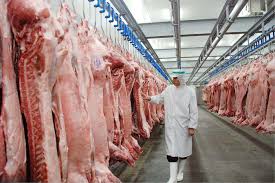
Meat under cold storage requires temperatures of -15 to -25°C, preserving it for 6 to 12 months. Meat must be frozen using a blast freezer, such as a blast freezer room or plate freezer. If the meat temperature exceeds 0°C (32°F), a blast freezer room is necessary. Understanding correct meat cold room procedures, whether frozen or chilled, is critical for ensuring a product that is fresh, delicious, and safe.
Harmful bacteria begin to develop in raw meat from the moment an animal is slaughtered, making storage a time-sensitive process. To prolong meat life, correct safe storage procedures must be followed.
At temperatures below -18°C, the food freezing rate is high, microorganisms and enzymes nearly stop moving and growing, and oxidation is very slow, allowing longer storage with better frozen quality. Stable storehouse temperatures are required, as excessive fluctuations cause spoilage.
1. Pre-Cooling Room
Meat cold rooms are mainly used for cold processing of carcasses such as pigs, cattle, and sheep. The freezing point of meat juice is -0.6 to -1.2°C. After slaughter, when the carcass temperature is about 35°C, it is sent to a cold room with a designed temperature of 0 to -2°C, reducing the meat temperature to 4°C.
Due to the low heat capacity and thermal conductivity of air, increasing airflow rate can enhance cooling. However, excessively strong airflow does not significantly increase cooling compared to the previous period but greatly increases dry shrinkage loss and power consumption on the meat surface.
In the cooling process, the wind speed in the cargo room should not exceed 2 m/s, with 0.5 m/s generally used. Air circulation should be 50–60 times/hour, with a cooling time of 10–20 hours. The average dry body consumption is about 1.3%.
2. Cooling Processing
i. Stage A: The temperature is -10 to -15°C, air velocity is 1.5–3 m/s, and cooling time is 1–4 hours. The average enthalpy value of meat at this stage is about 40 kJ/kg, forming a layer of ice on the surface. This reduces dry consumption and accelerates cooling, as ice’s thermal conductivity is four times that of water.
ii. Stage B: The cold room temperature is about -1°C, air velocity is 0.5–1.5 m/s, and cooling time is 10–15 hours. The surface temperature gradually increases, and the internal temperature decreases, balancing the body temperature until the thermal center reaches 4°C.
This method yields meat with good color, aroma, taste, and tenderness, shortening cooling time and reducing dry consumption by 40–50%.
Not all meats are equal, and storage times reflect this. Fat and water content, as well as cut size, determine storage duration in a blast freezer. These timings indicate how long regular cuts remain fresh at -18°C if storage procedures are followed correctly.
Microorganisms Associated with Meat Spoilage
Food poisoning may result from infection or intoxication caused by microorganisms. Infection occurs from consuming live bacteria that multiply in the human body, producing characteristic symptoms. Intoxication results from toxins in food produced by bacteria before consumption. Toxins, chemical compounds, may linger in food without microbial growth, making them highly dangerous.
1. Salmonella typhi
Salmonellae are facultative anaerobes causing food poisoning. Ten to twenty cells of Salmonella typhi are sufficient to cause typhoid, but 10,000 to 100,000 cells of other species may be needed for infection. Some are host-specific, affecting the animal from which the meat was produced but failing to cause infection in humans.
Typical symptoms of salmonellosis include diarrhea, fever, and vomiting, lasting one to 14 days after a 12- to 24-hour incubation period. Victims may excrete bacteria for weeks after symptoms subside. Poor personal hygiene causes meat contamination.
2. Staphylococcus aureus
Staphylococcus aureus, a facultative aerobe, causes intoxication and lives in the nose, throat, hair, skin, and animal hides. Meat is contaminated by handling, sneezing, or coughing. Minute amounts of toxin cause illness within one to eight hours of eating poisoned food, with symptoms of nausea, vomiting, and shock lasting one to two days.
In rare cases, it is fatal. The bacterium does not produce off-odors or spoilage, making it hard to detect. Refrigeration controls its growth, but while cooking may destroy the bacteria, the heat-stable toxin persists. It is particularly troublesome in cooked, cured meats, often due to recontamination after curing, such as during slicing.
3. Clostridium botulinum
Clostridium botulinum, an anaerobe, produces botulin, one of the most poisonous substances known, attacking the central nervous system and causing death by respiratory paralysis. The illness, botulism, results from dormant cells in soil, fish, animals, and plants. High-moisture, low-acid, low-salt conditions above 3°C favor growth and toxin production.
Control measures must destroy spores or prevent growth and toxin formation. Botulism is usually due to undercooking processed meats. Pressure-cooking ensures commercial sterility, while pasteurization (heating to 70°C) and adding salt (NaCl) and sodium nitrite (NaNO2) are used for canned ham. Refrigeration (0–10°C) is essential for vacuum-packed meats, and frozen storage prevents growth.
4. Clostridium perfringens
Clostridium perfringens, an anaerobic bacterium, is a common but rarely fatal cause of food poisoning. It grows well in warm meats, often found in leftovers not kept chilled or reheated to 70°C to kill bacteria. Symptoms include diarrhea and weakness, lasting 12–24 hours after an 8- to 20-hour incubation period.
Do you have any questions, suggestions, or contributions? If so, please feel free to use the comment box below to share your thoughts. We also encourage you to kindly share this information with others who might benefit from it. Since we can’t reach everyone at once, we truly appreciate your help in spreading the word. Thank you so much for your support and for sharing!