


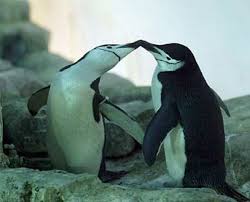
This article explores the documented evidence of homosexual or transgender behavior in animals across various species, including birds, mammals, insects, and fish. Such behavior includes a range of activities such as sex, courtship, affection, pair bonding, and even parenting. The documentation of these behaviors is detailed in researcher and author Bruce Bagemihl’s 1999 book, Biological Exuberance: Animal Homosexuality and Natural Diversity.
The Historical Context of Research
Bruce Bagemihl notes that widespread observation of same-sex behavior in animals did not emerge “officially” until the 1990s. Prior to this, observer bias—rooted in social attitudes towards LGBT people—may have contributed to the reluctance to acknowledge or report such behaviors. This made the topic somewhat of a taboo in scientific discourse. In Biological Exuberance, Bagemihl devotes three chapters to the history of this bias: Two Hundred Years at Looking at Homosexual Wildlife, Explaining (Away) Animal Homosexuality, and Not For Breeding Only. In these sections, he documents systematic prejudices in biology, highlighting a tendency to focus solely on reproductive explanations for behaviors, thus ignoring or downplaying non-reproductive activities like homosexuality and transgender behaviors.
Bagemihl critiques this narrow biological perspective, stating that the current ignorance stems from biology’s “single-minded attempt to find reproductive (or other) ‘explanations'” for homosexuality and other forms of non-procreative sexual behavior in animals. Petter Bøckman, an academic adviser for the Against Nature? exhibit, also points out that many researchers incorrectly regard homosexuality as something entirely separate from sexual activity. Bøckman emphasizes that animals engage in sex “with whom they will, when they will, and without consideration to a researcher’s ethical principles.”
Observations of Homosexual Behavior Across Species
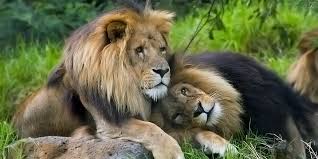
Homosexual behavior is particularly prevalent among social birds and mammals, especially sea mammals and primates. Animal sexual behavior takes many forms, even within the same species, and its motivations and implications remain complex and not fully understood.
According to Bagemihl’s research, same-sex behavior is not limited to one species or type of animal. It has been observed in close to 1,500 species, ranging from primates to gut worms, and is well-documented for around 500 of them. The presence of these behaviors among animals is controversial for some social conservatives, as it challenges arguments against the naturalness of homosexuality in humans. Others argue that it is unwise to directly equate animal behavior with human morality, as animal motivations are always inferred from behavior rather than conscious choice.
The term “homosexual behavior” has been given various definitions over the years, but the modern scientific consensus uses the term “homosexuality” to refer broadly to all sexual behavior—including copulation, genital stimulation, mating games, and sexual display—between animals of the same sex.
Read Also: Poultry Farming and Adverse Season as a Stressor
Examples of Homosexual Behavior in Specific Species
Mammals
1. Humans
Human sexuality serves several roles beyond reproduction. It fosters physical intimacy, forms social bonds, and establishes hierarchies. Additionally, human sexual desire, or libido, is linked to strong emotions like love, ecstasy, and jealousy. Humans have evolved several unique sexual traits, such as concealed ovulation and the development of permanent secondary sexual characteristics. Sexual attraction and activity have been pivotal to the development of human social structures, similar to the bonobo, where complex sexual behavior plays a significant role in group dynamics.
Cultural norms heavily influence human sexual behavior, and these norms vary widely across societies. Researchers like Sigmund Freud and Alfred Kinsey have proposed theories about human sexuality, with Freud suggesting that humans are born capable of finding pleasure in a variety of objects (polymorphously perverse) and Kinsey proposing that sexual orientation exists on a continuum.
2. Dogs
In domestic dogs, sexual maturity occurs between six and twelve months, though in larger breeds, it may be delayed up to two years. Female dogs experience biannual estrous cycles, during which they are receptive to copulation. Mating behavior is complex and can involve multiple partners.
Selective breeding in some dog breeds has introduced traits that interfere with natural reproduction. For example, male French Bulldogs often cannot mount females due to their physical traits, necessitating artificial insemination.
3. Raccoons
Raccoons mate during a season that varies by region but typically occurs from January to March. During mating, males search for females, and courtship involves extended periods of foreplay. Males compete for females, but weaker males still have opportunities to mate.
Read Also: 12 Poultry Eggs Fascinating Facts you must know about
Birds

1. Chickens
Male chickens (roosters) engage in courtship behaviors, such as dancing in circles around hens. When a hen responds, the rooster mounts her to fertilize her eggs. This process is crucial in the reproductive cycle of chickens but also serves as an example of complex animal courtship rituals.
Reptiles
1. Desert Tortoise
Desert tortoises mate in the spring and fall, with females laying clutches of 3–5 eggs, which hatch a few months later. Reproduction is essential for species survival, yet tortoises also exhibit non-reproductive behaviors that suggest complex social interactions beyond simple mating.
2. Wood Turtles
Wood turtles take a long time to reach sexual maturity and have low reproductive rates. Mating behavior involves elaborate courtship rituals, including “dancing” and prolonged interaction. Females can lay eggs from multiple males in a single clutch, indicating complex mating strategies.
Homosexual behavior in animals is often viewed through a controversial lens, particularly when compared to human sexuality. While social conservatives may argue that the existence of homosexual behavior in animals supports the naturalness of homosexuality in humans, others maintain that animal behavior should not be used to draw moral conclusions.
The diversity of sexual behaviors in the animal kingdom including same-sex interactions—suggests that sexuality is far more complex than merely a reproductive act.
Bagemihl’s work challenges long-held scientific assumptions and calls for a more open and nuanced understanding of animal sexuality, free from the biases and prejudices that have historically clouded the field.
Do you have any questions, suggestions, or contributions? If so, please feel free to use the comment box below to share your thoughts. We also encourage you to kindly share this information with others who might benefit from it. Since we can’t reach everyone at once, we truly appreciate your help in spreading the word. Thank you so much for your support and for sharing!