


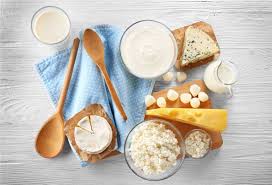
Many enzymes are used in the processing of food as food additives. The use of specific enzymes instead of microorganisms has several advantages. A specific substrate can be converted into a specific product by an enzyme through a single-step reaction. Thus, production of different metabolites by live cells from the same substrate can be avoided.
In addition, a reaction step can be controlled and enhanced more easily by using purified enzymes. Finally, by using recombinant DNA technology, the efficiency of enzymes can be improved and, by immobilizing, they can be recycled.
The main disadvantage of using enzymes is that if a substrate is converted to a product through many steps (such as glucose to lactic acid), microbial cells must be used for their efficient and economical production.
Among the five classes of enzymes, three are predominantly used in food processing: Hydrolases, Isomerases, and Oxidoreductases.
Role of α-Amylase, Glucoamylase, and Glucose Isomerase in Food Processing
Together, these three enzymes are used to produce high-fructose corn syrup from starch. α-Amylase hydrolyzes starch at α-1 position randomly and produces oligosaccharides (containing three hexose units or more, for example, dextrins).
Glucoamylase hydrolyzes dextrins to glucose units, which are then converted to fructose by glucose isomerase. α-Amylase is also used in bread making to slow down staling (starch crystallization resulting from loss of water). Partial hydrolysis of starch by α-amylase can help reduce the water loss and extend the shelf life of bread.
Read Also: Reptiles and Birds: Species, Characteristics and their Economic Importance
Application of Catalase in Food Preservation
Raw milk and liquid eggs can be preserved with H2O2 before pasteurization. However, the H2O2 needs to be hydrolyzed by adding catalase before heat processing of the products.
Use of Cellulase, Hemicellulase, and Pectinase in Juice Extraction
Because of their ability to hydrolyze respective substrates, the use of these enzymes in citrus juice extraction has increased juice yield. Normally, these insoluble polysaccharides trap juice during pressing.
Also, they get into the juice and increase viscosity, causing problems during juice concentration. They also cloud the juice. By using these hydrolyzing enzymes, such problems can be reduced.
Function of Invertase in Sugar Processing
Invertase can be used to hydrolyze sucrose to invert sugars (mixture of glucose and fructose) and increase sweetness. It is used in chocolate processing.
Role of Lactase in Whey Processing
Whey contains high amounts of lactose. Lactose can be concentrated from whey and treated with lactase to produce glucose and galactose. It can then be used to produce alcohol.
Application of Lipases in Cheese Production
Lipases are produced by filamentous fungi, and commercially important lipase-producing fungi include Rhizopus sp., Aspergillus sp., Penicillium sp., Geotrichum sp., Mucor sp., and Rhizomucor sp. Lipases may be used to accelerate cheese flavor along with some proteases.
Use of Proteases in Food Processing
Different proteases are used in the processing of many foods. They are used to tenderize meat, extract fish proteins, separate and hydrolyze casein in cheese making (rennet), concentrate cheese flavor (ripening), and reduce bitter peptides in cheese (specific peptidases).
Benefits of Immobilized Enzymes in Food Processing
Enzymes are biocatalysts and can be recycled. An enzyme is used only once when added to a substrate in liquid or solid food. In contrast, if the molecules of an enzyme are attached to a solid surface (immobilized), the enzyme can be exposed repeatedly to a specific substrate.
The major advantage is the economical use of an enzyme, especially if the enzyme is very costly. Enzymes can be immobilized by several physical, chemical, or mechanical means. The techniques can be divided into four major categories.
Some of the cell components, metabolic end products, and enzymes produced by food-grade and regulatory agency–approved microorganisms that are used in foods as additives to improve the nutritional and acceptance qualities of foods.
Recent advances in genetic engineering and metabolic engineering of these bacteria have helped develop strains that can produce many unique products.
Microbial Metabolites as Food Additives
These enzymes, like other microbial metabolites, can be used as food additives to improve nutritional value, flavour, colour, and texture. Some of these include proteins, essential amino acids, vitamins, aroma compounds, flavor enhancers, salty peptides, peptide sweeteners, colors, stabilizers, and organic acids.
Because they are used as ingredients, they need not come only from microorganisms used to produce fermented foods but can be produced by many other types of microorganisms with regulatory approval for safety before use in foods.
Many enzymes from bacteria, yeasts, molds, as well as from plant and mammalian sources, are currently used for the processing of foods and food ingredients. Some examples are production of high-fructose corn syrups, extraction of juice from fruits and vegetables, and enhancement of flavor in cheese.
Recombinant DNA Technology in Enzyme Production
Recombinant DNA technology (or biotechnology) has opened up the possibilities of identifying and isolating genes or synthesizing genes encoding a desirable trait from plant and animal sources or, from microorganisms that are difficult to grow normally, clone it in a suitable vector (DNA carrier) and incorporate the recombinant DNA in a suitable microbial host that will express the trait and produce the specific additive or enzyme economically.
In addition, metabolic engineering, by which a desirable metabolite can be produced in large amounts by a bacterial strain, is being used to produce food additives from new sources.
The metabolites can then be purified and used as food additives and in food processing, provided they are safe-to-use, generally regarded as safe.
Production of Amino Acids for Nutritional Enhancement
Proteins of most cereal grains are deficient in one or more of the essential amino acids, particularly methionine, lysine, and tryptophan. To improve the biological values, cereals are supplemented with essential amino acids.
Supplementing vegetable proteins with essential amino acids has been suggested to improve the protein quality for people who either do not consume animal proteins (people on vegetarian diets) or do not have enough animal proteins (such as in some developing countries, especially important for children).
To meet this demand, as well as for use as nutrient supplements, large amounts of several essential acids are being produced. At present, because of economic reasons, they are mostly produced from the hydrolysis of animal proteins followed by purification.
In recent years, bacterial strains have been isolated, some of which are lactic acid bacteria that produce and excrete large amounts of lysine in the environment. Isolating high-producing strains of other amino acids and developing strains by genetic and metabolic engineering that will produce these amino acids in large amounts can be important for economical production of essential amino acids.
Use of Single-Cell Proteins (SCPs) in Food and Feed
Molds, yeasts, bacteria, and algae are rich in proteins, and the digestibility of these proteins ranges from 65% to 96%. Proteins from yeasts, in general, have high digestibility as well as biological value. In commercial production, yeasts are preferred.
Some of the species used are from genera Candida, Saccharomyces, and Torulopsis. Some bacterial species have been used, especially from genus Methylophilus.
The use of microbial proteins as food has several advantages over animal proteins. There may not be enough animal proteins to feed the growing human population in the future, especially in many developing countries. Also, microbial proteins can be produced under laboratory settings. Thus, land shortage and environmental calamities (such as drought or flood) can be overcome.
They can be produced on many agricultural and industrial wastes. This will help alleviate waste disposal problems and also reduce the cost of production. Microbial proteins can be a good source of B vitamins, carotene, and carbohydrates.
There are some disadvantages of using microbial proteins as human food. They are poor in some essential amino acids, such as methionine. However, this can be corrected by supplementing microbial proteins with the needed essential amino acids.
The other problem is that proteins from microbial sources can have high-nucleic acid content (RNA and DNA; 6%–8%), which, in the human body, is metabolized to uric acid. A high serum-acid level can lead to kidney stone formation and gout.
However, through genetic manipulations, the nucleic acid content in microbial proteins has been reduced.
Even though, at present, the use of microbial proteins as a protein source in human food is limited, they are being used as a protein source in animal feed.
An increase of microbial proteins will automatically reduce the use of grains (such as corn and wheat) as animal feed, which then can be used as human food.
Production of Flavour Compounds and Enhancers
Flavour compounds and enhancers include those that are associated directly with the desirable aroma and taste of foods and indirectly with the strengthening of some flavors.
Many microorganisms produce different types of flavor compounds, such as diacetyl (butter flavor by Leuconostoc), acetaldehyde (yogurt flavor by Lactobacillus acidophilus), some nitrogenous and sulfur-containing compounds (sharp cheese flavor by Lactococcus lactis), propionic acid (nutty flavor by dairy Propionibacterium), pyrazines (roasted nutty flavors by strains of Bacillus subtilis and Lac. lactis), and terpenes (fruity or flowery flavors by some yeasts and molds).
Some natural flavors from plant sources are very costly because only limited amounts are available and the extraction process is very elaborate. By employing biotechnology, they can be produced economically by suitable microorganisms.
Natural vanilla flavor (now obtained from plants), if produced by microorganisms, may cut the cost to only a 10th or less. Natural fruit flavors are extracted from fruits. Not only is it costly, but also large amounts of fruits are wasted.
The possible production of many of these flavors by microorganisms through recombinant DNA technology is being studied.
Several flavour enhancers are now used to strengthen the basic flavours of foods. Monosodium glutamate (MSG, enhances meat flavor) is produced by several bacterial species, such as Corynebacterium glutamicum and Micrococcus glutamicus.
Also, 5ʹ nucleotides, such as inosine monophosphate and guanosine monophosphate, give an illusion of greater viscosity and mouthfeel in foods such as soups. They can be produced from Bac. subtilis. Several small peptides, such as lysylglycine, have strong salty tastes.
They can be produced by recombinant DNA technology by microorganisms and used to replace NaCl. Sweet peptides, such as monellin and thaumatin from plant sources, can also be produced by microorganisms through gene cloning.
At present, the dipeptide sweetener aspartame is produced synthetically, but a method to produce it by microorganisms has been developed. By metabolic engineering, strains of lactic acid bacteria have been developed that can produce large quantities of diacetyl (for the aroma of butter), acetaldehyde (for the aroma of yogurt), α-ketoglutarate (to produce cheese flavor), and other compounds.
Read Also: Order Lagomorpha: Species, Characteristics and their Economic Importance
Microbial Production of Food Colour Pigments
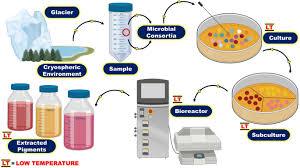
Many bacteria, yeasts, and molds produce different colour pigments. The possibility of using some of them, especially from those that are currently consumed by humans, is being studied.
Some of the common fermentative food-grade pigments include yellow, red, and orange pigments from Monascus sp. (fungus), astaxanthin (pink-red) from Xanthophyllomyces dendrorhous (yeast), arpink red from Penicillium oxalicum (fungus), riboflavin from Ashbya gossypii (fungus), β-carotene from Blakeslea trispora (fungus).
The pink-red color pigment astaxanthin gives the red color to salmon, trout, lobster, and crabs. Another red pigment, produced by Monascus sp., has been used for a long time in the Orient to make red rice wine.
Because pigment production may involve multistep reactions, recombinant DNA techniques to produce some fruit colors by microorganisms may not be economical. However, they can be produced by the plant cell culture technique.
Production of Nutraceuticals and Vitamins by Microorganisms
Many vitamins are added to foods and also used regularly by many as supplements. Thus, there is a large market for vitamins, especially some B vitamins and vitamins C, D, and E. Some of these are obtained from plant sources, several are synthesized, and a few are produced by microorganisms.
Vitamin C is now produced by yeast by using cheese whey. Microorganisms have also been a source of vitamin D. Many are capable of producing B vitamins.
The possibility of using gene-cloning techniques to improve production of vitamins by microorganisms may not now be very practical or economical. Vitamins are produced through multienzyme systems, and it may not be possible to clone the necessary genes.
In recent years, through metabolic engineering, strains of lactic acid bacteria have been developed that when used in dairy fermentation produce high amounts of folate and some cyanocobalamin (B12) in the fermented products, thereby increasing the nutritional value of the products.
In addition, strains of lactic acid bacteria have been developed that produce low-calorie sweeteners, such as mannitol, sorbitol, and tagatose.
Frequently Asked Questions
1. What are the advantages of using microbial enzymes over whole microorganisms in food processing?
Using specific enzymes allows conversion of a substrate to a product in a single-step reaction, avoids production of unwanted metabolites, enables easier control of reactions, and allows enzyme efficiency improvement and recycling through recombinant DNA technology and immobilization.
2. Which enzymes are used to produce high-fructose corn syrup?
The three enzymes used are α-amylase, which hydrolyzes starch to oligosaccharides; glucoamylase, which converts dextrins to glucose; and glucose isomerase, which converts glucose to fructose.
3. How does α-amylase contribute to bread making?
α-Amylase partially hydrolyzes starch in bread, reducing water loss and slowing down staling (starch crystallization), thus extending shelf life.
4. What role do cellulase, hemicellulase, and pectinase play in juice extraction?
These enzymes hydrolyze insoluble polysaccharides in citrus fruits, increasing juice yield, reducing viscosity, and minimizing cloudiness during juice concentration.
5. How is invertase used in food processing?
Invertase hydrolyzes sucrose into invert sugars (glucose and fructose) to increase sweetness, commonly used in chocolate processing.
6. What is the benefit of immobilizing enzymes in food processing?
Immobilizing enzymes allows repeated use of costly enzymes by attaching them to a solid surface, making the process more economical.
7. How do microbial proteins (SCPs) benefit food production?
Single-cell proteins from molds, yeasts, bacteria, and algae can be produced in controlled settings, use agricultural and industrial wastes, reduce reliance on animal proteins, and provide B vitamins, carotene, and carbohydrates.
8. What are some examples of microbial flavor compounds used in food?
Examples include diacetyl (butter flavor by Leuconostoc), acetaldehyde (yogurt flavor by Lactobacillus acidophilus), propionic acid (nutty flavor by Propionibacterium), and pyrazines (roasted nutty flavors by Bacillus subtilis and Lactococcus lactis).
Do you have any questions, suggestions, or contributions? If so, please feel free to use the comment box below to share your thoughts. We also encourage you to kindly share this information with others who might benefit from it. Since we can’t reach everyone at once, we truly appreciate your help in spreading the word. Thank you so much for your support and for sharing!