



Before recommending fertilizers or soil amendments, evaluating the fertility status of the soil is essential. Various site-specific and condition-specific methods are employed to assess these factors before making recommendations.
Methods for Soil Fertility Evaluation in Agriculture
Several methods are used globally to diagnose soil fertility status. The most common include:
- Soil testing
- Plant analysis
- Missing element technique
- Simple Fertilizer Trials (SFT)
- Combination of all above
- Microbiological test
- Nutrient deficiency symptoms on plants
Read Also: Important Diseases of Crop Plants
Soil Testing for Nutrient Assessment
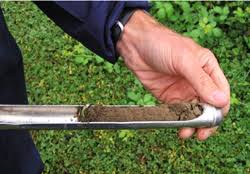
Soil tests focus on the chemical properties of the soil, involving six interrelated facets:
- Sampling of plant and soil
- Laboratory analysis of plant and soil
- Correlation between analysis and yield
- Interpretation and recommendation
- Putting information into use
- Research works to be carried out
Soil sampling is the first and most critical step in soil and plant analysis, also being the highest source of error due to field variability.
A representative soil sample consists of 10–20 sub-soil samples per hectare from the rooting zone within a relatively homogeneous field. Samples are thoroughly mixed to minimize non-uniformity.
Sampling depth and timing are key considerations. The rooting zone for arable crops is 0–15 cm, and for tree crops, 0–30 cm or deeper. Sampling frequency depends on fertilizer use intensity and crop economic value.
Intensively managed areas require annual sampling, while average-managed areas need sampling every three years.
For plant sampling, avoid parts damaged by insects or diseases. Nutritionally healthy and unhealthy parts should be sampled for comparative analysis. Younger leaves are sampled first for micronutrient determination, as they show deficiency symptoms earliest.
Laboratory Analysis of Soil and Plant Properties
This involves analyzing chemical properties such as:
- pH
- Organic Carbon
- Total and Available Nitrogen
- Available Phosphorus
- Cation Exchange Capacity (CEC)
- Exchangeable Bases (Ca²⁺, Mg²⁺, Na⁺, K⁺)
- Exchangeable Acidity
- Extractable Micronutrients (Fe, Zn, Mn, Cu, B)
Key physical parameters include: - Soil Texture
- Infiltration Rate
- Soil Color (via physical observation)
Extractants for soil test laboratory analysis must: - Extract all or a significant portion of available nutrient forms with varying properties.
- Be rapid and accurate.
- Correlate extracted amounts with crop growth and nutrient response under different conditions.
Correlation, Interpretation, and Recommendation in Soil Analysis
Correlation, interpretation, and recommendation are challenging due to complex phenomena. Correlation involves using chemical properties to assess soil fertility. If the Critical Level (CL) of an element is unknown, values are meaningless.
The critical level is the threshold below which crops respond to fertilizer application and above which no response occurs.
Laboratory-determined element values are compared against the critical level. Values below the critical level indicate nutrient deficiency, while values significantly above suggest toxicity.
Interpretation and recommendation stem from correlating soil test values and plant analysis with crop yield. If a nutrient is deficient, fertilizer application is needed to sustain growth. For example, under deficiency, the maximum nitrogen dose (120 kg N/ha) should be applied.
For medium fertility, about 60 kg N/ha is recommended, and for high fertility, a quarter (30 kg N/ha) of the recommended rate, known as a maintenance dose, is applied to account for losses from erosion, leaching, and burning.
Read Also: Fertilizer Application, Pests and Diseases Control in Cocoa
Implementation of Soil Fertility Recommendations

After determining optimal fertilizer requirements through soil testing, information is shared with farmers via Extension Agents.
Monitoring the impact of these recommendations on productivity through follow-up visits is essential to identify issues and modify recommendations as needed, known as impact assessment. Research works should be conducted to address arising problems.
Missing Element Technique for Nutrient Diagnosis
Also known as the minus-1 technique, this involves growing a plant in one plot with all nutrients applied and in another plot with one nutrient omitted. If no differences exist between the plots, the omitted nutrient (e.g., N) is not essential for the crop, indicating no deficiency.
If differences occur, nitrogen fertilizer is needed. The amount depends on soil N levels: maximum for low, half for medium, and maintenance dose for high.
For legumes, no nitrogen fertilizer is applied at high or medium levels, but a starter dose (10–20 kg N/ha) is used when critically low.
This technique’s disadvantage is that plants are harvested early, potentially exaggerating deficiencies due to small soil volume. It is better for participatory screening in research or when soil test results are poor.
Simple Fertilizer Trials (SFT) for Field Evaluation
Similar to the missing element technique, SFT involves conducting numerous un-replicated fertilizer trials on randomly selected farmers’ fields. Fertility response is evaluated in the field, not in controlled greenhouse conditions.
Moderate fertilizer rates yield moderate increases, revealing nutrient deficiencies (e.g., N, P, K) and regional yield potentials. However, it overlooks local soil variability, limiting site-specific recommendations.
Nutrient Deficiency Symptoms for Visual Diagnosis
This involves observing growing plants for abnormal growth due to nutrient deficiencies. Deficiency symptoms manifest when an element is lacking. This method is cheap and simple but requires experience. Insect attacks and diseases limit its reliability.
A major disadvantage is that damage occurs before symptoms appear, as symptoms emerge when nutrient supply is too low for proper plant function. Early detection allows correction with appropriate fertilizer treatment.
Do you have any questions, suggestions, or contributions? If so, please feel free to use the comment box below to share your thoughts. We also encourage you to kindly share this information with others who might benefit from it. Since we can’t reach everyone at once, we truly appreciate your help in spreading the word. Thank you so much for your support and for sharing!