


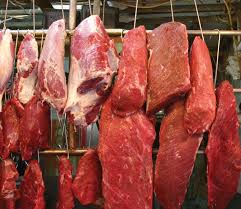
The procedure of fresh meat production in the tropics is not standard. There should be a standard procedure in all meat processing operations.
Biochemical changes occur during the conversion of muscle to meat, and these phenomena should be well understood for adequate processing of meat to retain the desired qualities.
Read Also: How to Extract and Package Snail Slime (Snail filtrate) for Commercial Use
Factors Contributing to Optimum Meat Quality
The procedure of fresh meat production in the tropics is not standard. After slaughter, usually by cutting the throat of the animal transversely or by decapitation, the animal is bled. Bleeding consists of a skin incision along the jugular furrow, with the carotid artery and jugular vein of one side severed.
The knife is then passed through the skin incision towards the entrance of the chest, severing the anterior vena cava, but in some cases, the skin is incised, and the anterior aorta is opened by a single cut at its junction with the two carotid arteries.
Following bleeding, the animal is skinned, as in the case of cattle, burned to remove the hairs for smaller animals, or scalded in pigs. It is then eviscerated by opening the median line of the belly, leaving the heart, liver, and kidney in the carcass.
At this point, health inspectors, especially at government-controlled abattoirs, must approve every carcass as suitable for human consumption. This is done by visual inspection of the viscera and certain other parts, which would show any characteristic health-related malformations.
This practice should be a standard procedure in all meat processing operations. In some parts of the world, legal regulations exist concerning hygiene and conditions governing the processing of meat, but in many rural areas of the tropics, perhaps due to economic constraints such as the lack of potable water and electricity, meat processing is traditionally carried out in unhygienic conditions.
Most abattoirs do not have lairages where animals can be rested before slaughter. Consequently, animals are low in muscle glycogen after long, tedious treks or lorry and rail-wagon journeys, producing high pH meat.
Where a lairage is available, it is simply an open, fenced, bare area of ground located opposite the abattoir, such that live animals are made to watch their colleagues struggle to death.
The fear and anxiety generated in animals are stressful and further result in poor-quality meat. Abattoirs are commonly located in markets a busy, dirty place where the air is stinking, polluted, and heavily charged with both spoilage and microorganisms.
There, butchers literally wrestle with the beast to restrain it for slaughter; this further exhausts the animals and their glycogen reserves. There is no stunning to reduce death shock and often no hoist to suspend the animal for thorough bleeding.
Skinning, evisceration, and cutting up of the carcass are often carried out on the filthy slaughter floor or on equally filthy platforms and tables. Usually, many more hands than necessary are involved in these operations, each hand being a source of contamination.
In areas where there are no abattoirs, a common practice with wildlife, processing takes place over leaves, especially banana or cocoyam leaves, spread on the ground.
Water is generally lacking and sparingly used. As there are no chilling facilities, the meat is never aged; rather, the hot carcasses are manually carried or transported in trucks or on bicycles directly from the slaughter slab to the retail table.
The display requires no packaging, counters, chambers, or any other measures to reduce contamination and exposure to intense sunshine, high temperatures, and high humidity, which greatly accelerate microbial, chemical, and physical deterioration of the meat. The meat is simply placed on a table, which is itself filthy as it is hardly washed thoroughly, let alone sanitized.
As the meat is exposed to bright sunshine and high temperatures, the surface tends to dry up and discolor. To avert this problem, the retailer often sprinkles water on the meat. Sometimes the meat is soaked in water, as this also increases bulk. This water is far from potable and is always heavily loaded with microorganisms and flies.
Any unsold meat at the end of the day is stored at ambient temperatures overnight for sale the next day. Meat buyers are further sources of contamination, since butchering does not follow any standard pattern; the meat cuts are neither sorted nor graded, and their prices are not fixed.
For quality judgment and pricing, buyers rely on sensory evaluation by sight, smell, and finger feel. The meat is sniffed and thoroughly fingered all over to judge its freshness and proportion of lean. In this way, the buyer evaluates, or rather, contaminates several pieces before making a choice.
The remaining meat pieces are repeatedly subjected to this ordeal by subsequent buyers. These habits are obvious deterrents to the maintenance of meat quality and storability.
Slaughtering methods and carcass handling in the tropics can be improved to minimize the risk to human health that may arise from eating contaminated meat.
Technological Principles for Achieving Optimum Meat Quality
Technological principles must be observed to ensure optimum quality and stability of the end product. These include:
- The animal should be well rested, calm, and cool immediately prior to slaughter, for reasons outlined earlier.
- The animal should be clean, free from external soil and fecal material, both of which can introduce extremely heavy loads of microbial contamination onto the killing area. Cleaning may be achieved by footbaths and the use of overhead water sprays, which also help to cool the animals and make the removal of blood much easier.
- The animal should be killed as quickly and painlessly as possible to avoid stress and depletion of glycogen reserves, as well as for humane reasons; all processes applied should be designed to reduce to a minimum the number and types of contaminating microorganisms that find their way onto the freshly exposed carcass.
The initial microbial contamination must be minimized to ensure a maximum storage life of meat distributed and marketed in the fresh condition. Sources of microbial contamination that must be monitored and controlled include:
- The hides and skins of animals, which carry a heavy concentration of microorganisms resembling those of the soil; preliminary washing can reduce this number, but it is also most important to avoid contact of the hide or skin with the freshly exposed carcass surface during the skinning operation. The hide or wool of the skinning operation should be folded back as it is cut and not allowed to touch the carcass.
- Soil itself, which can be a major source of contamination, should not enter the killing area.
- The rumen and intestines, a significant source of bacterial numbers, should not be ruptured to ensure the contents do not contaminate the meat surface.
- Flies, which must be excluded from the killing area.
- Equipment such as knives, hooks, and benches, which should be of stainless steel construction and subject to frequent cleansing by means of boiling water or hypochlorite solution. Wooden equipment and surfaces are impossible to maintain in a sanitary condition.
Biochemical Changes During Muscle to Meat Conversion
Conversion of the muscle of a living animal to meat or meat product may be viewed as a simple mechanical disintegration of the carcass after the animal is slaughtered. The numerous biochemical reactions governing the actions of the muscle do not stop immediately after the animal is killed.
At least cursory knowledge of the most significant reactions occurring after slaughter is necessary to understand some of the basic steps in fresh and processed meat technology. In the living muscle, one of the important reactions, involving the generation of energy needed for muscle contraction, is glycolysis.
1. Glycolysis in Muscle Tissue
The sugar, glycogen, is used up to generate the needed energy in the presence of oxygen thus:
glycogen → glucose + O₂ + H₂O + energy
When oxygen is not available, after the animal is killed or under stress, the glycogen and the resulting glucose are broken down to lactic acid, which has a substantial effect on the pH drop in the muscle.
In a living organism, the lactic acid can be utilized along another biochemical pathway, thus keeping the living muscle above pH 6.0. However, after death, this alternative pathway is not utilized, and the pH of the meat will typically drop to about 5.4 or lower.
2. Advantages of Glycolysis in Meat
This acidity generated gives fresh meat some protection against microbial spoilage. Unless meat contains an appropriate amount of lactic acid, it is sticky and flabby, and bacteria are liable to multiply in it during storage.
This is because a proper degree of acidity restricts bacterial growth, so acidity is required. Glycogen can be depleted in vivo in the muscular tissue by walking, running, or fighting, and it may take some time for the glycogen to be restored.
When a rested animal is killed, the glycogen in its muscles breaks down to lactic acid. Therefore, an animal should be killed when its meat may retain a concentration of glycogen to ensure satisfactory keeping quality.
This implies that meat animals should be fully rested before slaughter. If they have to be driven to the slaughterhouse on foot, they must be kept quietly rested for some length of time.
As well as the decrease in glycogen and increase in lactic acid concentrations, post-mortem glycolysis gives rise to many other changes in the muscle, and the most important of these, from the viewpoint of meat quality, is meat texture.
For post-mortem glycolysis to occur, inorganic phosphate must be available to enable phosphorylase to convert glycogen to glucose-1-phosphate, the first product of glycolysis. The inorganic phosphate arises from the splitting of ATP, thus:
ATP → ADP + P
Thus, even in death, the muscle attempts to maintain its structural integrity and temperature by energy derived from this reaction. In many muscles, there is a store of creatine phosphate (CP), which is used to resynthesize ATP via:
ADP + CP → ATP + creatine
Thus, from the moment of death, the CP level in muscle falls, and ultimately, there is a point at which it is no longer possible to resynthesize ATP, and the level of ATP itself begins to fall.
As ATP disappears, the muscle ceases to be elastic and tends to stiffen, i.e., rigor mortis occurs. This change occurs because ATP, apart from being a plasticizer, prevents the myofibrillar proteins—actin and myosin—from cross-linking to form the inextensible actomyosin.
Of all the various effects of rigor mortis, the most important one for the meat processor is the stiffening of the muscle fibers, resulting in a temporary but sequential toughening of the meat. If the meat were cooked or frozen during rigor mortis, the eating quality of the final product would be very poor due to toughness.
After completion of rigor mortis, the meat slowly returns to and often exceeds its pre-rigor tenderness. This is due to the effect of various proteolytic enzymes that slowly degrade the muscle fibrous structure.
This so-called “aging” is a very important step in fresh meat technology. Industrially, aging is carried out at low temperatures and about 100% relative humidity under strict microbiological control.
Other Biochemical Changes Affecting Meat Quality
The other changes that accompany the conversion of muscle to meat and affect its quality are as follows:
- The natural antibacterial defense mechanisms of the body are destroyed, thus encouraging the growth of microorganisms.
- As the pH decreases, enzymes (cathepsins) may be released from the lysosomes and degrade the tissue.
- Some compounds formed may modify the intrinsic flavor associated with the meat, for example, the pattern of nucleotides changes via:
ATP → ADP → IMP → inosine + hypoxanthine + ribose + Pi + NH₃
Most of the breakdown of IMP occurs during and after rigor mortis.
Read Also: The Health Benefits of Using Accent Seasoning on your Cooking
Impact of Fat, Storage, and Stress on Meat Quality
1. Role of Fat in Meat Quality
The quality of meat has been related to the amount of fat distributed uniformly through the muscle, known as marbling. Quality is also related to the age of the animal; younger animals have better quality. Marbling tends to increase as the animal matures.
2. Storage Conditions for Meat
When meat is stored unfrozen, it should be stored in a temperature range of 1 to 3°C. The relative humidity should be in the range of 85–90%. High humidity prevents excessive drying and shrinkage. In addition, high humidity tends to preserve the white color of the fat in meat.
Regarding texture, generally, the lesser the amount of connective tissue in the meat, the more tender it is. When meat is heated in water, as in boiling or stewing, the connective tissue is converted to a sort of tender gelatin, making it more palatable. On the other hand, when meat is heated without water, such as in oven dry heat, the connective tissues tend to become tougher.
3. Effects of Stress on Meat Functional Properties
The stress associated with the conversion of living tissue to meat can lead to changes in muscle metabolites and, hence, differences in the ultimate properties of the meat.
Different animals have variable degrees of resistance to the stresses imposed by the pre-slaughter environment. Stress-susceptible animals generally have higher post-mortem muscle temperatures and undergo very rapid post-mortem glycolysis and pH fall.
The combination of high temperature and low pH encourages protein denaturation with concomitant loss of water-holding capacity (WHC) and color, resulting in pale, soft, exudative (PSE) meat after rigor.
If an animal survives stress applied over a relatively long term, it may do so at the expense of its glycogen reserves. Thus, some stress-susceptible animals and all stress-resistant ones that survive stress associated with fatigue, exercise, fasting, fighting, etc., and are not replenished, can only undergo limited post-mortem glycolysis.
The resultant high pH gives rise to dark, firm meat, which, besides being unpopular with consumers due to its appearance, is hygienically undesirable since the environment for bacterial growth is more favorable than in meat of normal pH.
The effect on meat appearance (color) can be explained thus: at high pH, the WHC of the muscle fibers is maximal, resulting in a dry, relatively compact structure that reflects little light; at normal pH values, the decreased WHC of the muscle fibers leads to a more open structure, with some relatively free water capable of reflecting more light.
Also, surviving oxygen-utilizing enzymes in the tissue are more active at high than at low pH values, so oxygen cannot penetrate to any appreciable depth in tissue, causing the dark-purple color of reduced myoglobin to be visible, as opposed to the bright-red color of oxymyoglobin seen at the surface of meat of normal pH.
The color of red meat is determined by the chemical state of the purplish-red muscle pigment myoglobin. In the presence of oxygen, myoglobin is oxygenated (called oxymyoglobin), and the muscle is bright red in color.
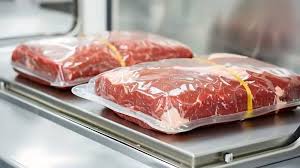
When much of the oxygen is removed, myoglobin changes to metmyoglobin, resulting in a brownish color developing in the muscle. The creation of metmyoglobin by vacuum packaging in improper semi-permeable plastic packaging materials may be a serious problem, as the brownish meat color can be mistaken for an old product.
Cooking of meat also denatures the meat pigment, as well as the various meat enzymes involved in color reactions, giving the cooked meat its characteristic grayish-brown color.
4. Chemistry of Meat Flavor
The chemistry of meat flavor is not fully understood. Cooking is necessary to develop meat flavor, as raw meat has little odor and only a blood-like taste. The odor and taste of cooked meat arise from water- or fat-soluble precursors and by the liberation of volatile substances pre-existent in the meat. These precursors are distributed between the lean and fat.
Over 100 compounds, from at least 10 chemical classes, have been identified. Although many of these have little or no odor, synergistic and antagonistic effects may prevail, causing these apparently ineffective substances to become important flavor modifiers.
The majority of flavor studies on meat have been concerned with volatile aroma compounds; this may be misleading, as the fulsome and satisfying sensation of juice in the mouth plays an important part in the appreciation of meat flavor. Certain reactions, however, have been identified as being responsible for meat flavor and can be summarized as follows:
- Amino acids may degrade to volatile products, e.g., 3-methyl- and 2-methyl-butanol from leucine and isoleucine; 2-methyl-propanol from valine; benzene, toluene, and ethyl-benzene from phenylalanine; hydrogen sulphide from cysteine; ammonia from lysine, etc.
- Carbohydrates may caramelize to highly odiferous substances, e.g., furan derivatives, carbonyl compounds, and aromatic hydrocarbons.
- Maillard browning reactions occur between amino acids or protein material and carbohydrates. These reactions are probably of major importance in determining meat flavor, as they only occur at relatively high temperatures.
- Lipids contribute to flavor when heated. Some non-acid compounds, such as aldehydes, ketones, lactones, alcohols, esters, hydrocarbons, and pyrazines, have been identified in beef fat and may contribute to flavor.
- 5’-ribonucleotides formed following slaughter may contribute to flavor, but most recent studies have shown that inosine-5’-monophosphate and other nucleotides modify existing flavors rather than contribute intrinsic notes.
- Volatiles containing nitrogen, oxygen, and sulfur are formed or released during heating. Although their full relevance to flavor is not established, the nitrogen-containing pyrazines and several sulfur- and oxygen-containing volatiles found in cooked meat have such low odor thresholds that they are believed to play a significant part in the formation of a meaty aroma.
- The food ingested by the animal is sometimes responsible for undesirable odors and tastes in the flesh. There are noticeable differences in flavor between beef fed on corn and that fed on grass.
Do you have any questions, suggestions, or contributions? If so, please feel free to use the comment box below to share your thoughts. We also encourage you to kindly share this information with others who might benefit from it. Since we can’t reach everyone at once, we truly appreciate your help in spreading the word. Thank you so much for your support and for sharing!