


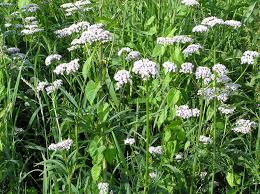
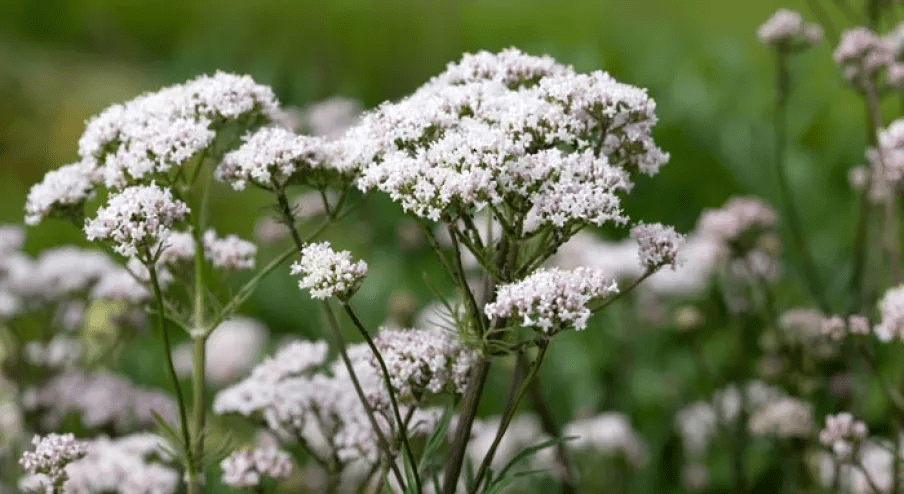
Valerian botanically known as Valeriana officinalis, a perennial flowering plant belonging to the Valerianaceae family, is the source of valerian root. The plant produces summer-blooming pink or white blooms with a delicious aroma.
Native to regions of Asia and Europe, valerian sometimes spelled incorrectly as valerian is now also found growing in North America. In America, it is becoming a popular herb for enhancing the quality of sleep, often added to drinks and nutritional supplements.
The volatile oils in valerian root, such as Valerenic acids, less volatile sesquiterpenes, and valepotriates, are present esters of short-chain fatty acids. The potential of valerian root to have a calming and healing impact on the body’s central nervous system is probably due to these active ingredients.
Although valerian root is generally seen to be safe, it can have adverse effects like headache, lightheadedness, or stomach issues. The reverse of what they were hoping for when taking valerian, such as feeling nervous and restless instead of peaceful and drowsy, is sometimes how people react to it.
The majority of studies indicate no negative impact on embryonic development or fertility, although additional study is required. If you are expecting or breastfeeding a child, see your doctor before using valerian root. Additionally, before administering children valerian root, see a physician.
The majority of people do not appear to get dependent on valerian root in any way. Additionally, most people do not experience withdrawal symptoms from it.
The Latin verb Valere and the human name Valeria were combined to create the herb’s name to be strong, and healthy.
Since at least the period of ancient Greece and Rome, valerian has been utilized as a medicine. Galen later recommended it as a treatment for insomnia after Hippocrates reported its qualities.
Up to the late 18th century, it was also employed as an early epilepsy treatment. Researchers discovered that the molecule in valerian, isovaleric acid, may prevent convulsions in a way that is comparable to the effects of the anticonvulsant drug, valproic acid.
Read Also: 5 Health Benefits of Moringa (moringa Oleifera)
4 Health Benefits of Valerian Root (Valeriana officinalis)

1. Naturally Helps in Good Sleep
Valerian may be the solution you’re looking for if you’re having trouble falling asleep because studies have shown that it shortens the time it takes and enhances the quality of sleep.
Contrary to many prescription sleep aids, valerian has fewer adverse effects and is much less prone to cause drowsiness in the morning.
The Foellinge Health Center in Sweden ran a double-blind trial in which valerian significantly improved sleep quality.
44 percent of study participants said they had perfect sleep, while 89 percent said their sleep had improved after consuming valerian root. Additionally, no negative impacts were seen in this group.
To treat sleep disorders, valerian root is sometimes mixed with other sedative herbs including hops (Humulus lupulus) and lemon balm (Melissa officinalis).
According to a study on kids with mild sleep issues that was published in the journal Phytomedicine, 81 percent of those who consumed a herbal blend of valerian and lemon balm reported sleeping significantly better than those who consumed a placebo.
How does valerian root promote such restful sleep? A substance called linarin, found in valerian, has been proven to have sedative properties.
Gamma-aminobutyric acid (GABA) in your brain is elevated when valerian extract is consumed, which can make you feel drowsy.
The central nervous system contains the inhibitory neurotransmitter GABA. It has a sedative effect that can settle anxious activity when consumed in sufficient amounts.
According to the findings of an in vitro experiment, valerian extract might release GABA from brain nerve endings while also preventing its uptake into neuron cells.
Another way valerian can raise your GABA levels and encourage a restful night’s sleep is by inhibiting an enzyme that breaks down GABA. This enzyme is inhibited by valerenic acid, a component of valerian.
Read Also: 3 Health Benefits of Mugwort (Artemisia vulgaris)
2. Lowers Blood Pressure

Knowing that valerian root has such relaxing effects on the body and mind, the fact that it can also lower blood pressure and benefit heart health certainly comes as no surprise.
The same active ingredients that make valerian effective in treating anxiety and restlessness can also assist the body in maintaining healthy blood pressure regulation.
Since high blood pressure raises the risk of stroke and heart attack and heart disease is a major health concern in the United States, it is something you should absolutely avoid.
Studies show that using valerian root supplements can help lower blood pressure naturally and keep it at a healthy level, which directly benefits heart health.
3. For Menstrual Cramps
Valerian root can be a wise choice for all-natural menstrual cramp relief due to its calming properties. It can lessen the severity and discomfort of menstrual cramps, a frequent issue for women who experience PMS on a monthly basis.
How precisely does valerian root assist? It functions as a natural muscle relaxant and antispasmodic, which implies that it reduces muscle spasms.
According to a double-blind, randomized, placebo-controlled trial, valerian root dietary supplements can successfully reduce the painful uterine muscle spasms that many women experience during their period.
4. Manages Stress

Nutritional value of Valerian Root (Valeriana officinalis)
1. Valerenic Acid: This is arguably the most critical compound found in valerian root. It is responsible for interacting with Gamma-aminobutyric acid (GABA) receptors in the brain. By modulating these receptors, valerenic acid helps reduce nerve activity, which is the primary mechanism behind the herb’s ability to induce relaxation and sleepiness.
2. Isovaleric Acid: This compound is responsible for the distinct, pungent, and somewhat unpleasant odor associated with dried valerian root. Beyond its smell, isovaleric acid acts as a mild anticonvulsant and works synergistically with valerenic acid to prevent involuntary muscle contractions, promoting physical calmness.
3. Valepotriates: These are iridoids found in the plant that possess sedative and regulatory effects on the autonomic nervous system. While they can degrade quickly during storage or processing, they are potent agents that help lower stress levels and reduce agitation when fresh or properly preserved.
4. Hesperidin: This is a bioflavonoid that is also found in citrus fruits but is present in valerian root. It acts as a sedative and sleep aid. Hesperidin works by crossing the blood-brain barrier and influencing signaling pathways that control the sleep-wake cycle, contributing to the overall sedative effect of the root.
5. Linarin: Similar to hesperidin, linarin is a flavonoid with sedative and sleep-enhancing properties. Studies suggest that linarin enhances the effects of valerenic acid, meaning that the compounds work better together than they do in isolation, creating a “entourage effect” that makes the whole root more effective than isolated extracts.
6. Gamma-aminobutyric acid (GABA): Valerian root actually contains small amounts of GABA itself, in addition to compounds that stimulate the brain’s own production of it. GABA is an inhibitory neurotransmitter that blocks impulses between nerve cells in the brain. High levels of GABA are associated with reduced anxiety and improved mood.
7. Actinidine: This is a pyridine alkaloid found in the root. While it contributes to the plant’s biological activity, it is notably the compound that makes valerian root attractive to cats, similar to catnip. In humans, alkaloids like actinidine contribute to the overall calming effect on the central nervous system.
8. Antioxidants (Lignans): Valerian root is rich in lignans, which are polyphenols that function as antioxidants. These compounds help combat oxidative stress in the body by neutralizing free radicals. Reducing oxidative stress is crucial for protecting brain cells and maintaining overall neurological health.
9. Calcium and Magnesium: While usually consumed as an extract, the raw root contains trace minerals, including calcium and magnesium. Both of these minerals are essential for proper nervous system function. Magnesium, in particular, is well-known for its ability to relax muscles and support deep sleep, complementing the phytochemicals in the plant.
10. Volatile Oils: The root contains a complex mixture of volatile oils (up to 2%) that include borneol and pinene. These oils are easily absorbed by the body and provide carminative effects, meaning they can help soothe digestive spasms and reduce gas, which often accompanies stress-induced stomach issues.
Scientific Evidence and Case Studies on Valerian Root (Valeriana officinalis)
1. Improvement of Sleep Quality in Menopausal Women: A significant study focused on women experiencing menopause, a time often marked by severe sleep disturbances. The researchers found that 30% of the participants taking valerian reported a significant improvement in sleep quality, compared to only 4% in the placebo group. The study concluded that valerian is an effective and safe treatment for sleep disorders in postmenopausal women without the grogginess often associated with pharmaceutical sleeping pills.
2. Reduction of OCD Symptoms: Research conducted by Pakseresht et al. investigated the effects of valerian root extract on Obsessive-Compulsive Disorder (OCD). Over an 8-week double-blind trial, patients who took the extract showed a significant reduction in the severity of OCD symptoms compared to the placebo group. The study suggests that the herb’s ability to modulate GABA receptors may help manage the anxiety and compulsive behaviors associated with the disorder.
3. Management of Restless Legs Syndrome (RLS): In this study, participants with Restless Legs Syndrome were given 800 mg of valerian for eight weeks. The results showed a reduction in daytime sleepiness and a decrease in the severity of RLS symptoms. While it did not completely cure the condition, the researchers noted that the supplement significantly improved the overall quality of life and sleep architecture for those suffering from the urge to move their legs at night.
4. Systematic Review of Sleep Promotion: Bent et al. conducted a massive systematic review combining data from 16 different studies involving over 1,000 patients. They assessed the overall efficacy of valerian for sleep promotion. The review concluded that valerian root might improve sleep quality without producing side effects. The authors noted that while not every single study was positive, the aggregated data leaned significantly toward a benefit for sleep latency (falling asleep faster).
5. Anxiety Reduction in stressful situations: A study explored how valerian affects physiological responses to stress. Healthy volunteers were subjected to a stressful mental task. The group that received valerian reported less subjective pressure and anxiety. However, the study interestingly noted that while it reduced the feeling of anxiety, it did not necessarily lower blood pressure, suggesting it works primarily on the psychological perception of stress rather than purely physiological markers.
Frequently Asked Questions About Valerian Root (Valeriana officinalis)
1. How long does it take for valerian root to work?
For immediate sedation, it may take 30 minutes to two hours to feel the effects. However, for chronic insomnia, studies suggest regular use for two to four weeks is often required to achieve the full therapeutic benefit.
2. Is valerian root addictive?
No, valerian root is generally not considered addictive. Unlike benzodiazepines or prescription sleep aids, it does not typically cause dependency or withdrawal symptoms when used as directed.
3. Can I take valerian root with melatonin?
Yes, many people take them together, and they are often sold in combination formulas. However, because both induce sleepiness, combining them can cause excessive drowsiness, so it is best to start with a lower dose of each to gauge your reaction.
4. Why does valerian root smell so bad?
The unpleasant odor, often described as “dirty socks,” is caused by isovaleric acid. This is a natural compound in the plant that becomes more potent as the root dries. Capsules can help mask the smell compared to teas.
5. Is valerian root safe during pregnancy or breastfeeding?
Due to a lack of sufficient safety data, most medical professionals advise against using valerian root during pregnancy or while breastfeeding. It is always best to consult an obstetrician before adding supplements.
6. Does valerian root cause a “hangover” effect?
Generally, no. Most users report waking up feeling refreshed. However, taking very high doses or taking it too late in the night can result in morning grogginess for some individuals.
7. Can valerian root interact with other medications?
Yes. It acts as a central nervous system depressant. It can interact negatively with alcohol, benzodiazepines, narcotics, and antidepressants, potentially intensifying their sedative effects to dangerous levels.
8. What is the standard dosage for sleep?
Typical dosages for sleep range from 300 mg to 600 mg of dried root extract, taken 30 minutes to two hours before bedtime. For tea, 2 to 3 grams of dried root steeped in hot water is common.
Read Also: 7 Health Benefits of Lemongrass (Cymbopogon)
Do you have any questions, suggestions, or contributions? If so, please feel free to use the comment box below to share your thoughts. We also encourage you to kindly share this information with others who might benefit from it. Since we can’t reach everyone at once, we truly appreciate your help in spreading the word. Thank you very much for your support and for sharing!
Disclaimer: This article is for educational and informational purposes only. The health benefits described are based on scientific research and traditional knowledge. They ayre not a substitute for professional medical advice, diagnosis, or treatment. Always consult a healthcare professional before using any herb or natural remedy for medical purposes.
Read Also: Estimating Waste-water Flow Rates from Water Supply Data