


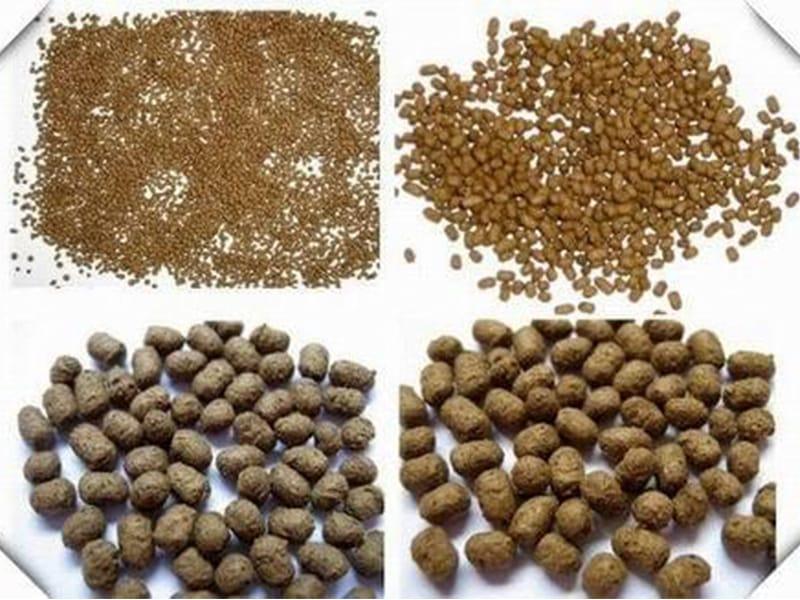
Preparing your own catfish feed gives you direct control over ingredients, nutrient balance, and cost. It also helps you understand exactly what your fish are eating, which improves management decisions and confidence.
That control becomes useful when growth slows or water conditions change. You can adjust protein, energy, or ingredient sources quickly, rather than waiting for a feed mill to modify a commercial formula for you.
Read Also: How to know if your fishes are Underfed or Overfed
1. Feeding Strategy for Catfish Production
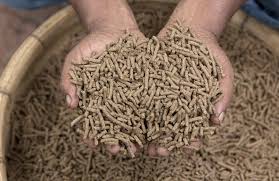
Many farmers also prefer home compounding because it supports better record keeping and clearer budgeting. When you understand every ingredient, it becomes easier to compare performance against your own pelletized feed and improve results.
Home-made feed may cost slightly more at first, especially when ingredients are bought in small quantities. Even so, the quality, flexibility, and consistency often repay the extra expense through healthier fish and stronger growth.
Good feeding management is not just about buying feed cheaply. It is about selecting ingredients that match the fish stage, pond condition, and production goal, while avoiding waste, stress, and unnecessary losses in water quality.
🌿 Go Organic on Your Farm: Instead of harmful chemical pesticides and fertilisers, try our organic farming products — including neem oil spray, bio-pesticides, natural plant treatments, organic seeds and seedlings, suckers, and many more organic products that are safe for your health, your family, your soil and your harvest. Shop Now →
Keep improving your formula by observing fish response, checking growth rates, and reviewing feed conversion. Those habits work especially well when you study balanced feed formulation and apply the lessons carefully.
Some farms also benefit from comparing protein sources, pellet quality, and ingredient availability before changing the ration. That process becomes easier when you study supplemental feed options alongside normal production records.
Always remember that feed strategy should support growth without causing unnecessary expense. A disciplined plan, combined with patient observation, gives the farmer more control than buying feed blindly and hoping for the best.
Read Also:The Quantity of Feed CatFish Eat at a Time
🔧 Free Farm Tool Available: Use our free Agric4Profits Farm Tools to calculate your farm profits, formulate feeds, identify pests and diseases on both your crops and animal farms, plan your planting and harvesting season, including many more farm tasks to get free expert advice and recommendations — completely free, no registration required. Access Free Tools →
2. Catfish Feeding Rate
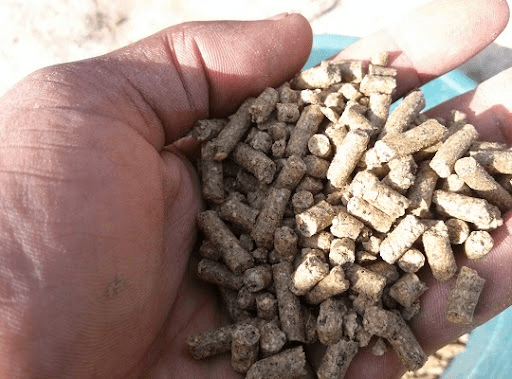
Catfish feeding rate should always match standing crop, fish size, water temperature, and water quality. Feeding too little slows growth, while feeding too much wastes money and can quickly damage pond conditions.
When fish are small, they need frequent access to feed and a protein-rich ration. As they grow, the feed rate should be adjusted carefully using growth stage guidance and regular weighing.
Fingerlings usually perform better on finely sized feed, while larger fish handle bigger pellets more efficiently. Matching the pellet size to the fish mouth reduces waste and supports faster feeding response in the pond.
Producers should also consider whether a floating or sinking ration better suits their system. Feed type selection can affect waste, feeding visibility, and how easily farmers monitor appetite during daily feeding.
Daily feeding should be enough for strong growth, but not so high that leftovers begin polluting the pond. A practical feeding plan keeps feed conversion stable and protects dissolved oxygen from unnecessary stress.
💬 Have a Farming Question? Join thousands of farmers across Africa on the Agric4Profits Community — ask questions, share experiences and connect with agricultural experts. It is completely free. Ask Your Question Now →
In well managed ponds, feeding rates around 120 to 150 pounds per acre per day can be workable, but only when the fish population truly demands it. Careful observation remains more important than rigid numbers.
3. Catfish Feeding Frequency
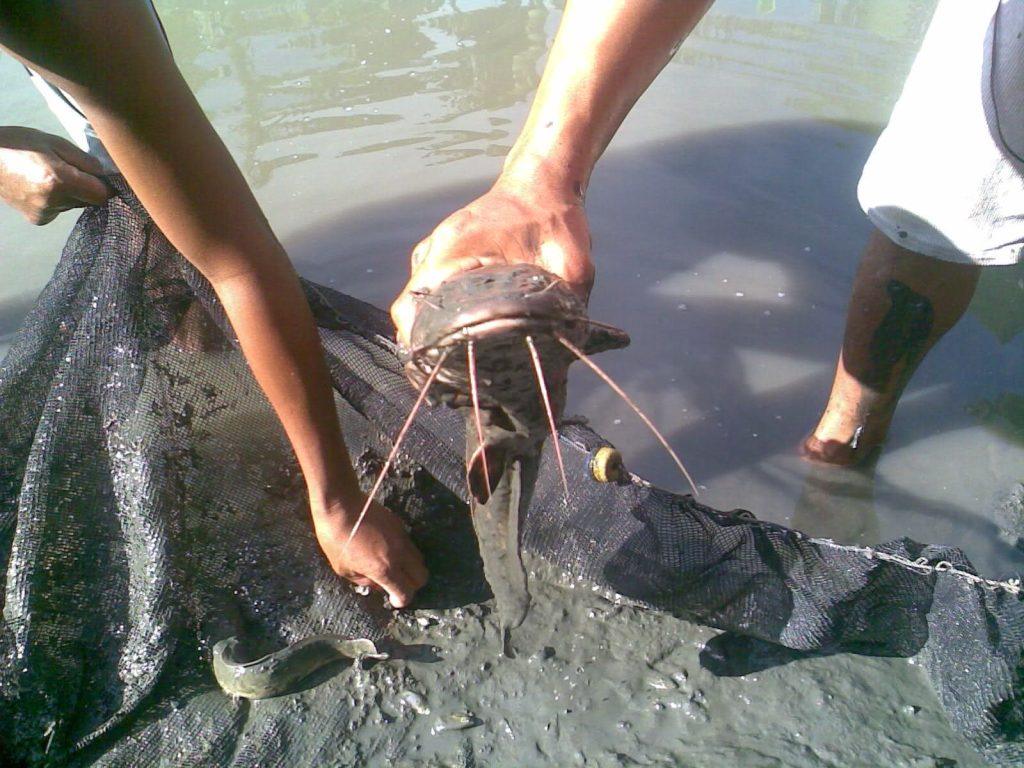
i. Once vs. twice daily: Feeding once daily is usually enough for food fish grow out, because it keeps management simple and lowers the chance of accidental overfeeding when the feeder is moving fast.
ii. Less than daily feeding: Feeding every other day or every third day can trigger compensatory eating on feeding days, but it usually extends production time and reduces the consistency farmers need for commercial output.
iii. Seven days versus five or six days: Feeding every day usually gives steadier growth, while skipping days may reduce labor. That tradeoff should be weighed carefully against production goals and pond size before changing routines.
Daily frequency should always reflect pond conditions, labor availability, and fish behavior. In many farms, one proper feeding session is better than two rushed sessions that waste feed and confuse the fish.
Researchers and farmers often compare schedules, but the pond itself gives the best answer. Observing appetite, feed disappearance, and fish movement matters more than copying another farm without adaptation and guesswork.
When you need more detail on schedule choices, study daily feeding routines and adjust according to weather, labor, and dissolved oxygen levels in the pond.
4. Catfish Maintenance Feeding
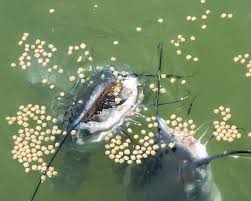
Maintenance feeding means offering just enough feed to keep body weight steady without encouraging major gain or loss. It is useful when fish must be held briefly before market, grading, or stocking decisions.
This approach works best when fish sizes are mixed and smaller fish need time to reach the feed. Farmers sometimes combine it with quantity checks so the pond remains balanced.
📖 Want to Go Deeper on This Topic?
Our expert agricultural ebooks cover poultry, fish farming, different crops production, snail farming, organic farming, mushrooms, sheep, cattle, flowers, pig farming, goat farming, agribusiness, etc. in practical step-by-step detail — written by agricultural professionals for African farmers.
Browse All Farming Ebooks →Feeding all the fish will eat on a chosen day can be better than offering a tiny ration every day. That method gives quieter fish a better chance to eat before aggressive fish dominate the pond surface and block access.
Short maintenance periods can also help when water temperature drops or disease interrupts normal growth. After the problem passes, the fish should return to full feeding so they can recover lost weight efficiently.
Regular observation is important because maintenance feeding can hide small problems if records are poor. Good farmers compare gains, losses, and feed use while reviewing farm planning records.
Even when the goal is only to hold weight, the ration should still be complete and clean. A weak diet may keep fish alive, but it will not support good condition or later market performance.
Read Also: In another helpful guide, The Effect of giving Smaller or Bigger Size of Feeds to Catfish explains how pellet size can affect feed use and fish growth.
5. Catfish Feeding Time
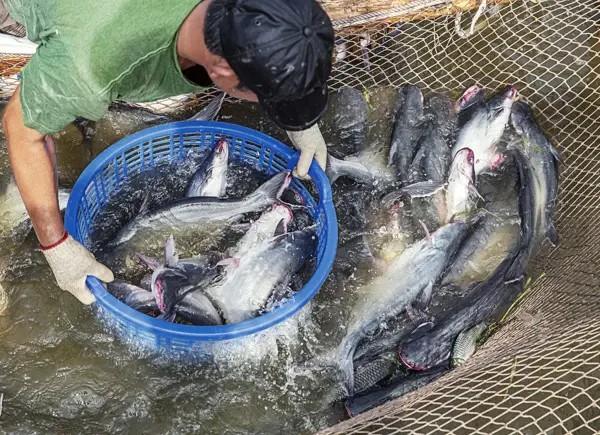
The best feeding time depends on labor, pond access, and water behavior. On large farms, the schedule often begins when dissolved oxygen begins to rise and fish activity improves after dawn.
In warm weather, early morning feeding is practical because fish can respond while temperatures are rising. In cooler seasons, afternoon feeding may be better because the water is warmer and the fish are more active.
Research has shown little difference in weight gain between several feeding times when the ration is offered to satiation. That means the farmer should choose the time that fits logistics without disturbing fish too much.
Feeding too close to dark can be risky in large ponds unless strong aeration is available. Oxygen demand often peaks several hours after feeding, so the pond should stay stable through the night.
If you want a deeper comparison of feeding windows, use morning and evening timing to guide your schedule while considering weather and water quality.
When the day is hot and the fish are ready, a calm and steady routine matters more than chasing a clock time. Consistency helps fish learn when to feed and reduces stress in the pond.
6. Catfish Feed Distribution and Duration of Feeding
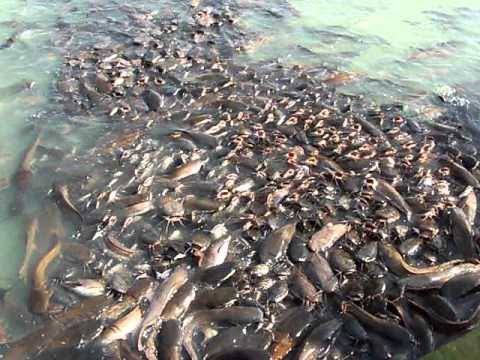
Good feed distribution matters because large ponds rarely allow every fish to reach the same spot. Spreading feed along the upwind edge keeps pellets from washing ashore and gives more fish a chance to eat.
Feeding should be slow enough for the farmer to watch appetite and stop before waste begins. Hurrying through the pond often creates either underfeeding or overfeeding, both of which reduce performance and increase cost.
Experienced feeders are valuable because they can read fish response and adjust the delivery pattern. Their judgment becomes even more important when the farm is using proper feed sizes for different age groups.
Duration also matters because the fish need time to notice the pellets and gather around them. A few calm minutes can produce better results than throwing feed in a rush and leaving immediately.
On small research ponds, active fish may finish feeding in about thirty minutes. In commercial ponds, however, the farmer should stay long enough to judge activity, weather, and any sign that feed is being wasted.
When pond conditions or fish density change, distribution practices should be reviewed immediately. A careful routine supported by water management can keep feeding efficient and the pond environment healthier.
7. Winter Feeding
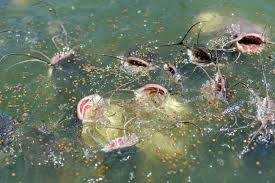
Catfish slow down when water temperature falls below about 70°F, and many stop eating almost completely when water drops near 50°F. That is why winter feeding requires patience and careful observation.
Even so, winter feeding can still be useful during mild weather. Fish may gain weight slowly when they continue receiving feed, while unfed fish can lose condition and extend their recovery time in spring.
Research has shown that fish held through winter without feed may lose notable body weight, while fish offered a small ration can maintain or even improve condition when temperatures stay warm enough.
There is no exact temperature that works for every pond, so farmers should judge by fish response. If the fish are active and the weather remains gentle, feeding is usually better than waiting too long.
Some farmers prefer sinking feed in cold weather because fish feed less aggressively at the surface. When using that option, choose a stable extruded product rather than a fragile pellet that breaks apart quickly.
Winter decisions become easier when they are supported by disease management records and regular pond checks, because stressed fish often need different feeding choices than healthy fish in warmer months.
Read Also: Before you leave the topic, How to Start an Urban Farm offers another practical farming perspective that can inspire better planning and record keeping.
Farmers who want extra control can study pellet mismatch risks before changing feed dimensions, especially in mixed-size ponds where competition is strong and waste appears quickly.
Some managers also compare feeding behavior with recirculating system practices because water stability and feed efficiency often improve when the culture environment is tightly managed.
During stressful periods, a useful reference is animal-based supplement safety, which reminds farmers that feed inputs should always be fresh, clean, and appropriate for fish health.
Production can also improve when farmers review disease prevention lessons alongside feeding records, because illness often begins with poor water quality or uncontrolled stress in the pond.
For long-term performance, it helps to follow growth cycle optimization so feeding decisions support market timing, harvest planning, and steady profit.
Where nutrition needs improvement, farmers may also consult supplement strategies to strengthen feed quality without losing sight of cost control.
In pond systems that resemble earthen pond management, feed distribution, water exchange, and careful observation become even more important for growth and water quality.
Finally, feed changes should always be gradual, tested, and monitored against results. When a farmer records the response carefully, the pond becomes a teacher rather than a mystery every season.
Summary on Catfish Feeding
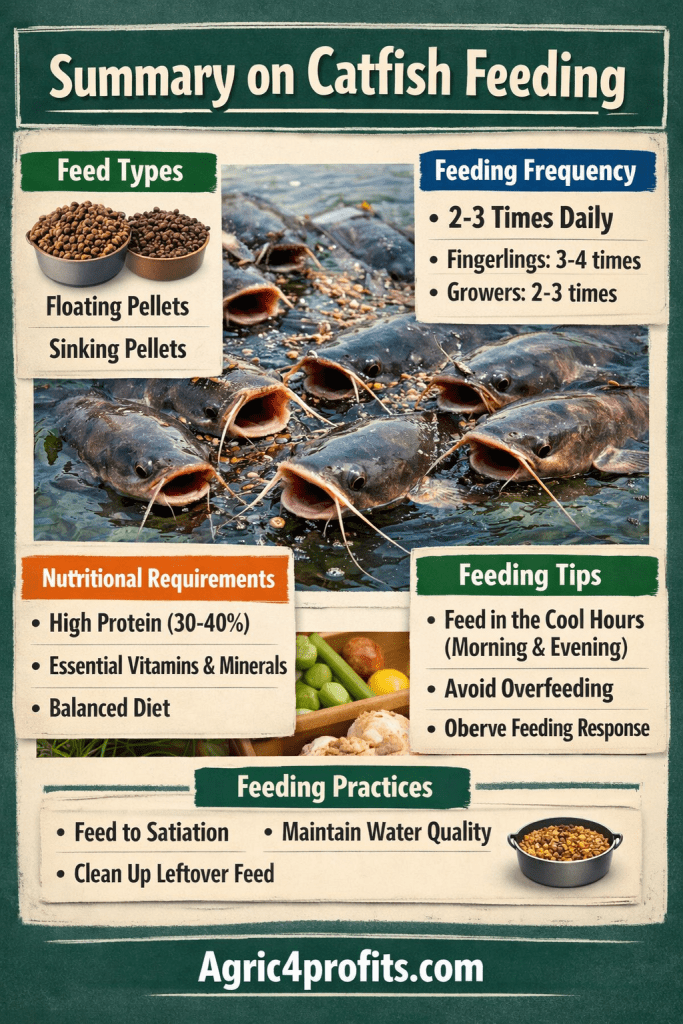
| Key Area | Main Point |
|---|---|
| Feed preparation | Home compounding gives the farmer better ingredient control and easier formula adjustment. |
| Feeding rate | Rates should match fish size, water quality, and actual appetite to prevent waste. |
| Feeding frequency | Once daily is usually enough for grow-out fish, while smaller fish may need more attention. |
| Feeding time | Morning or afternoon can both work, depending on oxygen, temperature, and farm logistics. |
| Distribution | Feed should be spread carefully so more fish can eat without the pellets washing away. |
| Winter feeding | Feed only when the fish are still active and the temperature supports digestion. |
Frequently Asked Questions About Catfish Feeding
1. What is the best feed for catfish growth in a managed pond when the goal is fast, steady, economical production, and good water quality?
A complete ration with the right protein, energy, vitamins, and minerals is best. The exact formula should match the fish stage, pond condition, production goal, and seasonal water conditions in the pond.
2. How many times should catfish be fed each day in grow-out ponds when labor, weather, pond size, and water quality all affect the schedule?
For most grow-out ponds, once daily is usually enough. Smaller fish may benefit from more attention, but the farmer should avoid rushed or wasteful feeding sessions that lower efficiency and raise cost.
3. Is floating feed better than sinking feed for catfish farming, or should the choice depend on temperature, management style, and fish behavior?
Floating feed helps farmers watch appetite and reduce waste. Sinking feed can be useful in cold weather or special systems, but it must remain stable in water for longer periods.
4. How do I know when I am overfeeding catfish in the pond before water quality, growth, and costs begin to suffer?
Leftover feed, poor water quality, sluggish fish behavior, and higher waste costs are common signs. Regular observation and proper records help prevent overfeeding problems early and keep the pond cleaner.
5. Can catfish eat the same feed at every stage of growth, or do pellet size and nutrition need to change as the fish grow?
No. Fingerlings, juveniles, and grow-out fish need different pellet sizes and nutrient densities. Matching feed to fish size improves consumption, growth, feed conversion, and feeding comfort.
6. Should catfish be fed during cold weather or winter months when temperature drops and appetite becomes less predictable in managed ponds?
Yes, but only when the fish are still active and the temperature is high enough for feeding. The ration should be light, careful, and guided by fish response, observation, and stable weather.
Do you have any questions, suggestions, or contributions? If so, please feel free to use the comment box below to share your thoughts. We also encourage you to kindly share this information with others who might benefit from it. Since we can’t reach everyone at once, we truly appreciate your help in spreading the word. Thank you very much for your support and for sharing!
Read Also: Biogas Production from Organic Waste: Process and Benefits
🌱 Take Your Farming Further With Agric4Profits
Based on what you just read, here are free resources and products from Agric4Profits that can help your farm right now:
- 🛒 Visit Our Marketplace — Organic neem oil, bio-pesticides, seeds and farming products
- 📚 Read Premium Content — Advanced guides for serious and profitable farming
- 🎓 Join Our Free Academy — Structured free training for farmers across Africa
- 🔧 Use Our Free Farm Tools — Profit calculators, feed formulation, pest identifier and more
- 💬 Join Our Farming Community — Connect with farmers across all 54 African countries
- ❓ Ask a Farming Question — Get answers from experienced farmers and agricultural experts
Please cite this content in academic work, research, or publications.