


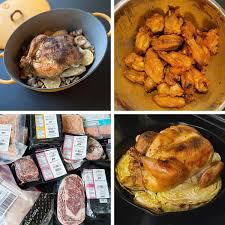
This article focuses on the different methods of cooking meat and how to prepare various cuts of meat.
There are two basic methods of cooking meat:
- Moist heat
- Dry heat
Selecting the proper cooking method for the cut of meat is crucial. Less tender cuts of meat require moist heat cooking methods to help break down the tough connective tissues. Moist heat cooking involves adding moisture to the meat and cooking it slowly over a long period; it includes braising and cooking in liquid, such as stews or other slow cooker recipes.
Methods for Cooking Meat
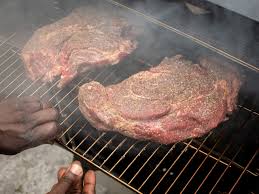
Tender cuts of meat do not require moisture and long, slow cooking. They are usually cooked with a dry heat method, including roasting, broiling, pan-broiling, pan-frying, and grilling.
The method chosen to cook a certain cut of meat should relate directly to the inherent tenderness of that cut. Tenderness is determined by:
- Where on the animal the meat comes from
- The degree of marbling
- The age of the animal
- How the meat was stored
- How the meat was prepared for market
In general, cuts from the loin section are the tenderest; the farther away from this section, the less tender the meat will be.
Preparing Tender Cuts of Meat
1. Roasting Tender Cuts
Roasting is a cooking method in which meat is surrounded and cooked by heated air, usually in an oven. Meat is not covered, and no water is added. Follow these steps:
- Place meat fat side up on a rack in a shallow open roasting pan
- Season as desired
- Insert meat thermometer; ensure the tip does not rest in fat or on a bone
- Do not add water, do not cover
- Roast in a slow oven at 325°F until the thermometer reaches the desired doneness
- Baste with drippings during cooking
To test for doneness, use a meat thermometer. The internal temperature shows exactly how done the meat is. Refer to roasting time tables in a cookbook. The more tender cuts of meat will remain tender if cooked to rare rather than well-done. On the other hand, less tender cuts may be tenderer if cooked to medium or well-done, rather than rare.
2. Broiling, Pan-Broiling, and Pan-Frying Tender Cuts
The basic rule for broiling, pan-broiling, or pan-frying meat is to use enough heat to brown the outside without overcooking the inside of the meat. A moderate temperature is best for broiling and frying most meats.
i. Broiling
Broiling is cooking by direct heat from a flame, electric unit, or glowing coals. Meat is cooked one side at a time. Choose tender beef steaks, lamb chops, cured ham slices, and bacon for broiling. Use steaks or chops cut 1 to 2 inches thick. If steaks or chops are less than 1 inch thick, pan-broil them.
Consult the manufacturer’s instructions for broiling since equipment varies. Usually, the door is left open when broiling in an electric range and closed when broiling in a gas range:
- Place meat on a rack in a broiler pan
- Place pan two to five inches from heat; the thicker the cut, the farther the meat should be placed from the heating unit to ensure even cooking
- Broil one side until browned, season cooked side, if desired
- Turn meat; cook second side to desired doneness and until meat is browned, season, if desired
ii. Pan-Broiling
Pan-broiling is cooking in an uncovered pan over direct heat. Fat that cooks out of the meat is drained off:
- Place meat in a preheated heavy frying pan
- Do not add oil or water, do not cover
- Cook slowly, turn occasionally, pour off fat as it accumulates
- Cook to desired doneness, until both sides are browned
- Season, if desired
iii. Pan-Frying
Pan-frying is similar to pan-broiling, except that meat is cooked in a small amount of fat:
- Heat a small amount of oil in a skillet over medium heat
- When oil is hot, add meat; do not cover
- Turn occasionally until done as desired and browned on both sides
- Season, if desired
The easiest way to tell when steaks and small pieces of meat are done when broiling, pan-broiling, or pan-frying is to make a small cut in the meat near the bone and check the interior color:
- Rare beef will be reddish pink with lots of clear red juice
- Medium beef has a light pink color and less juice than rare
- Well-done beef is light brown with slightly yellow juice; fresh pork should be cooked until the juice is no longer pink
Read Also: Sowing Guide for Different Kind of Crops
Preparing Less Tender Cuts of Meat
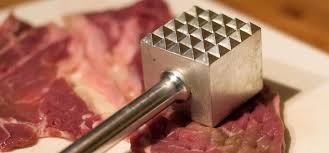
i. Braising Less Tender Cuts
Braising is cooking in steam trapped and held in a covered container or foil wrap. The source of the steam may be water or other liquid added to the meat, or it may be meat juices.
Large, less tender cuts, such as chuck, round, and rump, are braised as pot roasts:
- In a heavy frying pan, brown meat on all sides in a small amount of oil; pour off fat
- Season, if desired
- Add a small amount of liquid to the meat; cover pan tightly
- Simmer on top of the range or cook in the oven at 350°F until tender
ii. Cooking Less Tender Cuts in Liquid
This method involves covering a less tender cut of meat with liquid and simmering in a covered kettle until tender and well-done:
- In a Dutch oven or heavy pan, brown meat on all sides in a small amount of oil; pour off fat
- Season, if desired
- Add enough liquid to cover meat completely; cover pan tightly
- Simmer on top of the range or in the oven until tender
- Add vegetables just long enough before serving to be cooked
Cooking Poultry Effectively
The type of method to use for cooking poultry depends on the bird. Young poultry is best for roasting, broiling, and frying. Older poultry requires braising or stewing methods. Either way, slow, even heat should be used for tender, juicy, evenly done poultry. Do not overcook; it results in tough, dry meat.
1. Broiling Poultry
- Cut chicken broiler in half lengthwise, in quarters, or in pieces; quarter young turkey fryers or roasters, or cut in pieces
- Fold wing tips across back side of poultry quarters
- Set oven control to broil
- Brush poultry with one tablespoon margarine or butter
- Place poultry skin side down on rack in broiler pan
- Place broiler pan so top of chicken is seven to nine inches from heat
- Broil 30 minutes, sprinkle with salt and pepper
- Turn chicken and brush with one tablespoon margarine or butter. Broil 15 to 25 minutes longer or until chicken is brown and juices run clear
2. Poaching Poultry in the Microwave
An easy way to prepare for any recipe that calls for cooked chicken is to poach chicken in the microwave ahead of time and store it in the freezer. That way, cooked chicken is available for use in casseroles, sandwiches, and salads.
- Place four chicken breast halves, skin side up, in a 12×8-inch (2-quart) microwave-safe baking dish, with the thickest portions placed toward the outside edges of the dish. If desired, sprinkle the chicken lightly with seasoned salt, paprika, and pepper
- Cover the dish with waxed paper. Microwave on HIGH for 12 to 14 minutes or until it is fork-tender and juices run clear
- Use the chicken immediately, or cool it completely before removing the meat from the bones. Package the cooked chicken in freezer bags or containers in the amounts needed in recipes. Store in the refrigerator up to two days or in the freezer up to two months
- Thaw the frozen cooked chicken in one of two ways:
- Place chicken in a microwave-safe covered casserole and microwave it on DEFROST for four to six minutes or until the chicken is thawed. Break up and rearrange the chicken halfway through thawing. When thawed, the chicken will feel cool to the touch
- Leave chicken in its moisture/vapor-resistant freezer container and thaw overnight in the refrigerator
Note: Chicken breasts can also be poached in a large saucepan on top of the stove. Add cold water just to cover chicken, bring to a boil, and simmer for 30 to 40 minutes or until chicken is tender. Skim off any scum that rises to the surface.
2. Roasting Poultry
- Place poultry breast side up on a rack in a shallow roasting pan. Do not add water. If desired, brush poultry with cooking oil or melted margarine or butter
- Cover poultry with a loose tent of heavy-duty aluminum foil. To make a tent, tear off a sheet of foil 5 to 10 inches longer than the poultry. Crease foil crosswise through the center, place over the bird, crimping loosely onto sides of pan to hold it in place. This prevents overbrowning, keeps the bird moist, and reduces oven spatter
- Insert a meat thermometer through the foil into the thickest part of the thigh muscle without touching the bone. The inner thigh is the area that heats most slowly. For turkey parts, insert the thermometer in the thickest area
- Roast at 325°F according to the timetable. To brown the poultry, remove the foil tent 20 to 30 minutes before roasting is finished, and continue cooking until the thermometer registers 185°F
- Basting is usually not necessary during roasting since it cannot penetrate the turkey; it does help brown the skin
Timetable for Roasting Fresh or Thawed Poultry or Poultry Parts
| Weight (kg) | Unstuffed (Hours) | Stuffed (Hours) |
|---|---|---|
| 1.8-2.7 (breasts) | 1 1/2 to 2 1/4 | Not applicable |
| 2.7-4.0 | 2 1/4 to 3 1/4 | 3 to 3 1/2 |
| 3.6-5.4 | 3 to 4 | 3 1/2 to 4 1/2 |
| 5.4-7.3 | 3 1/2 to 4 1/2 | 4 1/2 to 5 1/2 |
| 7.3-9.1 | 4 to 5 | 5 1/2 to 6 1/2 |
| 9.1-10.9 | 4 1/2 to 5 1/2 | 6 1/2 to 7 |
| 10.9-12.7 | 5 to 6 1/2 | 7 to 8 1/2 |
| Drumsticks, quarters, thighs | 2 to 3 1/2 | Not applicable |
Read Also: Maize Definition and Economic Importance
3. Using Oven Cooking Bags for Poultry

Preparing poultry in an oven cooking bag is a moist heat cooking method. It is the best way to produce a moist, tender bird. It also helps reduce oven spatter. Using ordinary brown bags for roasting is not recommended because they may not be sanitary, the glue and ink used on brown bags have not been approved for use as cooking materials, and the juices formed as the poultry cooks may saturate the bag and cause it to break.
- Preheat oven to 350°F
- Shake 1 tablespoon of flour in the bag to prevent bursting
- Place celery and onion slices in the bottom of the bag to help prevent poultry from sticking to the bag and to add flavor
- Place poultry on top of the vegetables, close the bag with the enclosed twist-tie, and make 6 half-inch slits in the top to let steam escape. Insert meat thermometer through a slit in the bag. The poultry is done when it reaches 180°F
- When poultry is done, cut or slit the top of the bag down the center. Loosen the bag from the turkey so there is no sticking and carefully remove the poultry to the serving platter
** Roasting Chart for Fresh or Thawed Poultry Cooked in an Oven Cooking Bag**
| Weight (kg) | Unstuffed (Hours) | Stuffed (Hours) |
|---|---|---|
| 3.6-5.4 | 1 3/4 to 2 1/4 | 2 1/4 to 2 3/4 |
| 5.4-7.3 | 2 1/4 to 2 3/4 | 2 3/4 to 3 1/4 |
| 9.1-10.9 | 2 3/4 to 3 1/4 | 3 1/4 to 3 3/4 |
| 10.9-12.7 | 3 1/4 to 3 3/4 | 3 3/4 to 4 1/4 |
Thawing Frozen Turkeys
The preferred method for thawing a turkey is in the refrigerator. Simply place the turkey in its original wrap on a tray or in a pan to catch moisture that accumulates as it thaws.
If time is a factor, place the turkey in its unopened bag in the sink or a large container and cover it with cold water. If the wrapping is torn, place the turkey in another plastic bag, close securely, and then place in water.
Change the water frequently to ensure safe, effective thawing. The National Turkey Federation recommends every 30 minutes as a rule of thumb.
1. Thawing Time in the Refrigerator
| Whole Turkey (kg) | Thawing Time |
|---|---|
| 3.6-5.4 | 1 to 2 days |
| 5.4-7.3 | 2 to 3 days |
| 7.3-9.1 | 3 to 4 days |
| 9.1-10.9 | 4 to 5 days |
| Pieces of Large Turkey (half, quarter, half breast) | 1 to 2 days |
2. Thawing Time in Cold Water
| Weight (kg) | Thawing Time |
|---|---|
| 3.6-5.4 | 4 to 6 hours |
| 5.4-7.3 | 6 to 9 hours |
| 7.3-9.1 | 9 to 11 hours |
| 9.1-10.9 | 11 to 12 hours |
Cooking a Frozen Turkey
A whole frozen turkey without giblets and neck can be roasted, braised, or stewed without thawing. Turkey parts can also be cooked without thawing. The turkey should be cooked in a preheated 325°F oven.
Timetable for Roasting Frozen Turkey
| Weight (kg) | Cooking Time (Hours) |
|---|---|
| 5.4-7.3 | 7 1/2 to 8 1/2 |
| 7.3-9.1 | 8 to 9 1/4 |
| 9.1-10.9 | 9 to 10 |
| Half, breast | 4 1/4 to 6 1/4 |
| Drumsticks, quarters, thighs | 2 to 3 3/4 |
Do you have any questions, suggestions, or contributions? If so, please feel free to use the comment box below to share your thoughts. We also encourage you to kindly share this information with others who might benefit from it. Since we can’t reach everyone at once, we truly appreciate your help in spreading the word. Thank you so much for your support and for sharing!