


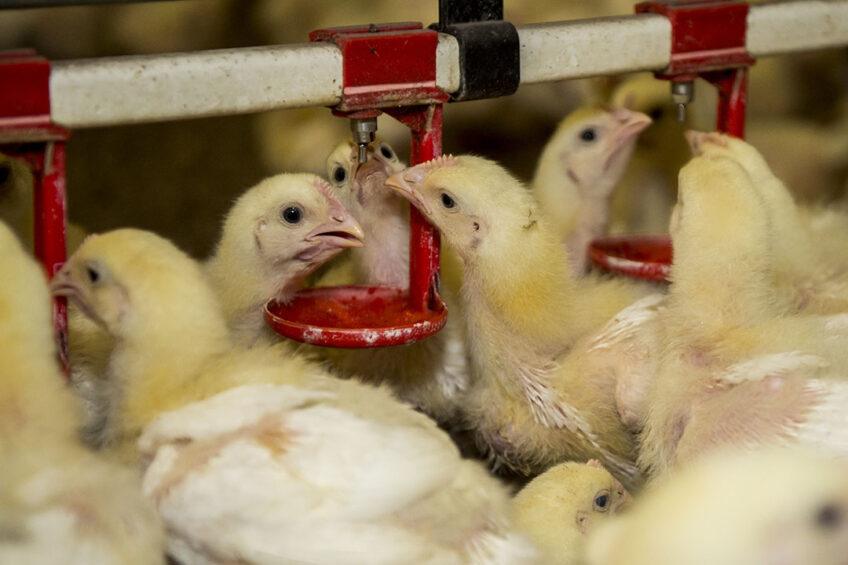
Water is one of the most critical yet often overlooked aspects of poultry farming. Birds can survive for weeks without food, but they’ll die within days without water. Despite this, many farmers pay far more attention to feed quality than water quality, which is a costly mistake that directly affects bird health, growth rates, and egg production.
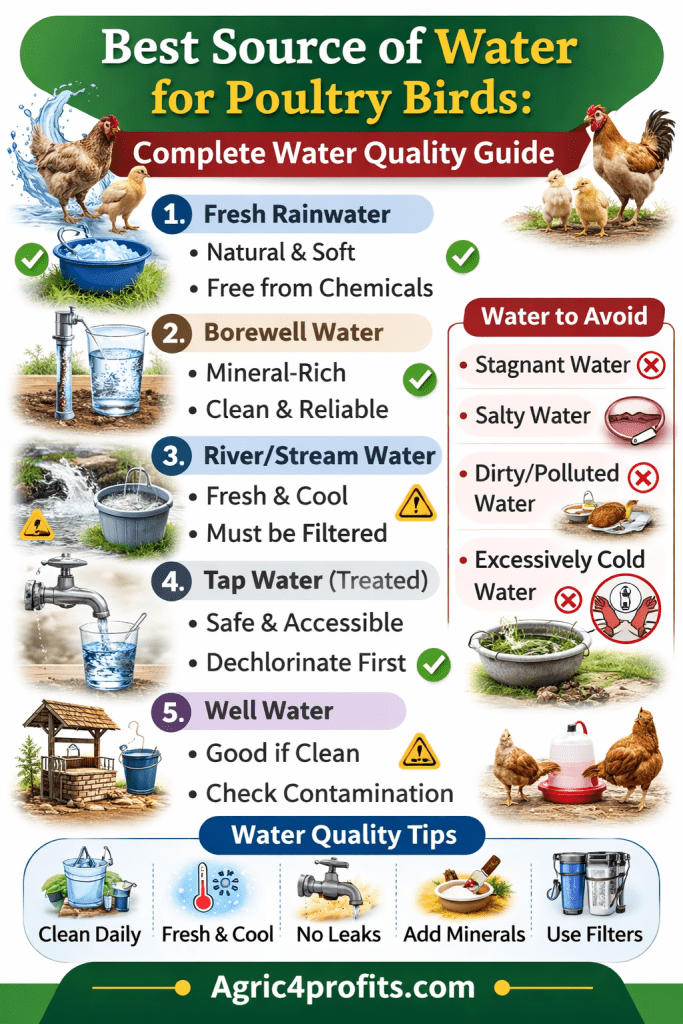
From whatever source you’re getting water for your poultry birds, the basic fact is that the water must be cool, free of germs, and without harmful chemicals. Well water, tap water, and borehole water sources are all acceptable for your birds provided they meet these criteria. The source matters less than the quality of what actually reaches your birds.
Avoid giving hard water to your poultry birds. Hard water contains high levels of dissolved minerals, particularly calcium and magnesium, which can cause multiple problems including poor medication absorption, reduced performance, and wet litter conditions. In order to know if your water source is free of germs and dangerous chemicals, the best approach is water testing, which should be done as regularly as feed testing.
Water should be given to your poultry birds without restriction. Birds self-regulate their water intake based on their needs, which vary with temperature, diet, and production stage. The only time water can be withdrawn from birds is a few hours before oral vaccination so they’ll drink the vaccine solution faster when it’s offered. Even then, never withhold water for more than 2 to 4 hours.
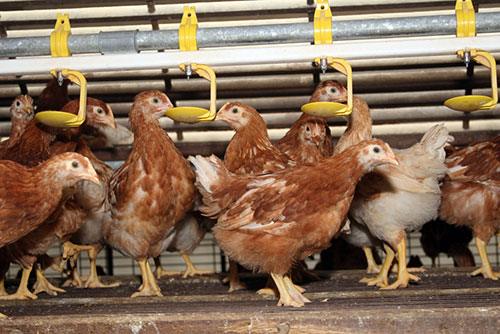
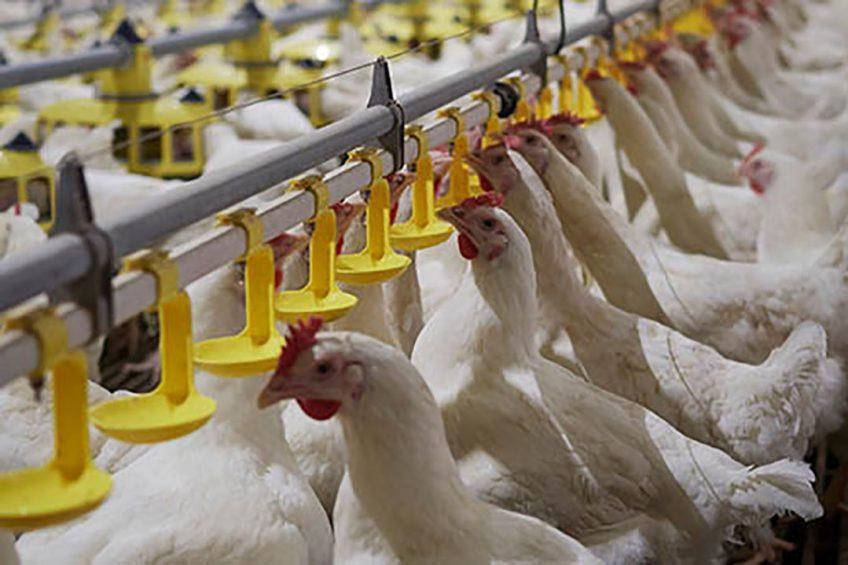
Enough drinkers must be provided for the birds. One drinker per 50 birds is ideal under normal conditions. This ratio can be increased during oral vaccination so birds can access the vaccine solution quickly. Insufficient drinker space creates competition, limits water intake for subordinate birds, and reduces overall flock performance.
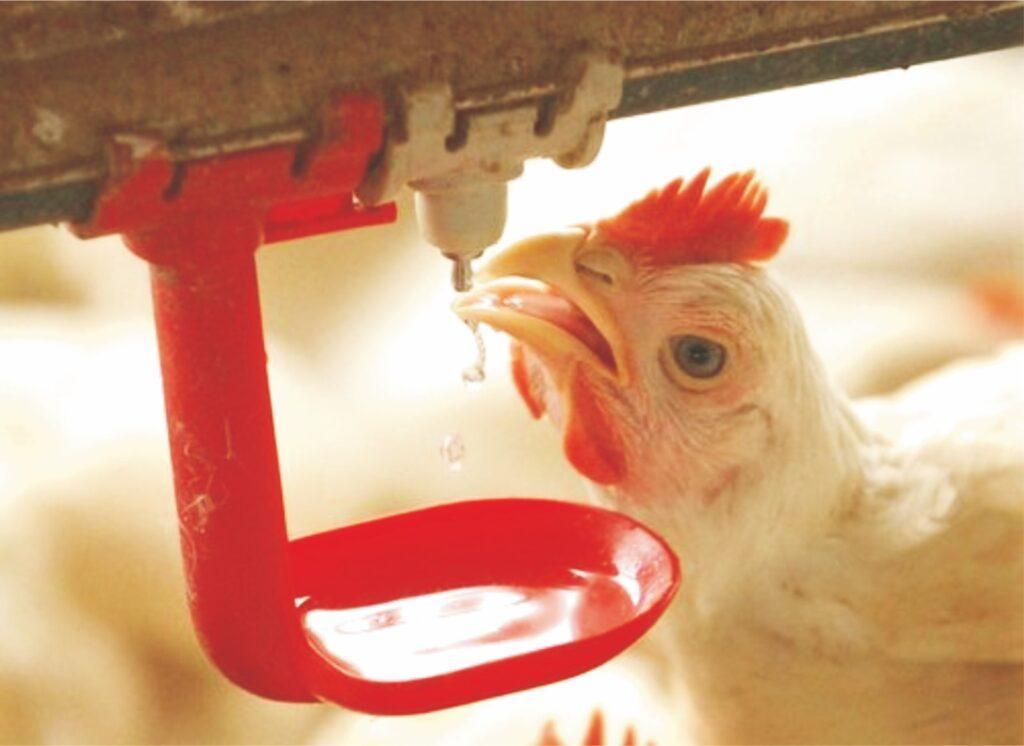
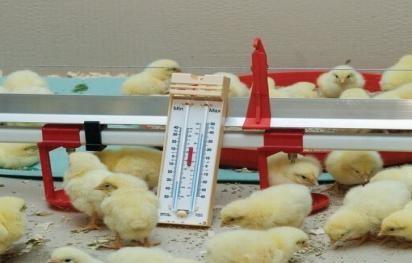
The recommended drinker sizes for birds change as they grow. During brooding (the first four weeks of life), the fountain-type drinker placed on the brooding floor works well. These are appropriately sized for small chicks and easy to clean. After four weeks of age, a bigger bowl or hanging drinkers are recommended. This prevents birds from wasting water and pouring it on the floor, which creates wet litter and increases ammonia levels.
Understanding water quality, testing procedures, monitoring programs, and sanitation practices separates successful operations from those that constantly struggle with mysterious health and production problems. This guide covers everything you need to know about providing optimal water to your poultry flock.
1. Importance of Healthy Water to Your Poultry Birds
Water supplies are dynamic and quality can change over time. This includes changes at both the source and the level of what birds actually drink at the drinker level. Therefore, it’s important to monitor supplies regularly to ensure quality remains optimal.
A. Well Construction and ProIection
i. Proper design: Check well construction to ensure wells are properly designed with surfaces sloping away from the well head. This prevents surface water from flowing toward the well during rain.
ii. Location matters: Wells situated in an indentation could have water pooling during rain events, which causes surface contaminants to leach into the well. Never place wells in low-lying areas where water collects.
iii. Security: Secure wellheads with locked caps to prevent tampering with water supplies. This protects against both accidental contamination and intentional sabotage.
B. Water Testing Programs
Maintaining water quality involves testing water supplies to identify both mineral and microbial challenges. Test supplies at the source at least annually for minerals and pH. More frequent testing is warranted if you notice performance issues or if your water source is known to have variable quality.
Ideal mineral analysis should include:
I. pH: Optimal range is 6.5 to 8.5 for poultry. Water outside this range can corrode equipment, reduce medication effectiveness, and affect bird health.
ii. Minerals:
- Sodium and chloride (high levels indicate saltwater contamination)
- Iron and manganese (cause staining and water system blockages)
- Calcium and magnesium (measure water hardness and alkalinity)
iii. Bicarbonate (HCO3): High levels indicate alkalinity issues that affect medication and vaccine effectiveness.
iv. Nitrates and nitrites: These indicate contamination from fertilizer runoff or septic systems. High levels are toxic to young birds.
v. Sulfur and sulfates: Cause bitter taste, reduced water intake, and loose droppings at high levels.
Read Also: Concrete Pond Management: Steps to take before introducing the Fish in the Water
C. Heavy Metal Testing
Should there be concerns about poor performance or potential contamination, it may be wise to test for heavy metals including lead, arsenic, cadmium, and copper. These metals are toxic even at low concentrations and can accumulate in bird tissues.
Rarely do mineral analyses change much from source to point of consumption. However, if water systems have galvanized pipes or lots of metal components and performance issues don’t occur in all houses, then it could be helpful to test minerals and pH in more than one location. This could identify if quality changes are occurring due to the water system itself.
Samples for mineral analysis don’t need to be sterile. The container should be filled to prevent airspace that may cause minerals like sulfur to gas off before analysis.
D. Microbial Testing
Microbial testing is crucial for identifying if water supplies harbor harmful levels of bacteria, yeast, or mold. A total aerobic bacteria plate count (APC or TPC) is an inexpensive test indicating the cleanliness of a water system, though it doesn’t necessarily provide information on whether the bacteria present are harmful or benign.
i. Where to test: Test the source and test water at the bird level. This identifies whether contamination occurs in the source or develops within the water distribution system.
ii. Interpretation: Counts greater than 10,000 colony forming units (cfu)/ml suggest the system has potential for harboring pathogens. Ideally, counts should be zero.
iii. Sample collection: Take care when pulling water samples for microbial evaluations to prevent contamination from the air. The air in a chicken house is loaded with bacteria that can contaminate samples and give false results.
iv. Collection procedure: Do not sample directly in front of a running fan. Find a location out of direct air movement. Utilize a sterile container. Clean the water line opening (faucet) or nipple drinker with 91% rubbing alcohol. Let the water run for 20 to 30 seconds (activate nipple drinkers with sterile tweezers), then collect the sample. Place samples on ice packs and deliver to the lab within 24 hours when possible. If samples must be held longer, keep refrigerated for the most reliable results.
v. Troubleshooting location: When troubleshooting production facilities plagued with chronic health issues, the best place to take a swab sample is within the water line regulator. If the water supply is a source of microbial problems, it’s almost guaranteed to be harbored within the rubber seals of the regulator.
2. Water Sanitation Programs for Poultry Birds
Daily waand ter sanitation programs are an excellent tool to help prevent health challenges being introduced to flocks via the water system. Clean water systems support good health. Contaminated systems spread disease.
A. Common Sanitizers
Products such as chlorine, chlorine dioxide, and hydrogen peroxide are commonly used, but proper application is critical for good sanitizing efficacy.
I. Individual system requirements: Every water supply and system is unique regarding what level of sanitizer best controls microbial growth. Start with recommended levels, then adjust sanitizer concentrations based on microbial testing results.
ii. Target levels: When water sanitizers are in place at appropriate concentrations, APC results should be 0 cfu/ml. Starting points for sanitizing residuals are:
- Free chlorine: 2 to 4 ppm
- Free chlorine dioxide: 0.5 to 0.8 ppm
- Hydrogen peroxide: 25 to 75 ppm
iii. Variation in requirements: Some farms can manage perfectly with 1 ppm free chlorine while others require as much as 6 to 8 ppm. This depends on the minerals present and the cleanliness of the system. The best indicator of effectiveness is evaluating what’s living in the water (microbial level).
B. Testing Sanitizer Effectiveness
I. Proper sample collection: Ideally, samples collected for evaluating sanitizer effectiveness should be collected sterilely and in containers that have sodium thiosulfate to neutralize the sanitizer. This prevents the sanitizer from continuing to work in the sample bottle, which would give falsely low bacterial counts.
ii. Establishing monitoring programs: Once a residual level is correlated with no microbial growth in the water supply at the drinker, establish a residual monitoring program and document test results. This creates a baseline for comparison and helps identify when problems develop.
Read Also: The Best Source of Water for Fishes in Concrete Ponds
C. New Water Sanitation Technologies
New water and sanitation technologies continue to emerge, offering alternatives to traditional chlorine-based systems.
I. Acid-stabilized dry chlorine: Green Klean recently introduced bleach crystals to the poultry industry after receiving drinking water approval. This chlorine source uses sodium dichloro-s-triazinetrione dehydrate as the active ingredient, providing 55% available chlorine. The product was compared to liquid bleach with bleach crystal mixed at less than 0.1 ounce per gallon stock solution versus liquid Clorox mixed at 4 ounces per gallon stock solution. Each stock was then added to contaminated water and pH, residual, and microbial kill were measured over an hour.
ii. Advanced Oxidation Process: The Silver Bullet utilizes the Advanced Oxidation Process to sanitize water. It’s well suited for treating water storage. One strong positive: it won’t over-treat water so it can run continuously during downtime to maintain the integrity of stored water.
iii. On-site chlorine generation: Some operations now generate chlorine onsite from salt, eliminating the need to transport and store large quantities of liquid bleach or chlorine products.
Summary on Best Source of Water for Poultry Birds
| Aspect | Key Points |
|---|---|
| Water Requirements | Must be cool, free of germs, without harmful chemicals |
| Water Availability | Provide without restriction except 2-4 hours before oral vaccination |
| Drinker Ratio | One drinker per 50 birds; increase during vaccination |
| Drinker Types | Fountain type for first 4 weeks; hanging/bowl drinkers after 4 weeks |
| Well Construction | Surfaces slope away from wellhead; avoid low-lying areas |
| Testing Frequency | At least annually for minerals and pH; more often if problems occur |
| Optimal pH Range | 6.5 to 8.5 for poultry water |
| Key Minerals | Sodium, chloride, iron, manganese, calcium, magnesium, nitrates, sulfates |
| Heavy Metals | Test for lead, arsenic, cadmium, copper if performance issues occur |
| Microbial Target | 0 cfu/ml ideal; counts above 10,000 cfu/ml indicate contamination risk |
| Sample Collection | Sterile container, clean opening, run water 20-30 seconds, use ice packs |
| Chlorine Residual | 2-4 ppm free chlorine starting point; adjust based on testing |
| Chlorine Dioxide | 0.5-0.8 ppm residual; effective at lower concentrations than chlorine |
| Hydrogen Peroxide | 25-75 ppm residual; alternative to chlorine-based sanitizers |
Frequently Asked Questions About Water for Poultry Birds
1. How much water do chickens drink per day?
Water consumption varies with temperature, diet, and production stage. Laying hens drink approximately 250 to 300 ml per day under normal conditions, while broilers drink about 100 to 200 ml depending on age. Hot weather can double or triple these amounts. Generally, birds drink 1.5 to 2 times as much water as they consume feed.
2. Can I use rainwater for my poultry flock?
Rainwater can be excellent for poultry if collected and stored properly. Use clean collection surfaces, first-flush diverters to remove initial contamination, and covered storage tanks to prevent algae growth and contamination. Test rainwater before use, as it may be acidic (low pH) and lack minerals. Add a water sanitizer, such as chlorine, to prevent bacterial growth in storage tanks.
3. What causes hard water and why is it bad for chickens?
Hard water contains high levels of dissolved minerals, particularly calcium and magnesium. It forms scale in water lines, reduces the effectiveness of medications and vaccines, can cause wet litter by increasing water consumption, and may reduce feed efficiency. Test your water and consider water softening if the hardness exceeds 180 ppm.
4. How do I know if my water has too much iron?
Water with high iron content (above 0.3 ppm) has a metallic taste, causes reddish-brown staining on equipment and egg shells, and promotes bacterial growth in water lines. Birds may reduce water intake due to poor taste. Test your water if you notice these signs. Iron filters can remove excess iron before water reaches birds.
5. What’s the difference between chlorine and chlorine dioxide for water treatment?
Chlorine is less expensive and widely available, but it loses effectiveness in water with high pH or organic matter. Chlorine dioxide works across a wider pH range, is more effective at lower concentrations (0.5 to 0.8 ppm versus 2 to 4 ppm), and produces fewer harmful byproducts. However, chlorine dioxide is more expensive and requires special generators or mixing systems.
6. How often should I clean my poultry water system?
Daily cleaning of drinkers is essential. Between flocks, perform a complete system flush and sanitization. At least twice yearly, do a thorough acid cleaning to remove mineral scale and biofilm from water lines. More frequent cleaning may be needed if you have hard water or notice slime buildup in drinkers.
7. Can bacteria grow in water lines even when I’m using chlorine?
Yes, bacteria can form biofilm inside water lines that protects them from sanitizers. Biofilm forms on surfaces within the pipes and is resistant to normal chlorine levels. This is why periodic acid cleaning is necessary to remove biofilm and why monitoring microbial levels at the drinker, not just at the source, is important.
8. What should I do if my water test shows high bacterial counts?
First, increase sanitizer levels and retest after 24 to 48 hours. If counts remain high, clean the entire water system with an acid-based cleaner to remove biofilm, then establish appropriate sanitizer levels. Check the water system for dead-end lines, low-flow areas, and leaking seals where bacteria accumulate. Consider testing at multiple points to identify where contamination originates.
Do you have any questions, suggestions, or contributions? If so, please feel free to use the comment box below to share your thoughts. We also encourage you to kindly share this information with others who might benefit from it. Since we can’t reach everyone at once, we truly appreciate your help in spreading the word. Thank you very much for your support and for sharing!
Read Also: Complete List of Iron Rich Foods you Should Know About