


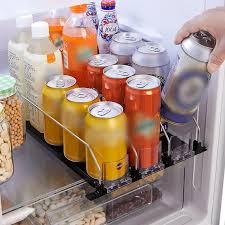
Storage of beverages is an important aspect of beverage operations. It is the responsibility of management to see to the proper organization of the store.
It is also important to see that it is only essential supplies that are kept there, and that it is operated efficiently and competently by trustworthy staff. It should be controlled as carefully as the cashier’s safe since the goods kept there are simply another form of cash.
Beverage Storage and Record-Keeping
The size of a store room depends on the volume and nature of the establishment’s business, the location, and the purchasing policy. There will be no need for excessive storage space which may encourage overbuying.
There is a relationship between the size of the inventory and usage. Overcrowded conditions in a store room may be due to excessive inventories containing dead stock. It could also result from the use of an extensive wine list that contains slow-moving beverages.
Read Also: Cold Weather Poultry Diseases and How to Manage them
Maintaining Storage Records
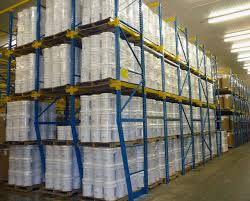
These are records that aid the competent and efficient operation of the cellar. They are used in documenting the operations of the store with regard to incoming and outgoing stock. They include:
Cellar Inwards Book
This provides an accurate record of all beverages coming into the cellar. The data for the cellerman’s bin card is as well posted here. The cellar inwards book is a useful check against the perpetual beverage inventory ledger held in the food and beverage control/accounts office.
WAZOBIA HOTELS LTD
Cellar Inwards Book
Date:
| Date | Beverage | Delivery/Invoice No | Bin Code No | Bottle | Halves | Other Sizes |
|---|
Bin Cards
These are provided for each individual beverage held in stock. It records all deliveries and issues made, and is normally pinned on shelves against each beverage.
WAZOBIA HOTELS LTD
Bin Card
Bin No:
Type:
Size:
| Date | Received | Issued to Bar | Balance | ||||
|---|---|---|---|---|---|---|---|
| A | B | C | Total | ||||
| 05/02/10 | 12 | 2 | 1 | 3 | 9 | ||
| 07/02/10 | – | 1 | 1 | 2 | 4 | 5 |
Cellar Control Books
This provides a record of all daily deliveries to the cellar and all daily issues from the cellar to the various bars. This record should cross-check with the entries on the bin card and the perpetual inventory ledger held in the food control/accounts office.
1. Beverages Perpetual Inventory Ledger
This is a master ledger prepared in the control/accounts office. It consists of cards prepared for each individual beverage held in stock. The purpose is to keep a daily record of any purchases of the separate type of beverages and of the quantities issued from the cellar to each bar or to other areas, and to record a perpetual balance for each of them.
The information on this ledger is obtained from the suppliers’ delivery notes or invoices, and the daily beverage requisition notes from the different bars. During physical stock-taking in the cellar, the stock-take figures should match those on the perpetual inventory ledger.
WAZOBIA HOTELS LTD
Beverages Perpetual Inventory Ledger
| Date | Beverage Purchase | Perpetual Inventory and Issue Record | |||||||
|---|---|---|---|---|---|---|---|---|---|
| Supplier | No | Unit Cost | Total Amount | Date | Opening Inventory | Total Purchases | Bar A | Bar B | |
| 05/08 | |||||||||
| 09/02 | Smith Smith | 36 | 3.20 | 115.20 | 05/02 | 12 | 36 | 48 | 2 |
| 36 | 3.20 | 115.20 | 09/02 | 30 | 36 | 66 | 2 |
2. Ullages and Breakages
Ullage is a term used to cover all substandard beverages such as bottles of weeping wine, bottles of wine with faulty corks, unfit barrels of beer, etc.
It is necessary that ullages and breakages be recorded on a standard form together with an explanation, and countersigned by a staff of the food and beverage control department.
3. Empties Return Book
Many of the containers of beverages such as crates, kegs, beer bottles, soda siphons, etc., are charged for by the supplier against a delivery. It is therefore necessary that a control is maintained on these charged items to ensure that they are returned to the supplier, and the correct credit obtained.
A container record book is required to record all containers received from the various suppliers, containers returned, and the balance matching the stock-take of containers.
4. Hospitality Book
This book records all issues of drinks to the kitchen and other grades of staff as laid down by company policy.
Read Also: Layers or Broilers which One is More Profitable in Poultry Farming? Find Out!
Establishing Beverage Storage Standards
Storing control is established in beverage operations to achieve three important objectives:
- To prevent pilferage
- To ensure accessibility when needed
- To preserve quality
In order to accomplish these objectives, standards must be established. The following standards are critical to effective storing control.
1. Preventing Beverage Pilferage
To prevent pilferage, it is clearly necessary to make all beverage storage areas secure. To establish the proper degree of security, access to storage areas must be restricted to authorized individuals, and steps must be taken to guard against unauthorized use of beverages by those who are permitted access to the storage areas.
Alcoholic beverages are among the items in hotels and restaurants that are most prone to theft by those who are inclined to steal. Unless appropriate steps are taken, beverage products will disappear. There are many reasons for this, including the money value of the products, addiction to alcohol, and irresponsible, impulsive behaviour, among others.
2. Ensuring Beverage Accessibility
To ensure accessibility of products when needed, the storage facility must be organized so that each individual brand and product can be found quickly. In practice, this means assigning a specific storage location (shelf or bin number) to each item in the beverage inventory.
3. Maintaining Beverage Product Quality
To maintain product quality, each item in the beverage inventory must be stored appropriately, under conditions that will maximize its shelf life. This requires taking into account such important elements as temperature, humidity, and the manner in which items are stored.
Although the quality of spirits will not be adversely affected in storage under most conditions, wines and beers are subject to rapid deterioration if improperly stored.
Establishing Standard Storage Procedures
Standard procedures must always be established to ensure that standards will be met. The standard procedures required to achieve control over the storing of beverages normally include those discussed in the following paragraphs.
1. Securing Beverage Storage Areas
Because beverage products are prone to theft, keeping them in a secure facility is an urgent requirement. There are two ways to maintain the necessary degree of security. The first is to assign responsibility for the security of the stored items to one person alone.
This responsibility can mean literally keeping watch over these items. In many hotels and some large restaurants, a steward may be assigned to work in the storage facility, maintaining the stock and issuing beverages as needed.
Typically, this steward is the only person permitted in the facility, except for authorized managers. In operations that are open for long hours, responsibility may be shared by two or more stewards working different shifts.
Alternatively, the hours for storing and issuing beverages may be restricted so that one person can be held accountable for the beverage inventory. The second way to maintain security is to keep the beverage storage facility locked, and to issue a single key to one person, who will be held accountable for all beverages in the inventory.
The person with the key is required to open the lock and issue the needed beverages. An alternative provision can be made for issuing the needed beverages in the absence of this one individual. For example, a procedure can be established by which a manager can gain access to the beverage storage facility.
The difficulty with both of these procedures is that the individual assigned responsibility for the beverage inventory is not likely to be available 24 hours a day.
At some point, the storage facility will be inaccessible, and no one will be able to obtain items that may be urgently needed. One way to prepare for this eventuality is to place a second key in a safe or a similar secure location and require that anyone using it sign for it and write a short explanation of why it is needed.
Some managers may require both an explanation and a list of the items removed from the facility. However, making a second key available reduces both the degree of security and the possibility of holding one individual accountable for all beverages in the inventory.
In general, the common standard procedure is to keep the number of keys to the minimum that management deems appropriate for efficient operation and maximum security.
If there is more than one key or if more than one person has access to the single key, it is normally advisable to change locks regularly to minimize the possibility that some persons may obtain and use duplicate keys.
It is also advisable to change locks whenever a worker with access to the beverage storage facility leaves the employ of the establishment.
Some hotels and large restaurants take the additional precaution of installing closed-circuit television cameras to keep various facilities and their entrances under observation, such as the doors to beverage storage areas.
A security guard in a remote area is responsible for monitoring traffic into and out of the area on a television screen. As an alternative, activity in the area may be monitored by means of a video recording that can be viewed by the security staff at a later time.
One company sells a device that looks like a surveillance camera, but does not record anything. In theory, the mere presence of this device will deter theft.
Another means of monitoring is to install special locks that print on paper tape the times at which the doors on which they are installed are unlocked and relocked.
The times printed on the tape inform management exactly when the door to a facility was unlocked and how long it remained so.
This is a less costly alternative to a closed-circuit television system, but it provides less information. Maintaining the security of the beverage inventory is a clear imperative for any hotel or restaurant, requiring constant vigilance and careful monitoring.
2. Organizing the Beverage Storage Facility
Ensuring accessibility means storing beverage products in an organized manner, so that each stored item is always kept in the same place, and thus can be found quickly when needed. The physical arrangement of a storage area is important. Similar items should be kept close to one another.
All gins, for example, should be kept in one area, rye whiskies in another, and scotch whiskies in a third. This kind of arrangement simplifies finding an item when needed.
It is helpful, too, for a floor plan of the storage area to be affixed to the door of the facility so that authorized personnel can easily locate items. One way of ensuring that items will always be found in the same locations is to institute the use of bin cards.
Bin cards can be affixed to shelves and serve as shelf labels. When properly used, bin cards include essential information (e.g., type of beverage, brand name, and bottle size).
They may also include an identification number for beverages. Some establishments assign a code number from a master list to each item in the beverage inventory and record that code number on the bin card.
2. Maximizing Shelf Life of Stored Beverages
Procedures for maximizing the shelf life of stored beverages may be divided into two categories:
- Those dealing with temperature, humidity, and light in the storage facilities
- Those dealing with the manner in which bottles and other containers are handled and shelved
i. Temperature, Humidity, and Light in Storage Facilities
For every beverage product, there is a temperature range appropriate for storage that will tend to preserve quality and shelf life. For some, the range is extremely broad; for others, it is very limited. Spirits, for example, can be stored indefinitely at normal room temperatures without harming product quality.
If necessary, they can be stored well above or well below room temperatures for considerable periods. As long as the storage temperature does not become extreme, they will not suffer loss of quality.
In contrast, carefully controlled storage temperatures are critical for maintaining the quality of beers and wines. The problem of maintaining product quality for these items is complicated by the fact that various wines and beers require different treatments, depending on how they were made and the containers in which they are purchased.
It is normally advisable to learn from the maker, brewer, or distributor of each specific brand the temperature range recommended for the proper storage of the product.
As a general rule, red wines should be stored at about 55°F. White wines and sparkling wines should be kept at slightly lower temperatures. Pasteurized beers can be stored for limited periods at normal room temperature without great harm, but they are normally kept under refrigeration, closer to the temperature at which they will be served. However, beer that has once been chilled should be kept chilled thereafter to maintain quality.
Unpasteurized beers, including all draft and some bottled and canned beers, should be stored at about 40°F to reduce the risk of deterioration. The degree of moisture in the air is of significance only for those beverages purchased in corked bottles.
In general, wines are typically purchased in corked bottles, and the better the wine, the more likely the bottle is to have a cork rather than a screw top. Low humidity will cause corks to dry out, thus permitting air to reach the product.
Air is likely to harm product quality. Therefore, wines should be stored either in rooms that are naturally cool and damp or in special facilities, such as refrigerated rooms where both temperature and humidity can be controlled.
Bottled wines and beers should be kept away from light, which adversely affects product quality. Natural light is more harmful than artificial light, but any light will affect these products.
Vintners and brewers package their products in colored glass bottles, commonly dark green or dark brown, to minimize the negative effects of light. However, although the dark glass reduces the impact, it merely slows the inevitable deterioration that light will cause if these products are not properly stored.
ii. Shelving and Handling of Bottles and Other Containers
Spirits can be stored upright on horizontal shelves for unlimited periods. In contrast, wines and other corked beverages cannot safely be stored in an upright position. If they are to be kept for any length of time, they must be stored on their sides, parallel to the floor.
There are special racks designed to store wines in the proper position. In this horizontal position, the beverage in the bottle is kept in constant contact with the cork, helping to keep the cork moist and thus keeping the bottle tightly sealed.
Canned and bottled beers are usually not shelved at all. They are delivered in cases and are stored in those cases. The cases are typically stacked in the storage facility to save space.
Handling is an important factor in maintaining the quality of wines. They should be handled with great care as they are being positioned in wine racks and later, as they are being removed to fill customers’ orders.
Many wines, especially finer reds, develop natural sediment that settles in the bottle. If the bottle is improperly handled, this sediment will be dispersed through the wine, destroying its clarity and making it unpalatable to those who appreciate and order fine wines.
For all practical purposes, the wine becomes unusable until the sediment has resettled. Sparkling wines those containing natural or artificial carbonation must also be handled carefully for obvious reasons. Beers require careful handling as well. They are carbonated beverages, and shaking will cause them to foam excessively.
Establishing Standard Issuing Procedures
To ensure that the essential issuing standards identified previously will be met, it is necessary to establish appropriate standard procedures for issuing beverages:
1. Establishing Par Stocks for Bars
Par stocks vary greatly from one establishment to another. In every case, however, the par stock for any particular beverage should be related to quantities used and should be changed from time to time as customer demand changes.
2. Setting Up a Requisition System
A requisition system is a highly structured method for controlling issues. In beverage control, a key element in the system is the bar requisition form, on which both the names of beverages and the quantities of each issued are recorded. No bottles should ever be issued without a written requisition signed by an authorized person, often the head bartender.
In most beverage operations, one type of requisition form is normally sufficient for maintaining the desired degree of control over issues. In more complex beverage operations, such as those found in many hotels, several kinds of requisitions may be required for specialized bars.
Conducting Stock-Taking
Stock-taking can be described as a physical count of stock at hand. The main objectives are:
- To determine the total value of all beverages held in stock. It will indicate if too much is held in stock and if it is in line with the financial and catering policies.
- To compare the actual value of beverages held in the cellar at a specific time with the book value of the stock, which would have been calculated with a simple formula.
- To identify slow-moving items.
- To compare beverage usage at cost with beverage sales in order to calculate beverage gross profit.
- To deter pilferage and check security and control systems.
- To determine the rate of turnover.
This article has shown the need to apply control systems in beverage operations. This will go a long way in checking many sharp practices among staff and suppliers.
Do you have any questions, suggestions, or contributions? If so, please feel free to use the comment box below to share your thoughts. We also encourage you to kindly share this information with others who might benefit from it. Since we can’t reach everyone at once, we truly appreciate your help in spreading the word. Thank you so much for your support and for sharing!