


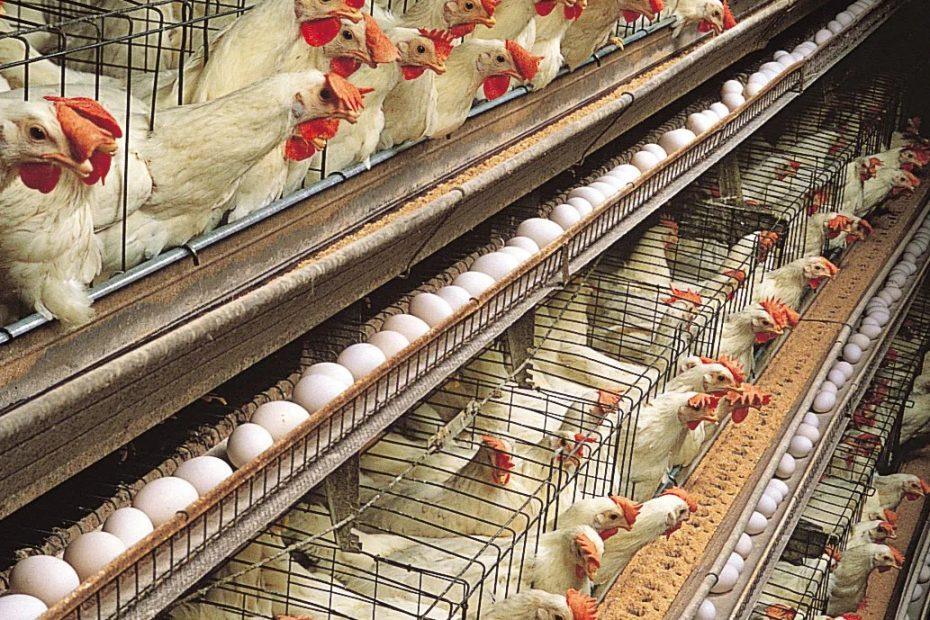
Poultry farming is one of the most accessible entry points into animal agriculture. It requires less land than cattle or pig farming, produces results faster, and delivers a product that almost everyone consumes. Whether you’re a smallholder looking for additional income or a commercial operator planning a large-scale operation, understanding the basics of poultry farming is the right place to start.
Poultry generally refers to domesticated birds kept mainly as food for people. This includes domestic fowl (chickens), ducks, turkeys, guinea fowl, pheasants, quails, ostriches, pigeons, and doves.
Chickens dominate commercial production globally, but interest in other species like quails and guinea fowl is growing as farmers look for niches in the market.
The advantages of keeping poultry are practical and well-documented. Their small body size makes them easy to handle and house compared to larger livestock.
The cost of production is lower per kilogram of output. Poultry meat and eggs are high in quality protein and are consumed across virtually all cultures and religions without the taboo restrictions that affect pork and beef in some markets.
Feed efficiency in modern poultry breeds is excellent. A broiler converts feed to meat more efficiently than almost any other farm animal.
Generation intervals are short, meaning you can go from day-old chick to a productive flock in a matter of weeks or months. And the by-products, manure for fertilizer and feathers for other uses, add value beyond the primary product.
But poultry farming also comes with real challenges. Feed competition with humans is a genuine concern, particularly when grain prices rise and the same maize or soya that feeds people also feeds chickens. Housing requirements add to startup costs.
Diseases spread quickly in confined flocks, and without a solid vaccination and biosecurity program, losses can be devastating. Parasites, both internal and external, require regular management. And many new farmers underestimate how much knowledge is required to formulate proper nutrition for different classes of birds at different stages.
Improving poultry production means addressing these challenges systematically. Better diets, sound management practices, and consistent vaccination programs make the biggest difference. None of these require advanced technology or large budgets. They require knowledge, consistency, and attention to detail.
Chickens are divided into breeds and varieties through centuries of natural and selective breeding. Today, many are commercially exploited for specific production goals.
The three main production categories are egg type, meat type, and dual purpose. Understanding what each category means helps you choose the right bird for your operation and your market.
This guide covers what poultry farming involves, the three main production types, the key breeds within each type, and the practical considerations that apply when choosing birds for a tropical farming environment. Use this information as a foundation for making decisions that match your resources and goals.
1. Egg Type Breeds
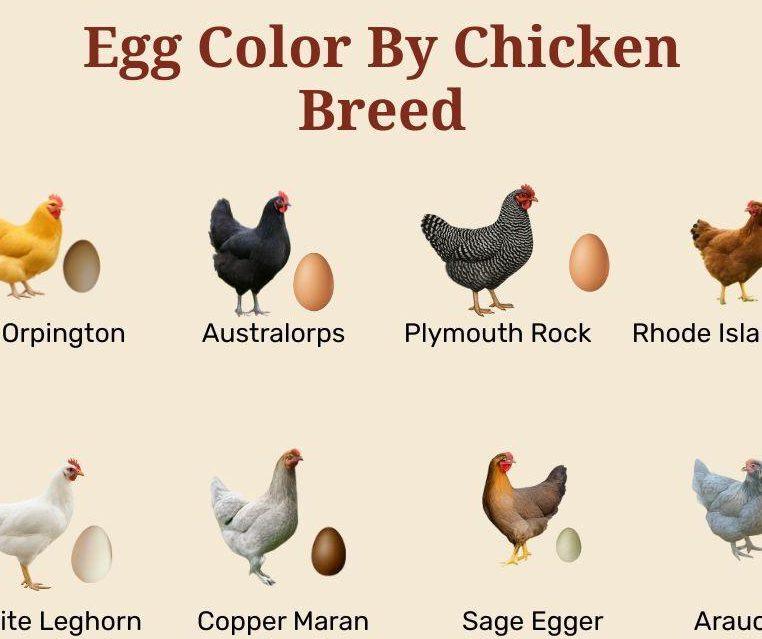
Egg type breeds are developed specifically for egg production. They carry specific characteristics that make them efficient layers but less useful for meat production.
These birds have small body size and slow growth rates. They put most of their nutritional energy into producing eggs rather than building muscle mass. This makes them poor meat birds but excellent layers. Their feed-to-egg conversion is better than dual-purpose breeds, meaning you get more eggs per kilogram of feed consumed.
In commercial settings, egg-type breeds dominate the layer industry because of their production efficiency. A high-performing white leghorn, for example, can produce over 300 eggs in a year. This level of production from a small-bodied bird represents excellent feed efficiency.
Common egg type breeds:
i. White Leghorn: The most widely used commercial layer breed globally. White feathers, small body, and exceptional productivity with over 300 white shell eggs per year.
ii. Brown Leghorn: Similar in type to the white leghorn but lays brown shell eggs. Not as productive as the white leghorn.
iii. Rhode Island Red: An American breed with red feathers and some black feathers on the wing. Lays large brown eggs and performs well in both intensive and semi-intensive systems.
iv. Harco: A heavy American breed commonly used to develop modern commercial breeders. Known for reliable egg-laying performance.
v. Ancona: Mediterranean origin breed, early maturing at 150-160 days, producing 240-250 white shell eggs per year.
2. Meat Type Breeds
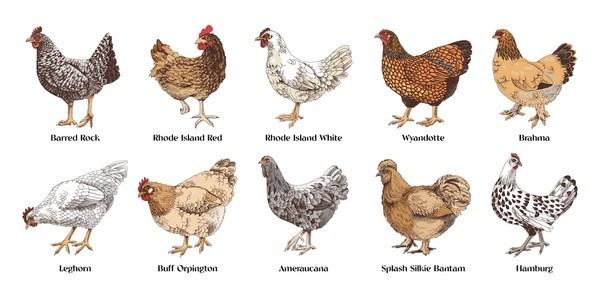
Meat type breeds are developed for rapid growth and large body size. Everything about their genetics is oriented toward converting feed into muscle quickly.
These birds have large body size, are classified as heavy breeds, and grow faster than laying breeds. Their muscle-to-bone ratio is higher. They reach slaughter weight in a shorter time, which reduces the total feed cost per kilogram of meat produced.
Modern commercial broiler production uses hybrids from specific meat-type breeds crossed to produce birds that grow even faster than the parent breeds. The examples below represent the foundational breeds behind most modern broiler genetics.
Common meat type breeds:
i. Light Sussex: An important English breed that grows rapidly and has good fleshing properties. Works well as a broiler but performs poorly as a layer. One of the foundational breeds in British poultry history.
ii. White Sussex: Related to the Light Sussex, with similar meat production characteristics and good body development.
iii. White Wyandotte: Heavy American breed with broad, deep body shape suited to meat production.
iv. Plymouth Rock: Heavy dual-use breed with good meat qualities and moderate laying ability.
v. Anak: Commercial broiler breed used widely in tropical regions for fast meat production.
3. Dual Purpose Breeds

Dual purpose breeds produce both meat and eggs but are not the best at either. The cocks are typically used for meat production and the hens for eggs and occasional meat.
In today’s commercial reality, particularly in developed countries, dual purpose breeds are regarded as inefficient. They don’t produce eggs as consistently as dedicated laying breeds, and they don’t grow as fast as dedicated meat breeds. But they still have real value in certain contexts.
For small-scale and subsistence farmers in developing regions, dual purpose breeds make more sense. You get useful eggs from the hens and reasonable meat from the cocks without needing to maintain two separate flocks for two separate purposes. The birds are also often more adaptable to less controlled environments.
One distinct quality of dual purpose birds is flavor. Because they’re considerably older when slaughtered than commercial broilers, they develop more complex flavor in their meat. This is why traditional breeds command premium prices in some niche markets that value flavor over tenderness or fast growth.
Common dual purpose breeds:
i. Rhode Island Red: Performs as both a layer and a reasonable meat bird. Popular in backyard and small-scale settings for this reason.
ii. Light Sussex: Appears in both the meat type and dual purpose categories because it performs adequately on both fronts, though it excels more at meat production.
iii. Plymouth Rock: Heavy enough for meat and productive enough for moderate egg laying, making it a true dual purpose option.
iv. New Hampshire: American breed developed from the Rhode Island Red with good body size and moderate laying ability.
Read Also: Facilities Required for Brooding and Rearing of Poultry Chickens
4. Different Breeds of Chickens
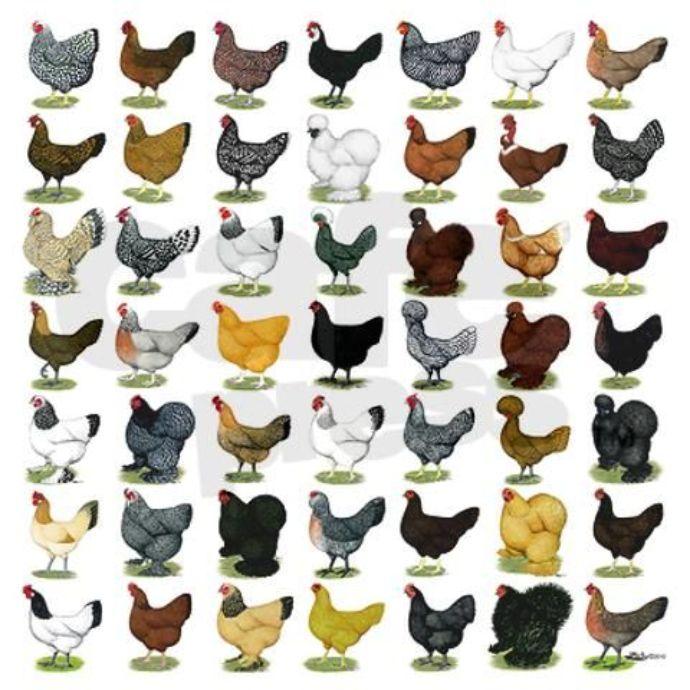
Beyond the three production categories, chickens can also be grouped by their origin and genetic makeup into exotic standard breeds, local breeds, and hybrids.
A. Exotic Standard Breeds
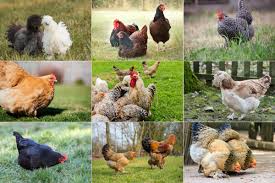
These are established breeds with documented histories and breed standards. Each has specific physical characteristics, performance levels, and behavioral traits that have been selected over generations.
i. Rhode Island Red: Originates from America. The feather is red with some black feathers on parts of the wing. Has yellow skin and lays large brown eggs. Used in both egg and dual purpose production.
ii. White Leghorn: White feathers, small body size, and the highest egg production of any standard breed. Lays over 300 white shell eggs per year. The foundation of the commercial egg industry worldwide.
iii. Brown Leghorn: Produces brown shell eggs. Similar in type to the white leghorn but less productive. Suits markets that prefer brown eggs.
iv. Light Sussex: Important English breed, grows rapidly, large body with good fleshing properties. Better suited as a broiler than a layer.
v. Barred Plymouth Rock: Feather color is grayish black with white underneath. The sides are black with prominent white streaks. Heavy breed used for dual purpose. Lays brown eggs.
vi. Harco: Heavy American breed, commonly used to develop modern commercial breeders. Reliable egg-laying performance.
vii. Ancona: Mediterranean origin. Early maturing at 150-160 days. Produces 240-250 white shell eggs per year.
viii. Andalusian: Mediterranean origin, similar production profile to Ancona. Early maturing with good white egg production.
ix. Spanish White: Mediterranean origin. Early maturing breed with white egg production similar to Ancona and Andalusian.
B. Local Breeds
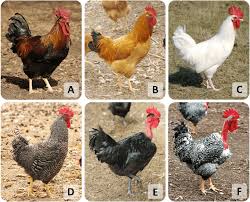
i. West African local breeds: These breeds are native to the West African sub-region. They are generally small with tough flesh. They are poor layers but good brooders. Feather color varies widely from white to black, including multi-color mixtures. Despite lower production compared to exotic breeds, they are hardy, disease-resistant, and adapted to local conditions. They thrive in extensive and backyard systems where exotic breeds would struggle.
C. Hybrids
i. Commercial hybrids: These are the birds most commonly seen on commercial farms today. They are produced by crossing two or more parent lines that have been selectively bred for specific traits. The result is a bird that often outperforms both parent lines in production, a phenomenon called hybrid vigor. Commercial hybrids are generally high yielding in both meat and egg production.
They are fast replacing most standard breeds in commercial settings. Examples include the Arbor Acres, Ross, and Cobb broiler hybrids and ISA Brown, Lohmann, and Hy-Line laying hybrids. These birds are optimized for intensive production systems with controlled nutrition and health management.
Improving Poultry Production
Getting the most from your flock requires attention to three key areas regardless of which breed or system you choose.
i. Improved bird diet: Feed quality and formulation directly affect growth rates, egg production, and bird health. Match the diet to the bird’s age, production stage, and genetic potential. Avoid overfilling troughs and keep tube feeders properly adjusted to prevent feed wastage, which can reach 20% in poorly managed systems. Feed wastage turns profitable operations into losing ones.
ii. Sound management practices: Day-to-day management including stocking density, ventilation, water access, litter management, and record keeping determines whether your birds reach their genetic potential. Good management can’t be replaced by good genetics. Both are needed.
iii. Vaccination programs: Disease prevention through vaccination is cheaper and more reliable than treatment after an outbreak. Work with a veterinarian or animal health extension officer to develop a vaccination schedule appropriate for your region and production system. Newcastle disease, Marek’s disease, infectious bursal disease, and other common poultry diseases can be controlled with proper vaccination.
Poultry has proved to be a particularly versatile domestic bird that adapts to almost all environments and production systems. This flexibility makes it an open choice for farmers at every level, from backyard producers with 20 birds to commercial operators with 20,000. The choice of which system and breed to use comes down to your capital, skills, and the needs of your market.
Read Also: Important Considerations in Rearing Poultry Chickens
Summary on Introduction to Poultry Farming
| Aspect | Key Points |
|---|---|
| Poultry Definition | Domesticated birds kept for food including chickens, ducks, turkeys, guinea fowl, quail |
| Advantages | Small size, low production cost, high protein quality, feed efficiency, no food taboos |
| Challenges | Feed competition with humans, housing costs, disease, parasites, nutrition knowledge |
| Egg Type Breeds | Small body, slow growth, high egg production; examples include White Leghorn, Harco, Ancona |
| Meat Type Breeds | Large body, fast growth, high muscle yield; examples include Light Sussex, Wyandotte, Anak |
| Dual Purpose Breeds | Moderate egg and meat production; examples include Rhode Island Red, Plymouth Rock |
| Dual Purpose Limitation | Regarded as inefficient in developed countries; suits small-scale and subsistence farming |
| Local Breeds | Small, tough flesh, poor layers, good brooders, hardy and disease-resistant |
| Hybrids | High-yielding crosses replacing standard breeds in commercial production |
| Rhode Island Red | American origin, red feathers, brown eggs, dual purpose |
| White Leghorn | 300+ white eggs per year, small body, world’s top commercial layer |
| Light Sussex | English origin, fast growth, good flesh, better for meat than eggs |
| Plymouth Rock | Grayish black barred feathers, heavy breed, dual purpose, brown eggs |
| Mediterranean Breeds | Ancona, Andalusian, Spanish White; early maturing, 240-250 white eggs per year |
| Production Improvement | Better diets, sound management, consistent vaccination programs |
Frequently Asked Questions About Introduction to Poultry Farming
1. What types of birds are classified as poultry?
Poultry includes any domesticated bird kept primarily as food for humans. Chickens are the most common, but ducks, turkeys, guinea fowl, pheasants, quails, ostriches, pigeons, and doves all fall under the poultry category. Commercial poultry production globally is dominated by chickens for both eggs and meat. Ducks are the second most farmed poultry species in many parts of Asia and Africa. Quails are gaining popularity as a small-scale alternative because they mature quickly and produce eggs efficiently relative to their size.
2. Why is poultry farming considered more accessible than other livestock farming?
Several factors make poultry farming easier to start than cattle, pig, or goat farming. The initial investment per bird is much lower. Birds take up far less space per unit of output. They reach productive age quickly, weeks to months rather than years. Feed costs per kilogram of output are lower because poultry converts feed to protein efficiently. And because poultry products face fewer religious or cultural taboos globally than beef or pork, the market is broader and more stable.
3. What’s the difference between egg type and dual purpose breeds?
Egg type breeds are optimized purely for egg production. They have small bodies, produce a large number of eggs annually, and are poor meat birds. Dual purpose breeds are capable of both egg and meat production but excel at neither. They produce fewer eggs than dedicated layers and grow more slowly than dedicated meat breeds. For commercial production where efficiency determines profit, specialized breeds dominate. For backyard and smallholder systems where versatility matters more, dual purpose breeds offer practical value.
4. Why are White Leghorns the most widely used commercial layer breed?
White Leghorns produce more eggs per year than almost any other breed, consistently exceeding 300 eggs annually in good management conditions. Their small body size means they consume less feed per egg produced. This feed efficiency makes them the most economical layer breed for commercial operations focused purely on egg production. The white eggshell they produce is the commercial standard in many markets. Modern commercial laying hybrids are largely based on Leghorn genetics crossed with other breeds to combine high production with better adaptability.
5. What is hybrid vigor and why does it matter in poultry?
Hybrid vigor, also called heterosis, refers to the performance advantage that offspring from two different genetic lines often show over either parent line. When two specialized parent breeds are crossed, the offspring frequently grow faster, lay more eggs, or show better disease resistance than either parent alone. Commercial broiler and layer hybrids exploit this principle deliberately. Parent flocks from separate genetic lines are maintained and crossed to produce commercial birds that consistently outperform standard breeds. This is why commercial hybrids have largely replaced standard breeds in intensive production systems.
6. Are local breeds worth keeping for commercial production?
Local breeds are not competitive with exotic breeds or hybrids for commercial intensive production. Their egg production and growth rates are simply too low. But they have real advantages in other contexts. They are hardy and adapted to local disease pressures. They thrive in extensive and backyard systems without the carefully controlled nutrition and health management that exotic breeds need. They also command premium prices in local markets that prefer traditional chicken meat for its flavor and texture. For farmers without the resources to manage exotic breeds properly, local breeds are often the more practical choice.
7. What are the main diseases that new poultry farmers should vaccinate against?
Newcastle disease is the most critical. It spreads rapidly, kills quickly, and can wipe out an entire flock. All chickens should be vaccinated against it from an early age. Marek’s disease is a herpesvirus that causes tumors and paralysis, typically vaccinated at hatch. Infectious bursal disease (Gumboro) damages the immune system in young birds and must be controlled through vaccination. Infectious bronchitis affects the respiratory system and egg production. Fowl pox spreads through mosquitoes and causes lesions. Your specific vaccination schedule should be developed with local veterinary guidance because disease pressure varies by region.
8. How do I choose between egg type, meat type, and dual purpose breeds?
Start with your market. If your main market is eggs and you can find reliable buyers at good prices, invest in a high-producing layer breed. If your market is live birds or processed chicken meat, go with broiler hybrids or meat-type breeds. If you’re a smallholder who wants flexibility and doesn’t have a dedicated market for either product, dual purpose breeds give you options. Also consider your management capacity. High-producing layers and fast-growing broilers need more precise nutrition and health management than dual purpose or local breeds.
9. What are the main feed-related challenges in poultry farming?
The cost and availability of protein ingredients is the biggest challenge. Soybean meal and fish meal, the main protein sources in poultry feed, fluctuate in price and availability. Maize, the main energy source, competes with human food demand. Formulating a balanced diet requires knowledge of ingredient nutritional values and bird requirements at each production stage. Many small farmers under-feed or feed imbalanced diets and then attribute poor performance to disease when nutrition is the real cause. Feed wastage is another major issue. Poor trough design and management can waste 10-20% of feed, which directly reduces profitability.
10. Can poultry farming be profitable for a small-scale farmer?
Yes, but profit margins are thin and require careful management. Feed represents 60-70% of production costs, so any inefficiency in feed management directly hits your bottom line. Disease losses can be financially devastating without a solid prevention program. Market access matters too. A farmer producing eggs or meat without a reliable buyer faces price volatility that can eliminate profit. The most successful small-scale poultry farmers have reliable feed sources at reasonable prices, a consistent disease prevention program, and an established market for their product. Without all three, profitability is inconsistent.
Do you have any questions, suggestions, or contributions? If so, please feel free to use the comment box below to share your thoughts. We also encourage you to kindly share this information with others who might benefit from it. Since we can’t reach everyone at once, we truly appreciate your help in spreading the word. Thank you very much for your support and for sharing!
Read Also: Unearthing the Impact of Landfills on Our Environment