


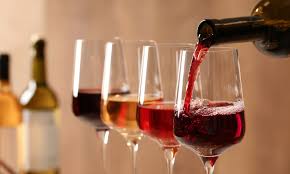
There are hundreds of wine types in the world, each with its own flavours and styles. Most people know about the popular varieties of wine Chardonnay, Cabernet, and Merlot.
Characteristics of Red Wines
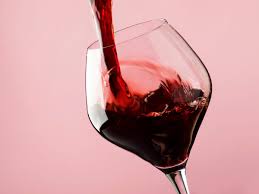
Red wine is red. Its colour can be derived from a vast assortment of grape varietals ranging from grapes that are reddish, deep purple, and even a beautiful blue on the colour scale. These grapes give rise to a wine that is colour classified with such descriptors as garnet, almost black, dark red, light red, ruby red, opaque purple, deep violet, maroon, and the list goes on.
The grape skins are responsible for the red wine’s distinct colour spectrum. The skins are in contact with the grape’s juice during the fermentation process, allowing the dispersion of both colour and tannins.
The individual wine’s particular red hue depends on the grape type used in the process and the length of time the skin’s pigmentation is in contact with juice. There are about 50 red wine varietals that consistently manifest themselves in today’s world wine market.
Wine producers worldwide are constantly developing reds that are smoother, more rounded, and juicier.
Styles of Red Wine
As with all wines, the particular winemaker will have adequate “say” in the style of wine produced. Red wines are often classified by “body-type.” This has to do with mouth-feel and tannin structure. There are:
1. Light-bodied
2. Medium-bodied
3. Full-bodied
A light-bodied wine will have fewer tannins present and less presence on the palate. These wines tend to be less demanding partners with flavour-filled foods. An example of a light-bodied red wine would be one derived from the Gamay grape varietal, such as France’s famed young red wine: Beaujolais Nouveau. In general, light-bodied wines tend to “feel” more like water in the mouth.
A medium-bodied red wine will contain more tannins than light-bodied wine. Typical examples of medium-bodied red wines include Merlot, Shiraz, or Chianti.
Full-bodied red wines boast the highest tannin (and often alcohol) content.
Prime examples of full-bodied reds are France’s esteemed Bordeaux wines, California’s key Cabs, and Italy’s sizzling Super Tuscans. Full-bodied wines feel heavier and more like milk. This effect is due in large part to the higher tannin (and alcohol) content.
Characteristics of White Wines
White wine is not white at all, but yellow, golden, or straw-like in colour. Its colour can be derived from an assortment of grape varietals. White wines are made from the grape juice and grape skin of green, gold, or yellowish coloured grapes or from just the juice (not the skin) of select red grapes. They are more refreshing, lighter in both style and taste than the majority of their red wine counterparts. White wine styles vary from bone dry to golden sweet.
Read Also: Health Benefits and Uses of Lobster
Types of Sparkling and Still Wines

1. Sparkling Wines
Sparkling wine is a wine with significant levels of carbon dioxide in it, making it fizzy. The carbon dioxide may result from natural fermentation, either in a bottle, in a large tank designed to withstand the pressures involved, or as a result of carbon dioxide injection.
Sparkling wine is usually white or rosé; however, there are many examples of red sparkling wines such as Italian Brachetto and Australian sparkling Shiraz.
The sweetness of sparkling wine can range from very dry “brut” styles to sweeter “doux” varieties.
The classic example of a sparkling wine is Champagne; however, this wine is exclusively produced in the Champagne region of France.
Other sparkling wines are produced in other countries and regions, such as Espumante in Portugal, Cava in Spain, Franciacorta, Trento, Oltrepò Pavese Metodo Classico, and Asti in Italy (the generic Italian term for sparkling wine being Spumante) and Cap Classique in South Africa. Most countries reserve the word “Champagne” for a specific type from the Champagne region of France.
The French terms Mousseux or Crémant are used to refer to sparkling wine not made in the Champagne region. German and Austrian sparkling wines are called Sekt. The United States is a significant producer of sparkling wine with producers in numerous states. Recently, the United Kingdom, which produced some of the earliest examples of sparkling wine, has started producing sparkling wines again.
2. Categories of Sparkling Wines
Sparkling wines and Champagnes are categorised as:
1. Extra brut
2. Brut
3. Extra dry
4. Sec
5. Demi-sec
This categorisation depends on their sugar levels. These classifications can be somewhat confusing, but in wine terms, “dry” is the opposite of “sweet.”
1. Extra brut – is “extra” dry
2. Brut – dry (most popular style and very food-friendly)
3. Sec – medium dry
4. Demi-sec – pretty sweet (pair with fruit and dessert)
Champagne and sparkling wines are also categorised as “vintage” or “non-vintage” (NV on the label), meaning they either come from a single year or are a blend of several different years. The “vintage” Champagnes are typically pricier, as the non-vintage Champagne and sparkling wines make up the majority of the market.
3. Semi-Sparkling Wines
Semi-sparkling wines are defined as those with between 1 and 2.5 atmospheres of pressure. These wines have less carbon dioxide than regular sparkling wine. Their bubbles develop during second fermentation in tanks. This fermentation is interrupted before the wines are fully sparkling. They are produced in many countries.
4. Still Wines
Still wines are wines that have not gone through the sparkling wine methods and have no effervescence. This is the largest category of wine. Their alcoholic content may be between 8 per cent and 15 per cent by volume. They can be red, white, or rosé.
Production of Organic Wines
These are wines made from grapes grown without the aid of artificial insecticides, pesticides, or fertilizers. They are also known as ‘green’ or ‘environmentally friendly’ wines. The wine itself will not be adulterated in any way, save for minimal amounts of the traditional preservatives, sulphur dioxide, which is controlled at source.
Read Also: Health Benefits and Uses of Oysters
Characteristics of Dessert and Fortified Wines
A. Dessert Wines
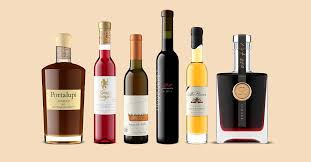
A dessert wine is one that is potent, sweet, and full of flavour. Because of their sweet flavour, the wine complements a dessert. Often, extra spirits are added to raise the alcohol content. In general, dessert wines are thicker, richer, and sweeter than table wines.
The grapes are picked late in the harvest to preserve residual sugars.
They come in small bottles and are served in tiny glasses. An average pour is 2 ounces. Therefore, dessert wines are sold in the smaller 375ml bottles (as well as in larger bottles).
Like dinner wines, white dessert wines are generally served chilled. Red dessert wines are served at room temperature or slightly chilled. Dessert wines are especially good with fresh bakery sweets and fruits. It is best to save heavier tastes for winter, lighter tastes for summer.
These wines contain flavours like peach, almond, oak, and herbs, which allow them to show off their flavour and add a tang to even the lightest dessert. Adding them to a sweet cream or paste dessert always creates a wonderful combination.
Examples include fortified wines like port and sherry, and late harvest wines, which originated from grapes that have shriveled a bit, concentrating their sweetness. As a rule of thumb, a dessert wine should always be sweeter than the dessert it accompanies.
Some of the world’s greatest fortified wines include Madeira, vermouth, Marsala, sherry, cream sherry, and port.
B. Types of Dessert Wines
1. Late Harvest: In Sauternes, late harvest allows the sugars to condense in the grapes, and then a noble rot forms on the grapes. It sounds disgusting, but it makes some of the best wines in the world.
2. Ice Wines: The grapes used for these wines freeze at the end of harvest. They yield only a small amount of sugary juice because of this when pressed. The water is frozen. They are grown in cold regions like Canada and Germany.
3. Fortified Wines: Fortified wines are wines that have been strengthened by the addition of alcohol, usually a grape spirit. Their fermentation process is stopped by this addition of a spirit, such as brandy, or additional spirit added after fermentation.
They are often sweeter and generally more alcoholic wines. Fortified wines are known in Europe as liqueur wines or vin de liqueur. Their alcoholic strength may be from 15 per cent to 22 per cent. Examples include Port, Madeira, and Sherry.
Alcohol-Free, De-Alcoholised, and Low-Alcohol Wines
These wines are made in the normal way, and the alcohol is removed by either hot-treatment distillation or cold filtration process/reverse osmosis. The hot-distillation process removes not only the alcohol content but also most of the flavour.
The cold-filtration process removes the alcohol by mechanically separating or filtering out the molecules of alcohol through membranes made of cellulose or acetate. At a later stage, water is added in an attempt to preserve much of the flavour of the original wine.
1. The alcohol-free wine has a maximum of 0.05 per cent alcohol.
2. De-alcoholised wine contains a maximum of 0.50 per cent alcohol, while low-alcohol wine contains a maximum of 1.2 per cent alcohol.
Aromatised/Aromatic Wines
These are wines fortified and flavoured with herbs, roots, flowers, and barks. They may be sweet or dry. Aromatic wines are also known as aperitifs. They are generally consumed before meals as digestive stimulants. Examples include:
1. Vermouths
2. Chamberyzette
3. Dubonnet
4. St. Raphael
Characteristics of Table Wines
These wines have an alcohol content that is less than 14 per cent in the United States. In Europe, light wine must be within 8.5 per cent and 14 per cent alcohol by volume. Thus, unless a wine has more than 14 per cent alcohol, or it has bubbles, it is a table wine or a light wine.
Table wines are usually classified as white, red, or rosé, depending on their colour. In Europe, vins de table (in French), vino da tavola (in Italian), Tafelwein (in German), or vino de mesa (in Spanish), which translate to ‘table wine’ in English, are cheaper wines that often on the label do not include the information on the grape variety used or the region of origin.
Use of Cooking Wines
This usually refers to inexpensive grape wine or rice wine (in Chinese and other East Asian cuisine). It is intended for use as an ingredient in food rather than as a beverage. Cooking wine typically available in North America is treated with salt as a preservative and food colouring. In other countries, good quality sherry wine is used for cooking, providing nice flavour to the dish and a tasty sauce.
When a usual wine bottle is opened and the wine is exposed to oxygen, a fermentative process will transform the alcohol into acetic acid, resulting in wine vinegar. This does not happen in fortified wines, as they are already fermented.
The salt in cooking wine inhibits the growth of the microorganisms that produce acetic acid. This will preserve a bottle of cooking wine, which may be opened and used occasionally over a long period.
Cooking wines are convenient for cooks who use wine as an ingredient for cooking on rare occasions. However, they are not widely used by professional chefs, as they believe the added preservative significantly lowers the quality of the wine and subsequently the food made with that wine.
Most professional chefs prefer to use inexpensive but drinkable wine for cooking, and this recommendation is given in many professional cooking textbooks as well as general cookbooks. Many chefs believe there is no excuse for using a low-quality cooking wine for cooking when there are quality drinkable wines available at very low prices.
Cooking wine is considered a wine of such poor quality that it is unpalatable by itself and intended for use only in cooking. There is a school of thought that advises against cooking with any wine one would find unacceptable to drink.
Methods of Wine Listing
Wines are normally listed in three main ways, these are:
1. By place of origin
2. By type
3. By grape
1. Listing by Place of Origin
This is a traditional approach. Here, the wines are presented based on their country or region of origin. This can further be broken down such that within the country or region, the wines are presented area by area. Example of this listing is:
1. Champagne and Sparkling
a. France
b. Spain
c. South Africa
d. Germany
e. Italy
f. England
g. Australia
h. Portugal
It is usual to list white wines first, followed by rosé wines, and then the red wines.
2. Listing by Type
This is a modern approach, which lists wines by type. For example:
1. Sparkling wines
2. White wines
3. Rosé wines
4. Red wines
5. Dessert wines
Within this grouping, the wines can further be presented by country, region, or style. If the presentation will be by type and style, the list could appear thus:
1. White wines
a. Grapy whites
b. Grassy-fruity whites
c. Richer whites
2. Red wines
a. Fruity reds
b. Claret style reds
c. Herby-spicy reds
It is better to list the wines from the lighter to the fuller wines.
3. Listing by Grape
In this type of listing, the grapes are usually listed in alphabetical order. Under each heading, the wines made from that grape are listed. Examples of the grapes are:
1. White grapes
a. Chardonnay
b. Chenin Blanc
c. Pinot Blanc
d. Riesling
2. Red grapes
a. Cabernet Sauvignon
b. Pinot Noir
c. Sangiovese
d. Zinfandel
Frequently Asked Questions
1. What are the main categories of red wine based on body type?
Red wines are classified into three body types: light-bodied (e.g., Beaujolais Nouveau), medium-bodied (e.g., Merlot, Shiraz, Chianti), and full-bodied (e.g., Bordeaux, California Cabs, Super Tuscans), based on mouth-feel and tannin structure.
2. How is the colour of red wine achieved?
The red colour of wine is derived from grape skins of reddish, deep purple, or blue varietals, which are in contact with the grape juice during fermentation, dispersing colour and tannins.
3. What distinguishes white wines from red wines?
White wines, yellow or golden in colour, are made from green, gold, or yellowish grapes or just the juice of select red grapes, offering a lighter, more refreshing style compared to most red wines.
4. What makes sparkling wine fizzy?
Sparkling wine contains significant levels of carbon dioxide, resulting from natural fermentation in a bottle or tank, or from carbon dioxide injection, creating its fizzy character.
5. How are sparkling wines categorized by sweetness?
Sparkling wines are categorized by sugar levels as extra brut (extra dry), brut (dry), sec (medium dry), and demi-sec (pretty sweet), with brut being the most popular and food-friendly.
6. What defines organic wines?
Organic wines are made from grapes grown without artificial insecticides, pesticides, or fertilizers, using minimal traditional preservatives like sulphur dioxide, and are known as ‘green’ or ‘environmentally friendly’ wines.
7. What are the characteristics of dessert wines?
Dessert wines are potent, sweet, and full of flavour, often fortified with extra spirits, served in small 2-ounce pours, and are sweeter than the desserts they accompany, with flavours like peach, almond, oak, and herbs.
8. How are wines listed in modern wine listings?
Wines are listed in three main ways: by place of origin (country or region), by type (sparkling, white, rosé, red, dessert), or by grape varietal (e.g., Chardonnay, Cabernet Sauvignon) in alphabetical order.
Do you have any questions, suggestions, or contributions? If so, please feel free to use the comment box below to share your thoughts. We also encourage you to kindly share this information with others who might benefit from it. Since we can’t reach everyone at once, we truly appreciate your help in spreading the word. Thank you so much for your support and for sharing!