



Chemical food preservatives are substances that, under certain conditions, delay the growth of microorganisms without necessarily destroying them or prevent deterioration of quality during manufacture and distribution.
This article explores chemical preservatives, including antibrowning agents, emulsifiers, sequestering agents, and buffering agents, and their roles in agricultural food processing.
Managing Undesirable Browning in Agricultural Products
Many plant foods undergo degradative reactions during handling, processing, or storage, collectively described as browning reactions, resulting in the formation of brown, black, gray, or red colored pigments. These reactions are grouped into two categories: enzymatic browning and nonenzymatic browning. Examples of enzymatic browning include the discoloration of cut apples or potatoes, while nonenzymatic browning is observed in shelf-stable, pasteurized juices and dehydrated vegetables.
Controlling Enzymatic Browning in Fresh Produce
Enzymatic browning results from the oxidation of polyphenols to quinones, catalyzed by the enzyme polyphenol oxidase (E.C. 1.14.18.1 and E.C. 1.10.3.1; also known as PPO, tyrosinase, o-diphenol oxidase, and catechol oxidase), followed by further reaction and polymerization of the quinones. This discoloration primarily affects raw fruit and vegetable products rather than blanched or thermally processed products, where enzymes are inactivated.
Enzymatic browning in raw commodities may occur due to physiological injury, senescence, pre- or postharvest bruising, disruption of fruit or vegetable flesh by peeling, coring, slicing, or juicing, tissue disruption from freeze–thaw cycling, or bacterial growth.
This issue limits the shelf-life of fresh-cut fruits, salad vegetables, fresh mushrooms, prepeeled potatoes, yams, unripe plantains, and other commercially significant fresh products. Enzymatic browning has hindered the development and commercialization of fresh-cut fruits such as sliced apples.
It also affects some dehydrated and frozen fruits and vegetables. Additionally, enzymatic browning reactions can lead to a loss of ascorbic acid (vitamin C) through reactions with quinones.
Control measures include blanching where applicable, acidification, and application of sulfites (now subject to regulatory constraints for certain commodities) or sulfite substitutes such as ascorbic acid or cysteine, which are generally less effective.
1. Preventing Nonenzymatic Browning in Processed Foods
Nonenzymatic browning reactions may result from the classic Maillard reaction between carbonyl and free amino groups, such as reducing sugars and amino acids, producing melanoidin pigments in dairy, cereal, fruit, and vegetable products.
These discolorations typically occur in products subjected to heat or prolonged storage. Nonenzymatic browning can be minimized by avoiding excessive heat exposure, controlling moisture content in dehydrated products, and applying sulfites.
2. Using Sulfites as Browning Inhibitors in Agriculture
Sulfites are unique in their ability to control both enzymatic and nonenzymatic browning, suppress microbial growth, and act as bleaching agents. They have been used since antiquity for these purposes. For enzymatic browning, sulfites act as polyphenol oxidase inhibitors and react with intermediates to prevent pigment formation.
For nonenzymatic browning, sulfites react with carbonyl intermediates, blocking pigment formation. Sulfites may be applied as sulfur dioxide, sulfurous acid, or sodium (or potassium) sulfite, bisulfite, or metabisulfite. Treatment levels vary, but residues typically do not exceed several hundred ppm, although some products may contain up to 1000 ppm.
Products treated with sulfites include dehydrated fruits and vegetables, prepeeled potatoes, fresh grapes, and wine. Maximum levels of 300, 500, and 2000 ppm have been proposed for fruit juices, dehydrated potatoes, and dried fruit, respectively (FDA, 1988b).
3. Safety and Regulatory Considerations for Sulfites
Sulfite residues in foods have caused severe allergic reactions in susceptible individuals, particularly asthmatics, with fatal anaphylactic reactions reported.
The FDA has restricted sulfite use in certain food categories, such as raw fruit and vegetable products sold unlabeled in salad bars, restaurants, or bulk containers, where consumers cannot be alerted to their presence. The FDA established labeling requirements for foods containing sulfites and affirmed the GRAS status of sulfiting agents in 1988.
Read Also: How To Start A Piggery Project
4. Alternatives to Sulfites in Agricultural Food Preservation

i. Ascorbic Acid-Based Formulations
Ascorbic acid (vitamin C) has been used as an antibrowning agent for over five decades and remains the most widely used alternative to sulfites. Its efficacy stems from its ability to reduce quinones, produced by PPO-catalyzed oxidation of polyphenols, back to dihydroxy polyphenols.
As long as quinones do not accumulate, further reactions leading to pigment formation are prevented. However, when ascorbic acid is depleted, quinones accumulate, and browning occurs. Thus, ascorbic acid inhibits the enzymatic browning reaction but does not directly inhibit PPO.
ii. Cysteine
Cysteine, a key ingredient in browning inhibitor formulations for apples and prepeeled potatoes (e.g., supplied by EPL Technologies, Inc.), reacts with quinone intermediates to yield stable, colorless compounds, blocking pigment formation. Cysteine also directly inhibits the enzyme.
iii. 4-Hexylresorcinol
This PPO inhibitor is used commercially to control discoloration in unpeeled shrimp (Everfresh) and is highly effective for some fruits and vegetables.
Role of Emulsifiers in Agricultural Food Products
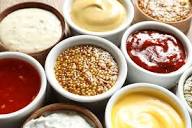
An emulsion is a heterogeneous system consisting of at least one immiscible liquid dispersed in another as droplets, typically exceeding 0.1 µm in diameter. These systems have minimal stability, which can be enhanced by additives such as surface-active agents or finely divided solids.
In an emulsion, liquid droplets and/or liquid crystals are dispersed in a liquid. Emulsifiers are added to increase product stability and achieve an acceptable shelf-life.
The function of an emulsifier is to combine oily and aqueous phases into a homogeneous and stable preparation. Emulsifiers contain a hydrophilic part and a lipophilic part. They are classified as anionic, cationic, amphoteric, or nonionic emulsifiers.
Emulsifier selection depends on final product characteristics, emulsion preparation methodology, the amount of emulsifier added, the chemical and physical characteristics of each phase, and the presence of other functional components.
Food emulsifiers serve multiple functions, primarily stabilizing emulsions by reducing surface tension at the oil–water interface, as seen in mayonnaise and margarine.
They also alter the functional properties of other food components, such as acting as crumb softeners or dough conditioners in bakery products, and modify fat crystallization, such as reducing bloom in certain candy products.
1. Categories of Food Emulsifiers in Agriculture
Food emulsifiers can be categorized (Table 1) based on origin (synthetic or natural), ionization potential (nonionic or ionic), hydrophilic/lipophilic balance (HLB), and the presence of functional groups.
i. Sorbitol or Sorbitan Esters
Sorbitol or sorbitan esters are formed from 1,4-anhydro-sorbitol and fatty acids, typically consisting of a mixture of stearic and palmitic acid esters of sorbitol and its mono- and dianhydrides (Fig. 1).
ii. Lactitol
Lactitol (the hydrogenation product of lactose) palmitate is synthesized by direct esterification at approximately 160°C.
iii. Sucrose Fatty Acid Esters
Sucrose fatty acid esters (Fig. 2) can be synthesized using various solvents or by direct esterification.
2. Applications of Emulsifiers in Agricultural Food Processing
Emulsifiers have diverse functional properties beyond stabilizing food emulsions. Table 2 lists functional properties compiled from various sources, including product brochures from emulsifier manufacturers.
i. Cereal-Based Agricultural Products
In bakery products, emulsifiers improve final product characteristics and facilitate processing. They function as dough conditioners, with some acting as crumb softeners. Emulsifiers form complexes with amylose that are difficult to dissociate and affect starch viscosity and gelatinization.
ii. Dairy-Based Agricultural Products
Ice cream, a frozen foam and emulsion, relies on protein and polar lipids (lecithin) in milk as surfactants. These are supplemented with additional emulsifiers to improve fat dispersion, facilitate fat–protein interactions, control fat agglomeration, enhance air incorporation, impart dryness to formed products, provide smoother texture through smaller ice crystals and air cells, increase resistance to shrinkage, reduce whipping time, and improve melt-down.
iii. Candy Products from Agricultural Sources
Emulsifiers eliminate “bloom,” the transition of fat crystals from alpha and beta′ configurations to the less desirable beta configuration, in candy products. They act as crystal structure modifiers in triglyceride mixtures and control viscosity in cream fillings and chocolates.
iv. Miscellaneous Applications
Emulsifiers are used in meat analog products and in formulating flavor emulsions.
3. Common Emulsifiers in Agricultural Food Production
i. Lecithin and Lecithin Derivatives
Lecithin, the primary naturally occurring emulsifier used in significant quantities, is derived from soybeans, with crude soybean oil containing 1–3% phospholipids. Other sources include corn, sunflower, cottonseed, rapeseed, and eggs.
ii. Mono- and Diglycerides
Mono- and diglycerides, the most commonly used food emulsifiers (Fig. 4), are esters synthesized via catalytic transesterification of glycerol with triglycerides, typically from hydrogenated soybean oil.
iii. Hydroxycarboxylic and Fatty Acid Esters
To produce emulsifiers with increased hydrophilic character relative to monoglycerides, small organic acids (acetic, citric, fumaric, lactic, succinic, tartaric) are esterified to monoglycerides (Fig. 5).
iv. Lactylate Fatty Acid Esters
Polymeric lactic acid esters of monoglycerides (Fig. 6), known as sodium or calcium stearoyl-2-lactylates, typically contain two lactic acid groups per molecule.
v. Polyglycerol Fatty Acid Esters
Polyglycerol esters of fatty acids (Fig. 7) are used primarily in baked goods, consisting of mixed partial esters synthesized from polymerized glycerol and edible fats.
vi. Polyethylene or Propylene Glycol Fatty Acid Esters
Fatty acids can be esterified directly to polyethylene glycol ethers (Fig. 8) or by enzymatic preparation for better reaction control.
vii. Ethoxylated Derivatives of Monoglycerides
Ethoxylated mono- and diglycerides are produced by reacting several moles of ethylene oxide with mono- or diglycerides under pressure. Ethoxylation results in a highly hydrophilic product, with polyoxyethylene monoglycerides containing up to 40 moles of ethylene oxide per mole of monoglyceride. The end product is a mixture with a distribution range and peak, leading to variability among manufacturers.
viii. Sorbitan Fatty Acid Esters
Polyoxyethylene sorbitan esters are synthesized by adding ethylene oxide to sorbitan fatty acid esters via polymerization. These nonionic hydrophilic emulsifiers (Fig. 9) are effective antistaling agents in bakery products.
ix. Miscellaneous Derivatives
Fatty acids can be esterified to compounds other than glycerol, such as sugar alcohols (sorbitol, mannitol, maltitol) and sugars (sucrose, glucose, fructose, lactose, maltose).
4. Toxicology and Global Regulations for Emulsifiers
International food standards are provided by the Codex Alimentarius (FAO/WHO) globally and EEC directives for member states. In the United States, the FDA regulates food additives. Recommendations for the Codex Alimentarius come from the Joint Expert FAO/WHO Committee on Food Additives (JEFCA), for the EEC from the Scientific Committee on Food (SCF), and in the United States from the FDA. Opinions from the SCF and JEFCA are provided to legislative bodies in Europe and worldwide.
Read Also: Positive and Negative Effects of Drinking Garri
Role of Sequestering and Buffering Agents in Food Preservation

Food products are susceptible to deterioration, discoloration, and rancidity due to reactions with trace metals like iron, nickel, and copper. Even at concentrations as low as 0.05 ppm, metal ions can cause rancidity, discoloration, and spoilage in texture, odor, or flavor.
Copper affects ascorbic acid, vitamin E, thiamine, and folic acid, while copper and iron can destroy vitamin A in fortified foods. Metal ions catalyze the oxidation of fats and oils, shortening the shelf life of processed foods.
1. Importance of Sequestering Agents
Sequestering agents are critical in the food processing industry as they prevent spoilage by surrounding metal ions, preventing their reaction with food.
They form a buffer between metal ions and food, inhibiting deterioration during processing and storage. Sequestering agents stabilize products, prevent deterioration in color and aroma, and enhance antioxidant efficacy, protecting ascorbic acid and fat-soluble vitamins.
They preserve natural flavor, color, texture, and nutrition, improve shelf life, and enhance product appeal. Beverages and liquid foods maintain clarity, and solid foods retain texture.
According to Health Canada, sequestering agents are substances that “combine with metallic elements in food, thereby preventing their participation in reactions leading to color or flavor deterioration.
For example, the addition of a sequestrant to canned lima beans prevents darkening by binding iron ions and other trace metals in the canning water, making them unavailable for other reactions.”
2. Definitions and Functions of Buffering Agents
“Sequestering agents” prevent the adverse effects of metals catalyzing oxidative breakdown by forming chelates, inhibiting decolorization, off-taste, and rancidity. “Buffering agents” counter acidic and alkaline changes during storage or processing, improving flavor and increasing food stability.
**3. Regulatory Restrictions on Sequestering and Buffering Agents
| S/NO. | Name of Sequestering and Buffering Agents | Group of Food | Maximum Level of Use (ppm) (mg/kg) |
|---|---|---|---|
| 1. | Acetic Acid | Acidulant, buffering, and neutralizing agents in beverages, soft drinks, canned baby foods | Limited by GMP, 5000 |
| 2. | Adipic Acid | Salt substitute and dietary food | 250 |
| 3. | Calcium Gluconate | Confections | 2,500 |
| 4. | Calcium Carbonate | Neutralizer in various foods | 10,000 |
| 5. | Calcium Oxide | Neutralizer in specified dairy products | 2,500 |
| 6. | Citric Acid, Malic Acid | Carbonated beverages and acidulant in miscellaneous foods | Limited by GMP |
| 7. | DL-Lactic Acid (food grade) | Acidulant in miscellaneous foods | Limited by GMP |
| 8. | (L+) Lactic Acid (food grade) | Acidulant in miscellaneous foods | Limited by GMP |
| 9. | Phosphoric Acid | Beverages, soft drinks | 600 |
| 10. | Polyphosphate | (a) Processed cheese, bread containing less than 6 phosphate moieties (b) Milk preparations (c) Cake mixes (d) Protein foods | 40,000 4,000 10,000 4,000 |
| 11. | (L+) Tartaric Acid | Acidulants | 600 |
| 12. | Calcium Disodium Ethylene Diamine Tetraacetate | Emulsions containing refined vegetable oils, eggs, vinegar, salt, sugar, spices; salad dressing; sandwich spread or fat spread | 50 |
| 13. | Fumaric Acid | Acidulant in miscellaneous foods | 3000 |
Note: DL-Lactic acid and L(+) Tartaric acid shall not be added to any food meant for children below 12 months. The lactic acid shall also conform to the specification laid down by the Nigerian Standards Institution.
Do you have any questions, suggestions, or contributions? If so, please feel free to use the comment box below to share your thoughts. We also encourage you to kindly share this information with others who might benefit from it. Since we can’t reach everyone at once, we truly appreciate your help in spreading the word. Thank you so much for your support and for sharing!