


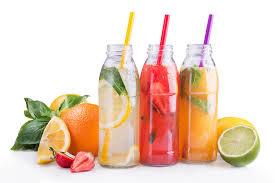
Beverages are potable drinks with thirst-quenching, refreshing, stimulating, and nourishing qualities. Refreshing refers to replenishing fluid loss from the body due to perspiration. Nourishment comes from nutrients in beverages, particularly fruit juices.
Most beverages supply energy via sugar or alcohol and provide nutrients like mineral salts and vitamins. For example, milk provides calcium, and citrus fruits offer vitamin C. This article explores the classes of beverages, beverage selection, and various preparation methods.
People generally drink for one or more of six reasons: to quench thirst, to get drunk, to enjoy a social setting (social drinking), to savor the beverage’s taste, to feed an addiction (alcoholism), or as part of a religious or traditional ceremony or custom (proposing a toast).
Classification of Beverages in Agriculture
A beverage is a liquid formulation specifically prepared for human consumption. The word “beverage” derives from the Latin word bever, meaning rest from work. After work, thirst arises due to fluid loss through perspiration, prompting one to drink water or other potable beverages to compensate for this loss.
Beverages can be broadly classified into two categories: Alcoholic Beverages and Non-Alcoholic Beverages.
Read Also: Introduction to Ruminant Animals Production
1. Alcoholic Beverages in Agricultural Production
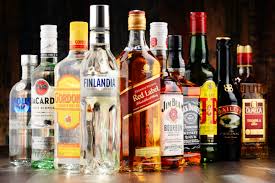
An alcoholic beverage contains ethanol, commonly known as alcohol, a psychoactive drug with a depressant effect. Significant blood alcohol content may constitute legal drunkenness, reducing attention and slowing reaction speed.
Alcohol has been consumed globally since prehistoric times as part of the standard diet, for hygienic or medical reasons, for relaxant and euphoric effects, for recreation, for artistic inspiration, as an aphrodisiac, or for other reasons.
Some drinks carry symbolic or religious significance, suggesting mystical uses of alcohol. However, alcoholic beverages can be addictive, with addiction to ethanol known as alcoholism.
A. Fermented Alcoholic Beverages
In fermentation, certain yeasts decompose sugars in the feedstock without oxygen, forming alcohol and carbon dioxide. Low-alcohol-content drinks result from fermenting sugar or starch-containing products, while high-alcohol drinks are produced by distilling these low-alcohol products.
i. Beer
Beer is an alcoholic beverage made by brewing and fermenting cereal mash, especially malted barley, typically with hops added as a flavoring agent (bitter taste) and stabilizer. Numerous beers are brewed worldwide. Local traditions give beers different names, creating the impression of varied styles, but brewing basics are shared across national and cultural boundaries. Ale and lager are the two main beer types, clear and sparkling. Stout is a stronger, colored beer.
ii. Wine
Wine is an alcoholic beverage produced through partial or total fermentation of grapes. Other fruits and plants, such as berries, apples, cherries, dandelions, elderberries, palm, honey, and rice, can also be fermented. Popular wine types include table wine, sangria, sparkling wine, champagne, fortified wine, port, sherry, and vermouth.
B. Distilled Alcoholic Beverages
A distilled beverage is a consumable liquid containing ethyl alcohol (ethanol) purified/enriched by distillation from a fermented feedstock like fruits, vegetables, or cereal grains. Spirits generally refer to distilled beverages low in sugars, containing at least 35% alcohol by volume. Popular spirits include absinthe, baijiu, brandy, grappa, rum, tequila, vodka, whisky, sake, and traditional German schnapps. Below is a brief description:
i. Whiskey
Whiskey refers to a broad category of alcoholic beverages distilled from fermented grain mash and aged in wooden casks (generally oak). Different grains, including barley, malted barley, rye, malted rye, wheat, and maize (corn), are used for various types.
ii. Brandy
Brandy is a general term for distilled wine, usually containing 40–60% ethyl alcohol by volume. Besides wine, this spirit can be made from grape pomace or fermented fruit juice. It is typically consumed as an after-dinner drink. Brandy from wine is generally colored with caramel to mimic long aging in wooden casks; pomace and fruit brandies are usually drunk unaged and uncolored.
iii. Rum
Rum is a distilled beverage made from sugarcane by-products like molasses and sugarcane juice through fermentation and distillation. The clear distillate is typically aged in oak or other barrels. Rum comes in various styles. Light rums are used in cocktails, while golden and dark rums suit cooking and cocktails. Premium rum brands are also available for consumption neat or on the rocks.
iv. Vodka
Vodka is one of the world’s most popular distilled beverages, a clear liquid of water and ethanol purified by distillation from fermented substances like potatoes, grain, or sugar beet molasses, with minimal impurities or flavorings. Except for some flavorings, vodka is colorless, typically with 35% to 50% alcohol by volume. It is a Russian specialty.
v. Sake
Sake is a strong Japanese wine made from rice.
C. Compound Beverages
Distilled beverages with added flavorings and high sugar content are called compound beverages. A liqueur is a sweet alcoholic beverage, often flavored with fruits, herbs, spices, flowers, seeds, roots, plants, barks, or sometimes cream.
The word liqueur comes from the Latin liquifacere, meaning “to dissolve,” referring to dissolving flavorings used in production. Liqueurs are not aged long but may rest to allow flavors to blend. Categories include fruit, cream, coffee, chocolate, schnapps, brandy, anise, nut-flavored, and herbal liqueurs, depending on the flavoring agents.
i. Gin
Gin is a spirit flavored with juniper berries. Distilled gin is made by redistilling white grain spirit flavored with juniper berries. Compound gin is made by flavoring neutral grain spirit with juniper berries without redistilling, akin to flavored vodka. London dry gin is the most common style, typically used for mixed drinks.
Read Also: Goats Farming Complete Practical Guide
Non-Alcoholic Beverages in Agricultural Production

A non-alcoholic beverage contains no alcohol and is generally consumed for refreshment or to quench thirst. Non-alcoholic beverages are mainly classified as hot or cold beverages.
A. Cold Drinks
i. Aerated Beverages
These beverages are charged with carbonic gas, imparting a pleasant effervescent quality. Carbonation occurs when carbon dioxide dissolves in water or an aqueous solution, yielding the “fizz” in carbonated water and sparkling mineral water. Examples include soda water, dry ginger, fizzy lemonade, ginger beer, Coca-Cola, Pepsi, and Fanta.
ii. Spring Water
Spring water derives from underground mineral water formations, flowing naturally (artesian) to the earth’s surface. Minerals dissolve in the water as it moves through underground rocks, adding flavor and sometimes carbon dioxide bubbles. This is why spring water is often bottled as mineral water.
iii. Mineral Water
Mineral water contains minerals or other dissolved substances that alter its taste or provide therapeutic value. Salts, sulfur compounds, and gases may dissolve in the water, often making it effervescent. Mineral water can be prepared or occur naturally.
iv. Squash
Squash is a highly sweetened, often fruit-based concentrate diluted with water before drinking. Typically, one part concentrate is mixed with four or five parts water, depending on concentration and taste, directly into a glass, mug, or jug.
Squashes are also mixed with spirits or cocktails. Common flavors include orange, apple, blackcurrant, lemon, peppermint, mixed fruit, summer fruits, and lemon-lime. Other flavors include peach, strawberry, passion fruit, custard apple, and kiwi fruit.
v. Juice
Juice is prepared by mechanically squeezing or macerating fresh fruits or vegetables without heat or solvents. Popular juices include apple, orange, prune, lemon, grapefruit, cherry, pineapple, tomato, carrot, grape, strawberry, cranberry, pomegranate, and guava.
Combining fruits into single juice drinks, like “5 Alive,” is increasingly popular. Popular blends include cran-apple (cranberry and apple) and apple and blackcurrant. Juices are also used in cocktails and mixed with spirits.
vi. Syrup
Syrup is a thick, viscous liquid with a high amount of dissolved sugars (60 to 65% brix) but little tendency for sugar crystallization. These concentrated sweet fruit flavorings are used as a base for cocktails, fruit cups, or mixed with soda water as a long drink. Examples include orgeat (almond), cassis (blackcurrant), citronelle (lemon), framboise (raspberry), and cerise (cherry).
B. Hot Drinks
i. Tea
Tea is one of the most widely consumed stimulant beverages globally, with a cooling, slightly bitter, astringent flavor. It has almost no carbohydrates, fat, or protein and is a natural source of the amino acid thiamine, methylxanthines like caffeine and theobromine, and polyphenolic antioxidant catechins. As the most popular non-alcoholic beverage, tea is stimulating and refreshing.
All tea comes from Camellia sinensis, an evergreen shrub that may grow up to 60 feet in the wild. When cultivated, tea bushes are kept at about three feet. Over 3,000 tea varieties exist, each with specific characteristics. Tea leaves have an oval shape and serrated edge; younger leaves yield better quality.
The tea type is determined by the manufacturing process and treatment. Principal flavor components are caffeine (stimulating effect), tannin-yielding compounds (color, body, and taste), and essential oils (aroma).
Tea is predominantly grown in India, Ceylon, China, and Japan. Chinese tea contains less tannin than other varieties. Teas are often named after their cultivation region, e.g., Assam tea (Assam, India) and Keemun (Keemun, China).
Types of Tea
Climate, soil conditions, and processing determine tea’s flavor characteristics. Tea is harvested after each flush—the sprouting of the top two leaves and bud. The tea pickers’ motto is “two leaf and a bud.” These are hand-plucked and processed into four tea types: black, green, oolong, and white.
1. Black Tea
Leaves are withered, then rolled until soft and massy to break up fibers and cells for easier constituent extraction. They are then fermented, during which some leaf acids oxidize into less soluble forms, and more essential oils develop. After fermentation, leaves are fired in a drying machine. Popular black teas include English Breakfast and Darjeeling.
2. Processing of Tea
Green tea skips oxidation, being withered and dried. It has a delicate taste and pale green/golden color. Black tea is fermented, while green tea is not, making green tea more astringent and bitter due to higher tannin content. Oolong tea, popular in China, is withered, partially oxidized, and dried, blending black and green tea in color and taste. White tea, minimally processed and rare in China, is withered and dried by steaming. High-quality tea produces a pale infusion; color depth does not always indicate strength. Freshly infused tea is harmless to digestion, but prolonged infusion extracts harmful, bitter tannin.
3. Storage of Dried Tea
Tea absorbs moisture and odors, requiring storage in a cool, dry place away from strong-smelling items. It must be kept in an airtight container, shielded from light, and used within a reasonable time. Light causes photo-oxidation, degrading quality, so glass containers are unsuitable unless stored in darkness. Tea chests should be kept 16 cm (6 inches) from walls and off the ground to allow air circulation and prevent dampness. Once opened, a close-fitting lid is advisable.
Preparation of Tea
Tea brewing is a simple art requiring care. Tea is brewed by adding boiling water to dry leaves, but leaf quantity, water temperature, and timing are critical. A guide for preparation follows:
- Use “one teaspoon of loose-leaf tea per cup” as a starting rule.
- Warm the teapot with hot water to prevent rapid cooling when leaves are added.
- Boil freshly drawn tap water. If tap water quality is poor, use filtered or bottled spring water. For black tea, use water at boiling point. Over-boiled water de-aerates, resulting in flat-tasting tea.
- For green tea, heat water to about 80°C, varying by tea type.
- Empty hot water from the teapot and add 2.25g or one rounded teaspoon of tea leaves per cup (or one heaping teaspoon per mug), placing tea directly in the pot or using a basket infuser. Tea ball strainers may yield poorer taste if too small to allow leaves to unravel fully; use a sufficiently large one for loose packing.
- Pour freshly boiled water over the leaves.
- Brew for the appropriate time, varying by leaf type and taste preference. Timing is essential; smaller leaves and Darjeeling teas need 3–4 minutes, whole-leaf teas 4–5 minutes. Brewing beyond 5–6 minutes increases tannin extraction, causing bitterness. Use a timer, not visual cues, as color is a poor taste indicator.
- Remove basket infusers or tea balls promptly after brewing. If tea is in the pot, pour through a strainer into cups or another preheated teapot if not serving immediately.
- Tea may be brewed with spices like fresh ginger, dried ginger powder, or cardamom to enrich flavor. Add milk and sugar to taste. Adding milk first or last has no significant taste impact, though preferences vary. Add sugar last.
- For Russian tea, serve hot with sugar and lemon slices. For iced tea, prepare strong tea, pour over crushed ice with a mint sprig and lemon slices.
- Instant tea, a water-soluble powder, and tea bags are convenient preparation methods.
ii. Coffee
Coffee is a widely consumed stimulant beverage made from roasted seeds, commonly called coffee beans, of the coffee plant. It may be served black, with sugar, milk, cream, or both. When cold, it is called iced coffee.
Coffee berries, containing the bean, are produced by small evergreen bushes of the genus Coffea, mainly Coffea canephora (robusta) and Coffea arabica, cultivated in India, Latin America, Southeast Asia, and Africa. Ripe berries are picked, processed to remove the mesocarp, and dried.
Seeds are roasted, undergoing physical and chemical changes, to various degrees based on desired flavor, then ground and brewed to produce liquid coffee, also known as coffee decoction. Coffee is prepared and presented in various ways, always brewed immediately before drinking. It may be purchased unprocessed, roasted, or roasted and ground, often vacuum-packed to prevent oxidation and extend shelf life.
Processing of Coffee Beans
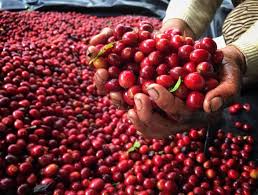
Coffee preparation turns beans into a beverage through four steps: roasting raw beans, grinding roasted beans, brewing ground coffee with hot water, and filtering liquid coffee from spent grounds.
1. Roasting
Roasting transforms green coffee beans’ chemical and physical properties into roasted products. This process is key to a savory cup. Beans nearly double in size, shifting from green to yellow, light “cinnamon” brown, then dark and oily. Oils appear on the bean’s surface during roasting.
The roast darkens until removed from heat. Coffee can be roasted with kitchen equipment (frying pan, grill, oven) or specialized appliances. Sometimes, butter fat (melted butter/ghee) is added during roasting to enhance flavor.
2. Grinding
Whole roasted beans are ground (milled) to aid brewing. Grind fineness affects brewing and must match the method for best results. Longer exposure to hot water requires coarser grinds; faster methods need finer grinds.
Uniform grinding is better than mixed sizes from chopping blades. Many grind beans just before brewing. Four grinding methods exist: burr-grinding, chopping, pounding, and roller grinding.
Methods of Preparation of Coffee
Coffee brewing methods fall into two groups based on how water contacts grounds. Single-pass methods extract more soluble components (like caffeine). Repeated cycling (e.g., percolator) includes less soluble, bitter compounds, requiring coarser grounds.
1. Boiling
Avoid boiling coffee beyond an instant to prevent bitterness. The simplest method is adding ground coffee to a cup, pouring hot water, and letting grounds settle as it cools, known as “mud coffee.” “Cowboy coffee” heats coarse grounds with water in a pot, letting them settle before pouring, sometimes filtering fine grounds.
Hot milk may replace water. Water temperature is crucial; 93°C (199.4°F) is ideal. Cooler water misses flavor compounds; hotter water extracts bitter components. Brief boiling has minimal taste impact, but prolonged high heat worsens flavor.
2. Steeping
A cafetière (French press) is a tall, narrow cylinder with a plunger and metal or nylon mesh filter. Coffee is placed in the cylinder, boiling water is poured in, and after 4–7 minutes, the plunger is pushed down, leaving the filter above the grounds for pouring. Grind size matters, typically coarse. A plain glass cylinder or vacuum flask may be used to keep coffee hot.
3. Drip Brew
Drip brew (filter or American coffee) involves hot water dripping onto coffee grounds in a paper or perforated metal filter. Strength depends on water-to-coffee ratio and grind fineness, typically weaker than espresso but with more caffeine. Regular coffee is served in a brown or black pot (or with a brown/black handle), decaffeinated in an orange pot (or with an orange handle).
General Rules for Storing and Making Coffee
- Coffee loses aroma and flavor as volatile components evaporate. Roast and grind just before brewing for the best drink.
- Roasted beans can be stored briefly and re-roasted before use. Ground coffee should be used within two or three days.
- Vacuum-packing extends storage life. Store roasted coffee (ground or not) in an airtight container in a freezer to prolong shelf life.
- Buy coffee to last no more than a week for freshness.
- Use the exact powder quantity needed.
- Use freshly drawn, freshly boiled water.
- Rinse the coffee maker with hot water before use and wash and dry thoroughly before storage. Never brew less than three-fourths of the coffee maker’s capacity; use a smaller one instead.
iii. Cocoa
Cocoa is a powder made from cacao seeds (beans) after fermentation, roasting, shelling, grinding, and fat removal. A beverage is made by mixing this powder with sugar in hot water or milk. It is rich in theobromine, a stimulant.
Besides being a stimulant, cocoa is a food, prepared from Theobroma cacao seeds grown in South and Central America, the West and East Indies, and along the Gold Coast and adjacent African areas. Common varieties are criollo (fine quality) and trinitario (medium quality).
Pods are gathered, cut open, and beans with moist, sweet white pulp are scooped out. Oxidation begins immediately, browning the beans. They are placed in fermenting heaps and spread in the sun to remove moisture and prevent spoilage.
Fermentation is necessary for optimal flavor, raising temperature and transforming sugars into acetic and other acids. After days, beans dry and are packed for shipping.
Cocoa contains theobromine, caffeine, starch, fat, nitrogenous compounds, and salts, making it both a stimulating drink and a food. It can be prepared with milk only or milk and water, mixed to taste.
Do you have any questions, suggestions, or contributions? If so, please feel free to use the comment box below to share your thoughts. We also encourage you to kindly share this information with others who might benefit from it. Since we can’t reach everyone at once, we truly appreciate your help in spreading the word. Thank you so much for your support and for sharing!