


Watershed classification based on size is not always precise; however, regarding spatial heterogeneity and the averaging of hydrological processes, watersheds can generally be grouped into small and large types.
Land use also defines how watersheds are exploited, allowing for classification into agricultural, urban, mountainous, forest, desert, coastal, marsh, or mixed types.
Watersheds are commonly classified based on their size and land use, which is crucial in agricultural water management and conservation planning.
Classification of Watersheds by Size and Its Agricultural Relevance
Although this classification is vague, the focus is on spatial heterogeneity and the dampening of hydrological processes. Therefore, a watershed can be identified as either small or large.
1. Small Watersheds in Agriculture
Small watersheds have dominant land phases and overland flow, with less defined channel networks. These watersheds are highly sensitive to short, intense rainfall events.
They are the least heterogeneous and exhibit more nonlinear behavior, typically covering areas smaller than 250 km². Their sensitivity makes them suitable for localized agricultural water harvesting and soil conservation efforts.
2. Large Watersheds in Agriculture
Large watersheds feature well-developed channel networks and dominant channel storage. They are less reactive to high-intensity short-duration rainfall and are more heterogeneous, with characteristics varying across space.
These watersheds usually cover areas greater than 250 km². In agriculture, large watersheds are important for regional irrigation schemes and flood management.
Read Also: How to Grow, Use and Care for Woodrush Grass (Luzula spp.)
Classification of Watersheds by Land Use in Agricultural Systems
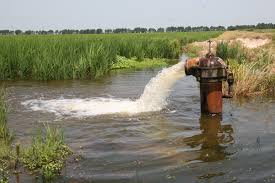
Land use plays a vital role in the hydrologic behavior of a watershed. Based on land use, watersheds can be grouped into the following types:
1. Urban Watersheds
2. Agricultural Watersheds
3. Forest Watersheds
4. Mountainous Watersheds
5. Desert Watersheds
6. Coastal Watersheds
7. Marsh/Wetland Watersheds
These different watershed types function hydrologically in diverse ways, prompting specialized approaches in hydrology and agricultural planning.
1. Urban Watersheds and Agricultural Impact
Urban watersheds are characterized by buildings, roads, pavements, and parking lots, which reduce infiltration and increase impervious surfaces. Artificial drainage systems disrupt natural water flow patterns.
During rainfall, interception and surface storage can be significant, but infiltration and evaporation are reduced, leading to increased runoff and decreased soil erosion.
Flooding becomes a significant concern in these watersheds, especially where drainage is inadequate. Once urbanised, land use becomes fixed, and hydrological behavior shifts due to changes in precipitation. This presents challenges in managing stormwater runoff that affects adjacent agricultural lands.
2. Agricultural Watersheds and Land Management
Agricultural watersheds are shaped by land treatments such as cultivation, fallow periods, row cropping, contouring, meadows, grasslands, forests, and gardens.
These practices increase infiltration, influence erosion, and affect runoff. Agricultural activities also raise depression storage levels.
When fields are bare, raindrop impact compacts the soil, reducing infiltration. Stream development is limited as small channels are frequently erased by tillage.
Soil texture is modified through the regular addition of manure, changing the watershed’s infiltration and hydrological behavior. These characteristics are critical in farm water management and erosion control.
Read Also: How to Grow, Use and Care for Woolfruit Sedge Grass (Carex lasiocarpa)
3. Forest Watersheds in Agricultural Watershed Management

Forest watersheds feature ground covered with leaves, stems, and branches, allowing rainfall to be intercepted and absorbed. Subsurface flow becomes dominant, and surface runoff is minimal. Groundwater recharge is high, and peak discharge is reduced due to forest resistance to flow.
These watersheds reduce downstream flooding and provide excellent protection against soil erosion. With high interception and dominant evapotranspiration, they play a key role in maintaining hydrological balance that benefits downstream agricultural zones.
4. Mountainous Watersheds and Their Hydrological Effects
Mountainous watersheds are largely defined by steep terrain and moderate to dense vegetation. Infiltration is low due to steep gradients and compacted soils, resulting in high surface runoff and frequent flash floods.
Downstream regions are highly vulnerable to flooding following rainfall in the highlands.
If the terrain is rocky, erosion is minimal. However, landslides and slope collapses can occur during intense precipitation.
These watersheds contribute little to groundwater recharge, though evapotranspiration can be high. Agricultural activities in valleys downstream must consider these upstream dynamics for flood prevention and water planning.
5. Desert Watersheds and Water Conservation in Arid Agriculture
Desert watersheds are almost barren with sandy soils and receive minimal rainfall. Vegetation is sparse, and stream development is limited. Rainfall that does occur is mostly absorbed by the porous soil or evaporated. Limited runoff contributes minimally to groundwater recharge.
Agricultural practices in desert regions must rely on water conservation techniques and efficient use of limited water resources, making understanding desert watershed behavior crucial for sustainable farming.
6. Coastal Watersheds and Their Influence on Agricultural Land
Coastal watershed hydrology is strongly influenced by wave and tidal backflows. These watersheds typically receive high rainfall, often cyclonic, and have poor channel control, making them prone to local flooding.
The water table is high, and saltwater intrusion threatens aquifers that serve as water sources. With sandy soil, flat gradients, and slow drainage, coastal areas face challenges in both water management and land protection. Coastal erosion and changes in land use frequently disrupt farming activities in these zones.
7. Marsh and Wetland Watersheds and Their Ecological Role
Wetland or marsh watersheds are flat, water-saturated areas rich in vegetation and wildlife. Evaporation dominates due to abundant surface water.
Rainfall is typically high, and infiltration is minimal, resulting in most rainfall turning into runoff, which flows slowly due to minimal slope.
Erosion is limited, except in coastal marshes. Flood peaks are gradual and prolonged.
These characteristics make wetlands essential in water purification and flood regulation, and they play a supporting role in nearby agricultural ecosystems by maintaining water balance.
Do you have any questions, suggestions, or contributions? If so, please feel free to use the comment box below to share your thoughts. We also encourage you to kindly share this information with others who might benefit from it. Since we can’t reach everyone at once, we truly appreciate your help in spreading the word. Thank you so much for your support and for sharing!