


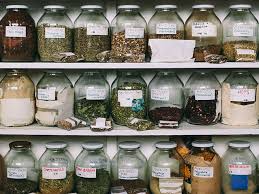
Herbs, like spices, are high-value, export-oriented crops. To meet international market demands, herbs must be produced and processed to achieve high quality and comply with globally accepted food safety standards.
Precautions must be taken during pre-harvesting, harvesting, post-harvesting, and primary processing, which includes washing, threshing, blanching, drying, cleaning, grading, and packaging.
This article discusses the collection, production, packaging, and storage of common herbs, focusing on rosemary and lemongrass, to ensure extended shelf-life and optimal quality.
Read Also: Wambugu Apple Tree Farming Guide
Rosemary: Collection, Production, and Storage
1. Post-Harvest Technology and Processing of Rosemary
Rosemary leaves, flowering tops, flowers, and twigs are of economic importance. Fields of rosemary are usually harvested once or twice a year, depending on the geographical area and whether the harvest is for plant material or essential oil.
The first harvest is carried out about eight months after planting, with the onset of flowering or just before flowering.
2. Production of Fresh and Dried Rosemary
For the fresh market, rosemary is cut frequently at a young stage, as young, fresh shoots are used in culinary preparations. Woody stems lower the price. Fresh rosemary is harvested early in the morning and kept cooled at 5°C before packaging for the market.
At this temperature, a minimum shelf-life of 2 to 3 weeks can be expected. After temperature, prevention of excess moisture loss is the second most important post-harvest factor affecting the quality and shelf-life of herbs.
The dried product should be processed to remove the leaves from the stems and then sieved to remove dirt and produce a uniform product. Several drying methods exist, from sun-drying to sophisticated driers. Sun-drying results in poor quality.
Artificial drying methods allow better control of product quality. A forced air-flow drier is a suitable system to dry better-quality leaves. Rosemary should be dried at temperatures lower than 40°C to reduce loss of flavor through volatilization of essential oil and to maintain a good green color. After drying, the leaves should be further separated from the stems, sieved, and graded.
3. Production of Rosemary Essential Oils
Essential oils are volatile oils extracted from essential oil-bearing plants by steam-based distillation. Tender, non-hardy shoots are harvested for distillation upon attaining full size. However, leaves and twigs can also be used after drying for oil extraction.
Rosemary oil is colorless to pale yellow and is usually recovered by steam or water distillation, although supercritical fluid extraction (SFE) using CO2 as a solvent is also now being used.
4. Packaging and Storage of Rosemary
Essential oils can be packaged in bulk or smaller quantities. Smaller quantities usually have higher prices owing to extra handling and packaging materials needed. Essential oils are volatile and must be handled with care.
Deterioration begins if the liquid is much darker or more viscous than normal. The relative humidity in the packing area, cold stores, and transport vehicles should be maintained at a high level (>95%) where practical.
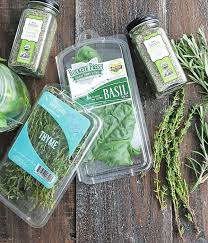
Fresh rosemary is packaged in crates for bulk handling or in clear cellophane sachets that can be marketed directly in shops and supermarkets. Dried rosemary is usually sold in carton boxes or in glass or plastic containers. Moisture, heat, oxygen, and light destroy its properties.
Dark, air-tight glass is preferred for preservation. Storing under 18°C will extend shelf-life. Rosemary essential oil should be stored in a cool, dry area until used. Once opened, refrigeration and tightly closing the cap will prolong its shelf-life. It should be kept in dark, air-tight glass bottles and not exposed to heat or heavy metals.
Read Also: 7 Factors to Consider before Setting up your Farming Business
Lemongrass: Collection, Production, and Storage
1. Harvesting Lemongrass
Harvesting is done by cutting the grass 10 cm above ground level with the help of sickles. The number of harvests in a year depends on climatological factors such as temperature, rainfall, humidity, and soil fertility.
Generally, the crop thrives best in humid conditions. Cutting can begin as soon as the night dew has evaporated from the plants, as wet grass left for later distillation quickly ferments. Sunny days are preferable, since cloudy and misty conditions tend to depress leaf oil content.
2. Processing Lemongrass
The crop is cut into small pieces and filled into stills. Prior to the distillation process, the grass is set to wilt for 24 hours. The wilting process improves the overall yield of essential oils. Drying the crop also decreases moisture content by 30%, which further aids in the distillation process.
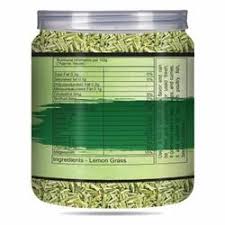
For some products, like herbal tea or infusions where dried leaves or powdered lemongrass is the final product, dried and powdered lemongrass packaging takes place after the drying step in appropriate packaging material.
3. Production of Lemongrass Essential Oil
Lemongrass oil is collected by steam distillation of the herbage. There are three types of distillation:
i. Hydro-distillation: The herb is packed in a vessel and partly filled with water. The vessel is heated by direct fire, steam jacket, or immersed steam coil.
ii. Hydro and Steam Distillation: The plant material is packed on a grid fitted at a height above the base of the still. The lower part of the still is filled with water to a level below the grid and fired from below. In this method, the steam is always fully saturated, wet, and never superheated. The plant material is in contact with only steam and not boiling water.
iii. Steam Distillation: No water is added to the still. Instead, saturated or superheated steam is introduced through open or perforated steam coils below the charge.
4. Packaging and Storage of Lemongrass
i. Packaging
Essential oils are volatile and must be handled with care. The grass should be packed firmly to prevent the formation of steam channels. If the grass is too long, it can be cut into smaller lengths to ensure firm packaging.
ii. Storage
Lemongrass oil should be stored in dark, air-tight glass bottles. It should not be exposed to heat or heavy metals. Once opened, refrigeration and tightly closing the cap will prolong its shelf-life. Deterioration begins if the liquid is much darker or more viscous than normal. Lemongrass oil is very acidic and will destroy plastic and rubber in a short time.
Do you have any questions, suggestions, or contributions? If so, please feel free to use the comment box below to share your thoughts. We also encourage you to kindly share this information with others who might benefit from it. Since we can’t reach everyone at once, we truly appreciate your help in spreading the word. Thank you so much for your support and for sharing!