


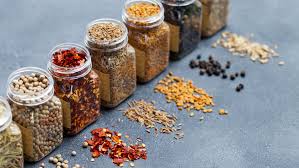
Spices are high-value, export-oriented crops. To meet international market demands, spices must be produced and processed to achieve high quality and comply with globally accepted food safety standards.
Precautions must be taken during pre-harvesting, harvesting, post-harvesting, and primary processing, which includes washing, threshing, blanching, drying, cleaning, grading, and packaging to meet these standards.
This article discusses the collection, production, packaging, and storage of spices to ensure extended shelf life and optimal quality.
Read Also: Worm Infestation on Ruminant Animals: Symptoms and Treatment
Ginger: Cultivation and Production
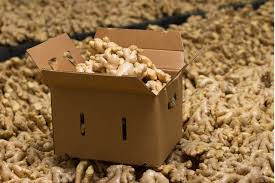
Ginger is cultivated in several parts of the world, with major producing regions including India, China, Indonesia, Nepal, Thailand, Nigeria, Bangladesh, Japan, and the Philippines. India and China are the dominant suppliers to the global market.
In terms of quality, Jamaican and Indian ginger are considered superior, followed by West African ginger. Jamaican ginger possesses a delicate aroma and flavor, often regarded as first-grade.
Indian ginger, entering the world market as ‘Cochin’ and ‘Calicut’ ginger, has a lemon-like note preferred by some over Jamaican ginger. Nigerian and Sierra Leone dried gingers have a somewhat camphoraceous and coarser odor but are rich in aroma and pungency, making them ideal for oil distillation and oleoresin extraction.
1. Processing of Ginger
Fresh ginger, immediately after harvest, undergoes washing to remove dirt, residues of farm chemicals, and other foreign materials. Other post-harvest operations include:
i. Peeling and Drying: After washing, ginger rhizomes are subjected to a peeling operation. The scraped or peeled rhizomes are washed again and dried in the sun for a week or more. Sun-dried ginger is brown in color with a more or less irregularly wrinkled surface.
ii. Polishing: Polishing of dried ginger is done to remove wrinkles developed during the drying process, improving the appearance of the dried rhizomes.
2. Products of Ginger Rhizomes
The primary products of ginger rhizomes for flavoring purposes are fresh ginger, preserved ginger in syrup or brine, and dried ginger. Secondary products include ginger powder, oils, and oleoresins from dry ginger.
i. Fresh Ginger: Fresh ginger is outstanding for flavoring as it retains the full note of the spice compared to other products made from it.
ii. Preserved Ginger: Immature green ginger is preserved in brine or sugar syrup. The processing technology for preserved ginger varies by country.
iii. Dry Ginger: Dry ginger, obtained by drying fresh ginger, is used in the spice trade for preparing ground ginger, extracting oleoresin, and producing oil.
iv. Ginger Powder: Ginger powder is made by pulverizing dry ginger to a mesh size of 50–60. Grinding releases the flavor, and finer powder ensures the flavor is more readily available and dispersible in the matrix.
v. Ginger Oil: Ginger oil is produced commercially by steam distillation of freshly ground dry ginger, yielding 1.5–3.0% oil, with an average of 2.0%. The oil is a green or yellow mobile liquid that becomes viscous on aging. Coated African ginger, followed by Nigerian splits and Cochin ginger, is most suitable for oil distillation. Ginger oil is used as a flavorant in food processing, pharmaceuticals, and perfumery.
vi. Ginger Oleoresin: Ginger oleoresin is obtained by extracting powdered dry ginger with organic solvents such as alcohol, acetone, or ethylene dichloride. Concentration of the solvent extract under vacuum and complete removal of solvent traces yields ‘oleoresin of ginger.’
3. Packaging and Storage of Ginger
i. Packaging: Bulk rhizomes can be packed in jute sacks, wooden boxes, or lined corrugated cardboard boxes for shipping. Dry slices or powder are packaged in multi-wall laminated bags, with some laminates being more effective due to lower film permeability. The packaging material must be impermeable to moisture and air. Sealing machines are used to seal the bags.
Labels should include all relevant product and legal information, including the product name, brand name (if applicable), manufacturer details (name and address), date of manufacture, expiry date, weight of contents, added ingredients (if relevant), and any additional information required by the country of origin or import (e.g., barcode, producer code, or packer code for traceability).
ii. Storage: Dried rhizomes, slices, and splits should be stored in a cool place (10-15°C). At higher temperatures (23-26°C), flavor compounds deteriorate, causing ginger to lose taste and aroma. The storage room must be dry, away from direct sunlight, and protected from insects and pests.
Natural pesticides, such as leaves of Glycosmis pentaphylla or Azadirachta indica, can be added to prevent damage from the cigarette beetle (Lasioderma serricorne).
The storage room should be clean, dry, cool, and free from pests, with mosquito netting on windows to prevent pest entry. Strong-smelling foods, detergents, and paints should not be stored in the same room.
Read Also: Factors to Consider when Choosing a Snail Farm Site
Cloves: Collection, Processing, and Storage
1. Processing of Cloves
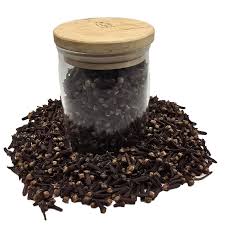
i. Dried Clove Buds: Clove buds are harvested when they reach full size before the corolla opens, and the hypanthium turns reddish. The buds are separated from the stems by hand or thresher machine and dried by the sun or an artificial dryer.
2. Products from Cloves
i. Ground Clove: Ground clove is produced by milling and/or grinding dried clove buds at room temperature (25–35°C) to prevent loss of valuable volatile components. Techniques such as pre-chilling, water cooling, or refrigeration of grinding chambers minimize heat during processing. Ground clove is produced with varying degrees of fineness, depending on the spice’s nature, ultimate application, and consumer preferences.
ii. Clove Oil: Clove oil, a mixture of compounds including eugenol, eugenyl acetate, and caryophyllene, is colorless or pale yellow with the characteristic aroma and taste of cloves. It is obtained through distillation of buds, leaves, or stems, with each resulting in oils of different characteristics. The yield and quality of the oil are influenced by origin, variety, post-harvest processing, pre-treatment before distillation, distillation method, and post-distillation treatment.
iii. Clove Oleoresin: Clove oleoresin, extracted from stems or buds, has a flavor and odor similar to the spice and is sometimes used as a substitute. Solvent extraction of clove buds yields about 18–22% oleoresin. It is produced from ground clove extracted with suitable solvents, followed by evaporation or distillation. Oleoresin is highly concentrated, containing all flavoring ingredients soluble in the solvent used, closely matching the original clove odor and flavor.
3. Storage of Clove Products
Storage is critical for maintaining clove quality. Dried whole clove buds are usually packed in gunny bags and stored in a clean, dry room with good ventilation. This storage method causes minimal changes, except for a loss of sheen.
Storage may lead to oil loss by evaporation, depending on the spice’s physical condition, primarily moisture content, temperature, and relative humidity.
Loss of volatile oil from whole cloves is relatively slow compared to ground cloves, which are more sensitive to high ambient temperatures and moisture, affecting stability and flavor profile. Poor storage conditions can result in greater volatile oil loss, mold growth, and the development of musty flavor and odor.
Cinnamon: Harvesting, Production, and Storage

1. Harvesting and Production of Cinnamon
Cinnamon spice is obtained from the bark of the cinnamon tree. Harvesting for bark occurs after the second or third year of planting, with subsequent harvests every 12 to 18 months. Branches are processed by scraping off the outer bark and beating the branch evenly with a hammer to loosen the inner bark.
The outer bark is thick and brownish, while the inner bark is more valuable. The ideal time for cutting stems is when the red flush of young leaves turns green, indicating the free flow of sap between the bark and wood. Shoots ready for peeling are removed from the stems, and terminal ends are discarded.
2. Processing of Cinnamon Bark
The bark must be processed immediately after harvesting while still wet. The processing steps include:
i. Production of Quills: Cinnamon quills are 8 cm lengths of tightly rolled, concentric layers of the thin inner bark, carefully peeled off cut branches and rolled into meter-long quills like a giant cigar, then cut into short ‘sticks.’ The process involves:
ii. Peeling: A special knife is used to scrape off the rough outer bark, followed by polishing with a brass rod to facilitate peeling. A longitudinal slit is made from one end to the other, and the bark is peeled off.
iii. Rolling: Barks are packed together, placed one above the other, and pressed well. Bark slips are reduced to 20 cm lengths and piled in small enclosures made by sticks, then covered with dry leaves or mats to preserve moisture and enhance slight fermentation, which is critical for the next step, piping.
iv. Piping: Rolled slips are taken to the piping yard. The outer skin is scraped off with a small curved knife, and slips are sorted by thickness, trimmed, cut, and pressed over pipes. Slips are rolled into pipes and dried. During drying, smaller quills are inserted into larger ones, forming smooth, pale brown compound quills known as pipes. Quills are arranged in parallel lines in the shade for drying, as direct sun exposure causes warping. Dried quills, a mixture of coarse and fine types, are yellowish-brown and may be bleached with sulfur treatment for about 8 hours if necessary.
v. Grinding: Most consumers prefer whole spices, but cinnamon is sometimes ground into powder before sale. Ground powder must be packaged in moisture-proof polypropylene bags to retain flavor.
3. Products from Cinnamon
i. Ground Cinnamon: Grinding adds value but reduces shelf life, as the heat of grinding destroys volatile oil content, and ground cinnamon is more vulnerable to spoilage due to unstable flavor and aroma compounds.
ii. Oils and Oleoresins: Hydrodistillation or steam distillation produces bark oil. Inner bark yields a superior oil, while broken quills, chips, and bark produce a lower-quality oil. Barks must not be stored in wet bundles or become damp, as this facilitates mold or fermentation, affecting oil quality. Cinnamon leaves are used to extract leaf oil, rich in eugenol.
4. Packaging and Storage of Cinnamon
i. Packaging: Cinnamon quills are cut into 10 cm pieces and packed in moisture-proof polypropylene bags for sale. Bags must be sealed to prevent moisture entry. Labels should include all relevant product and legal information, such as product name, brand name, manufacturer details, date of manufacture, expiry date, weight, and added ingredients, along with any additional information required by the country of origin or import.
ii. Storage: Dried cinnamon quills must be stored in moisture-proof containers away from direct sunlight. If they absorb moisture, they should be re-dried to a moisture content of 10%. The storage room must be clean, dry, cool, and free from pests, with mosquito netting on windows to prevent pest entry. Strong-smelling foods, detergents, and paints should not be stored in the same room to avoid spoiling the delicate aroma and flavor of cinnamon.
Do you have any questions, suggestions, or contributions? If so, please feel free to use the comment box below to share your thoughts. We also encourage you to kindly share this information with others who might benefit from it. Since we can’t reach everyone at once, we truly appreciate your help in spreading the word. Thank you so much for your support and for sharing!