


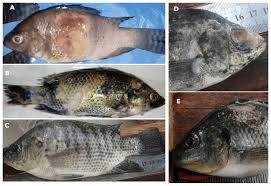
Epidemics of bacterial diseases are common in dense populations of cultured food or aquarium fish. Predisposition to such outbreaks is frequently associated with poor water quality, organic loading of the aquatic environment, handling and transport of fish, marked temperature changes, hypoxia, and related stressful conditions.
High concentrations of waterborne bacteria are normally found in ponds and aquaria. Many of these bacteria are opportunistic facultative pathogens, which are activated by an adverse environment, a debilitated host, or a primary pathogen.
In contrast, obligatory bacterial pathogens of finfish require the presence of fish for replication and are unable to survive alone for long in the aquatic environment. Most bacterial pathogens of fish are aerobic gram-negative rods. Diagnosis is made by isolating the organism in pure culture from infected tissues and identifying the bacterial agent.
Read Also: Benefits of Independent Leaf
Types of Bacterial Infections Observed Under Magnification

Stained Gram-positive bacteria viewed at high magnification and stained Gram-negative bacteria viewed at high magnification are commonly seen in bacterial infections.
1. Eye Disease in Fish
Fish are prone to developing bacterial infections in their eyes. Several different bacteria can grow and have devastating effects on a fish, as well as spread to the other fish in the aquarium. Fortunately, many infections can easily be cured by adding medicated drops to the fish pond or tank.
Eye diseases and infections in fish can be caused by a variety of factors, including fungus, bacteria, parasites, kidney infections, or protozoan infestations. Fish can exhibit a variety of symptoms when suffering from an infection or bacterial disease.
These include cottony growth around the eyes, cloudiness in the eyes, eyes that appear to be popping out of the socket, and a film on the eyes. Diagnosing the cause of the fish’s eye ailment will depend on the symptoms. Cottony white growth around the eye is caused by a fungus, and a cloudy iris is caused by bacteria.
If the entire eye looks cloudy, it is a protozoan infestation, and if the eye appears to be popping out, it is kidney failure. Liquefactions infect the eyes of silver carp. The cornea of the eyes gets vascularized, leading to opacity and complete necrosis, and even mass mortality of fish has been recorded. Investigations have isolated Staphylococcus aureus from the affected eyes of diseased fish.
Treatment for Eye Infections
A fungal infection is treated using sulfate drops, which are administered to the tank water as directed. Other infections are treated with antibiotic drops, which are also administered to the water. The affected fish can be treated along with the other fish in the tank; the antibiotic drops will prevent the infection from spreading.
A Chloromycetin bath at 8-10 mg/L has been found effective in controlling the disease at an early stage. Disinfecting the environment with Potassium permanganate at a dose of 0.1 ppm, followed by liming at 300 ppm, helps control the disease.
2. Ulcerative Disease in Catfish
Bilateral ulcerations of the opercula and head in catfish are observed in ulcerative disease. In most cases, Aeromonas hydrophila can be isolated, although several other bacterial forms were also present as secondary invaders.
3. Enteric Septicemia of Catfish (ESC)
ESC, caused by the gram-negative bacterium Edwardsiella ictaluri, is one of the most important diseases of farm-raised channel catfish (Ictalurus punctatus). ESC accounts for approximately 30 percent of all disease cases submitted to fish diagnostic laboratories in the southeastern United States.
In Mississippi, where channel catfish make up the majority of case submissions, ESC has been reported at frequencies as high as 47 percent of the yearly total. Economic losses to the catfish industry are in the millions of dollars yearly and continue to increase with the growth of the industry.
The disease was similar to another catfish disease caused by the gram-negative bacterium Edwardsiella tarda, but differed in several characteristics. ESC was described in a published account in 1979, and the causative bacterium was described as a new species in 1981.
i. Clinical Signs and Diagnosis of ESC
Catfish affected with ESC often are seen swimming in tight circles, chasing their tails. This head-chasing-tail, whirling behavior is due to the presence of Edwardsiella ictaluri in the brain. Affected fish sometimes hang in the water column with their head up and tail down. In addition, catfish with ESC tend to stop eating shortly after becoming infected.
ii. External Signs of ESC
Catfish affected by ESC frequently have red and white ulcers (ranging from pinhead size to about half the size of a dime) covering their skin; pinpoint red spots (called petechial haemorrhages), especially under their heads and in the ventral or belly region; and longitudinal, raised red pimples at the cranial foramen between the eyes that can progress into the hole-in-head condition. Internal fluid buildup can lead to a swollen abdomen and exophthalmia (popeye).
iii. Internal Signs of ESC
When a fish is infected with Enteric Septicemia of Catfish (ESC), there are distinct internal indicators. Clear, straw-colored, or bloody fluids are typically found in the body cavity. The liver shows areas of tissue destruction or appears mottled with red and white sections. Additionally, hemorrhages may be seen in the muscles, intestines, and fat. Often, the intestines are filled with bloody fluid.
iv. Treatment of ESC
A proactive approach is key in managing ESC. Early diagnosis is crucial, and pond managers should monitor feeding behavior, mortality, and general fish health. The standard treatment for ESC involves administering medicated feed containing antibiotics.
Before starting treatment, sick fish samples should be taken to a diagnostic lab to isolate the causative bacterium and test for antibiotic sensitivity. Treatment must be prompt, as infected fish may reduce their feed intake, rendering medicated feed less effective.
4. Columnaris Disease
Columnaris disease, caused by Flavobacterium columnare, is a widespread issue among warm-water fish, particularly channel catfish. This disease is often triggered by environmental stress and occurs when water temperatures rise to 25–32°C. The disease manifests with brown to yellowish lesions on the gills, skin, and fins, leading to tissue erosion.
A distinctive “saddleback” lesion encircling the fish’s body is a classic symptom. Treatment options include using chemicals like potassium permanganate and administering medicated feeds.
5. Bacterial Gill Disease
Bacterial Gill Disease (BGD) is often caused by several species of Flavobacterium and Cytophaga. The disease primarily affects fry but can infect fish of all ages. Symptoms include hyperplasia and necrosis of gill tissues, leading to decreased respiratory function. Predisposing factors include overcrowding, high ammonia levels, and increased water temperatures. Potassium permanganate is an effective treatment.
6. Proliferative Gill Disease (PGD)
PGD, commonly known as “hamburger gill disease,” is a serious issue in farm-raised catfish, causing severe gill damage and leading to suffocation. The disease typically occurs during spring and fall when water temperatures range from 15–22°C.
Early signs include decreased feeding and fish congregating in aerated areas. Severe cases result in swollen, red, and white mottled gills. PGD is caused by a myxosporean parasite, possibly Aurantiactinomyxon sp., which uses the worm Dero digitata as its host. No validated treatment exists, but increased aeration can help manage oxygen levels in the water.
7. Edwardsiellosis
Edwardsiellosis, caused by Edwardsiella tarda, is a septicemic disease affecting several fish species, including channel catfish. It leads to anemia, lesions, and gas-filled abscesses in muscle tissues. Affected fish may show hemorrhaging and tissue necrosis. It is especially problematic in Asia’s eel culture.
Edwardsiella ictaluri, responsible for Enteric Septicemia of Catfish (ESC), causes similar symptoms. Key signs include open ulcers on the skull between the eyes, commonly known as “hole-in-the-head disease.” Improving water quality and early treatment with antibiotics can mitigate its impact.
8. Epizootic Ulcerative Syndrome (EUS)
EUS is a destructive disease primarily affecting bottom-dwelling fish. It starts with hemorrhagic spots that develop into large ulcers, leading to severe tissue necrosis. A variety of bacteria, including Aeromonas and Vibrio, have been implicated in the disease. Treatment options include the application of lime or the use of CIFA-developed medication, CIFAX, which has shown effectiveness in healing ulcers.
Read Also: Amazing Health Benefits of Uziza Leaf
Types of Vibrio Infections

Vibrio septicemia is caused by Vibrio species such as V. alginolyticus and V. anguillarum. It affects marine fish, leading to hemorrhages, skin ulcers, and internal organ necrosis. Treatment often involves antibiotics and other chemical treatments.
1. Streptococcus iniae
This disease affects tilapia, hybrid striped bass, and rainbow trout, causing either septicemia or chronic central nervous system infections. It is commonly linked to poor water quality and overcrowded conditions. Depopulation and disinfection are necessary to control outbreaks.
2. Mycobacterium Species (Tuberculosis)
Fish tuberculosis, caused by various Mycobacterium species, affects both saltwater and freshwater species. It is characterized by emaciation, spinal deformities, and granulomas in the organs. This disease is challenging to eliminate and requires depopulation and disinfection of affected environments. It is also zoonotic, capable of infecting humans through contact with diseased fish.
3. Flavobacterium Species
These bacteria primarily affect ornamental fish, leading to granuloma formation in visceral organs. The nodules can be cystic or mineralized, requiring differentiation from Mycobacterium infections. While the mode of transmission is unclear, it poses significant issues for hobbyists and fish farmers alike.
4. Epitheliocystis
Caused by a chlamydia-like organism, Epitheliocystis primarily affects juvenile fish, causing respiratory distress and the appearance of white cysts on gills and skin. The transmission mode remains unknown, and the disease often results in high mortality rates.
In conclusion, fish diseases in aquaculture are complex, often involving multiple pathogens and environmental factors. Proper management, early diagnosis, and timely treatment are essential to mitigate the impact of these diseases on fish populations.
Do you have any questions, suggestions, or contributions? If so, please feel free to use the comment box below to share your thoughts. We also encourage you to kindly share this information with others who might benefit from it. Since we can’t reach everyone at once, we truly appreciate your help in spreading the word. Thank you so much for your support and for sharing!
Read Also: Foods and Drinks That Can Cause Dehydration
Frequently Asked Questions
We will update this section soon.