


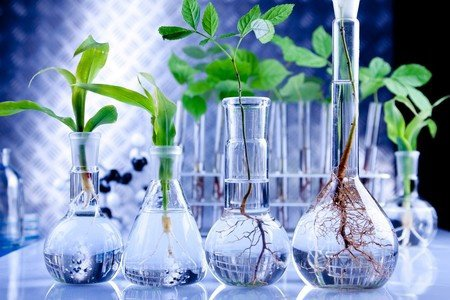
You may ask the question, “Why are transgenics needed?” Transgenic crops are satisfying needs which crop varieties produced by conventional breeding methods cannot.
Some people already affirm that genetic engineering appears as an indispensable tool for crop management and disease control systems, and for the increase by seventy-five percent of agricultural production from now to 2020 in order to be able to tackle the high increasing rate of the African population, objectives that classical breeding methods, alone, cannot attain.
Agricultural productivity is severely limited by a large number of constraints that are;
Biotic (arthropods, nematodes, diseases, weeds, rodents, birds);
Abiotic (drought, soil fertility, mineral toxicity); and
Infrastructural (low price to farmers and inability to compete with subsidized imports, high price of pesticide and fertilizer inputs, poor transportation and storage systems).
The issue of food and feed quality, which can be slowly and subtly destructive, situation that is only recognized by medical epidemiologists and by measurements in material stored on the farm.
Some fungal infections hardly reduce yields but produce mycotoxins. Except for export crops, these have largely been ignored; the low chronic levels of toxins in farmers’ diets have not been addressed.
Expensive fungicides could be used for export crops, but the lack of recognition of the problem, together with the prohibitive expense of fungicides, has allowed the mycotoxin problems to increase greatly.
Chronic low levels of mycotoxins in food and feed lead to poor utilization of food – i.e. malnourishment of people and slow growth rate in livestock and poultry. Higher rates lead to various cancers and death.
Biotic Constraints Where Conventional Technologies Have Been Inadequate
Crops have been heavily selected by farmers and bred by scientists to overcome indigenous diseases and insects not found elsewhere.
They have selected for ability to compete with weeds – with a considerable loss of yield until the green revolution rectified this, thanks to the availability of cheap cost-effective herbicides.
Indeed, pesticides are the major way of dealing with the biotic stresses, where they work. Still the preferred methods of dealing with these constraints are in seed technologies, where the crop can deal with the pest directly, through genetic means.
Read Also : Forms and Functions of Magnesium in Plants
The only caveat to this is there must not be a yield penalty that is greater than the cost of pesticides.
1. Disease constraints
Fungal and viral pathogens of plants are continually evolving and plant breeders are always having to play “catch up” to produce resistant varieties.
There are an increasing number of cases where breeders cannot keep up, or where there is no inherent resistance within the crop, especially with some viral diseases.
2. Insect constraints
Even in the developing world insecticides are used sparingly, mainly on high value fruit and vegetable crops, as well as cotton, and less frequently on row crops such as maize.
Insect pest infestations in staple row crops have either been “accepted” because insecticides are too expensive, or treated with low amounts of insecticides, often applied using methods that would be deemed unsafe and unacceptable in the developed world, i.e. in contravention of the pesticide label, e.g. a drop or pinch of insecticide applied by hand into the cup shaped whorl of leaves.
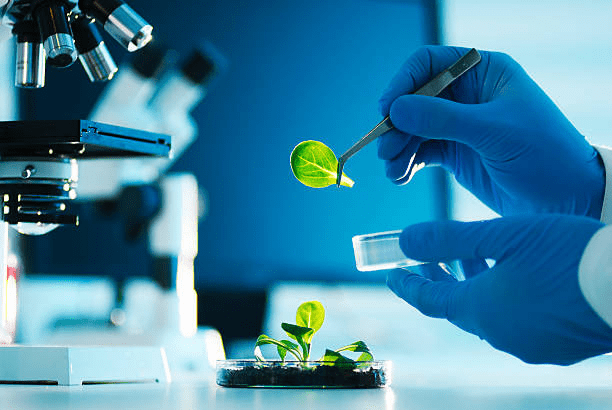
There are also cases where insecticide resistance has evolved. Insects are also vectors of viral diseases.
When insecticides are applied the farmer often does not use the advised application and protection advice with consequent risks to the environment and to his health.
3. Weed constraints
Weeding is predominantly a backbreaking task for women, often consuming 80% of their waking hours (Akobundo, 1991 Weeds in human affairs in sub-Saharan Africa, Weed Tech. 5, 660-690).
Weed issues have been largely ignored both on the farm and in the research community, possibly due to an element of male chauvinism.
Hand weeding has created a niche for weeds that could not be hand weeded, and which could not be directly killed by herbicides, without killing the crop.
Where herbicides have been used, weeds have evolved resistance or new weed species have appeared that could not be selectively controlled by herbicides.
In some cases resistance to herbicides has evolved and spread over millions of hectares, e.g. resistance of Phalarisminor to the herbicide isoproturon in India.
4. Abiotic constraints
Overgrazing and agricultural practices such as ploughing under inappropriate conditions can lead to soil degradation and severe erosion problems.
The use of fertilizer has become widespread within the developed world, but optimum amounts are typically too expensive for farmers in the developing world.
Adding fertilizer at times of high rainfall can lead to leaching into ground waters, causing severe environmental problems.
Conversely, the law of conservation of matter decrees that you cannot create minerals where they are lacking.
Be that as it may, some plants and microorganisms can extract mineral nutrients that are in unavailable forms, others are more efficient users of minerals, meaning that there must be genes that provide higher efficiency and mobilization of nutrients.
Degraded soils are often acid or saline, have high levels of lead, aluminium or other toxic ions, limiting the species that can exist on such poor substrates.
Liming and other amenities are often not an economic option. The transfer of genes from species that are tolerant of such pollutants to crop species can increase crop biodiversity – i.e. the options of the farmer.
5. Drought stress
Transient drought, when the duration between rains is all too long, is a common occurrence, with consequential crop losses. In dry areas without an irrigational back- up system, it can mean crop loss.
This is a major constraint to dry land agriculture. As some species can withstand this, there must be genes available.
Read Also : Plant Poisoning of Livestock and Control Measures
General drought, i.e. regions where the annual rainfall is very low presents a separate problem – requiring species that yield a crop (albeit low yields) or their relevant genes for movement into other crops.
Water availability for agriculture is an increasing major constraint due to climate change (global warming) and the damands of a growing population.
6. Cold stress
This can be either transient (early frost) or long term (very cold winters) and limits the species that can be cultivated.
Thus, agriculture in areas prone to this constraint requires species that yield a crop (albeit low yields) or their relevant genes for movement into other crops.
In summary, it is necessary to ascertain whether biotechnologies can supply rapid, safe, cost effective solutions to the intractable biotic and abiotic constraints.
The institutional and infrastructure constraints to agriculture are amenable to positive human intervention, and could facilitate rapid adoption of the yield and quality enhancing biotechnologies in later lectures.
Whether biotechnological solutions are employed is a matter of consumer demand and need, and the resolve of politicians and regulators to deal with these issues in a science and fact based manner with due resolve.
Read Also : FaceBook: How to Advertise your Business on FaceBook for Better Results
Frequently Asked Questions
We will update this section soon.