


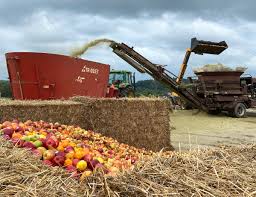
One of the greatest sources of food waste occurs when excessive amounts of foods are trimmed and discarded during preparation. Generating food waste has significant economic and environmental consequences.
A lot of money is thrown away through food wastage. Whether an individual, family, or business, a considerable portion of the budget goes towards purchasing food because everyone needs food to stay alive. Many times, simple changes in food purchasing, storage, and preparation practices can lead to food wastage.
As much as possible, all food purchased should be sold to customers. When food cannot be sold and must be thrown out, the manager must be notified about the problem.
Examples of such problems include servers writing down the wrong order, a wrong order being prepared by the kitchen, or food not being properly cooked; all of these lead to wastage.
.Food waste cost-savings have even greater potential at commercial establishments. Saving food means saving money; therefore, managers should acquire the habit of watching employees while they are preparing foods and checking trash cans for above-normal trimming of food.
Some restaurants have employees place all food trimmings in a container to be examined by a supervisor before being thrown out. This not only reduces waste but also makes the food budget go further.
Read Also: Health Benefits and Uses of Lobster
Identifying Generators of Food Waste
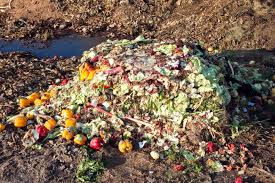
Waste is generated from different sources, and one of the greatest sources is food manufacturing and processing facilities. Restaurants, food courts, supermarkets, households, and institutions such as schools, prisons, and hospitals are also large generators of food waste.
Solid waste types may be subdivided into three categories:
- Food Waste: Categorized as either pre-consumer waste (e.g., food preparation waste) or post-consumer waste (e.g., leftovers or plate scrapings).
- Packaging Waste: Includes food packaging and inbound supply chain waste, such as pallets, cans, cartons, plastic wrap, and other materials used to package supplies and food. This also includes items used for packaging and serving food to guests, like clamshells, hot and cold cups, and disposable trays.
- Operating Supplies Waste: Divided into front-of-the-house operating supply waste (e.g., napkins, disposable cutlery, portion-controlled condiments, table linens) and back-of-the-house operating supply waste (e.g., towels, rags, expired seasonings, and paper).
Food waste generators may be subdivided into:
- Large-Scale Generators
- Small-Scale Generators and Homeowners
i. Large-Scale Food Waste Generators
Food service providers, such as restaurants, grocery stores, supermarkets, and institutions like schools and hospitals, where food is prepared and served in large quantities, produce a significant amount of food waste each day.
Environmental Protection Authorities encourage these large-scale food waste generators to manage their surplus food and implement a food waste diversion program by putting surplus food to good use.
ii. Small-Scale Food Waste Generators and Homeowners
Individuals, households, and other small-scale generators of food waste often do not realize just how much food they throw away every day, from uneaten leftovers to spoiled produce.
By paying attention to simple steps like planning a menu, buying the right quantities needed at a time, and, when buying in bulk, ensuring there are storage facilities to prevent spoilage, thinking of what is available to eat rather than what one wants to eat, and reusing leftovers—for example, taking leftovers from dinner to work for lunch can significantly reduce waste.
Strategies for Controlling Food Waste
There are several ways to control food wastage, and one of the easiest is by making simple changes in food purchasing, storage, and preparation, avoiding unnecessary expenditure and preparation that leads to wastage.
Often, wasted but edible products, such as improperly or mistakenly cooked orders, can be salvaged by serving them as employee meals or using them as ingredients in another menu item. Food scraps are not necessarily waste; they can be sent to a composting facility to enrich the soil for agriculture.
The slogan frequently preached by environmentalists, “Reduce, Reuse, Recycle”—the “3R’s” for food—comes to mind. Reducing, reusing, and recycling food products is referred to as the Food Waste Recovery Hierarchy or Waste Management Hierarchy in Food Service.
Read Also: Health Benefits and Uses of Oysters
Environmental Impacts of Food Waste
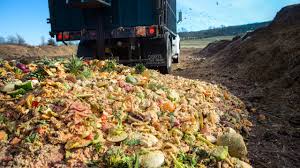
Apart from the significant economic impact of wasting valuable resources, there are also enormous and immediate environmental impacts. When food is disposed of in a landfill, it quickly rots and becomes a significant source of methane, a potent greenhouse gas with 21 times the global warming potential of carbon dioxide.
Landfills are a major source of human-related methane, accounting for more than 20 percent of all methane emissions. Reducing, recovering, and recycling food waste diverts organic materials from landfills and incinerators, reducing greenhouse gas emissions from landfills and waste combustion.
The use of recycled food waste (compost) has many environmental benefits, including:
- Improving soil health and structure
- Increasing drought resistance
- Reducing the need for supplemental water, fertilizers, and pesticides
An additional benefit of food waste reduction, donation, and composting is improved sanitation, public safety, and health for both the facility and the community.
Food waste dumped in standard trash cans and dumpsters at the back of the house, store, or restaurant can attract rodents and insects and generate bad odors.
Best Practices for Food Waste Reduction
The best way to control waste is to reduce it at the source: purchasing the right amount required at each time, cooking the quantity needed at a particular time, and serving quantities that can be finished by the consumer.
Food waste has significant economic and environmental impacts on society. While some environmental impacts are beneficial, others have adverse effects on public health.
Do you have any questions, suggestions, or contributions? If so, please feel free to use the comment box below to share your thoughts. We also encourage you to kindly share this information with others who might benefit from it. Since we can’t reach everyone at once, we truly appreciate your help in spreading the word. Thank you so much for your support and for sharing!