


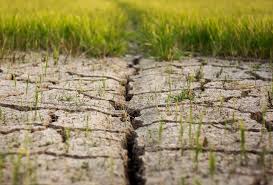
The key atmospheric variables that impact crops are solar radiation, air temperature, humidity, and precipitation. The day-to-day variability of these across the landscape can be described as weather.
Weather extremes at critical periods of a crop’s development can have dramatic influences on productivity and yields. The long-term average temperature and humidity and the total solar radiation and precipitation over a crop’s growing season can be described as the climate. It is the climate that, in the absence of any weather extremes, determines the realized yields for a given region.
Read Also : Vegetative Structure of Seed Plants: The Leaf
Understanding Crop Phenology in Agriculture
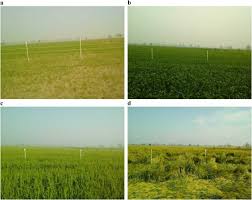
Phenology is the study of periodic plant and animal life cycle events and how these are influenced by seasonal and annual variations in climate, as well as habitat factors (such as elevation).
Understanding crop phenology is fundamental to crop management, where timing of management practices is increasingly based on stages of crop development. This will facilitate planning of operations, such as irrigation, the application of fertilizers, and pesticides.
The response of crops to the different weather variables is quite complex and difficult to describe. Predicting the exact response of crops to the weather is, as a result, an inexact science, and one that contains great uncertainty.
If one of the variables is limiting (for example, temperatures that are too hot or too cold), then the effects of solar radiation or precipitation do not greatly affect the crop. When none of the variables is limiting, the crop will respond to the variable that is farthest from the optimum for that variable.
Temperature Effects on Crop Growth
Other than planting, temperature is the main variable that determines when a crop will grow. It also determines, along with precipitation and solar radiation, how well a crop will grow and how fast it will develop.
There are four temperature thresholds, called the cardinal temperatures, that define the growth of a crop: the absolute minimum, the optimum minimum, the optimum maximum, and the absolute maximum. The absolute minimum and maximum temperatures define the coldest and hottest temperatures at which a crop will grow.
Temperatures between the optimum minimum and maximum define the range of temperature where the crop performs the best. For example, maize (Zea mays L.) has an absolute minimum temperature of 50 °F (10 °C), an optimum minimum of 64 °F (18 °C), an optimum maximum of 91 °F (33 °C), and an absolute maximum of 117 °F (47 °C).
Heat stress affects plants because as temperature increases, respiratory reaction rates speed up, using more of the photosynthetic compounds manufactured in a day.
Also, with elevated maximum temperature, especially temperatures that exceed 100 °F (38 °C), plants require more water to maintain optimum water content in their tissues. If the soil cannot meet the additional water requirement, heat stress is compounded by an added water stress.
Precipitation and Its Role in Crop Productivity
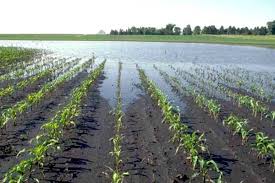
The type, timing, and amount of precipitation (rain, dew) received during the year play critical roles in crop productivity. Rain is generally more efficient in recharging the soil profile and thus is more available for crops.
The efficiency of rain in recharging the soil depends on the rate or intensity with which the rain falls. Rain showers or storms that fall at rates greater than 0.5 inches an hour (12.7 cm/hr) are less efficient than lighter showers because the water forms ponds on the surface and runs off the fields into ditches and rivers, carrying along precious topsoil.
The timing of rainfall while crops are growing is critical. During seed germination and stand establishment, either too much or too little rain can influence yields.
Too much rain, especially with cool temperatures, can result in seed diseases, causing poor stands, or can saturate the soil, causing poor soil aeration and poor germination and stands.
Dry soils during germination and stand establishment can result in either poor seed germination or weak and small plants that may not withstand dry weather during the early growth of the crop, causing smaller plant leaf area.
For corn, the critical time during the early growth lasts for approximately 30 days, from planting to tassel initiation, when the corn leaves are being initiated and beginning to grow.
Because the soybean crop continues to flower and fill pods from the start of flowering to almost the beginning of maturity, soybean requires adequate rainfall throughout the period of flowering to maturity.
Failure to receive adequate rainfall during flowering and pod fill will result in fewer flowers and pods on the plants.
Wet soils during the rainy season play an important role in determining how many days are suitable for fieldwork. When soil moisture is normal or wetter than normal, even small rains will result in fieldwork delays on all but the sandiest soils.
Over-saturated soils delay planting and seed emergence in addition to poor aeration. This underscores the importance of weather elements in crop production, thus crop phenology.
Read Also : Different Classes of Snail Feed Based on their Nutritional Requirements
Solar Radiation and Photosynthesis in Crops
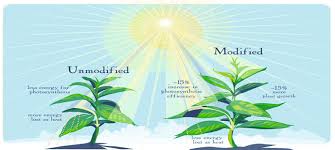
Plants use the solar energy from the sun to fix carbon dioxide from the atmosphere, in combination with water from the soil, into carbohydrates that cause plants to grow, reproduce, and provide the grain and vegetation used as food by humans and animals. The solar energy available to plants is a function of sunshine intensity and duration.
When the crop has a full canopy, with a leaf area index greater than 2.7, the rate of carbon fixation by maize results in an accumulation of approximately 0.14 bushels of grain per acre per megajoule-bu/A/MJ (8.8 kg/ha/MJ).
An average heavily overcast day between May and August receives about 8.2 MJ of solar energy. Thus, if all the carbon fixed by photosynthesis were to go into the grain, the yield gain on a heavily overcast day would be 1.2 bu/A/day (75.5 kg/ha/day).
Advantages of Understanding Crop Phenology
Understanding crop phenology in relation to weather is fundamental to crop management, where timing of management practices is increasingly based on stages of crop development and occurrences of the elements of weather. It facilitates planning of operations, such as irrigation, the application of fertilizers, and pesticides.
Harvesting of crops, especially grains, is synchronized to periods of highly reduced precipitation and humidity in order to hasten drying and storage.
Disadvantages of Weather-Dependent Crop Management
Weather forecasts are seldom accurate as the vagaries of nature are unpredictable. Most weather forecasts are for regions and hardly could be applied to small geographical areas. A regional forecast cannot suffice for all farming areas. Expertise is required to read and interpret data at weather stations.
Recommendations for Climate-Smart Crop Management
It is recommended that there should be proper study of the climate and weather components of a region/location before siting an agricultural enterprise.
Crop phenology studies of a region/location should be conducted before the commencement of commercial farming activities. These studies are necessary for appropriate crop type selection and management.
The response of crops to the different weather variables is quite complex and difficult to describe. Predicting the exact response of crops to the weather is, as a result, an inexact science, and one that contains great uncertainty. This notwithstanding, understanding crop phenology is fundamental to crop management.
Do you have any questions, suggestions, or contributions? If so, please feel free to use the comment box below to share your thoughts. We also encourage you to kindly share this information with others who might benefit from it. Since we can’t reach everyone at once, we truly appreciate your help in spreading the word. Thank you so much for your support and for sharing!