



Farming God’s Way offers sustainable methods for growing fruit, leaf, and root crops. This article details two techniques surface composting and manure inputs designed to enhance soil health and crop yield. Each method emphasizes minimal soil disturbance, natural mulching, and precise nutrient application for optimal growth.
Surface composting uses organic matter on the soil surface to mimic natural decomposition, ensuring nutrient availability. The manure input technique incorporates nutrient-rich materials into furrows or basins, providing a robust foundation for crops. Both methods promote healthy plants and sustainable gardening practices.
The article covers specific crops, including beans, eggplants, spinach, and carrots, with tailored instructions for row spacing, planting, and soil preparation. These techniques are adaptable for small or large gardens, ensuring efficient use of space and resources.
By following these methods, gardeners can achieve multiple harvests while maintaining soil fertility. The Farming God’s Way approach integrates natural processes, making it accessible and effective for sustainable crop production.
Read Also: How to determine if your Housing is Conducive for your Fishes
Surface Composting Technique

This technique applies compost on the soil surface to feed crops naturally, reducing disturbance and mimicking natural ecosystems. It’s ideal for fruit, leaf, and root crops, ensuring nutrient availability and weed suppression through a mulch layer called God’s Blanket.
A. Preparing the Planting Area
Proper preparation ensures crops have the space and nutrients needed for growth. This section outlines row arrangements, soil fracturing, and mulch management for various crops using the surface composting method.
1. Row Arrangement: For beans, use single 75cm rows with 10cm in-row spacing. Leaf crops like spinach and amaranth use triple 37.5cm rows, then a 75cm walkway. Root crops like carrots use double 20cm rows.
This layout optimizes space and access for harvesting. Triple rows promote canopy closure, reducing weeds. Walkways ensure easy maintenance without compacting soil, enhancing crop health.
2. Soil Fracturing: Push a fork 30cm deep for leaf crops or 15cm for fruit and root crops, pulling back slightly to loosen soil. Remove rocks but avoid turning soil. Repeat every 10cm along rows.
Fracturing improves aeration and root penetration without disrupting soil structure. This step ensures crops access nutrients efficiently. It’s critical for healthy root and plant development.
3. Remove God’s Blanket: Move the mulch layer downslope before planting to expose soil. For leaf and root crops, ensure a 2.5cm-thick blanket is applied after germination to suppress weeds.
This preserves soil moisture and prevents weed growth. The blanket mimics natural mulch layers, maintaining soil health. Proper timing prevents nitrogen depletion during germination.
B. Nutrient Application
Applying nutrients correctly supports crop growth over their lifecycle. This section details how to add wood ash, bonemeal, or compost to ensure nutrient availability for various crops.
1. Wood Ash or Bonemeal: Sprinkle 1 tablespoon per 60cm for beans, spinach, or kale, or per planting station for eggplants and tomatoes. For root crops like carrots, use a handful per meter.
These amendments correct soil acidity, ensuring nutrient uptake. They provide essential minerals for crop growth. Consistent application supports healthy development across all crop types.
Compost application varies by crop to meet specific nutrient needs. Proper depth and placement enhance growth. This step is crucial for sustained productivity in the surface composting method.
2. Compost Application: Apply 3-5cm deep, 10-25cm wide compost bands for leaf crops like spinach (5cm) or coriander (2cm). For fruit crops like peppers, use 500ml per planting station.
This provides a nutrient-rich surface layer, mimicking natural feeding. Compost supports medium to heavy feeders like spinach. It ensures steady nutrient release for optimal growth.
3. Seeding Depth: Press a 1-3cm furrow for seeds: 3cm for beans, 1cm for coriander, 2cm for beetroot. Cover seeds with fine soil, ensuring even or slightly raised surfaces for germination.
Accurate seeding depth promotes healthy germination. Proper covering prevents seed exposure, ensuring uniform growth. This step is vital for successful crop establishment.
C. Planting and Thinning
Planting and thinning ensure crops have adequate space and resources. This section covers seed and seedling planting, blanket application, and thinning for optimal crop development.
1. Planting Seeds or Seedlings: Plant one seed per 10cm for beans, 1cm for coriander, or one seedling per 20cm for spinach. For eggplants and peppers, plant one seedling per station.
Precise spacing prevents overcrowding, promoting healthy growth. Seedlings establish faster, while seeds are cost-effective. Correct placement ensures strong root systems and high yields.
After planting, apply a 2.5cm-thick God’s Blanket for leaf and root crops post-germination, or before planting for seedlings. This suppresses weeds and retains moisture, supporting crop health.
2. Thinning: Thin amaranth to one plant per 30cm, beetroot to one per 10cm, and carrots to one per 5cm after germination. Use thinned plants for salads or relish.
Thinning optimizes space and resources, enhancing crop vigor. It prevents competition among plants. This step ensures larger, healthier yields for leaf and root crops.
3. Arrangement: Use diamond patterns for celery, kale, and lettuce, or aligned rows for eggplants and tomatoes. Beans and coriander require no specific arrangement after thinning.
Arrangement patterns improve canopy closure and access. Diamond patterns reduce weed growth, while aligned rows simplify harvesting. This enhances garden efficiency and productivity.
D. Crop-Specific Considerations
Different crops require tailored approaches for optimal growth. This section highlights specific techniques for fruit, leaf, and root crops to maximize yield and quality using surface composting.
1. Fruit Crops: For squashes, plant three seeds per station, thinning to two, in every second row (1.5m apart). Sweetcorn uses 5cm seeding depth, with three seeds per station.
These crops need wider spacing for sprawling growth. Thinning ensures robust plants. Proper depth and spacing support healthy fruit development and high yields.
2. Leaf Crops: Kale and spinach use triple 37.5cm rows, with seedlings planted 30cm or 20cm apart, respectively. Coriander and rocket use dense seeding (1cm or 3cm) for baby leaves.
Leaf crops benefit from close spacing for canopy closure. Dense seeding maximizes yield for baby leaves. These methods ensure continuous harvests and healthy foliage.
3. Root Crops: Beetroot and carrots use double 20cm rows, with seeds planted 5cm or 2.5cm apart, thinned to 10cm or 5cm. Onions and spring onions use seedlings at 10cm.
Root crops require precise spacing for bulb or root development. Thinning prevents crowding, ensuring larger roots. Seedlings simplify establishment for onions and spring onions.
Read Also: How many plots of land do I need to start fish farming?
Manure Inputs Technique
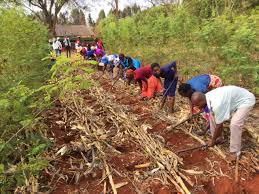
This technique incorporates manure into furrows, basins, or planting stations, providing a nutrient-rich base for crops. It’s ideal for gardeners seeking high nutrient input for robust fruit, leaf, and root crops.
A. Setting Up the Planting Area
Proper setup creates a nutrient-rich environment for crops. This section covers row arrangements, soil fracturing, and furrow or basin preparation for the manure inputs method.
1. Row Arrangement: Beans and potatoes use single 75cm rows. Amaranth, kale, and spinach use triple 37.5cm rows with a 75cm walkway. Carrots and onions use double 20cm rows.
This layout ensures efficient space use and easy access. Triple rows promote canopy closure, reducing weeds. Walkways allow harvesting without soil compaction, enhancing crop health.
2. Soil Fracturing: Fracture soil 10-15cm deep for most crops, using a fork. For squashes and sweet potatoes, fracturing is optional. Repeat every 10cm along rows or at planting stations.
Fracturing improves root penetration and aeration. It prepares soil for manure incorporation. This step ensures crops access nutrients without disrupting soil structure excessively.
3. Furrow or Basin Preparation: Dig 10cm deep furrows for beans and spinach, or 5cm deep basins for carrots and lettuce. For eggplants and peppers, prepare 15cm deep planting stations.
These structures hold manure effectively, providing a nutrient reservoir. Proper depth ensures roots access nutrients. This step sets the foundation for healthy crop growth.
B. Nutrient Application
Adding manure and soil amendments ensures crops receive adequate nutrients. This section details the application of wood ash, bonemeal, and manure for sustained growth.
1. Wood Ash or Bonemeal: Apply 1 tablespoon per 60cm for beans, spinach, or potatoes, or per planting station for eggplants and tomatoes. Use a handful per meter for carrots and onions.
These amendments neutralize soil acidity, enhancing nutrient availability. They support healthy growth across crop types. Consistent application prevents nutrient deficiencies.
Manure application provides a robust nutrient base for crops. Proper covering prevents seed burn and ensures germination. This step is critical for the manure inputs technique.
2. Manure Application: Spread 500ml of manure per meter in furrows for beans and spinach, or per planting station for peppers. For basins, use a 1-2cm layer for lettuce and carrots.
Manure supplies essential nutrients for medium to heavy feeders. Even application ensures consistent growth. This method supports crops over their 6-8 month growth period.
3. Soil Cover: Cover manure with soil, leaving 3-10cm depth for seeding: 3cm for beans, 5cm for sweetcorn, 10cm for potatoes. For seedlings, cover to level the surface.
Covering prevents seed burn and ensures proper seeding depth. It creates a separation layer for healthy germination. This step promotes uniform crop establishment.
C. Planting and Thinning
Planting and thinning optimize crop health and yield. This section covers seed and seedling planting, blanket application, and thinning for the manure inputs technique.
1. Planting Seeds or Seedlings: Plant one seed per 10cm for beans, 1cm for coriander, or one seedling per 20cm for spinach. Eggplants and tomatoes use one seedling per station.
Precise spacing ensures healthy growth and prevents competition. Seedlings establish quickly, while seeds are economical. Proper placement supports strong root development.
After planting, apply a 2.5cm-thick God’s Blanket post-germination for seeds or before planting for seedlings. This suppresses weeds, retains moisture, and protects soil health.
2. Thinning: Thin amaranth to one plant per 30cm, carrots to one per 5cm, and squashes to two per station. Use thinned plants for salads or compost to reduce waste.
Thinning promotes larger, healthier crops by reducing competition. It optimizes space and resources. This step is essential for maximizing yield in root and fruit crops.
3. Arrangement: Use diamond patterns for kale, lettuce, and celery, or aligned rows for eggplants and onions. Beans and coriander require no specific arrangement after planting.
Arrangement patterns enhance canopy closure and harvesting efficiency. Diamond patterns reduce weeds, while aligned rows simplify maintenance. This improves overall garden productivity.
D. Crop-Specific Considerations
Tailoring techniques to specific crops ensures optimal results. This section highlights unique approaches for fruit, leaf, and root crops using the manure inputs technique.
1. Fruit Crops: For squashes, plant three seeds per station, thinning to two, in every second row (1.5m apart). Sweetcorn uses a 5cm seeding depth with three seeds per station.
These crops require wide spacing for growth. Thinning ensures strong plants. Proper depth and spacing support healthy fruit production and high yields.
2. Leaf Crops: Spinach and kale use triple 37.5cm rows, with seedlings at 20cm or 30cm. Coriander and rocket use dense seeding (1cm or 3cm) for baby leaf production.
Close spacing maximizes leaf yield and canopy closure. Dense seeding suits baby leaves, ensuring high harvests. These methods support continuous leaf production.
3. Root Crops: Carrots and beetroot use double 20cm rows, with seeds at 2.5cm or 5cm, thinned to 5cm or 10cm. Potatoes and sweet potatoes use 30cm spacing in furrows.
Precise spacing ensures proper root development. Thinning prevents crowding, promoting larger roots. Furrows provide a nutrient-rich base for robust root crop growth.
Frequently Asked Questions
1. What is the Farming God’s Way approach?
It’s a sustainable farming method emphasizing minimal soil disturbance, natural mulching (God’s Blanket), and nutrient application through compost or manure to mimic natural ecosystems.
2. Why use God’s Blanket in these techniques?
God’s Blanket, a 2.5cm mulch layer, suppresses weeds, retains moisture, and protects soil. It mimics natural decomposition, enhancing crop growth and reducing maintenance.
3. How does soil fracturing benefit crops?
Fracturing loosens soil without turning it, improving aeration and root penetration. It ensures crops access nutrients efficiently, supporting healthy growth across fruit, leaf, and root crops.
4. Can I use both seeds and seedlings in these methods?
Yes, both are effective. Seeds are cost-effective, while seedlings establish faster. Follow specific spacing and depth guidelines for each crop to ensure optimal growth.
5. Why is thinning necessary for some crops?
Thinning reduces competition, allowing remaining plants to grow larger and healthier. It’s essential for crops like carrots, amaranth, and squashes to maximize yield.
6. How do I correct acidic soil for these crops?
Apply 1 tablespoon of wood ash or bonemeal per 60cm, or a handful per meter for root crops, to neutralize acidity and ensure nutrient availability.
7. What is the benefit of triple-row layouts?
Triple rows (e.g., 37.5cm for spinach) optimize space, promote canopy closure, and reduce weeds. Walkways ensure easy harvesting without compacting soil.
8. How much manure should I apply for leaf crops?
Use 500ml per meter in furrows for spinach and kale, or a 1-2cm layer in basins for lettuce and coriander, to support their nutrient needs.
Do you have any questions, suggestions, or contributions? If so, please feel free to use the comment box below to share your thoughts. We also encourage you to kindly share this information with others who might benefit from it. Since we can’t reach everyone at once, we truly appreciate your help in spreading the word. Thank you very much for your support and for sharing!