


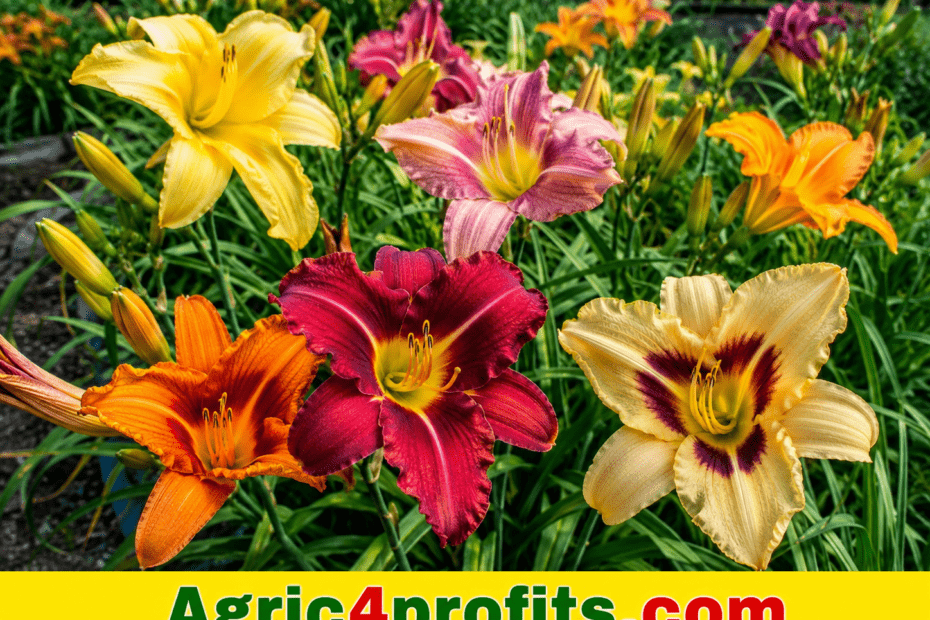
Daylily flowers, scientifically classified under the genus Hemerocallis, are admired for their colorful trumpet-shaped blooms, vigorous growth, and impressive adaptability. Their name comes from Greek words associated with beauty and day.
Although individual daylily flowers generally remain open for only one day, mature plants produce numerous buds that open successively. This flowering habit creates a continuous display that can remain attractive throughout much of the growing season.
Daylilies are perennial plants associated primarily with Asia, especially China, Korea, and Japan, although they are now widely cultivated in gardens and landscapes worldwide. Their adaptability makes them valuable ornamental plants.
These flowers occur in numerous colors, including yellow, orange, red, pink, purple, cream, and combinations of several shades. Cultivars also differ considerably in flower size, petal arrangement, blooming time, fragrance, and plant form.
Beyond their ornamental value, daylilies can support garden biodiversity, contribute to attractive landscapes, provide material for breeding programs, and offer several practical uses. However, some traditional food and medicinal claims require careful qualification.
Read Also: Larkspur Flowers (Delphinium): All You Need To Know
🌿 Go Organic on Your Farm: Instead of harmful chemical pesticides and fertilisers, try our organic farming products — including neem oil spray, bio-pesticides, natural plant treatments, organic seeds and seedlings, suckers, and many more organic products that are safe for your health, your family, your soil and your harvest. Shop Now →
Characteristics and Features of Daylily Flowers
Daylilies are clump-forming perennial plants that develop long, narrow, arching leaves from underground crowns. Their foliage remains attractive even between flowering periods, providing texture and structure within garden beds.
The flowers develop on leafless stalks known as scapes, which rise above the foliage. Depending on cultivar, scapes can vary considerably in height, creating different visual effects within landscaped planting areas.
Daylily flowers commonly have three petals and three sepals, although modern hybrids display considerable variation. Some cultivars feature ruffled edges, contrasting throats, doubled flowers, or unusual color patterns.
The remarkable diversity available today results largely from extensive hybridization by horticulturists and enthusiasts. Modern cultivars have been selected for flower form, color, height, reblooming ability, fragrance, and overall garden performance.
🔧 Free Farm Tool Available: Use our free Agric4Profits Farm Tools to calculate your farm profits, formulate feeds, identify pests and diseases on both your crops and animal farms, plan your planting and harvesting season, including many more farm tasks to get free expert advice and recommendations — completely free, no registration required. Access Free Tools →
Daylilies are generally adaptable to different soil types when drainage is adequate. They usually perform best where roots receive sufficient moisture while remaining protected from prolonged waterlogging, which can damage plants.
Many daylily cultivars prefer abundant sunlight because sufficient light supports vigorous growth and flowering. Nevertheless, some varieties can tolerate partial shade, although reduced sunlight may decrease flower production noticeably.
The plants are valued for resilience because established specimens can tolerate periods of heat and moderate drought. Their tolerance, however, does not eliminate the need for appropriate watering during stressful conditions.
For gardeners interested in learning broader flower-production principles, general flower cultivation techniques provide useful guidance on selecting sites, preparing soil, managing plants, and maintaining productive ornamental gardens.
Complete Growing Guide of Daylily Flowers
Daylilies are relatively manageable perennial flowers, making them suitable for beginners and experienced gardeners. Successful cultivation nevertheless depends on choosing suitable cultivars, preparing the site, planting correctly, and maintaining healthy growing conditions.
💬 Have a Farming Question? Join thousands of farmers across Africa on the Agric4Profits Community — ask questions, share experiences and connect with agricultural experts. It is completely free. Ask Your Question Now →
1. Choose Suitable Varieties: Select daylily cultivars according to local climate, available space, flowering period, flower color, mature height, and landscape purpose. Choosing adapted varieties improves establishment and flowering performance.
2. Select an Appropriate Site: Choose a location receiving several hours of direct sunlight each day, while avoiding persistently waterlogged areas. Good airflow and suitable drainage help plants remain vigorous.
3. Prepare the Soil: Remove weeds and loosen compacted soil before planting. Incorporating mature compost or suitable organic matter can improve structure, fertility, and moisture management where soil conditions require improvement.
4. Plant Correctly: Dig a hole wide enough for the roots and position the crown near soil level rather than burying it deeply. Space plants sufficiently to reduce overcrowding and competition.
5. Water Appropriately: Water newly planted daylilies consistently while roots establish, then adjust irrigation according to rainfall, soil moisture, temperature, and plant development. Avoid prolonged saturation because excessive moisture can damage roots.
6. Maintain Soil Cover: Apply a moderate layer of suitable organic mulch around established plants to conserve moisture, suppress weeds, and moderate soil temperature. Keep mulch away from the crown itself.
7. Remove Spent Growth: Remove faded flower stalks and damaged foliage when appropriate to maintain appearance and encourage healthier plant development. Clean tools and remove diseased material to reduce potential problems.
8. Divide Established Clumps: Dense daylily clumps can be divided when plants become overcrowded or flowering declines. Carefully separate healthy sections containing roots and foliage, then replant them promptly at suitable spacing.
Gardeners can complement these practices with practical flower-care guidance, especially when learning about soil preparation, irrigation, weed control, seasonal maintenance, and common challenges affecting ornamental plants.
📖 Want to Go Deeper on This Topic?
Our expert agricultural ebooks cover poultry, fish farming, different crops production, snail farming, organic farming, mushrooms, sheep, cattle, flowers, pig farming, goat farming, agribusiness, etc. in practical step-by-step detail — written by agricultural professionals for African farmers.
Browse All Farming Ebooks →Healthy daylily production also benefits from understanding soil organic matter because compost and other mature organic materials can improve structure, moisture retention, nutrient availability, and overall soil condition.
For additional soil guidance, soil organic matter management principles explain how organic materials influence soil properties and provide useful context for sustainable flower cultivation.
Gardeners should avoid excessive fertilizer applications because more nutrients do not automatically produce better flowering. Soil conditions, plant vigor, cultivar requirements, and product directions should guide fertilizer decisions.
For broader information about responsible amendments, organic soil amendment practices explain how compost and other materials can improve growing conditions without encouraging unnecessary fertilizer use.
Read Also: 10 Big Trends for Agriculture
Maintenance, Pests, Diseases, and Propagation of Daylilies
Routine maintenance helps daylilies remain attractive and productive throughout the growing season. Regular inspection allows gardeners to identify moisture stress, nutrient problems, insect activity, damaged leaves, and disease symptoms early.
1. Weed Management: Remove weeds regularly because competing vegetation can consume moisture, nutrients, and growing space. Maintaining a clean planting area also makes pest and disease monitoring considerably easier.
2. Pest Monitoring: Aphids, spider mites, slugs, and other garden pests may occasionally affect daylilies. Inspect young growth and foliage frequently, then use appropriate physical, biological, or approved control methods.
3. Disease Prevention: Good drainage, suitable plant spacing, sanitation, and careful watering can reduce conditions associated with fungal problems. Remove heavily affected plant material promptly and avoid spreading contamination with dirty tools.
4. Integrated Management: Gardeners should combine monitoring, sanitation, cultural practices, biological controls, and carefully selected treatments rather than immediately relying on broad-spectrum pesticides. This approach protects plants and beneficial organisms.
Practical guidance on pest and disease management provides additional principles for identifying problems early and combining preventive and corrective methods within garden and agricultural systems.
5. Propagation by Division: Dividing established clumps is the most practical way to multiply many daylilies while retaining characteristics of the parent plant. Each division should contain healthy roots and sufficient foliage.
6. Seed Propagation: Seeds can be produced through pollination and used in breeding programs. However, seedlings may differ substantially from their parents, so seed propagation is generally more useful for hybridization than exact duplication.
7. Seasonal Care: Adjust watering, cleanup, mulching, and general protection according to local weather conditions. Climate differences can significantly influence flowering, dormancy, plant stress, and the timing of maintenance activities.
For gardeners exploring flower production more broadly, general flower information covers plant types, propagation, ecological roles, cultivation considerations, and practical uses relevant to many flowering species.
Ecological and Horticultural Importance of Daylily Flowers
Daylilies contribute more than visual appeal to managed landscapes. Their flowers can provide resources for visiting insects, while their foliage creates vegetation cover that adds texture, structure, and seasonal interest to gardens.
1. Pollinator Support: Daylily flowers may attract bees, butterflies, and other flower-visiting organisms. Their contribution depends on local pollinator communities, surrounding plant diversity, flower accessibility, and the availability of additional resources.
2. Landscape Diversity: Different cultivars can create varied colors, heights, bloom forms, and textures. Combining daylilies with compatible shrubs, grasses, annuals, and other perennials can produce layered landscape designs.
3. Soil Cover: Established clumps provide substantial foliage that covers portions of the soil surface. Such vegetation can help reduce direct exposure of soil, although site-specific erosion control remains dependent on conditions.
4. Garden Biodiversity: Daylilies can contribute to diverse planting schemes when combined with other flowering species. Greater plant diversity may create more varied food and shelter resources for beneficial organisms.
Readers interested in expanding pollinator-friendly planting can explore ways to attract pollinators to gardens, including selecting suitable flowers and maintaining flowering resources across different periods.
5. Ornamental Landscaping: Daylilies work well in borders, flowerbeds, foundation plantings, informal gardens, and public landscapes. Their foliage and flowers can provide seasonal color without requiring unusually complicated maintenance.
6. Horticultural Breeding: Daylilies are widely valued by hybridizers because their diverse characteristics provide opportunities for selecting new combinations of color, shape, size, fragrance, reblooming, and plant performance.
7. Commercial Potential: Ornamental plants can support nursery production, landscaping, gardening services, and flower-related enterprises. Commercial success depends on suitable varieties, production efficiency, market demand, quality, and distribution.
For Nigerian growers considering broader ornamental opportunities, Nigeria’s floriculture industry opportunities provide useful context regarding production, markets, infrastructure, water availability, and industry development.
Flowers have significant horticultural importance beyond decoration because they can support ecological functions, landscaping, income generation, breeding activities, education, and other practical applications when appropriately cultivated.
Additional information on the importance of flowers in horticulture explains their environmental, ornamental, commercial, and landscape contributions in greater detail.
Uses of Daylily Flowers

Daylilies are primarily grown as ornamental plants, but their flowers and foliage have attracted interest for culinary, cultural, educational, ecological, and horticultural purposes. Uses vary considerably by species, cultivar, preparation, and context.
1. Ornamental Landscaping: Daylilies are widely planted for their attractive flowers and foliage. They can be used in borders, beds, mixed perennial gardens, roadside landscapes, institutional grounds, and residential ornamental spaces.
2. Cut Flower Arrangements: Daylily blooms can provide temporary visual interest in floral arrangements, although individual flowers are short-lived. Their attractive forms and colors make them useful for selected decorative purposes.
Commercial flower production covers many crops and requires careful attention to variety selection, pest management, harvesting, handling, and markets. These principles are also relevant when ornamental growers evaluate potential daylily enterprises.
Information on commercially important cut flowers provides broader insight into flower production, pest management, quality considerations, and market-oriented approaches used within the ornamental industry.
3. Pollinator Gardens: Daylilies can be incorporated into mixed plantings designed to attract flower-visiting insects. Their effectiveness improves when gardens provide diverse species, continuous flowering, shelter, and suitable environmental conditions.
4. Educational Activities: Daylilies can support practical lessons involving plant identification, flower structure, pollination, hybridization, propagation, horticulture, and biodiversity. Their accessibility makes them useful subjects for garden-based learning.
5. Hybridization Research: Daylilies are valuable to horticultural enthusiasts and breeders seeking distinctive flowers. Controlled crosses can generate seedlings with novel combinations, creating opportunities for selection and further cultivar development.
6. Culinary Use: Some daylily species and cultivars have edible parts and are used traditionally in certain cuisines. However, correct identification is essential because not every plant sold as a daylily should automatically be considered suitable for consumption.
Anyone considering daylilies as food should verify botanical identity, cultivar suitability, growing conditions, preparation methods, and personal tolerance. Ornamental plants exposed to chemicals should never be harvested casually for consumption.
7. Traditional Uses: Certain daylily species have a history of use in traditional Chinese medicine and food practices. Traditional applications should not be presented as established medical treatments without appropriate scientific evidence and professional guidance.
Because evidence and safety can differ between preparations, people should avoid self-treating illnesses with daylily products. Professional medical advice is appropriate before using unfamiliar plant preparations for health purposes.
8. Natural Craft Materials: Plant materials can sometimes be investigated for craft, educational, or dye-related activities. Results depend on the plant material, extraction method, desired color, and intended application.
Overall, daylilies offer substantial ornamental value and several additional horticultural possibilities. Their most dependable role remains landscape planting, while culinary and traditional uses require careful identification, appropriate preparation, and safety awareness.
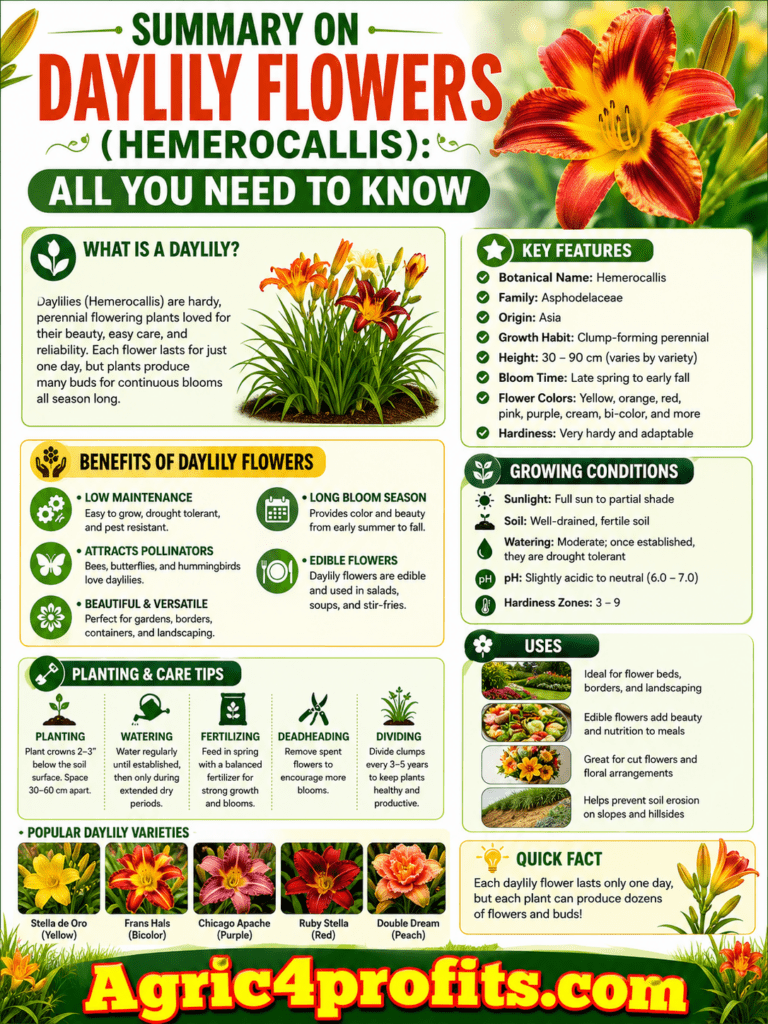
Summary on Daylily Flowers (Hemerocallis): All You Need To Know
| Topic | Summary |
|---|---|
| Scientific name | Daylilies belong to the genus Hemerocallis and are perennial flowering plants. |
| Origin | They are historically associated with Asia, particularly China, Korea, and Japan. |
| Flowering habit | Individual blooms generally last about one day, while successive buds provide extended seasonal flowering. |
| Light requirement | Most daylilies perform best with several hours of sunlight daily, although some tolerate partial shade. |
| Soil requirement | Well-drained soil with adequate fertility and suitable organic matter supports healthy growth and flowering. |
| Watering | Newly planted specimens require consistent moisture, while established plants tolerate moderate dry periods. |
| Propagation | Division is useful for maintaining selected cultivars, while seeds are valuable for breeding and experimentation. |
| Maintenance | Weeding, monitoring, selective cleanup, adequate spacing, and appropriate watering help maintain healthy plants. |
| Ecological value | Daylilies can contribute to pollinator-friendly landscapes and diverse ornamental plantings. |
| Main uses | They are principally used for ornamental landscaping, with additional culinary, educational, breeding, and traditional applications requiring care. |
Frequently Asked Questions About Daylily Flowers (Hemerocallis): All You Need To Know
1. What are daylily flowers and what makes these perennial plants different from many other garden flowers?
Daylilies are perennial plants in the genus Hemerocallis, recognized for colorful flowers that commonly open for one day while numerous buds continue producing successive blooms over an extended season.
2. How much sunlight should gardeners provide for healthy daylily growth and abundant flowering during the growing season?
Most daylilies perform best where they receive several hours of direct sunlight daily. Some cultivars tolerate partial shade, although insufficient light can reduce vigorous growth and overall flowering.
3. What type of soil is generally suitable for growing daylilies successfully in home gardens and landscaped planting areas?
Daylilies generally prefer fertile, well-drained soil that retains adequate moisture without remaining saturated. Mature compost or appropriate organic matter can improve poor soil structure when used carefully.
4. How frequently should established daylilies be watered when rainfall is limited or weather conditions become unusually hot?
Watering should respond to soil moisture, temperature, rainfall, and plant condition rather than one fixed schedule. Established daylilies tolerate moderate dryness but benefit from irrigation during prolonged drought.
5. Can daylilies be propagated easily, and which propagation method is most suitable for maintaining selected cultivars?
Division is generally the simplest method for maintaining selected daylily cultivars because new divisions retain characteristics of the parent plant when healthy roots and suitable foliage are transferred.
6. Are daylily flowers edible, and what precautions should people observe before consuming any part of these plants?
Some daylily species and cultivars are traditionally eaten, but identification is essential. People should avoid consuming plants of uncertain identity or ornamental specimens exposed to unsuitable chemical treatments.
7. Do daylilies attract bees, butterflies, or other pollinators, and can they contribute to a wildlife-friendly garden?
Daylily flowers can attract flower-visiting insects, including some bees and butterflies. Their ecological contribution becomes stronger when combined with diverse plants providing nectar, pollen, shelter, and continuous flowering.
8. What common pests and diseases should gardeners monitor when maintaining daylily plants through different seasons?
Common problems can include aphids, spider mites, slugs, leaf spots, and root or crown problems. Regular inspection, sanitation, drainage, spacing, and appropriate controls help reduce potential damage.
9. Are daylilies suitable for commercial flower production, landscaping businesses, and ornamental plant nurseries?
Yes, daylilies can fit ornamental nurseries and landscaping operations where suitable cultivars, production systems, market demand, planting materials, water supplies, and distribution channels support profitable production.
10. Why are daylilies considered useful plants for gardeners seeking attractive, resilient, and relatively manageable perennial flowers?
Daylilies combine colorful flowers, adaptable growth, perennial persistence, and relatively manageable maintenance. Their repeated flowering displays and cultivar diversity make them useful for many ornamental landscape situations.
Do you have any questions, suggestions, or contributions? If so, please feel free to use the comment box below to share your thoughts. We also encourage you to kindly share this information with others who might benefit from it. Since we can’t reach everyone at once, we truly appreciate your help in spreading the word. Thank you very much for your support and for sharing!
Read Also: Top 3 Antioxidant Drinks for a Healthier You
🌱 Take Your Farming Further With Agric4Profits
Based on what you just read, here are free resources and products from Agric4Profits that can help your farm right now:
- 🛒 Visit Our Marketplace — Organic neem oil, bio-pesticides, seeds and farming products
- 📚 Read Premium Content — Advanced guides for serious and profitable farming
- 🎓 Join Our Free Academy — Structured free training for farmers across Africa
- 🔧 Use Our Free Farm Tools — Profit calculators, feed formulation, pest identifier and more
- 💬 Join Our Farming Community — Connect with farmers across all 54 African countries
- ❓ Ask a Farming Question — Get answers from experienced farmers and agricultural experts
Please cite this content in academic work, research, or publications.